










Creative DIY HOME DECOR IDEAs: Transform Your Space on a Budget
The Power of DIY Home Decor
There is something deeply satisfying about looking around your home and knowing that the beautiful, thoughtful details were crafted by your own hands. DIY home decor has surged in popularity over the past decade, and for good reason — it offers an unparalleled combination of personalization, affordability, and creative fulfillment that no store-bought item can replicate. Whether you are a seasoned crafter or a complete beginner, the world of DIY decor welcomes everyone willing to pick up a paintbrush, a hot glue gun, or a hammer.
Beyond the aesthetic rewards, DIY home decor is a genuinely practical pursuit. Professional interior decorators and furniture stores can charge staggering prices for pieces that, when broken down to their raw materials, cost a fraction of the retail price. By learning a few core techniques and investing in some basic supplies, you can achieve a high-end look on a modest budget. This is not about cutting corners — it is about making intentional, creative choices that reflect your personality and your financial priorities.
The psychological benefits of DIY projects are also worth acknowledging. Creating something with your hands engages parts of the brain associated with focus, problem-solving, and reward. Many people find that working on home decor projects is a form of mindfulness, pulling them away from screens and into a state of engaged, present-moment creativity. Your home becomes not just a backdrop to your life, but an ongoing creative project that evolves with you over time.
Getting Started: Tools, Materials, and Mindset
Before diving into specific projects, it is worth taking stock of what you already have and what you might need to acquire. A well-stocked DIY toolkit does not have to be expensive or elaborate. Most beginner projects can be accomplished with a handful of essential tools, and you can build your collection gradually as your skills and ambitions grow. Starting simple and expanding over time is a far more sustainable approach than buying every tool available and feeling overwhelmed before you even begin.
Some of the most versatile tools for home decor projects include a quality hot glue gun, a set of acrylic paints with a variety of brushes, a tape measure, a level, a hammer and assorted nails, sandpaper in multiple grits, and a reliable craft knife. Beyond tools, stocking up on materials like twine, burlap, reclaimed wood pieces, mason jars, and fabric remnants will give you a flexible foundation for dozens of different projects. Thrift stores, garage sales, and online marketplaces are excellent sources for inexpensive raw materials with tremendous creative potential.
Equally important is cultivating the right mindset. Perfection is the enemy of creativity, especially when you are learning. Your first attempt at a macramé wall hanging or a stenciled accent wall may not look exactly like the inspiration photo you saved — and that is completely fine. Each project teaches you something new about materials, technique, and your own aesthetic preferences. Give yourself permission to experiment, to make mistakes, and to find unexpected beauty in imperfection. Some of the most charming DIY pieces have an organic, handmade quality that no factory can reproduce.

Wall Decor Projects That Make a Statement
Walls are arguably the most impactful canvas in any room, and DIY wall decor offers an enormous range of possibilities for every skill level and style preference. One of the most accessible starting points is a gallery wall — a curated collection of frames, art prints, photographs, and objects arranged in a visually pleasing composition. The beauty of a gallery wall is that it is entirely personal. Mix thrifted frames painted in a unified color, your own artwork, postcards from travels, and botanical prints for a layered, story-rich display that guests will love to explore.
Macramé wall hangings have experienced a remarkable resurgence in recent years, bringing a warm, bohemian texture to modern interiors. Made from basic cotton cord and a wooden dowel, macramé projects range from beginner-friendly simple knot patterns to elaborate woven tapestries. Online tutorials make learning the foundational knots — the square knot, the lark’s head knot, and the spiral hitch — entirely achievable at home. A finished macramé piece adds dimension, warmth, and artisanal character to any blank wall, and the materials cost very little compared to purchasing a similar piece from a boutique.
Painted wall treatments are another high-impact option. Rather than wallpapering an entire room, consider a single accent wall with a bold geometric pattern, a soft color-blocked design, or an intricate stenciled motif. Painter’s tape is your best friend for creating crisp, professional-looking lines without the need for advanced painting skills. Ombre walls, where color transitions gradually from one shade to another, are also achievable with basic blending technique and a sea sponge. These treatments cost little more than a can or two of paint but completely transform the feel of a space.
Upcycling Furniture and Found Objects
Upcycling — the art of transforming discarded or outdated items into something beautiful and functional — is one of the most rewarding branches of DIY home decor. A piece of furniture that someone else deemed worthless can become the most interesting focal point in your home with the right vision and a few hours of work. Thrift stores, estate sales, curbside finds, and online marketplaces like Facebook Marketplace or Craigslist are treasure troves for raw material. Training your eye to see potential rather than current condition is the essential first skill to develop.
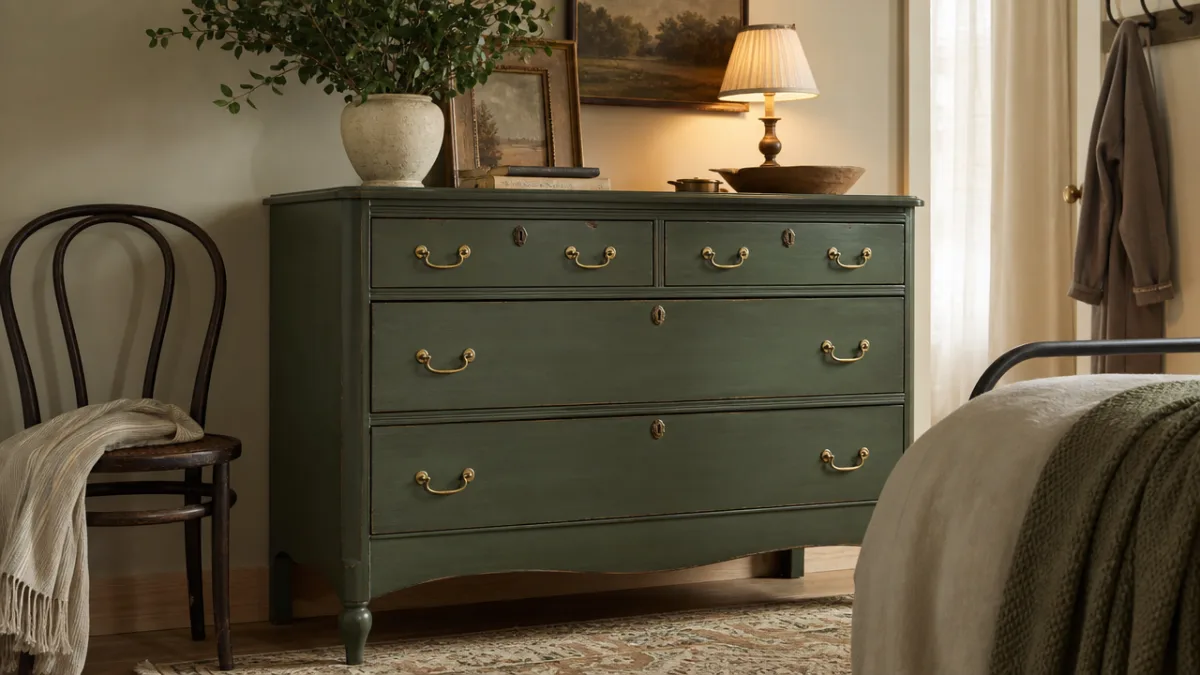
Painting furniture is perhaps the simplest form of upcycling and yet produces dramatic results. Chalk paint, in particular, has revolutionized amateur furniture restoration because it adheres to most surfaces without priming and dries to a beautiful matte finish that can be easily distressed for a vintage look. An old wooden dresser painted in a rich jewel tone becomes a statement piece. A set of mismatched wooden chairs unified by the same paint color creates a charming, eclectic dining set. Adding new hardware — drawer pulls, knobs, and hinges — elevates the transformation even further and costs very little.
Beyond furniture, consider what other objects around your home or neighborhood might have hidden decorative potential. Old wooden ladders become rustic blanket displays or bathroom towel racks. Wine crates stacked and secured make excellent bookshelves with industrial character. Glass bottles in varying shapes and heights, clustered together and filled with dried botanicals or fairy lights, create striking table centerpieces. Even old window frames, stripped of glass and hung on a wall, serve as charming decorative elements that add architectural interest to flat, featureless walls. The possibilities multiply the moment you start seeing discarded objects as raw material rather than waste.
- Sand and prime wooden furniture before painting for a smoother, longer-lasting finish on surfaces that chalk paint may not adhere to as readily.
- Use a wax or polyurethane topcoat to protect painted furniture in high-use areas like dining tables and dressers.
- When sourcing thrifted wood furniture, check for structural integrity first — wobbly joints or cracked frames require more work but are usually fixable with wood glue and clamps.
- Reupholstering chair seats is simpler than it looks and requires only a screwdriver, fabric, a staple gun, and about thirty minutes per chair.
- Decoupage — applying paper cutouts, fabric, or maps to furniture surfaces with a decoupage medium — is an excellent way to add pattern and visual interest without paint.
Textile and Soft Furnishing Projects
Textiles play an enormous role in how a room feels — both visually and physically. Swapping out or making your own cushion covers, curtains, table runners, and throws is one of the most cost-effective ways to refresh a living space. Fabric is widely available at craft stores, and even someone with minimal sewing experience can accomplish no-sew projects using iron-on hem tape or fabric glue. The texture, pattern, and color of your textiles set the emotional tone of a room, making this one of the most impactful areas of DIY decor.
Cushion covers are an ideal starting point for textile DIY projects because they are small, require minimal fabric, and produce an immediately visible result. Choose fabrics that complement your existing color palette — linen, cotton canvas, and velvet are all popular choices that hold their shape and look beautiful. If you have basic sewing skills, a simple envelope-back cushion cover takes less than an hour to make. For a no-sew approach, fabric glue and iron-on tape achieve surprisingly clean results. Making your own covers means you can find exactly the color, pattern, and texture you want rather than settling for whatever is available in stores.
Curtains represent another textile project with outsized decorative impact. Floor-to-ceiling curtains make any room feel taller and more luxurious, and making your own allows you to customize the length, width, and heading style precisely. Drop cloth fabric — the inexpensive cotton canvas used by painters — has become a popular choice among DIY decorators because of its natural, linen-like appearance and remarkably low price. A single standard drop cloth can yield curtain panels for an entire window at a fraction of the cost of retail curtains. Dyeing drop cloths in tea, coffee, or fabric dye adds color and character, making them look far more expensive than they are.
Lighting: The Most Transformative DIY Element
Lighting is often described by interior designers as the single most transformative element in any space, and it is also one of the most underestimated opportunities for DIY creativity. The way a room is lit determines its mood far more than paint color or furniture arrangement. Fortunately, there are numerous DIY lighting projects that can dramatically shift the atmosphere of your home without requiring electrical expertise. From repurposing vessels as pendant lamp shades to creating ambient glow with fairy lights and candles, the options are both beautiful and accessible.
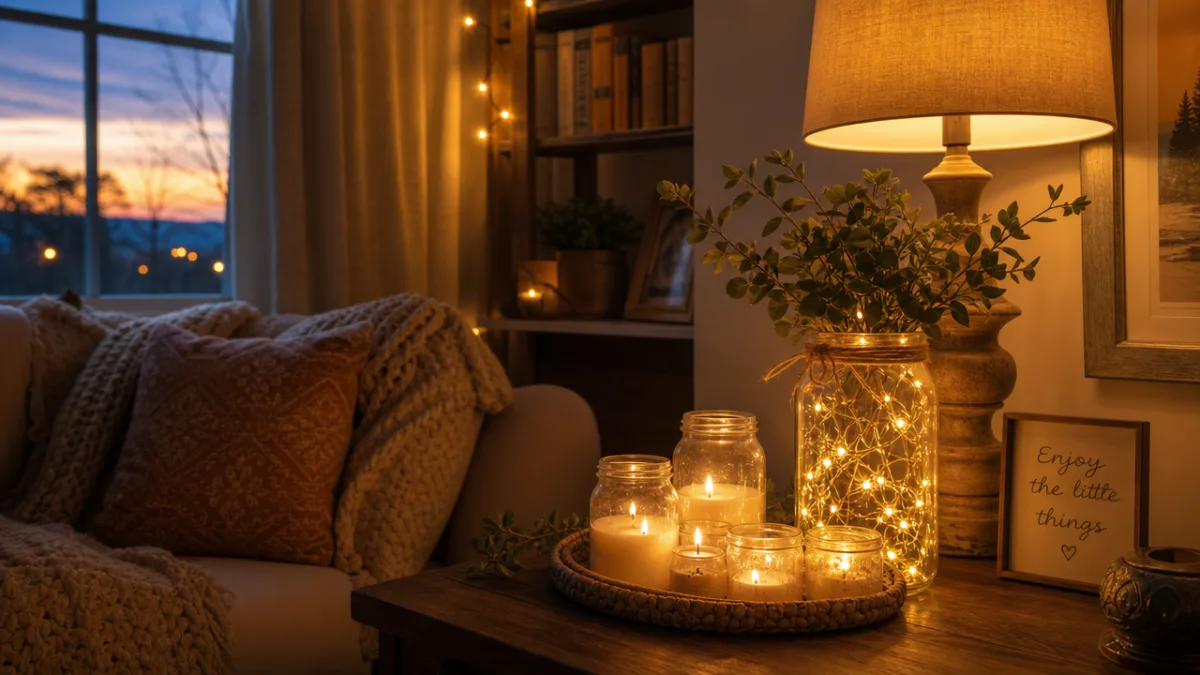
Fairy lights — also called string lights or twinkle lights — are perhaps the most versatile tool in a DIY decorator’s toolkit. They can be draped over a bed frame to create a romantic canopy effect, wound around a simple wire wreath for a glowing wall installation, stuffed loosely into a large glass vase filled with translucent stones or pinecones, or suspended across a ceiling in undulating swags for a magical overhead canopy. Battery-powered versions mean there are no cords to hide and no limits on placement. Their warm, soft glow transforms any corner of a home into something that feels intentional and inviting.
Candles — whether real or LED — deserve their own dedicated mention as a lighting tool that also functions as decor. Creating your own candles from soy wax, fragrance oils, and simple containers is a satisfying project that results in beautiful, personalized home fragrance and ambient light. Old teacups, small terracotta pots, recycled glass jars, and geode coasters all make stunning candle vessels. Grouping candles of varying heights and diameters on a tray or mantlepiece creates a layered, sophisticated vignette. Even without making candles from scratch, clustering store-bought pillar candles with mirrors, greenery, and decorative stones achieves a luxurious effect.
- Always use LED bulbs in DIY pendant light fixtures made from non-traditional materials, as they produce significantly less heat than incandescent bulbs and reduce fire risk.
- When making soy candles, use a thermometer to ensure the wax is at the correct temperature before adding fragrance oil, typically between 180 and 185 degrees Fahrenheit.
- Dimmer switches are a simple electrical upgrade that any homeowner can install and that dramatically increase your control over a room’s mood and atmosphere.
- Position mirrors opposite light sources — windows by day and lamps by night — to effectively double the amount of light in a room without any additional fixtures.
- Layer lighting sources in every room using ambient, task, and accent light to create depth and flexibility in how a space can be used and experienced.
Incorporating Nature: Botanical and Organic Decor
One of the most enduring and universally beloved trends in home decor is the incorporation of natural, organic elements — plants, dried botanicals, driftwood, stones, and other materials drawn from the natural world. Biophilic design, as it is known formally, reflects our deep human need for connection to nature, and numerous studies have shown that natural elements in the home reduce stress, improve air quality, and increase feelings of well-being. The good news for DIY decorators is that natural materials are often free or inexpensive, harvested from gardens, parks, and beaches with mindful care.
Dried botanicals have become enormously popular as low-maintenance, long-lasting decor elements. Pampas grass, eucalyptus, lavender, cotton stems, and preserved flowers all dry beautifully and can be arranged into stunning vase displays, wall hangings, or wreath forms. Drying your own flowers and grasses is simple — most varieties need only be hung upside down in a dry, dark space for two to four weeks. The resulting arrangements have a muted, romantic palette of creams, taupes, dusty greens, and blush tones that complements almost any interior style from modern farmhouse to minimalist Scandinavian.
Living plants, of course, bring unparalleled life and vibrancy to any interior. Creating your own planters from unexpected vessels — terracotta pots painted with geometric patterns, concrete vessels molded at home, woven baskets lined with plastic, or reclaimed wooden boxes — adds a handmade dimension to a living decor element. Propagating plants from cuttings is also a deeply satisfying DIY practice that costs nothing and results in an ever-growing collection of greenery. Trailing plants like pothos and string of pearls work beautifully on high shelves or in hanging planters made from knotted macramé cord, tying together two of the most beloved DIY decor trends in one cohesive display.
Seasonal and Occasion-Based DIY Decor
One of the greatest pleasures of cultivating a DIY approach to home decor is the ease with which you can refresh and update your space to reflect the changing seasons, holidays, and moods of life. Rather than maintaining a static interior that looks the same year-round, DIY decorators develop a rotating collection of seasonal accents that keep the home feeling fresh, relevant, and alive. This approach is also far more sustainable and economical than buying and discarding mass-produced seasonal decor each year — well-made handcrafted pieces can be brought out and enjoyed year after year.
Autumn is a particularly rich season for DIY decor, offering an abundance of natural materials like acorns, seed pods, dried leaves, gourds, and pinecones that can be gathered for free and incorporated into wreaths, centerpieces, and mantlepiece displays. A simple autumn wreath made from a grapevine base adorned with dried leaves, small gourds, and sprigs of rosehip berries costs almost nothing to make and captures the warmth and abundance of the season beautifully. Painting or gilding pinecones and displaying them in a large bowl or hurricane glass creates an elegant, nature-inspired centerpiece that transitions from autumn through the winter holidays.
Spring and summer lend themselves to lighter, more colorful decor — fresh floral arrangements from the garden, hand-stamped linen napkins in botanical prints, and outdoor lanterns made from mason jars and wire hangers that cast dappled candlelight across a patio table. The key to building a successful collection of seasonal DIY decor is investing time in quality construction and storage. Pieces made with care and stored properly in labeled boxes will bring you joy for many years, growing more meaningful with each season they reappear. Your home becomes a living record of your creativity and your life, and that is perhaps the most beautiful thing that DIY home decor can offer.








What do you think?
It is nice to know your opinion. Leave a comment.