










Chic DIY Home Aesthetics for Your Space
Understanding Your Personal Aesthetic Vision
Before you grab a paintbrush or start digging through thrift store racks, the single most useful thing you can do for any DIY home project is get honest with yourself about what you actually like. Home design is personal — deeply personal — and knowing what genuinely speaks to you (whether that’s the cozy, overgrown warmth of cottagecore, the breathing simplicity of Scandinavian minimalism, or the bold drama of maximalist decor) will save you so much time, money, and second-guessing down the road. Your home should feel like you, not like you copied someone else’s Pinterest board.
A great place to start is a mood board — physical or digital, doesn’t matter. Just start collecting images, fabric swatches, paint chips, anything that makes you feel something. Don’t stress about whether things “match” right away. Patterns will start showing up on their own once you have enough examples in front of you. Maybe you keep coming back to earthy terracotta tones, or you realize every space you save has serious texture layering going on. Those instincts are your aesthetic fingerprint, and leaning into them is what makes a home feel genuinely put-together rather than randomly assembled.
Once you have a clearer picture, it helps to think about your home in zones and give each one a mood or purpose before deciding how it should look. A home office probably wants a calm, focused palette that actually lets you think, while your living room might call for warmer, more layered elements that make people want to sink in and stay a while. Rooms can have their own personality even within the same overall style — what matters is keeping a through-line, whether that’s a recurring color, a shared material, or even just a design principle, so the whole place feels like it belongs together.
Budget-Friendly Ways to Refresh Your Walls
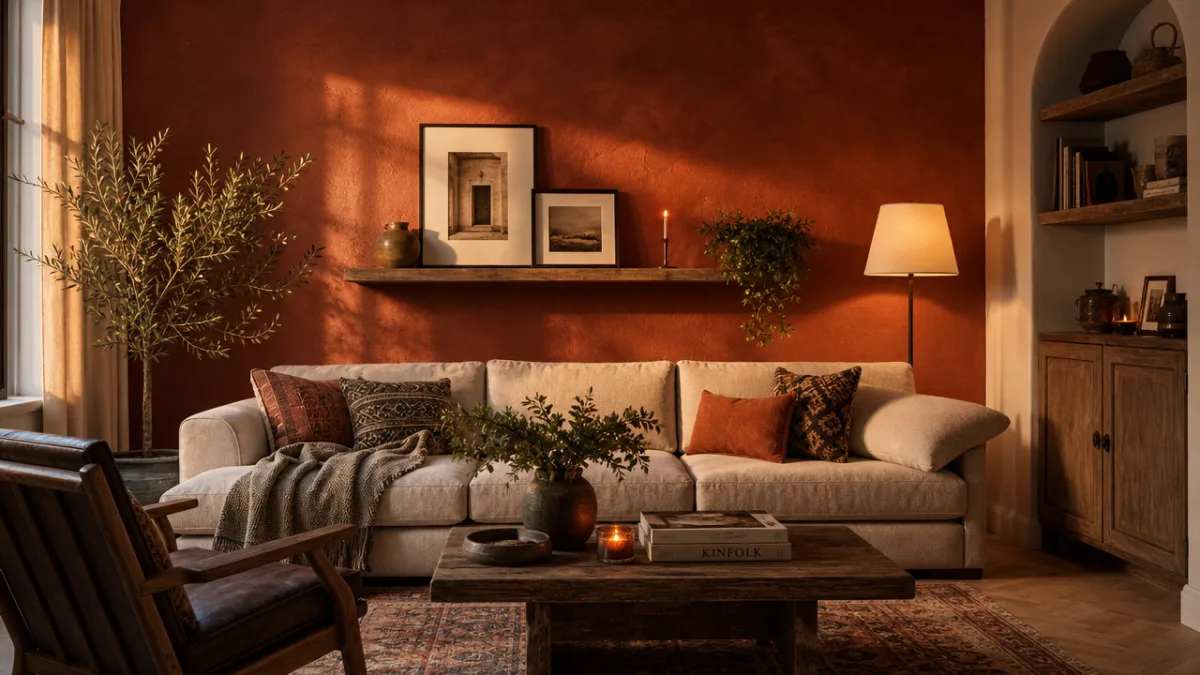
Your walls are literally the backdrop for everything else in your home, which means changing them is one of the highest-impact moves you can make without tearing anything down. And the good news? You don’t need a professional or a huge budget to do it. A single accent wall in a deep, moody color — forest green, dusty plum, terracotta — can completely change the feeling of a room. Most paint brands now sell peel-and-stick sample swatches so you can test colors in your actual space before committing to a full gallon, which is absolutely worth the few dollars it costs.
If you want to go beyond solid paint, DIY wall treatments have gotten incredibly accessible. Limewash paint creates a soft, chalky, layered finish that looks like old European plaster walls, and total beginners can pull it off with just a brush and a damp cloth. Painter’s tape opens up a world of geometric options — color-blocked panels, herringbone stripes, arched shapes, you name it — if you’re patient and reasonably steady-handed. Peel-and-stick wallpaper has also come a long way; today’s options have realistic textures and sophisticated patterns that hold up far better than the stuff from even a few years ago.
For anyone who wants more architectural character without making permanent changes, wall molding kits and wainscoting panels from most home improvement stores are a fantastic DIY option. You can apply them in grids, classic chair-rail configurations, or arched shapes to get the kind of built-in detail you’d expect in a high-end interior. Paint the molding the same color as the wall for a tonal, textural effect, or go two-tone for something more traditional. Either way, it adds a level of craftsmanship that makes a room feel significantly more finished and considered.
Transforming Furniture with Paint and Texture
Learning to turn secondhand or outdated furniture into something that looks custom-made is one of the most satisfying — and budget-friendly — skills you can pick up as a DIYer. Chalk paint especially has been a game-changer for home decorators because it sticks to almost anything with minimal prep, dries fast, and can be sanded and waxed to look anywhere from rustic farmhouse to polished antique. A beat-up dresser from a garage sale for twenty bucks can genuinely become the focal point of a bedroom after a weekend of painting, fresh hardware, and a little light distressing along the edges.
Hardware swaps are criminally underrated — and honestly, they might have the best return on investment of anything in furniture transformation. Swapping out generic brass or chrome pulls for sculptural ceramic knobs, matte black handles, or handmade rattan pulls takes just a few minutes per drawer and costs a fraction of what new furniture would. The same principle works for upholstered pieces too. Dining chairs with fabric that’s aged badly can look completely reborn with a yard of new material and a basic staple gun — it’s absolutely within reach for first-timers who are willing to watch a couple of instructional videos first.
There’s also a whole world of textural treatments to explore. Limewash and mineral paint can give wooden surfaces a beautiful, time-worn quality. Decoupage with decorative paper, fabric, or even pressed botanicals can turn a plain table surface into a real conversation piece. And cane webbing, which has had a massive design revival lately, can be inserted into routed cabinet door frames to nail that beloved Parisian rattan look. Put these techniques together and you end up with furniture that’s genuinely one-of-a-kind — far more interesting than anything you could buy off a showroom floor.
Curating Styled Vignettes and Shelf Displays
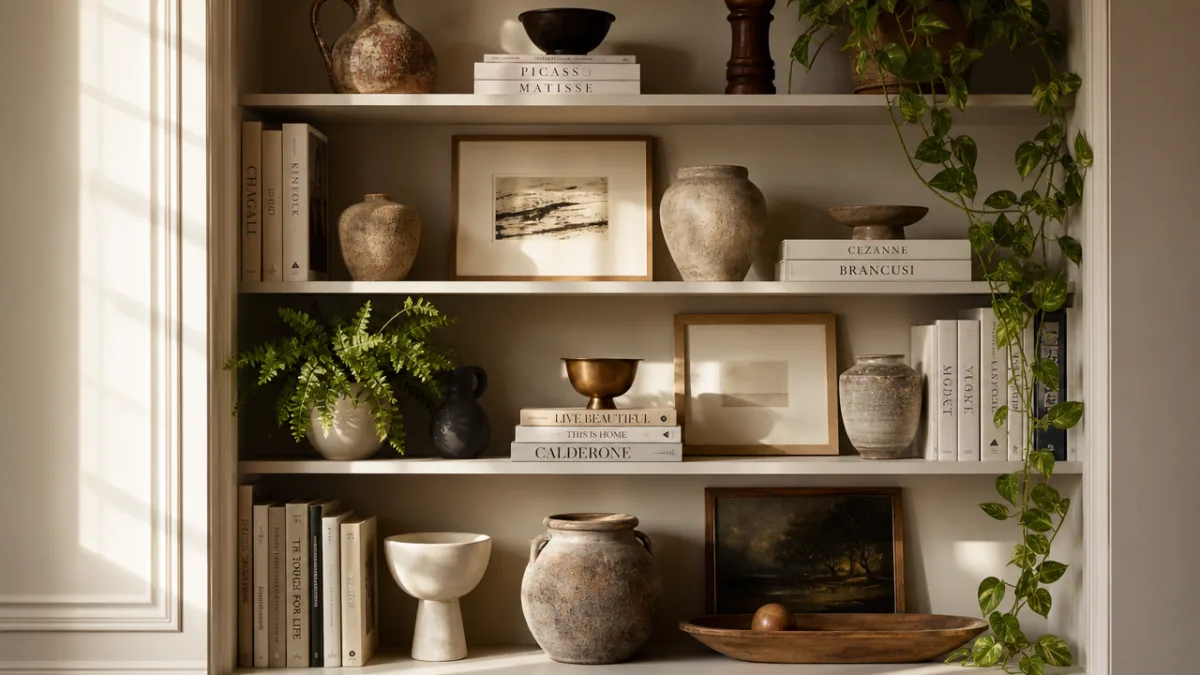
Vignettes — those carefully arranged little groupings of objects you see in every interior design photo — are one of the most powerful tools in a DIY decorator’s toolkit, and they’re more achievable than they look. The concept behind a good one is pretty simple: vary the heights, vary the textures, and build a little visual story with a clear focal point. A well-styled shelf might have a tall ceramic vase, a short stack of art books, a trailing plant, a sculptural candle holder, and a single framed photo — each piece contributing something without the whole thing feeling cluttered. Restraint is the key. Every object should earn its spot.
When you’re building a shelf display, designers swear by odd numbers — group things in threes or fives rather than symmetrical pairs, which can feel a bit stiff and predictable. It also helps to think of your shelf almost like a painting, with foreground, middle ground, and background. Larger, darker, or heavier pieces anchor the back, while smaller, more delicate things layer in front to create depth. One trick that always looks current: lean artwork against the wall instead of hanging it. It gives a casual, gallery-like quality that feels lived-in rather than overly staged.
The best part about styling is that it’s never really finished, and that’s actually a feature, not a bug. Swap dried grasses for eucalyptus sprigs in spring, bring in warm amber candles as autumn rolls around, or just rotate things from other rooms when you want a fresh perspective without spending anything. Keeping a small box of “extra” decorative objects you love but aren’t currently using means you always have something to pull from when a corner needs refreshing. It’s a low-pressure, endlessly enjoyable part of DIY decorating.
Lighting as a Design Tool
Nothing transforms a room’s atmosphere quite like lighting, and yet it’s consistently one of the most overlooked areas in DIY home design. When a space feels flat or vaguely uninviting, nine times out of ten it’s because the whole room is relying on a single overhead light. That kind of even, shadowless illumination flattens everything out and strips away warmth and depth. The fix is layering — floor lamps, table lamps, wall sconces, candles — multiple sources at different heights that together create an atmosphere that feels intimate and genuinely beautiful, day or night.
Swapping out a builder-grade light fixture is one of those afternoon projects that delivers results way out of proportion to the effort. Pendant lights, cage sconces, and rattan or paper lantern shades are easy to find at accessible price points and can completely shift the personality of a room. If you’re renting and can’t touch the wiring, plug-in wall sconces with fabric-wrapped cords have become a really stylish solution — hang them on a nail, plug them in, and they’re nearly indistinguishable from hardwired fixtures. Dimmer switches, where you’re allowed to install them, are another small change with a surprisingly big payoff.
Beyond fixtures, bulb color temperature matters more than most people realize. Warm white bulbs in the 2700K to 3000K range are almost universally flattering and create the golden, relaxed glow that characterizes well-designed, welcoming spaces. Cooler bulbs above 4000K can feel a bit clinical in living areas, though they work well in kitchens and home offices where you need sharper task lighting. And don’t underestimate candles — real flame or quality flameless varieties — which add a flickering warmth that no light bulb can quite match. They’re one of the easiest and most affordable ways to make a regular evening at home feel noticeably better.
Bringing Nature Indoors with Plants and Organic Materials
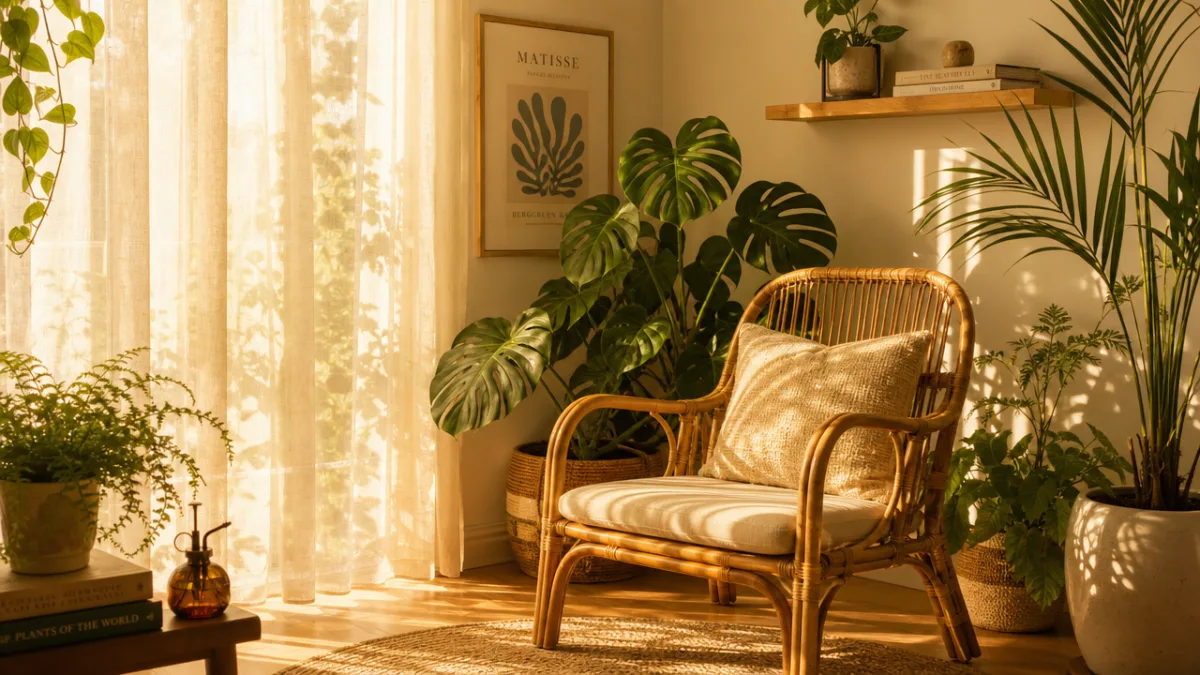
The biophilic design movement — built around our deep, innate connection to the natural world — has had a huge influence on contemporary interiors, and honestly, it makes a lot of sense. Bringing living plants, natural fibers, raw wood, stone textures, and organic shapes into your home doesn’t just look good; research consistently shows these elements reduce stress, improve air quality, and make people feel better in a space. Even something as small as a single thriving plant on a windowsill or a jute rug on a hardwood floor introduces a quality of aliveness that manufactured objects just can’t replicate.
If you’re someone who worries about keeping plants alive, take heart — the world of low-maintenance houseplants is vast and genuinely forgiving. Pothos, snake plants, ZZ plants, and cast iron plants are famously hard to kill and handle a wide range of light conditions. Statement plants like fiddle leaf figs, bird of paradise, and olive trees add real architectural drama and are actually more manageable than their reputation suggests when they’re in the right spot. And if live plants feel like too much commitment, dried botanicals — pampas grass, dried citrus slices, eucalyptus bundles, pressed flowers under glass — give you all the texture and warmth of nature with zero upkeep.
Organic materials go way beyond plants and touch every category of furnishing and decor. Linen and cotton textiles, rattan and wicker furniture, raw-edge wooden shelves, handmade ceramic vessels, wool throws, stone candle holders — all of these bring a subtle irregularity and warmth that makes a space feel grounded and real rather than sterile. Mixing these organic textures with smoother, more refined surfaces like glazed tile, polished metal, or glass creates the kind of sophisticated contrast that shows up in the most compelling, enduring interiors. The goal isn’t a perfectly polished space — it’s a layered, breathing home that grows alongside the people living in it.
Pulling It All Together: Creating Flow and Cohesion
Even the most beautifully decorated individual rooms can feel disconnected if there’s no intentional work on the flow between them. Cohesion doesn’t mean everything has to match — it means there’s a conversation happening across rooms through shared elements. Maybe an accent color shows up in different forms throughout the house. Maybe a consistent flooring material ties an open-plan area together. Or maybe you’ve committed to a particular material palette that echoes from one room to the next. Think of your home as a curated collection rather than a series of separate spaces, and decisions about what belongs start to get a lot easier.
A practical framework a lot of designers use is the 60-30-10 color rule: roughly 60% of a space is a dominant neutral, 30% is a secondary color or texture, and 10% is a bold accent. Applied consistently across your home — with the dominant neutral shifting slightly room to room while the accent color stays constant — you get variety without visual chaos. It’s also worth giving real thought to your transition spaces. Hallways, stairwells, and entryways get neglected constantly, but they’re actually some of the most powerful spaces in a home for setting tone and building anticipation for what’s on the other side.
At the end of the day, the most chic and lasting home aesthetics are the ones that come together slowly and honestly — through accumulated decisions made with real care, not rushed renovations chasing a look you saw somewhere online. The most beautiful homes are almost never truly finished. They’re in a constant, thoughtful state of becoming, with objects picked up on travels, heirlooms mixed with thrift store finds, and imperfect walls that carry a little history. Give yourself permission to work slowly, make mistakes, and let your space develop over time. A home that grows with you is always more interesting — and more authentically chic — than one assembled overnight.
- Start with a mood board before making any purchases to ensure visual consistency across your space.
- Prioritize lighting by layering multiple sources at different heights for warmth and dimension.
- Transform before you replace — paint, new hardware, and fresh upholstery can reinvent existing furniture for a fraction of the cost of buying new.
- Incorporate organic materials like linen, rattan, ceramic, and living plants to add warmth and texture that manufactured objects lack.
- Style in odd numbers and vary height and texture when arranging shelf displays and tabletop vignettes.
- Respect the transition spaces in your home — hallways and entryways set the tone for everything beyond them.
- Let your home evolve rather than rushing toward a finished look; the most compelling spaces are layered over time.








What do you think?
It is nice to know your opinion. Leave a comment.