










“`html
Library Mood and Vibes: A Complete Guide to the Aesthetic That Has Captured Our Hearts
There’s something quietly magical about libraries that goes way beyond their job of storing books. For centuries, these spaces have held a special place in our collective imagination — they make us feel safe, curious, and somehow both cozy and expansive at the same time. The “library mood” aesthetic that’s taken over Pinterest and other social platforms isn’t really about decorating with bookshelves or carving out a reading nook in your bedroom. It’s about capturing a whole emotional atmosphere, a way of inhabiting a space that feels personal and timeless all at once.
“Library vibes” has become shorthand for a very specific kind of atmosphere that a lot of people find almost irresistibly appealing. It’s the smell of aged paper, the soft amber glow of a table lamp, the hushed feeling of a room that’s been given over entirely to knowledge and imagination, and that particular satisfaction of being surrounded by stories you haven’t read yet. Whether you’ve been a lifelong bookworm or you just love the look without doing much actual reading, the library mood taps into something real — this deep human desire for a sanctuary that feels like it belongs to your mind.
The History and Romance of the Library as a Space
Libraries have been around in some form for thousands of years, from the legendary Library of Alexandria to the grand reading rooms of Victorian institutions. But they’ve always been more than just storage for scrolls and documents — they were centers of intellectual life, places where scholars gathered to argue, create, and keep human knowledge alive across generations. That long history is a big part of why the romantic idea of the library still resonates so strongly today. The aesthetic has had millennia to accumulate meaning.
The private home library became a symbol of wealth, education, and good taste during the Renaissance and kept carrying that cultural weight well into the twentieth century. Think of Thomas Jefferson, who famously sold his personal library to form the foundation of the Library of Congress — the idea being that your books were essentially an extension of your mind and character. A library in a grand house wasn’t just a functional room; it was a statement about who you were, something visitors were meant to see and interpret.
What’s interesting about today’s enthusiasm for library aesthetics is that it takes all that rich history and democratizes it. You don’t need a Victorian manor or a thousand leather-bound volumes to get those library vibes in your home. The aesthetic has stretched to embrace cozy apartment reading corners, coffee shop atmospheres, and even digital spaces designed to evoke that same sense of warmth and intellectual engagement. What stays consistent across all of these is the emotional quality — that feeling that you’re in a place where your mind can roam freely and your spirit can actually rest.
Core Elements That Define Library Aesthetic
To really understand what creates authentic library mood, you have to look at the specific sensory and visual elements that define it. The most recognizable one is obviously books — but arranged in a way that communicates personal history and genuine use, not just decoration. Books with cracked spines, dog-eared pages, and pencil notes in the margins tell a story that perfectly staged, aesthetically sorted volumes just can’t. The library look values an honest, lived relationship with reading over curated perfection.
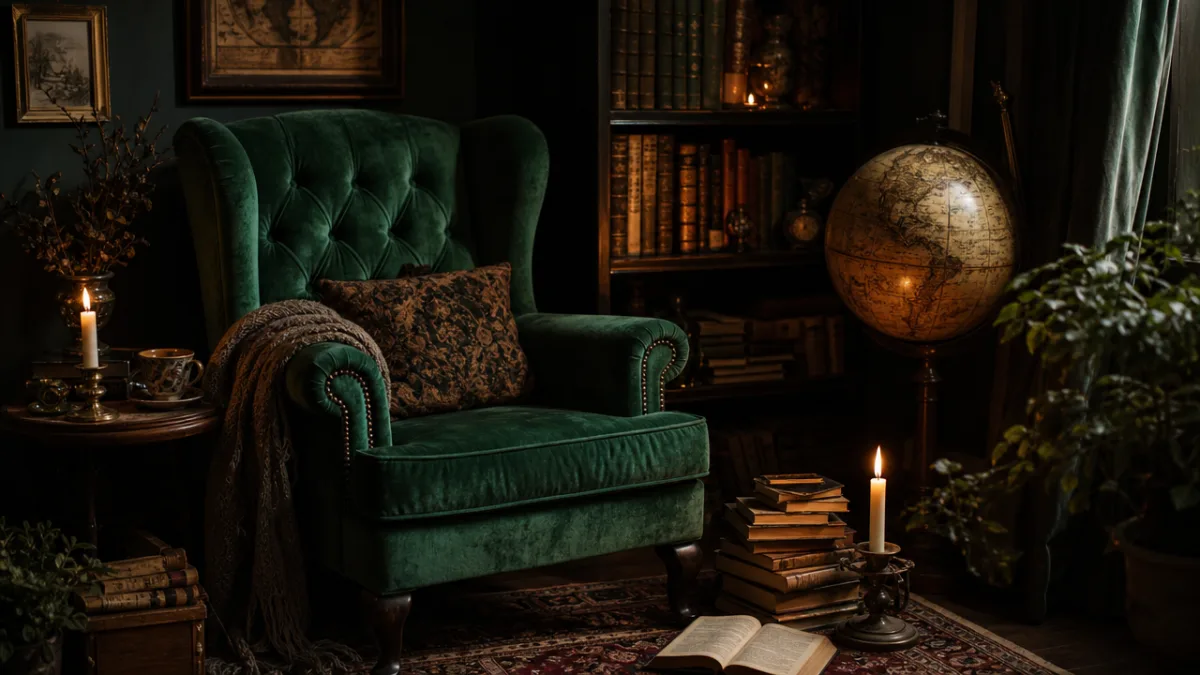
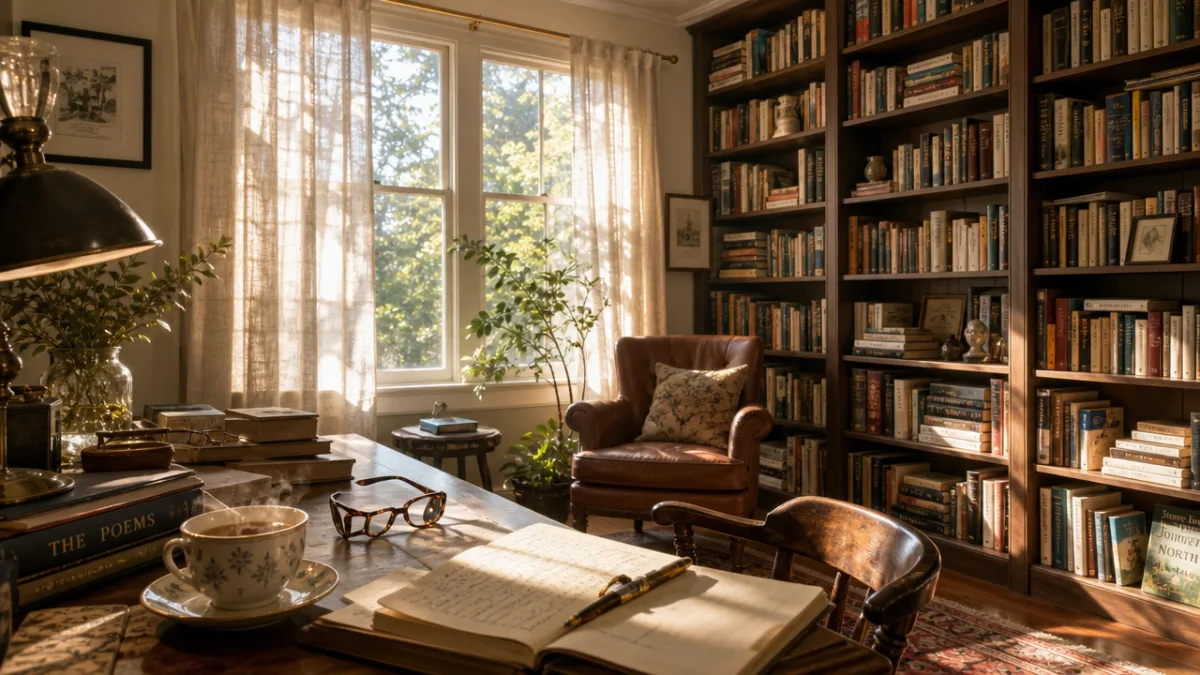
Lighting is absolutely everything when it comes to library vibes. The warm, amber-toned glow of table lamps, floor lamps with fabric shades, or even candles is what creates that characteristic atmosphere. It’s the total opposite of harsh overhead fluorescents — it’s intimate and directional, creating little pools of light against darker surrounding space that naturally pull you toward focus and introspection. Honestly, just changing your lighting can dramatically shift a room’s emotional register toward something that feels more library-like, even before you add a single book.
Texture is another defining feature that’s easy to overlook but makes a huge difference to how the space actually feels. Library aesthetic leans heavily on rich, varied textures that invite touch and suggest comfort and history. Here’s a look at the elements that tend to show up in spaces that really nail the library vibe:
- Worn leather armchairs or sofas with visible character from years of use
- Wooden furniture with visible grain and warmth, particularly darker finishes like walnut or mahogany
- Wool or cashmere throws folded over chair arms or draped across reading nooks
- Persian or Oriental rugs with intricate patterns that anchor a seating area
- Heavy curtains in deep jewel tones or muted earth colors that can be drawn against the outside world
- Aged paper and cardboard of book covers and spines in various sizes and states of preservation
All of these textures work together to make a space feel layered and accumulated over time — like the room has been slowly built up through years of thoughtful living rather than pulled together all at once from a single design scheme. That quality of apparent organic growth is a big part of why library aesthetics feel so different from other popular interior trends, which usually prioritize visual cohesion and simplicity above everything else.
Color Palettes and Atmosphere Creation
The color language of library aesthetic is pretty specific and consistent across its many variations. Dark, rich tones dominate — and deep greens are probably the most iconic choice. Forest green, hunter green, dark sage — they all appear constantly in library-inspired interiors, nodding to the color of classical reading room walls and traditional leather book bindings. These greens work so well because they manage to feel both sophisticated and natural, creating a backdrop that lets warm lighting and rich wood tones shine without competing with them.
Beyond green, the library palette borrows heavily from the colors of aged materials themselves. Warm browns ranging from honey to dark chocolate, burgundy and oxblood reds, midnight navy blues, and muted golds all show up throughout successful library-aesthetic spaces. These aren’t bright, saturated versions of those colors — they’re tones that suggest depth, age, and patina. The palette should always feel like it’s mellowed over time, the way the pages of a well-loved paperback turn from crisp white to warm cream through years of handling and sunlight.
Neutrals in the library aesthetic skew warm rather than cool. Where minimalist or Scandinavian-inspired interiors reach for crisp whites and light grays, library-mood spaces prefer off-whites with yellow or pink undertones, warm taupes, and aged linen tones. Even black, when it appears, tends to show up in softer forms — iron hardware on shelving, the cloth binding of a beautiful old volume. The overall effect of a well-done library color palette is enveloping warmth, a visual coziness that puts the mind in the right state for the inward journey of reading.
Furniture and Arrangement for Maximum Library Vibes
Furniture choices in library aesthetic are rooted in a pretty specific philosophy: comfort and purpose above everything. Every piece should look like it was chosen to support the act of reading and thinking. That means prioritizing certain kinds of seating above all others. The deep armchair is probably the single most important piece of furniture for authentic library mood — substantial enough to curl up in sideways with a book, with arms wide enough to hold a cup of tea and an open volume at the same time.
Arrangement matters enormously too, because library aesthetic is fundamentally about creating zones of intimate comfort within a larger room. Rather than pushing all the furniture against the walls in the conventional way, library arrangements tend to create conversational groupings or reading islands that feel separate from the broader space. A pair of armchairs near a lamp and a small side table, with a low bookshelf serving as a partial room divider, creates exactly the kind of contained, purposeful reading corner that defines the aesthetic at its best.
Library aesthetic also has a specific and interesting relationship with clutter — it sits somewhere between minimalism and maximalism. These spaces are full of objects and collections, but those objects tell a consistent story about intellectual life, curiosity, and accumulated experience. The specific items that tend to populate library-aesthetic spaces include:
- Antique globes or vintage maps that suggest a passion for geography and exploration
- Collections of objects gathered through travel or inherited from previous generations
- Framed botanical prints, astronomical charts, or other educational illustrations
- Writing implements displayed in ceramic or glass containers on desks
- Magnifying glasses, letter openers, and other tools of thoughtful correspondence
- Small sculptures or busts that reference classical art history
- Potted plants, particularly ferns, trailing ivy, or other greenery that softens hard surfaces
Each of these elements adds to the sense that the space belongs to someone with a particular kind of intellectual character — a person whose life is organized around curiosity and the pleasures of learning. Library mood is ultimately about personhood: a space that reflects a rich inner life made tangible through the objects and books that fill it.
The Psychological Appeal of Library Atmosphere
The enduring appeal of library aesthetics isn’t just about visual preference — there are real psychological reasons why these spaces make so many people feel safe, calm, and mentally engaged. Research in environmental psychology has consistently found that spaces with warm lighting, natural materials, and moderate sensory richness tend to lower anxiety and help with cognitive focus. Library aesthetic, almost by accident, checks a lot of those boxes — it incorporates many of the environmental features that help our nervous systems settle into a calmer, more receptive state.
There’s also a concept called “prospect and refuge,” developed by geographer Jay Appleton, that offers a useful lens for understanding why libraries feel so good. Appleton argued that humans are instinctively drawn to environments that offer both a broad view of the surrounding landscape and a protected, sheltered spot from which to observe it. A classic library reading nook — tucked into a bay window with views to the outside but sheltered by surrounding bookshelves and a high-backed chair — satisfies both of those primal needs at the same time. You can see without being seen, observe the world from a place of safety. It just feels right in a way that’s hard to fully articulate.
There’s also what psychologists sometimes call the “symbolic weight” of the objects around us. Books carry enormous symbolic significance across virtually every culture that has produced them. Being surrounded by them signals to your brain that you’re in a space associated with learning, safety, and human achievement. Even if you’re not actively reading, the visual presence of books functions as an environmental cue that activates certain mental associations — with patience, depth, and the slow pleasures of sustained attention. This might be exactly why library-aesthetic spaces feel so calming even to people who only encounter them through photographs on social media.
Bringing Library Vibes Into Your Own Space
Translating library aesthetic into a real living or working space is less about following a strict design formula and more about prioritizing atmosphere. The most important first step is dealing with your lighting. Swapping out overhead lights for warm-toned table lamps and floor lamps is the single highest-impact change you can make — it really is that significant. Look for lamps with fabric shades that diffuse light softly rather than glass or metal shades that cast harsher illumination. Warm-toned bulbs in the 2700 to 3000 Kelvin range will give you that amber glow that’s so central to the whole aesthetic.
Building a book collection that feels authentic and personally meaningful matters more than acquiring a lot of books quickly. Library vibes come from evidence of a genuine reading life, not books bought purely for visual effect. That said, there’s absolutely nothing wrong with supplementing your personal collection with secondhand books picked up for their beautiful or interesting covers and spines. Vintage paperbacks, old hardcovers with cloth bindings in muted colors, books in languages other than your own — they all add texture and visual interest without requiring you to have read every one of them.
Scent is an often-overlooked dimension of library atmosphere that can shift how a space feels more than you might expect. The smell of aged paper, leather, and wood is deeply embedded in many people’s sensory memory of libraries and reading rooms. Candles and diffusers with notes of sandalwood, cedar, patchouli, aged leather, or tea can help establish that olfactory layer of the aesthetic. Some companies now make candles specifically formulated to smell like old bookshops and libraries, though something as simple as a beeswax candle or sandalwood incense can get you most of the way there at a fraction of the cost.
Finally — and this is worth really taking to heart — library mood is a living aesthetic that develops over time. The most convincing library-inspired spaces are the ones that have been slowly accumulated through years of reading, collecting, and actual living. Don’t be discouraged if your space doesn’t immediately have the rich, layered quality of a Victorian reading room. Start with the core elements: warm lighting, comfortable seating, and a meaningful book collection. Let the rest grow organically from your actual intellectual life. The vibes will follow naturally when the space genuinely reflects who you are and what you love.
Library Aesthetic in Digital and Creative Life
Library mood’s influence stretches well beyond interior design into digital spaces and creative practices. Study-with-me videos on YouTube — where creators film themselves reading or working in beautifully atmospheric library-inspired settings — have racked up millions of views from people who aren’t there for instruction but for the ambient atmosphere the videos provide. These videos work essentially as portable library environments, letting people borrow the mood and focus of a library even when their own physical space isn’t cooperating.
The “dark academia” aesthetic that exploded in popularity in the early 2020s is one of the most fully developed cultural expressions of library mood. Dark academia takes the visual and atmospheric elements of library aesthetic and weaves them into a broader lifestyle identity that touches fashion, music, literature, and personal philosophy. Where library vibes as an interior aesthetic is relatively accessible and broadly welcoming, dark academia carries additional connotations — literary obsession, autumnal melancholy, a particular relationship to classical education and European intellectual tradition. The two aesthetics overlap a lot but aren’t identical, with library mood being the warmer and more universally approachable of the two.
For writers, illustrators, and other creative workers, library aesthetic has become an important part of how many people structure their creative practice and environment. There’s a growing recognition among creative professionals that where you work has a real influence on the quality and character of the work you produce. Cultivating a workspace that feels like a library — one that communicates to your own nervous system that this is a space for serious, sustained intellectual engagement — can genuinely help establish the mental conditions where deep creative work becomes possible. In that sense, library vibes aren’t just decorative. They’re functional: a designed environment that supports a particular mode of human consciousness and keeps the conditions right for creative work to happen.
“`








What do you think?
It is nice to know your opinion. Leave a comment.