










30+ Cool Basement Bar Ideas to Transform Your Space
Why a Basement Bar Is the Ultimate Home Upgrade
There’s something undeniably appealing about having your own private bar tucked beneath the rest of your home. A basement bar isn’t just a place to store bottles and pour drinks — it’s a destination, a gathering spot, and an extension of your personality all rolled into one. Whether you’re an entertainer at heart or simply someone who appreciates a well-crafted cocktail without leaving the house, building a basement bar is one of the most rewarding home improvement projects you can undertake. It adds function, atmosphere, and genuine value to your property in ways that few other renovations can match.
Unlike other rooms in your home, a basement bar operates by its own rules. You can push the design further, take more risks, and build something that truly feels like a retreat from the everyday world above. The ceiling can be lower, the lighting moodier, the decor more eclectic — and all of it works precisely because the basement is a world unto itself. From rustic speakeasy vibes to sleek modern minimalism, the range of styles available to you is as broad as your imagination and your budget will allow.
Beyond the aesthetics, there’s a deeply practical case for building a basement bar. It consolidates your entertaining space, keeps guests comfortable and contained during parties, and gives you a dedicated area that can be kept stocked and ready at all times. When the holidays arrive, when friends drop by unexpectedly, or when you simply want to wind down after a long week, having a well-designed bar downstairs means you’re always prepared to host without scrambling. The investment in building it right pays dividends in comfort and enjoyment for years to come.
Planning Your Basement Bar: Layouts and Spatial Considerations
Before you buy a single bottle or hang a single shelf, thoughtful planning is everything. The layout of your basement bar will determine how comfortably it functions for years, so it’s worth spending time sketching out the space, measuring carefully, and thinking through how people will actually move around and use it. A good bar layout accounts for the bartender’s workflow, the guests’ seating, and the traffic flow between the bar area and any adjacent lounge or game space. Getting this right from the start prevents costly renovations later and ensures the finished product feels intentional rather than improvised.
There are several classic layout options to consider depending on the shape and size of your basement. An L-shaped bar works beautifully in corners and naturally divides the bar from the seating area while giving the bartender plenty of counter space. A straight bar along one wall is ideal for narrower rooms and creates a clean, pub-like feel. A U-shaped bar is the most expansive option, providing abundant storage and counter space on three sides, and works best in a larger, more open basement. Island bars are a bold choice that place the bar freestanding in the center of the room, allowing guests to gather on all sides.
Don’t overlook the critical infrastructure decisions that need to be made early. Plumbing for a bar sink is far easier to plan during construction than to retrofit afterward, and having a dedicated sink with hot and cold water makes the bar dramatically more functional. Similarly, electrical planning for under-cabinet lighting, refrigeration, a dishwasher, and entertainment systems should be mapped out before walls are finished. HVAC considerations matter too — a basement that gets too warm or too humid will affect everything from the comfort of your guests to the quality of your stored wine and spirits. A little extra planning at this stage makes the entire project smoother and smarter.
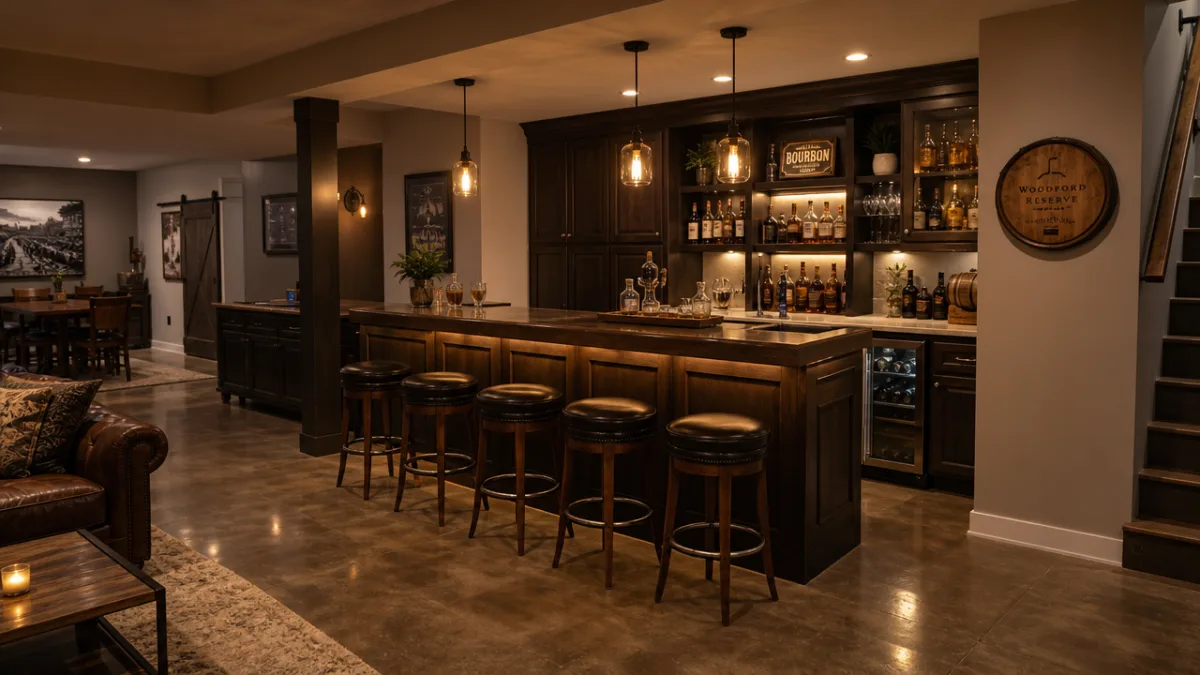
Design Styles to Inspire Your Basement Bar Vision
One of the most exciting parts of planning a basement bar is choosing a design aesthetic that speaks to you. The style you choose sets the tone for every subsequent decision, from materials and colors to lighting and decor. Some homeowners lean into the natural advantage of the basement — its underground, cave-like quality — and embrace darker, moodier aesthetics that feel like stepping into a private club. Others prefer to contradict the subterranean setting with bright, airy designs that feel surprisingly open and contemporary. There’s no wrong answer, only the style that genuinely excites you and reflects how you want to live.
Here are some of the most popular and enduring basement bar styles to consider:
- Industrial Chic: Exposed brick, steel pipe shelving, concrete countertops, and Edison bulb lighting create a raw, urban aesthetic that’s both stylish and effortlessly cool. This style works particularly well in older homes with natural brick or stone basement walls.
- Rustic Farmhouse: Reclaimed wood, barn doors, mason jar lighting, and warm earth tones give your bar a welcoming, unpretentious charm that invites people to linger and relax.
- Classic Pub: Dark stained wood, brass fixtures, stained glass panels, and vintage signage evoke the timeless atmosphere of a traditional Irish or English pub right in your own home.
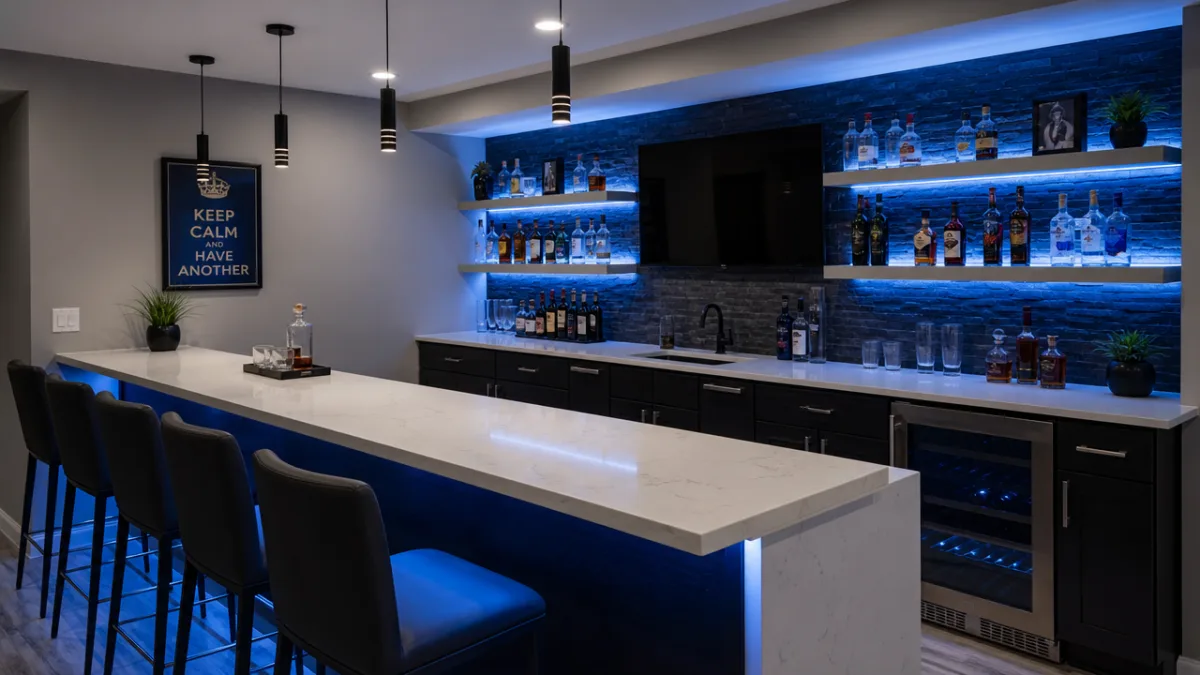
- Modern Minimalist: Clean lines, handle-free cabinetry, quartz or stone countertops, and integrated LED lighting create a sophisticated, contemporary space that feels fresh and uncluttered.
- Speakeasy or Art Deco: Black and gold accents, velvet upholstery, patterned tile, and dramatic lighting recreate the glamorous clandestine atmosphere of 1920s underground bars.
- Sports Bar: Multiple screens, team memorabilia, bar stools, neon signs, and durable surfaces make this style a paradise for the passionate sports fan who loves watching games with a crowd.
Whatever style you choose, the most memorable basement bars are those that commit fully to their aesthetic. Mixing too many styles can dilute the atmosphere and leave the space feeling unfocused. Pick a direction, gather visual inspiration through design resources and platforms, and then let that vision guide every decision from the countertop material to the style of glassware you display. Cohesion is what transforms a collection of nice individual elements into a truly immersive and impressive space.
Must-Have Features and Functional Elements
Once your style is settled, it’s time to think about the functional features that make a basement bar genuinely useful rather than merely decorative. The best home bars borrow smart ideas from commercial bars — the kind of thoughtful, workflow-driven design choices that make everything easier to use. A bar that looks beautiful but lacks practical storage, proper refrigeration, or adequate counter space will frustrate you every time you try to use it seriously. Think like a bartender when you plan the functional elements, and your guests will always be impressed by how smoothly everything runs.
The following features are considered essential by most serious home bar builders:
- Bar Sink: A dedicated sink with both hot and cold water is non-negotiable for a fully functional bar. It keeps ice, citrus, and tools clean and makes cleanup dramatically easier after entertaining.
- Refrigeration: At minimum, an undercounter beverage refrigerator keeps beer and mixers cold. A separate wine cooler with dual temperature zones is ideal if you’re a wine enthusiast. Ice makers are an increasingly popular addition.
- Adequate Storage: Think in three dimensions — open bottle display on shelves above, closed cabinetry for spirits and supplies below, and dedicated glassware storage that keeps glasses clean and within easy reach.
- Bar Top and Counter Space: Choose a surface material that is durable, attractive, and appropriate for your style. Popular options include butcher block, granite, quartz, concrete, and reclaimed wood with a clear sealant.
- Draft Beer System: For serious beer enthusiasts, a kegerator or built-in draft system is a dramatic upgrade that elevates the experience and impresses guests every time.
- Entertainment Integration: A television mounted for comfortable viewing, a sound system wired through the basement, and smart lighting control systems all contribute to an atmosphere that’s as enjoyable as any commercial venue.
Beyond the essentials, there are several premium upgrades worth considering if your budget allows. A dedicated cocktail station with a built-in muddler holder, cocktail shaker rack, and bitters shelf shows genuine commitment to the craft of mixology. A display for your bottle collection — properly lit with LED strip lighting to show off the colors of your spirits — becomes a design feature in itself. Heated flooring beneath tile or concrete is a luxury that basements particularly benefit from, making the space comfortable year-round. And a dedicated wine rack or cellar nook, even a modest one, adds both function and considerable visual drama to the overall design.

Lighting, Atmosphere, and the Details That Make the Difference
No single element transforms a basement bar more dramatically or cost-effectively than lighting. Light is mood, and in a bar setting, the right lighting can make an ordinary space feel extraordinary. The most successful basement bars use layered lighting — a combination of ambient, task, and accent lighting — that can be adjusted and dimmed based on the occasion. Bright overhead lighting might be appropriate when you’re restocking and cleaning, but when the party begins, you want the ability to dial everything down to a warm, inviting glow that makes your guests feel relaxed and welcome.
Specific lighting strategies that work brilliantly in basement bars include under-cabinet LED strips that illuminate the counter and create a floating effect, pendant lights hung over the bar top that add visual interest and focused warmth, and backlighting behind your spirit display shelves so that bottles become glowing, jewel-like focal points. Neon signs — whether vintage finds or custom-made pieces featuring a house cocktail or family name — add personality and a genuine bar atmosphere that guests immediately respond to. Recessed cans in the ceiling provide the baseline ambient light, while dimmer switches on all circuits give you complete control over the mood.
Beyond lighting, the finishing details are what separate a good basement bar from a truly great one. Bar stools at the right height for your counter, comfortable and durable in a material that fits your style, are an investment worth making thoughtfully. A dedicated chalkboard or vintage-style menu board where you can write out cocktail specials or beer selections adds charm and functionality. Coasters, bar mats, a well-stocked bitters collection displayed in a wooden rack, proper bar tools in a beautiful holder — these are the accumulated details that make the space feel like it was designed by someone who genuinely loves the craft. The basement bar that people remember is always the one where every detail was considered.
Budgeting, DIY Options, and Getting the Most Value
One of the most common concerns about building a basement bar is cost, and it’s a fair one — a fully built-out, professionally installed basement bar with all the premium features can represent a substantial investment. However, it’s important to understand that a basement bar doesn’t have to be expensive to be exceptional. With a clear budget, smart prioritization, and a willingness to do some of the work yourself, you can create a space that is genuinely impressive at a fraction of what a contractor-built installation might cost. The key is knowing where to spend and where to save without sacrificing quality where it truly matters.
The areas where quality investment pays off most clearly are the countertop, the cabinetry, and the plumbing. Skimping on your bar top means living with a surface that chips, stains, or warps — and since the bar top is what everyone touches and leans on constantly, it needs to be durable and beautiful. Similarly, well-built cabinetry with solid construction will outlast flat-pack alternatives by decades. Plumbing done properly from the start avoids leaks and water damage that become far more expensive to fix later. These are the structural and functional foundations of your bar, and they’re worth doing right the first time.
For those comfortable with DIY, there are many areas where personal effort can save significant money while producing excellent results. Painting or staining walls, installing floating shelves, laying peel-and-stick backsplash tile, hanging pendant lights, and building a simple bar back from purchased lumber are all manageable projects for someone with basic skills and patience. Secondhand bar stools from vintage stores or online marketplaces can be reupholstered or repainted to match your aesthetic at a fraction of the cost of new ones. Vintage beer signs, antique mirrors, and repurposed wood can all be sourced affordably and contribute tremendous character. The basement bar that carries your personality is often the one where your own hands were involved in building it.
Finishing Touches: Stocking Your Bar and Creating the Perfect Menu
A beautiful basement bar fully comes to life when it’s properly stocked and curated. Knowing how to build a well-rounded home bar collection is both an art and a practical skill. You don’t need every spirit on the market — in fact, the best home bars are carefully edited, featuring a considered selection that allows you to make a broad range of cocktails with quality ingredients rather than a sprawling collection of mediocre bottles. Start with the essential spirits — a good bourbon, a blended Scotch, a London dry gin, a silver tequila, a dark rum, and a quality vodka — and build from there according to your own preferences and the drinks you most enjoy making and serving.
Equally important is the collection of supporting ingredients and tools that allow you to execute cocktails properly. A well-stocked bar needs the following:
- A comprehensive bitters collection including Angostura, Peychaud’s, and orange bitters at minimum
- Vermouth — both dry and sweet — stored in the refrigerator after opening for freshness
- A selection of liqueurs including triple sec, Campari, Aperol, and at least one cream liqueur
- Fresh citrus — lemons, limes, and oranges — for squeezing and garnishing
- A variety of mixers including tonic water, ginger beer, club soda, and quality cola
- Simple syrup and specialty syrups like grenadine, orgeat, and honey syrup
- Proper bar tools: a cocktail shaker, mixing glass, bar spoon, jigger, muddler, hawthorne strainer, and channel knife
Finally, consider creating a signature cocktail menu for your bar — a small, curated list of three to five drinks that represent your taste and that you can make consistently and well. Having a house cocktail is one of the most charming and hospitable things a home bar can offer. It shows thoughtfulness, invites conversation, and gives your guests a genuine sense of the personality behind the bar. Name your drinks after family members, local landmarks, or inside jokes. Print the menu on card stock and display it in a small frame. These small gestures of hospitality are what transform a beautifully designed basement bar from a room into an experience — one that your guests will talk about long after the last round has been poured and the lights have been turned down low.








What do you think?
It is nice to know your opinion. Leave a comment.