










Beach House Coastal Candle: Bringing the Ocean Home
The Timeless Allure of Coastal Living
There’s something about the coast that just does something to you. The steady rhythm of waves, the salty air drifting through an open window, the way light moves across whitewashed walls — people have been chasing that feeling for generations, and honestly, it makes complete sense. Whether you’re a short walk from the beach or landlocked in the middle of a city, that pull toward something slower and more beautiful is about as universal as it gets.
Coastal style has also come a long way from the seashell collections and fishing net wall hangings of years past. Today it’s a much more considered look — natural textures, soft palettes, furniture that feels effortless without being sloppy. Linen curtains, a piece of driftwood, surfaces that feel worn in the best possible way. The whole vibe is about making a home feel like a real retreat, somewhere you actually want to be at the end of a long day.
What often gets overlooked in all of this, though, is scent. Smell is genuinely the most immediate thing about a space — guests register it before they even clock what’s on the walls. A beach house that looks the part but doesn’t smell like anything in particular is missing something crucial. That’s where a good coastal candle earns its place. The right one doesn’t just freshen a room; it conjures a whole mood, stirs up a memory, makes everyone in the space feel just a little more at ease.
What Makes a Coastal Candle Truly Exceptional
Here’s the thing about candles labeled “ocean” or “beach” — a lot of them are pretty disappointing. They smell synthetic and flat, more like a department store than an actual coastline at sunset. A really good coastal candle has layers to it, fragrance that shifts and develops over time the way your experience of the beach changes from early morning to late evening. The top notes might be bright and citrusy, giving way to something saltier and warmer, before finally settling into a woody, grounding base. That kind of complexity is what separates a candle you keep buying from one that just sits there.
The wax matters more than most people realize. Coconut wax and soy blends are what serious candle makers tend to reach for these days — they burn cleaner, hold fragrance better, and last longer than standard paraffin. The result is a scent that fills the room gradually and evenly rather than hitting you all at once and then fading. And the wick? A properly sized cotton wick keeps the flame steady and clean. These aren’t the kinds of details you notice right away, but they’re exactly what makes you reach for the same candle the next time you run out.
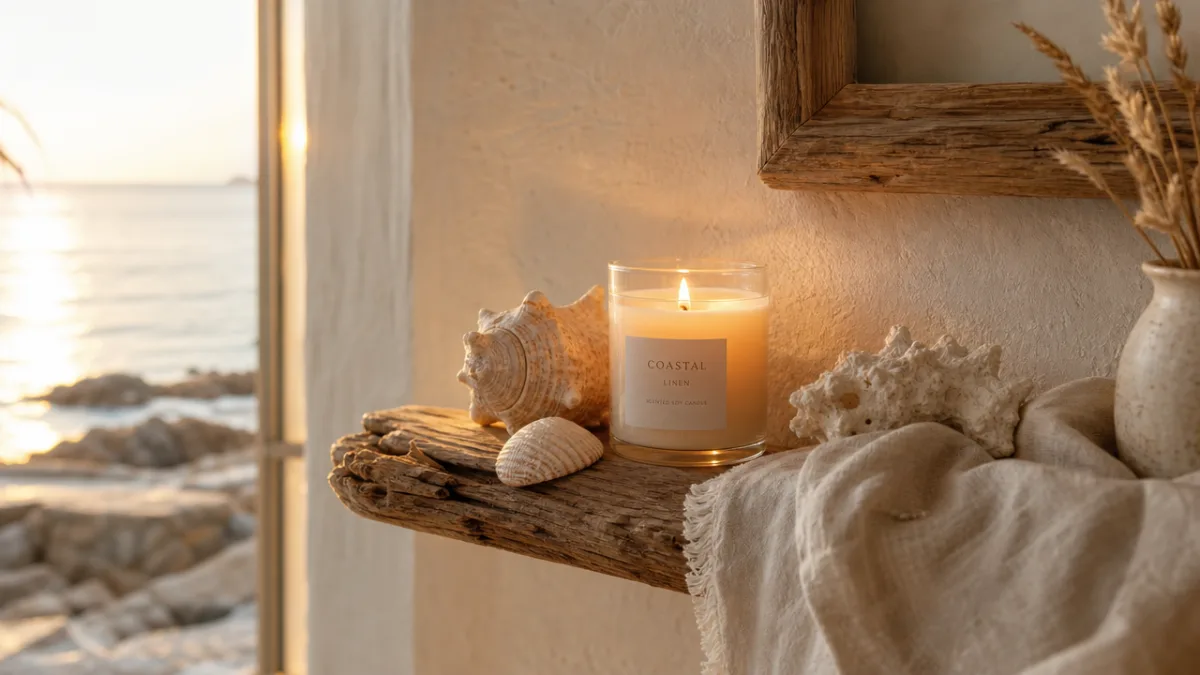
The vessel matters too, maybe more than you’d expect. The best coastal candles come in containers that look right at home on a weathered shelf or a marble bathroom counter — frosted glass, ceramic in sandy neutrals, sea-glass greens, soft matte finishes. A lot of artisan makers design their jars to be reused once the wax is gone, as a small planter or just a pretty object that sticks around. That attention to beauty and purpose beyond the burn is something you notice in the brands worth coming back to.
The Fragrance Palette of the Shore
Once you start understanding which fragrance notes make a coastal candle work, shopping for them becomes a lot more fun. Sea salt is the foundation — it delivers that briny, mineral quality that immediately puts you somewhere near open water. But sea salt on its own is a bit one-note. That’s where aquatic elements like marine accord and water lily come in, adding a sense of movement and air, like a breeze coming off the water rather than a static impression of the sea.
Citrus notes do a lot of the heavy lifting too. Bergamot, yuzu, fresh lemon — these bring brightness and that uplifting feeling of stepping out into coastal sunshine. They keep the fragrance from getting too heavy or too aquatic, which can happen quickly if a blend isn’t carefully balanced. When it works, the result smells genuinely alive, like something that shifts and breathes rather than sitting still. Floral notes like jasmine, neroli, and sea lavender add a softer romantic quality, calling to mind the wildflowers that grow in sandy dunes along the Atlantic or Mediterranean coast.
The base notes are what give everything else its staying power. Driftwood, sandalwood, musk, amber — these warmer, deeper elements mean the fragrance lingers even after you’ve blown the candle out. They also make coastal candles feel right in any season, not just summer. Honestly, a sea salt and driftwood candle burning on a grey February afternoon brings something genuinely comforting into a room, a little promise of warmer days ahead. That year-round quality is a big part of why coastal scents have such devoted fans.
Styling Your Space with Coastal Candles
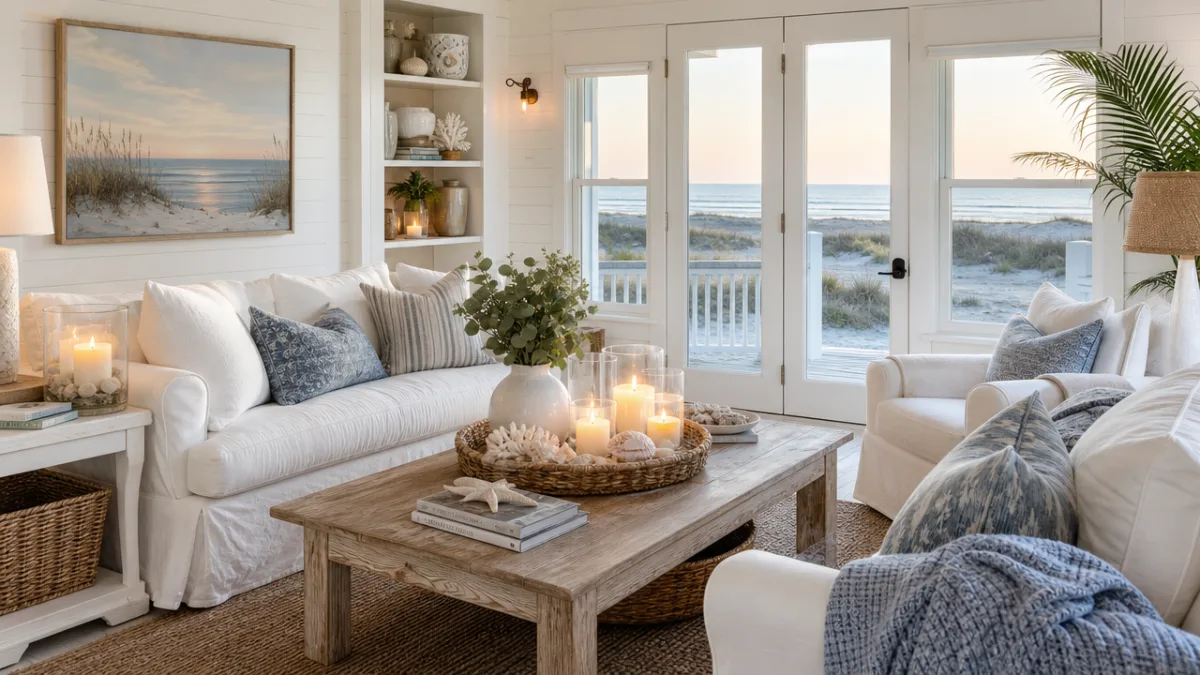
Placing a coastal candle well is worth thinking about rather than just setting it wherever there’s a free surface. The most beautiful coastal interiors use candles as deliberate focal points — somewhere they’ll actually be seen and experienced. A large pillar candle on a reclaimed wood coffee table, surrounded by a couple of smooth stones and a small piece of coral, becomes a little vignette that tells the whole coastal story in miniature. Grouping a few candles together at different heights and in different vessels gives a room real visual rhythm.
Different rooms call for different approaches. In the living room, a larger candle with a strong scent throw sets a relaxed, welcoming atmosphere whether you’re having people over or just unwinding. In the bathroom, a smaller candle next to a freestanding tub or arranged on a tray with bath salts and rolled towels turns an ordinary evening bath into something that actually feels indulgent. For the bedroom, reach for candles with softer, quieter coastal notes — less sharp citrus, more warm musk and sandalwood — the kind of scent that helps your brain understand it’s time to slow down.
If you’ve fallen for a few coastal candles and want to take things a step further, try layering scents through your home. Rather than using the same fragrance everywhere, think about creating a kind of scent journey from room to room. A bright, energizing citrus and sea salt blend in the entryway, something more complex and floral-aquatic in the main living areas, then a warm driftwood scent in the bedrooms. It makes the whole home feel considered and immersive in a way that’s hard to put your finger on but immediately noticeable.
The Art and Craft of Making Coastal Candles
There’s a real art to what goes into a great coastal candle, and the makers behind the best ones have usually put in a serious amount of time to get there. Developing a fragrance blend isn’t far off from the work of a perfumer — you have to understand how individual notes behave together, how they shift with heat and over time, how they interact with different waxes. A lot of coastal candle makers spend months testing blend after blend before landing on something that actually captures what they were going for. It’s slow, careful work, and you can feel the difference when it’s done well.
The actual process of making candles demands precision throughout. Temperature control is everything — wax poured at the wrong temperature won’t bond properly with fragrance oils, which leads to uneven scent throw or that frosty crystallization you sometimes see on the surface. The fragrance load has to be just right; too little and the candle is barely there, too much and it turns cloying and can throw off the burn. Wicks need to be centered perfectly before the wax sets, and in cooler weather the vessels often need to be pre-warmed to avoid adhesion problems. Every one of these details adds up, which is why professional makers develop very precise processes and stick to them batch after batch.
Small-batch production, which most artisan coastal candle makers prefer, has real advantages over anything made at scale. Smaller batches mean tighter quality control, more room to respond to seasonal changes, and the freedom to experiment with limited editions that give loyal customers something to look forward to. Many coastal candle brands build seasonal collections around this — a summer solstice blend that captures sunscreen and ocean spray, a late autumn version that leans into driftwood and woodsmoke — which turns buying a candle into something closer to an occasion. It’s that sense of a real relationship between maker and customer that keeps people coming back.
Caring for Your Coastal Candle
Even a genuinely great candle will let you down if you’re not caring for it properly, and the first burn is the most important one. Let a new candle burn long enough that the melt pool reaches all the way to the edges of the vessel before you put it out — this typically takes two to four hours depending on how wide the candle is. This is called memory burning, and skipping it on that first use causes the candle to tunnel straight down the center on every subsequent burn, wasting a significant amount of wax and cutting your candle’s life much shorter than it should be. A little patience upfront makes a real difference.
Wick trimming is the most commonly skipped step in candle care, which is a shame because it makes such a noticeable difference. Trim your wick to about a quarter inch before every single burn. A wick that’s too long produces a larger flame than you want, causes the candle to burn too fast and unevenly, generates soot, and can actually burn off the fragrance rather than letting it disperse properly. A small pair of wick trimmers — widely available and inexpensive — makes this quick and easy. Also keep the wax surface clean; wick trimmings that fall back in can act as extra wicks and create all kinds of unpredictable burning behavior.
A few more simple habits will get you the best performance and the longest life from any candle you buy. Burn on a stable, heat-resistant surface and keep it away from drafts, which cause uneven burns and excessive flickering. Keep candles out of direct sunlight — UV exposure breaks down fragrance and can discolor the wax. Don’t burn longer than four hours at a stretch, and stop when there’s about half an inch of wax left at the bottom; burning past that point can overheat the vessel. Follow these and you’ll get every last bit of fragrance and burn time the candle has to offer.
- Always trim the wick to one quarter inch before lighting to ensure a clean, stable flame and optimal scent throw.
- On the first burn, allow the melt pool to reach the full diameter of the vessel to prevent tunneling and wax waste.
- Keep candles away from drafts, direct sunlight, and flammable materials at all times for both safety and performance reasons.
- Do not burn a candle for more than four consecutive hours; allow the wax to cool and re-solidify between sessions.
- Stop burning when half an inch of wax remains to protect the vessel and prevent overheating of the surface beneath.
- Store unused candles in a cool, dark place with the lid on to preserve fragrance integrity and prevent dust accumulation.

Gifting Coastal Candles: A Gesture of Thoughtful Luxury
A well-chosen candle is one of those gifts that genuinely communicates that you put some thought in. A coastal candle especially carries a whole world with it — relaxation, natural beauty, a little sensory escape to somewhere sun-warm and peaceful. It works for almost any occasion: a housewarming gift that helps a new place start feeling like home, a birthday present that shows you actually know someone’s taste, a hostess gift that rises above the usual bottle of wine. The fact that a beautiful scent appeals across ages, genders, and personal styles makes it one of the more universally safe bets out there.
How you present a coastal candle gift can take it from nice to genuinely memorable. Pairing it with a few complementary pieces makes the whole thing feel curated rather than last-minute — a set of wick trimmers and a box of artisan matches, a linen pouch of sea salts alongside a room spray in the same fragrance family, or just a length of natural rope tied around the jar with a handwritten note. Small additions like these signal that you actually thought about it, and the coastal aesthetic — all natural textures and understated elegance — lends itself perfectly to this kind of simple, considered presentation.
When picking a coastal candle for someone else, it helps to think about how they actually live. Someone drawn to clean, minimalist spaces will probably love a simple white ceramic vessel with a fresh, uncomplicated sea salt and cucumber scent. A friend with a more romantic, bohemian sensibility might be better matched with a hand-poured candle in a warm amber jar and a complex floral-aquatic fragrance. Candle subscriptions from artisan coastal makers have also become a popular gift option — they extend the gesture over several months, delivering seasonal scents that keep the connection going long after the original occasion.
The growing enthusiasm around candles as gifts — and as personal rituals — says something real about how we’re thinking about our homes and our own wellbeing. We’re paying more attention to the environments we create around ourselves, and for good reason. A coastal candle isn’t just a pretty object or a small luxury. It’s a deliberate choice to bring a little more sensory beauty into daily life. Giving one to someone is, in its own quiet way, a genuinely caring act — an invitation to slow down, take a breath, and let the sound of imaginary waves do their thing.








What do you think?
It is nice to know your opinion. Leave a comment.