










20 Quick Home Upgrades That Deliver Big Results
Why Small Changes Create Dramatic Home Transformations
A lot of homeowners think that getting their home to look really good means tearing things apart, living in chaos for weeks, and spending a small fortune. But honestly? That’s rarely the case. Some of the best improvements you can make cost next to nothing, take an afternoon, and leave guests asking what you did differently. Once you realize that, your whole approach to home improvement changes.
There’s actually some interesting psychology behind why this works. Our brains are naturally drawn to contrast and freshness — we notice when something’s different, and we fill in the gaps. Swap out one light fixture or paint a single door, and your brain starts reading the whole room as updated. It’s kind of like how a new haircut makes you feel like a whole new person. That halo effect means you can get a lot of mileage out of a few well-chosen changes.
What follows is a tour through twenty specific upgrades, grouped by room, each picked because it punches well above its weight in terms of impact. Whether you’re getting ready to sell, just want to enjoy your home more day-to-day, or you’re trying to impress company without maxing out your credit card, these are the projects worth your time. And most of them? No contractor needed.
Setting a Realistic Budget and Timeline
Before you start buying things and rearranging your weekends, take thirty minutes to put together a simple list — each project, what it might cost, and how long it’ll realistically take. It sounds boring, but it saves you from the classic trap of running out of budget mid-project. For most of the upgrades here, you’re looking at somewhere between fifty and three hundred dollars and anywhere from a couple of hours to a full weekend day.
It also helps to think about priority, not just preference. Kitchens and bathrooms almost always give you the best bang for your buck, with the main bedroom and living area close behind. Entry foyers might seem minor given their size, but they’re the first thing anyone sees when they walk through your door — that first impression carries a lot of weight. If you rank projects by impact rather than by what you’re most excited about, your time and money will go a lot further.
Kitchen Upgrades That Transform the Heart of Your Home
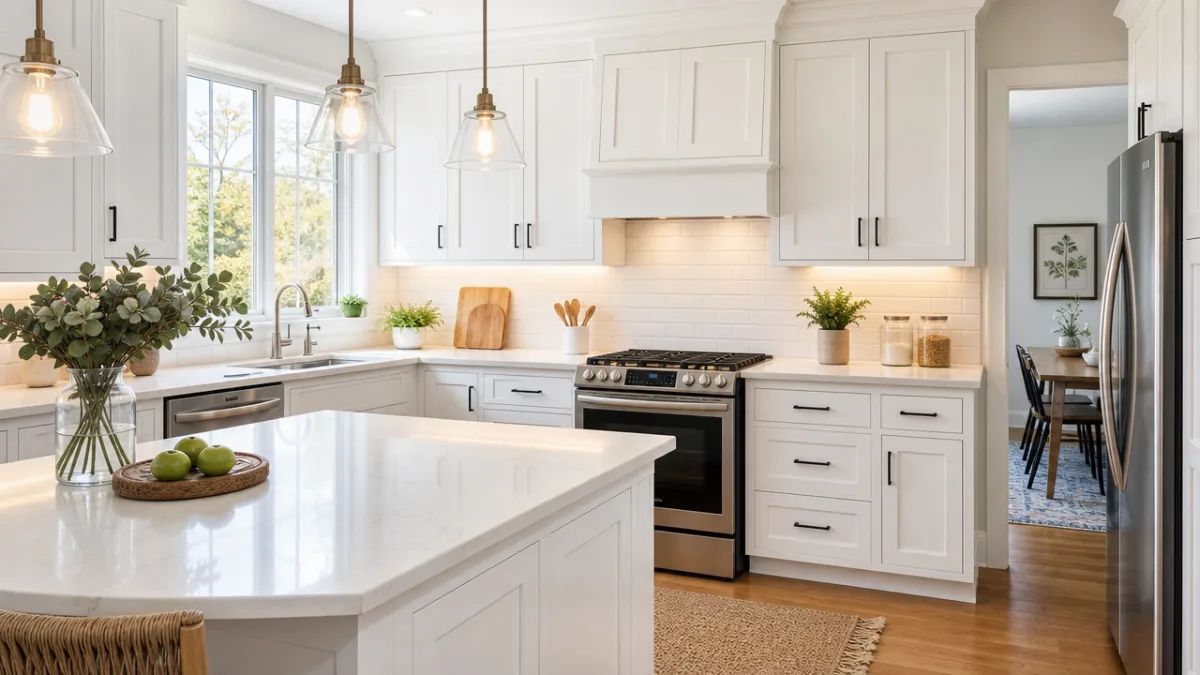
The kitchen is where most of us spend a huge chunk of our time at home, so it makes sense to start here. One of the easiest wins you can score without touching a single cabinet box is swapping out the hardware. Pulls and knobs are basically the kitchen’s jewelry — and trading tired brass or plastic for brushed nickel, matte black, or antique bronze takes a screwdriver and maybe two hours. The difference is honestly a little shocking, especially when the cabinets themselves are in decent shape.
A backsplash update is another move that delivers way more visual impact than the price tag suggests. Peel-and-stick tile has come a long way, and a lot of today’s options are nearly indistinguishable from real ceramic or subway tile unless you’re looking closely. Even just tiling the stretch of wall between your counter and upper cabinets behind the range can completely change the feel of the room. It signals that the kitchen was designed, not just assembled and left alone.
Under-cabinet lighting is one of those upgrades that improves both how the kitchen looks and how it actually functions — which makes it especially worth doing. LED strip lights or plug-in puck lights under your upper cabinets light up your work surface, making cooking easier and safer, while also adding a warm, layered glow that makes the whole space feel more intentional. Most systems are plug-in, so there’s no electrical work involved — the cord just routes discreetly inside the cabinet and plugs into an existing outlet.
Painting Cabinets for a Full Kitchen Refresh
If your cabinets are structurally fine but look like they belong in a different decade, painting them is one of the highest-impact things you can do in a kitchen. It takes more time and prep than swapping hardware, but the results can be genuinely jaw-dropping. The secret to making it look professional is almost entirely in the preparation: degrease thoroughly, sand so the primer has something to grip, and use a quality bonding primer before any color goes on. Skipping those steps is why so many DIY cabinet paint jobs end up looking rough.
Color choice is worth thinking through carefully. Bright white is always a safe bet and works especially well in smaller or darker kitchens. But warmer tones like cream, sage green, navy, and charcoal have all become really popular for good reason — they give a kitchen personality that plain white sometimes doesn’t. If you’re selling, stick to neutrals. If you’re staying and want to actually love the space, pick something that excites you. You can always repaint, and a kitchen you enjoy spending time in is worth more than one that just looks good in listing photos.
Bathroom Upgrades With Outsized Visual Impact
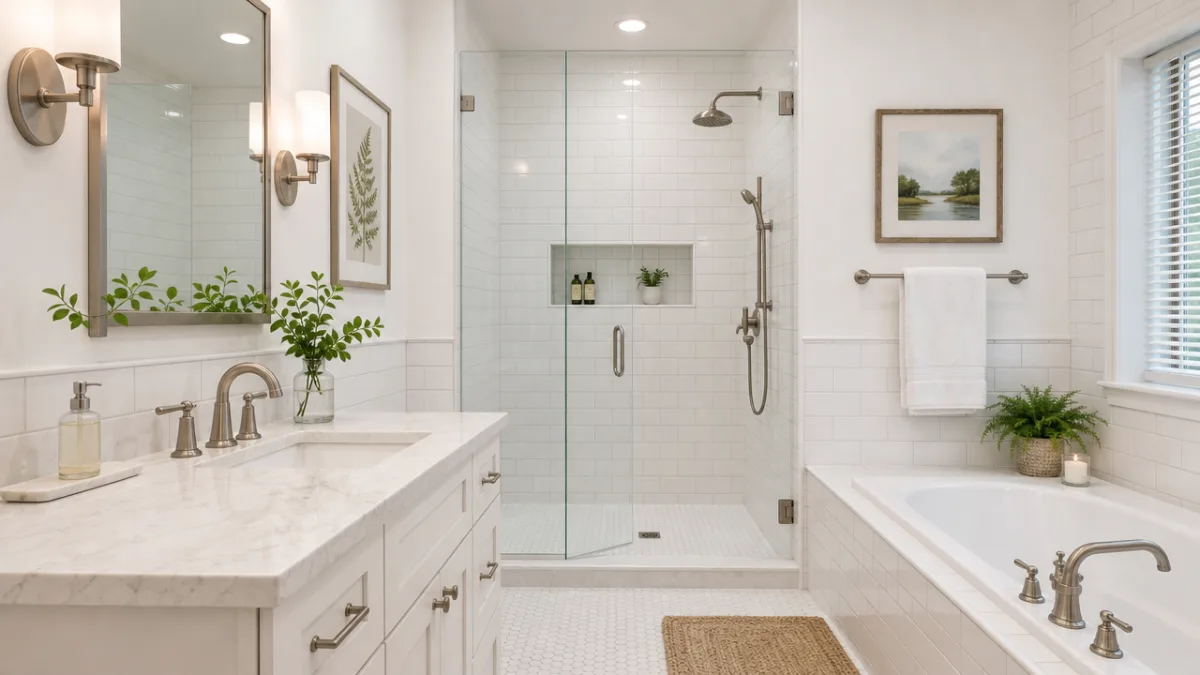
We start and end every single day in the bathroom, and its condition has a real effect on our mood — more than most people realize. The good news is that bathrooms are also surprisingly easy to transform without a full gut renovation. Replacing the vanity faucet is one of the simplest starting points. A stained, tarnished fixture immediately dates an entire bathroom, while a fresh one in a modern finish makes the whole room look newer, even on a tight budget. Most faucet swaps take about an hour and don’t require anything beyond basic plumbing tools.
Mirrors are another area where a small change goes a long way. The builder-grade frameless mirrors that come standard in most homes get the job done, but they don’t add anything. Swap one out for a framed mirror, a decorative round or oval shape, or a vintage-inspired pharmacy mirror, and suddenly the bathroom has actual character. If you’re not ready to replace the mirror entirely, a frame kit from any home improvement store achieves a similar effect for much less money and goes up in under two hours.
Grout cleaning and recoloring might be the least glamorous upgrade on this list, but the before-and-after is genuinely startling — so much so that people often assume the tile itself has been replaced. Years of humidity and use turn grout dark and dingy, making even clean tile look neglected. A good grout cleaner followed by a colorant pen or sealer can bring it back to near-new condition. It takes patience and time on your hands and knees, but the materials cost less than thirty dollars and the payoff is huge.
Upgrading Fixtures and Accessories for Cohesion
One of the most common bathroom mistakes is ending up with metal finishes that don’t match each other — chrome towel bars, brushed nickel faucet, oil-rubbed bronze toilet paper holder, polished brass light fixture. Individually, each might be fine. Together, they create a visual jumble that no amount of nice towels can fix. Swapping everything over to a single consistent finish, even with budget-friendly replacements, immediately makes the room feel pulled together and intentional.
And don’t underestimate your shower curtain. A limp, mildewed curtain on mismatched rings drags the whole room down. Replace it with something crisp — a linen-look white or warm neutral works beautifully — hung on sturdy rings in a finish that matches your other hardware, and the bathroom takes on a genuinely elegant feel. One extra tip: hang the rod as high as you reasonably can. It draws the eye up and makes the entire space feel taller and more open than it actually is.
Living Room and Entry Upgrades That Make Lasting Impressions
The living room is where your home’s personality really comes through, and the entry foyer sets the tone before anyone even gets that far. Both spaces respond really well to targeted upgrades. One of the most consistently overlooked living room changes is adding a large area rug — and by large, I mean large enough that the front legs of all your main furniture can sit on it. A rug that size anchors the seating arrangement, adds warmth and texture, and signals that the room was designed rather than just furnished.
Lighting makes an enormous difference in living rooms, far more than most people expect. If your room runs off a single ceiling fixture on a wall switch, the fastest upgrade is adding floor lamps and table lamps that you can use instead of or alongside that overhead light. Warm bulbs in the 2700–3000 Kelvin range give you that golden, inviting glow you see in well-designed interiors. Cool white bulbs above 4000K tend to feel clinical — they make a space feel like a waiting room no matter how nicely it’s decorated.
The entry foyer has an impact-per-square-foot that beats every other area of the home. A console table, a mirror above it, decent lighting, and somewhere to sit when you’re taking off your shoes — that’s the functional and visual core of a great entry. If yours is missing any of those pieces, fixing that is one of the best uses of your upgrade budget. Even a narrow hallway can fit a slim console and a round mirror, and the transformation from blank wall to welcoming entry is genuinely remarkable.
Crown Molding, Trim, and Architectural Details
Adding trim details is one of the upgrades that most reliably makes a home feel custom rather than cookie-cutter. Crown molding along the ceiling, chair rail at mid-wall height, picture rail — these are all relatively inexpensive materials you can pick up at any home center, and a patient DIYer with a miter saw and nail gun can install them over a weekend. The real trick is in the finishing: careful caulking of every joint, followed by a quality coat of paint. That’s what separates trim that looks professional from trim that looks DIY.
Baseboards and window casings are easy to overlook, but they have an outsized cumulative effect on how a room feels. Thin, flat baseboards read as cheap and unfinished. Tall, detailed baseboards give a room a sense of permanence and care. Swapping them out for something taller and more substantial is a weekend project, and when you pair it with fresh wall paint and freshly painted trim, people often assume you’ve done a complete renovation. It’s one of those changes that’s hard to put your finger on, but impossible to ignore.
Outdoor and Curb Appeal Upgrades That Elevate Your Entire Property
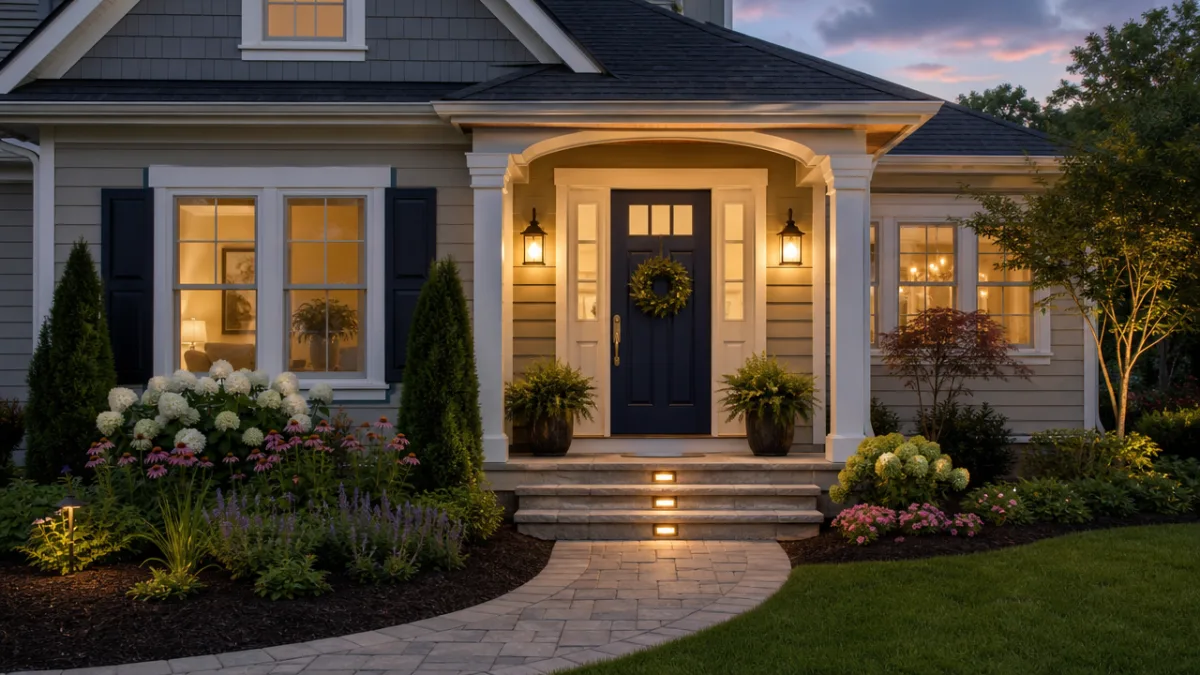
The outside of your home gets judged in the first few seconds of approach, and that snap impression colors everything a person thinks about the inside. One of the fastest ways to change it is painting or replacing your front door. Real estate pros consistently rank the front door among the top three curb appeal factors, and a door in a confident color — deep red, classic black, navy, forest green — communicates personality and care in a way a weathered beige door simply can’t. If the door itself is in rough shape, replacing it outright is still money well spent for the impression it creates.
Exterior lighting is another upgrade that homeowners put off for no good reason. Flanking porch lights, pathway lighting, uplighting for trees or architectural features — all of it adds to your home’s nighttime curb appeal, which matters more than people think, both for residents coming home after dark and for the impression it leaves on visitors and neighbors. Most exterior fixtures can be swapped in under an hour with nothing more than basic wire connections, and the selection of attractive, weather-resistant options at retail stores has gotten really good in recent years.
Landscaping doesn’t have to mean hiring a crew or spending a lot of money. A clean, consistent edging line along all your lawn-garden borders instantly makes the yard look maintained. Fresh mulch — applied two to three inches deep in a uniform layer — makes plants look more intentional and vibrant while also cutting down on weeds. Those two things together, plus pulling out anything dead or overgrown, can completely transform how your home looks from the street, often in a single Saturday morning for under a hundred dollars in materials.
Quick Wins: A Summary of the Top Upgrades by Category
Looking back across all twenty upgrades, a clear pattern emerges about what makes some projects more worth doing than others. The ones that consistently deliver the biggest results share three things: they address elements people see constantly, they fix something that was quietly dragging the space down, and they create a sense of freshness that makes everything around them look better too. Keep those principles in mind when planning your own projects, and you’ll naturally gravitate toward changes that actually improve your daily life rather than ones that just seem like a good idea at the time.
Here is a consolidated list of the twenty quick upgrades covered throughout this article, organized by the room or area they address:
- Kitchen: Replace cabinet hardware, install under-cabinet lighting, update the backsplash, paint cabinet fronts, and add a statement pendant light above the island or sink.
- Bathroom: Replace the vanity faucet, frame or replace the mirror, regrout or recolor grout lines, match all metal hardware finishes, and upgrade the shower curtain and rod.
- Living Room and Entry: Add a properly sized area rug, layer the lighting with floor and table lamps, style the entry foyer with a console and mirror, add crown molding, and upgrade baseboards to a taller profile.
- Exterior: Paint or replace the front door, upgrade exterior light fixtures, edge all garden borders, apply fresh mulch, and add pathway or uplighting for nighttime curb appeal.
The cumulative effect of knocking out even half of these upgrades is hard to put into words. People who knew your home before will feel the difference the moment they walk in, even if they can’t quite say what changed — which is exactly what good, thoughtful upgrading looks like. Your home should feel like the best version of itself: functional, beautiful, and clearly cared for. With the projects in this guide, that’s well within reach for any homeowner ready to put in a few focused weekends and a reasonable budget.








What do you think?
It is nice to know your opinion. Leave a comment.