










15 Cute Halloween Crafts for Kids to Make This Fall
Why Halloween Crafts Are a Fall Family Tradition Worth Starting
There is something genuinely magical about sitting around a kitchen table covered in orange and black construction paper, surrounded by the smell of glue sticks and the excited chatter of children deciding whether their pumpkin should look scary or silly. Halloween crafts for kids occupy a special place in the calendar of family activities because they combine creativity, seasonal excitement, and hands-on skill development in a way that few other activities can match. The weeks leading up to Halloween are filled with anticipation, and channeling that energy into making something beautiful or spooky gives children a productive and joyful outlet.
Beyond the fun of it, crafting together during the fall season builds memories that children carry with them for years. Parents often recall the specific projects they made as children — the paper bag ghosts, the hand-print spiders, the toilet-roll witches — with a warmth that speaks to how deeply these simple activities embed themselves in our sense of childhood. When you sit down with your kids to make Halloween crafts, you are not just passing an afternoon; you are building the texture of family life and giving children a sense of seasonal rhythm that roots them in time and place.
Halloween crafts also serve a wonderfully practical purpose. Many of the projects children create can be used as home decorations, turning their artwork into something the whole family displays with pride. A garland of paper bats strung across the mantle, a painted rock jack-o’-lantern on the front porch, or a yarn-wrapped mummy hanging on the bedroom door all give kids the powerful experience of seeing their own creations contribute to the home environment. This sense of contribution and visible accomplishment is enormously good for a child’s developing confidence and creative identity.
Essential Supplies to Have on Hand Before You Begin
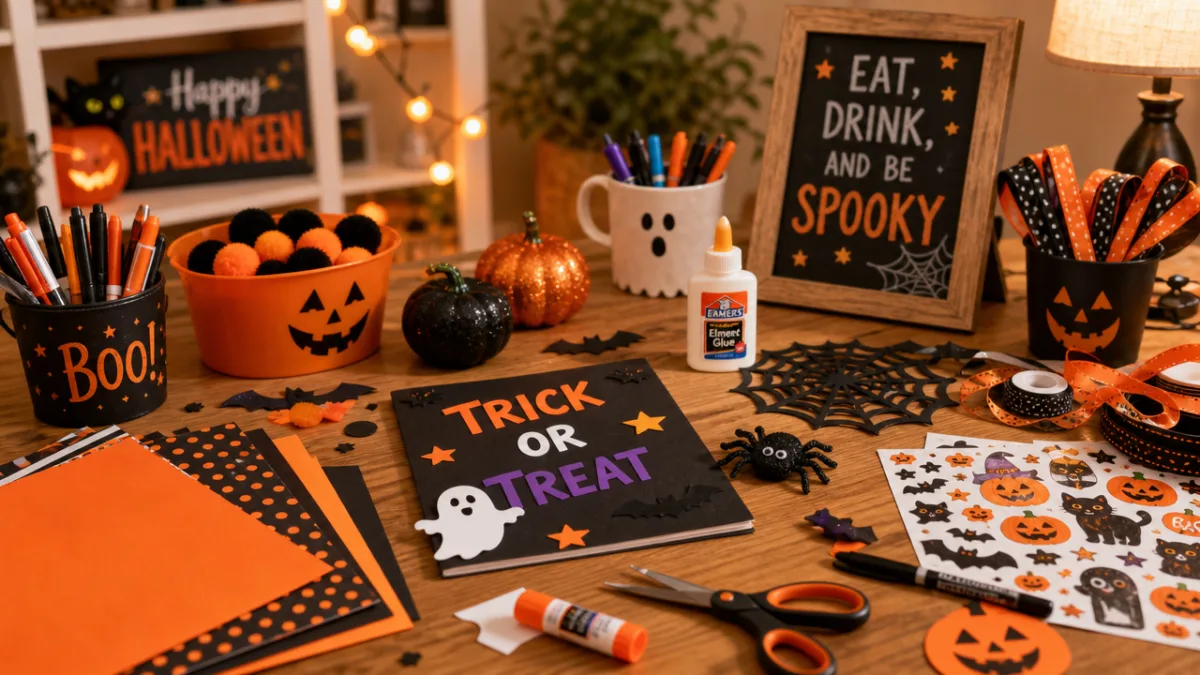
One of the best things about Halloween crafts for kids is that most of them rely on simple, inexpensive supplies that you likely already have around the house or can find at any dollar store. Before you dive into a crafting session, it pays to gather everything you might need so that the creative flow is never interrupted by a search for scissors or a missing bottle of glue. A well-stocked craft basket makes the difference between a smooth, enjoyable afternoon and a frustrating stop-and-start experience that leaves everyone a little deflated.
The foundation of any good Halloween craft supply kit includes construction paper in black, orange, white, purple, and green. These are the colors of the season, and having them readily available opens up dozens of project possibilities without requiring specialized purchases. Beyond paper, stock up on child-safe scissors, white school glue, glue sticks, washable markers, crayons, and a set of basic acrylic or tempera paints. Add some googly eyes in various sizes — these little plastic circles are arguably the single most transformative craft supply for Halloween projects, turning almost any object into an adorable or spooky creature with almost no effort.
Additional supplies worth having on hand include the following items, which expand the range of projects your family can tackle:
- Toilet paper rolls and paper towel tubes for three-dimensional figures like mummies, witches, and Frankenstein monsters
- Popsicle sticks for frame-based projects and puppet-making
- Yarn in black, orange, and white for wrapping mummies and weaving spiderwebs
- Paper plates in various sizes for masks, wreaths, and creature faces
- Foam sheets for sturdier decorative elements that hold their shape over the season
- Natural materials like pinecones, leaves, and twigs for rustic fall-themed projects
- Washi tape in Halloween patterns for quick, low-mess decorating
Having these supplies pre-sorted into labeled bins or trays makes the crafting process feel organized and intentional rather than chaotic. Children actually engage more deeply with craft projects when the materials are presented clearly and accessibly. Consider setting up a dedicated craft corner for the Halloween season, where supplies are always visible and ready to use. This kind of environmental invitation to create encourages kids to initiate their own projects spontaneously, which leads to some of the most imaginative and personally meaningful work they will do all season.
Five Easy Crafts for Toddlers and Preschoolers
The youngest crafters in the family deserve projects that are developmentally appropriate — meaning low frustration, high satisfaction, and maximum sensory engagement. Toddlers and preschoolers are not interested in perfection; they are interested in the experience of making, touching, and seeing color appear. The best Halloween crafts for this age group are open-ended enough that there is no wrong way to do them, while still producing something recognizable and exciting at the end. Hand-print and footprint crafts are perennial favorites for this reason: they require almost no fine motor skill, and yet the results are charming and uniquely personal.
A hand-print ghost is perhaps the simplest Halloween craft imaginable for a toddler, and it never gets old. Simply press a child’s hand into white paint and stamp it onto black construction paper. Once dry, add two small googly eyes to the palm area and draw a little open mouth with a black marker. The result is a whimsical ghost that parents want to frame and keep forever. Similarly, a footprint bat — created by stamping two footprints heel-to-heel on black paper and adding pointed ears and googly eyes — is a project that even the most easily frustrated two-year-old can complete successfully and with great delight.
Tissue paper pumpkins are another excellent choice for preschoolers. Cut pumpkin shapes from orange cardstock, then let children crumple small squares of orange and yellow tissue paper and glue them all over the surface. This crumpling and gluing action is wonderful for developing fine motor skills while keeping little hands busy for a surprisingly long time. Add a green pipe cleaner stem, and the finished pumpkin has lovely texture and dimension. These tissue paper pumpkins can be strung together to make a cheerful garland for a child’s bedroom window or classroom bulletin board, giving the project an added sense of purpose and display-worthy outcome.
Five Creative Crafts for Elementary School-Age Children
Children in the elementary school years have developed enough fine motor control to tackle more detailed projects, and they bring with them a growing sense of aesthetic preference and personal vision. This is the age group that really hits the sweet spot of Halloween crafting — old enough to execute more complex techniques, young enough to be utterly enchanted by the magic of the season. Projects for this age can involve multiple steps, the use of real scissors for more precise cutting, and the introduction of techniques like weaving, layering, and simple sewing with a blunt needle and yarn.
A paper plate spider web is a project that elementary-age children consistently love because it involves a skill — weaving yarn through punched holes — that feels genuinely impressive to accomplish. Start with a white paper plate and use a hole punch to create holes evenly around the edge and a few in the middle. Children then weave black yarn back and forth across the plate in an irregular web pattern, tying it off at the holes. A small plastic spider placed in the center of the finished web makes the whole thing come alive. These spider webs can be hung from ceilings, windows, or porch overhangs for dramatic Halloween effect.
Toilet roll mummies are a beloved classic that never fail to produce a chorus of delighted giggles when children see the finished result. White paint goes on first to cover the brown tube, then strips of white tissue paper or medical gauze are wrapped around the roll with glue to create the bandaged effect. Two large googly eyes peeking out from the wrapping give the mummy its character. Children can make an entire family of mummies in different sizes, creating a mummy community that marches across a mantelpiece or sits in a group on a windowsill. This project also teaches children about layering and texture in a very tactile way.
Other excellent crafts for this age group include the following projects, each of which builds a different set of creative skills:
- Leaf rubbings with monster faces: Place autumn leaves under white paper and rub crayon across the surface to reveal the leaf shapes, then add monster eyes, teeth, and horns to transform the rubbings into Halloween creatures.
- Spooky silhouette paintings: Paint a paper entirely in sunset colors — orange, yellow, pink — then cut black silhouettes of haunted houses, bare trees, and flying bats to glue on top for a dramatic Halloween scene.
- Yarn-wrapped pumpkins: Wrap an inflated orange balloon in orange yarn and glue, then pop the balloon once dry to leave a pumpkin-shaped yarn sculpture that can sit in a bowl for seasonal decoration.
Five Spooky-Fun Crafts for Tweens and Older Kids
Older children and tweens often feel that they have outgrown the simple holiday crafts of their younger years, and that perception is worth challenging with projects that genuinely match their growing sophistication and desire for things that look cool rather than just cute. The key to engaging this age group is to offer projects that feel more like art or design than like babyish holiday activities. When a tween produces a Halloween craft that they are genuinely proud to display or give as a gift, it reinforces the idea that making things by hand is a valuable and rewarding skill worth developing at any age.
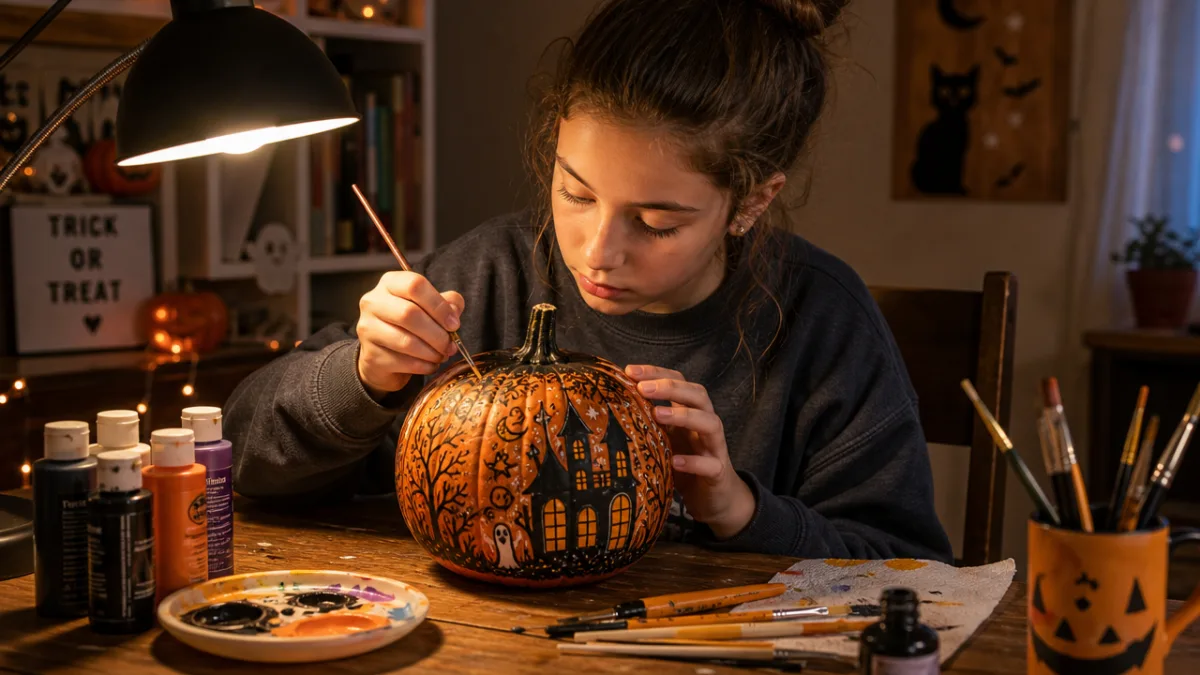
Decoupage pumpkins are a wonderful project for older kids because the technique itself feels grown-up and the results can be genuinely beautiful. Use real or foam pumpkins as the base, and let children tear tissue paper, scrapbook paper, or old book pages into small irregular pieces. Brush a thin layer of Mod Podge onto a section of the pumpkin, apply the paper pieces overlapping each other, then brush another layer of Mod Podge over the top. The finished pumpkin has an elegant, layered look that feels more like home décor than a kids’ craft, which is precisely what tweens tend to respond to with enthusiasm. Black and white book page pumpkins are particularly striking and have a literary Halloween aesthetic that literary-minded kids adore.
Melted crayon ghost art is another project that lands perfectly with this older age group because it involves a technique that produces unpredictable and dramatic results. Hot glue crayons in white, light blue, and light gray to the top of a black canvas in the shape of a ghost outline, then use a heat gun or hairdryer to melt the crayons so they drip down the canvas in streaks of color. The result is a vivid, abstract piece that looks far more sophisticated than its ingredients suggest. The element of controlled unpredictability — children direct the flow of melted wax but cannot entirely control it — produces work that always looks unique, which older kids appreciate as an expression of their individual creative identity.
For tweens who enjoy more detailed handwork, a Halloween cross-stitch or embroidery hoop project makes for a satisfying and impressive craft. Simple Halloween motifs — a black cat, a crescent moon, a small haunted house — can be traced onto embroidery fabric and stitched in bright Halloween colors with a basic running stitch or backstitch. The finished hoops make beautiful wall decorations and are a project children can work on over several sessions, building the satisfying experience of a long-term project coming together. Learning basic embroidery at this age also plants the seeds of a lifelong creative skill that can develop in many directions.
Tips for Making Halloween Crafting a Stress-Free Experience
Even the most enthusiastic crafting session can go sideways when glue gets everywhere, children argue over the last pair of scissors, or someone’s project tears at a crucial moment and triggers a full meltdown. The difference between a joyful crafting afternoon and a stressful one often comes down to preparation and expectation management, and a few simple strategies can make an enormous difference in how smoothly things go. The first and most important principle is to cover your work surface thoroughly — a plastic tablecloth or even a layer of newspaper prevents the kind of permanent marker and paint damage that turns a fun activity into an argument about responsibility and consequences.
Setting realistic expectations about what the finished projects will look like is also tremendously important, particularly with younger children who can become frustrated when their actual results do not match the Pinterest-perfect image that inspired the project in the first place. Before beginning any craft, spend a moment talking about how everyone’s version will look different, and how that difference is a feature rather than a bug. A child whose pumpkin looks wobbly and asymmetrical has made something uniquely their own, and framing it that way from the start prevents the disappointment that can otherwise overshadow an otherwise wonderful creative experience.
Consider also the pacing and duration of your crafting sessions. Younger children in particular have a limited window of engagement before fatigue and frustration set in, and it is far better to end a session while everyone is still having fun than to push through to a finished product at the cost of everyone’s good mood. Having a flexible approach — where it is perfectly fine to finish a project another day — takes the pressure off and makes the whole experience more relaxed. Some of the best crafting happens in two or three short sessions spread across a week, with children returning to their projects with fresh eyes and renewed enthusiasm each time they sit back down.
Finally, display the finished work prominently and enthusiastically. Nothing communicates to a child that their creative efforts are valued like seeing their Halloween crafts hung on the wall, arranged on a shelf, or showcased in the front window for the whole neighborhood to see. Take photographs of children with their finished work to create a record of their creative development across the years. A collection of Halloween craft photos spanning several years becomes a beautiful visual story of how children grow and change, and the crafts themselves — however simple — become artifacts of happy seasons spent making things together as a family. That is ultimately what Halloween crafting is all about: not the perfectly executed project, but the perfectly imperfect time spent making it.








What do you think?
It is nice to know your opinion. Leave a comment.