










15 Budget-Friendly Backyard Landscaping Ideas You’ll Actually Love
Why Your Backyard Deserves a Transformation Without Breaking the Bank
Your backyard is an extension of your home, a personal sanctuary where memories are made, meals are shared, and stress quietly dissolves. Yet so many homeowners assume that a beautiful outdoor space requires a contractor’s invoice that rivals a small car payment. The truth is far more encouraging: with a little creativity, some weekend effort, and a smart approach to spending, you can completely transform your outdoor space into something genuinely stunning without draining your savings account.
The landscaping industry often presents an intimidating face to the average homeowner. Glossy magazine spreads and Instagram-worthy gardens seem to whisper that professional help and premium materials are the only path to a beautiful yard. But seasoned DIY landscapers know better. The most charming and welcoming backyards are frequently those built piece by piece, with love and intention, by the very people who sit and enjoy them every evening.
This guide brings together 15 of the most practical, visually impactful, and genuinely affordable landscaping ideas available to any homeowner willing to roll up their sleeves. Whether you’re starting with a bare patch of dirt or trying to breathe new life into a tired, overgrown space, these strategies will help you build an outdoor retreat you’ll be proud to show off, all while keeping your budget firmly intact.
Understanding Your Space Before You Spend a Dollar
Before purchasing a single plant or paving stone, spend time simply observing your backyard at different times of day. Note where sunlight falls in the morning versus the afternoon, identify low spots where water tends to pool after rain, and pay attention to which areas feel naturally inviting and which feel exposed or awkward. This free, critical step will save you from costly mistakes like planting sun-loving flowers in a shaded corner or laying a patio in a spot that floods every spring.
Sketch a rough map of your yard, even if it’s just a quick pencil drawing on notebook paper. Mark permanent fixtures like fences, trees, utility boxes, and gates. Then start dreaming on paper before you dream at the garden center. Knowing your square footage, your sun and shade patterns, and your soil type gives you a powerful foundation for making intelligent, cost-effective choices that will actually thrive in your specific environment rather than struggling against it.
Defining Spaces with Budget-Friendly Hardscaping
One of the most transformative things you can do to a backyard is simply define its spaces. A yard without structure feels chaotic and unfinished, even if it’s full of plants and flowers. Hardscaping, the use of non-living elements like stone, gravel, wood, and brick, creates the visual skeleton that holds your entire landscape together. The good news is that hardscaping doesn’t have to be expensive, especially when you source materials creatively and do the work yourself.
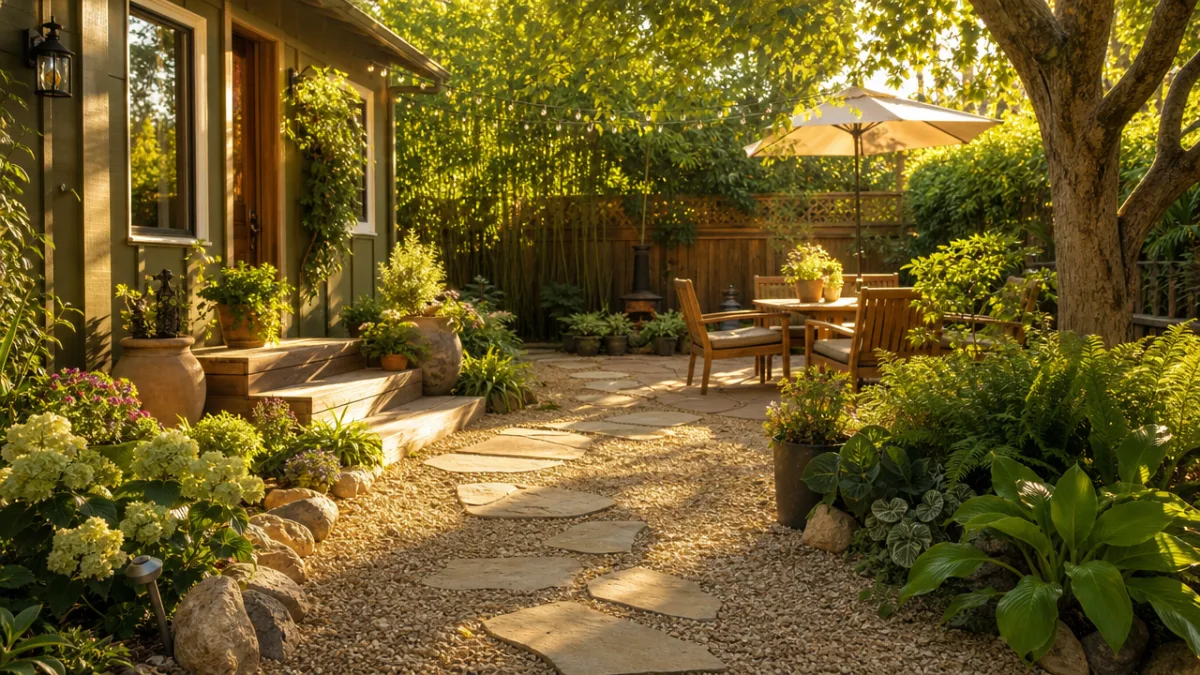
Gravel pathways are among the most affordable and visually satisfying hardscaping options available. A winding path of pea gravel or decomposed granite can connect a patio to a garden bed, create a sense of journey through your yard, and dramatically improve drainage at the same time. Edging the path with inexpensive metal garden borders or even salvaged bricks keeps the gravel contained and gives the whole project a polished, intentional look that costs a fraction of poured concrete or flagstone.
Stepping stones are another high-impact, low-cost option worth exploring. Irregularly shaped flat stones placed strategically through a lawn or garden area add texture, practicality, and charm simultaneously. You can find affordable stepping stones at most garden centers, home improvement stores, or even through local online marketplaces where homeowners sell leftover materials from their own projects. Spacing them comfortably apart and surrounding them with low ground cover like creeping thyme creates a finished look that feels professionally designed.
DIY Patio Ideas Using Reclaimed and Affordable Materials
A patio doesn’t have to be poured concrete or expensive pavers to be beautiful and functional. Reclaimed wood pallets, when properly treated and sealed, can be fashioned into a surprisingly attractive deck platform that costs almost nothing beyond a few weekends of effort. Sand-set paver patios are another excellent DIY option, where you simply lay a bed of compacted sand and arrange pavers in any pattern you like, no mortar required, making it a fully reversible and forgiving project for beginners.
Cinder blocks have enjoyed a genuine design renaissance in recent years, and for good reason. Stacked creatively, they can form raised garden beds, retaining walls, seating benches, and even outdoor furniture bases. Paint them in a cohesive color scheme to tie your space together, or leave them raw for an industrial-chic aesthetic that’s genuinely on-trend. A set of cinder block benches topped with wooden planks can seat guests comfortably and cost under thirty dollars to build entirely from scratch.
Planting Smart: Flowers, Shrubs, and Groundcovers on a Budget
Plants are the soul of any landscape, but they’re also where budgets most frequently spiral out of control. The secret to building a lush, full garden on a modest budget lies in timing your purchases strategically, choosing plants wisely, and understanding how to propagate and multiply what you already have. Garden centers routinely discount perennial plants at the end of the growing season, sometimes by as much as seventy percent, and those plants will come back just as strong the following year.
Native plants deserve special attention from any budget-conscious landscaper. Because they evolved in your specific regional climate and soil conditions, native plants require significantly less water, fertilizer, and general maintenance than exotic species. They establish quickly, resist local pests naturally, and support pollinators and wildlife in ways that imported ornamentals simply cannot match. Many municipalities and conservation organizations even offer free or heavily subsidized native plants to homeowners, making them the smartest possible starting point for an affordable garden.
Dividing and propagating plants is a skill that pays compounding dividends over time. Many common perennials, including hostas, ornamental grasses, coneflowers, and black-eyed Susans, can be divided every few years by simply digging up the root clump and splitting it into multiple plants. Each division grows into a full plant within a season, meaning that one purchased plant can become five or ten plants completely free of charge. Connecting with neighbors or local gardening groups to exchange divisions is a wonderful way to build a diverse garden at virtually zero cost.
Creating a Layered Planting Strategy for Maximum Visual Impact
Professional landscape designers always think in layers, and this principle is just as accessible to the DIY gardener. The concept is straightforward: arrange plants by height, placing tall structural plants like ornamental grasses or shrubs at the back or center, medium-height perennials in the middle tier, and low-growing groundcovers or flowering annuals at the front edge. This layered approach creates depth, visual interest, and a sense of lushness even when you’re working with relatively few individual plants.
Groundcovers are frequently underutilized by homeowners who default to mulch or bare soil between larger plants. Creeping thyme, ajuga, sedum, and sweet woodruff are all affordable, low-maintenance groundcovers that spread to fill empty spaces over time, suppressing weeds and reducing the need for constant mulching. Once established, a good groundcover essentially maintains itself, saving you both money and effort in every subsequent season while keeping your beds looking neat and intentional year-round.
Water Features and Lighting: Affordable Ambiance Upgrades
Nothing elevates a backyard quite like the sound of moving water or the warm glow of strategic lighting as evening falls. Both of these elements have a reputation for being expensive, and while high-end versions certainly can be, there are genuinely affordable approaches to both that will transform the atmosphere of your outdoor space in ways that far exceed their modest cost. These are the details that make a yard feel like a true retreat rather than simply a patch of maintained lawn.
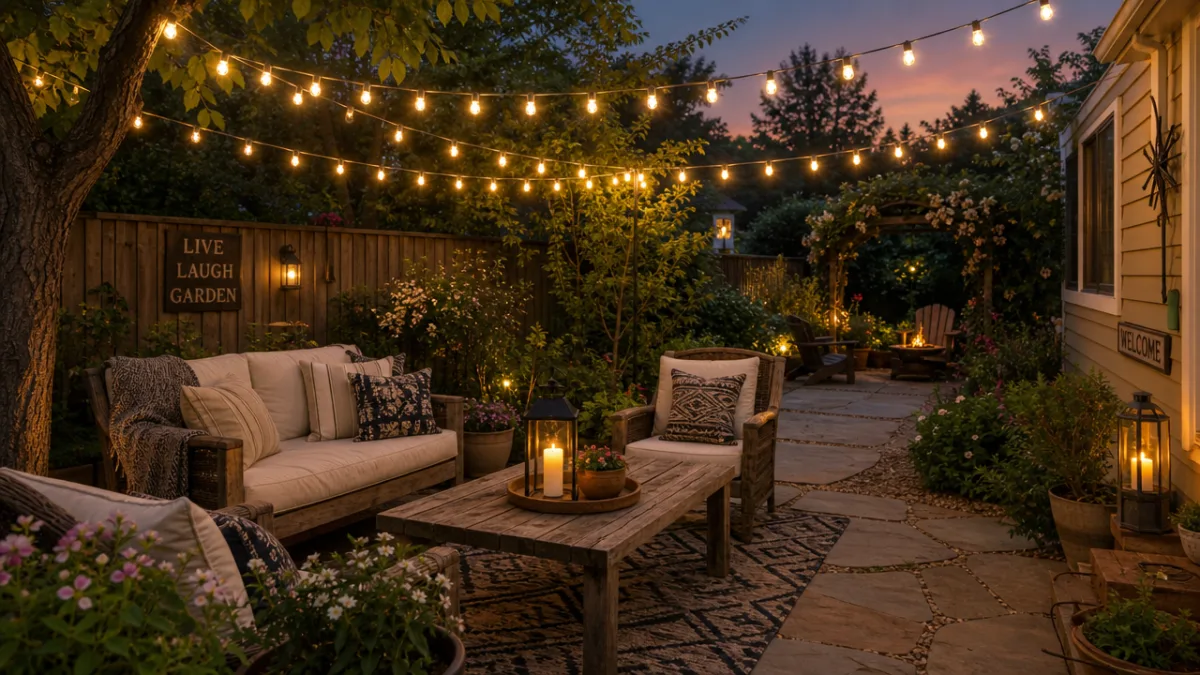
Solar-powered lighting has improved dramatically in both quality and affordability over the past several years. Modern solar path lights, string lights, and spotlights hold their charge effectively and produce warm, attractive illumination that can define pathways, highlight garden features, and create a magical ambiance for evening entertaining. Because they require no electrical work or wiring, installation is entirely DIY-friendly, and the ongoing operating cost is essentially zero. A string of solar Edison bulbs draped over a simple pergola or fence line can transform an ordinary patio into an inviting outdoor room.
A small container water feature is one of the most rewarding DIY projects any backyard enthusiast can undertake. A large ceramic pot or half wine barrel, sealed and fitted with a small submersible pump available at most hardware stores for under twenty dollars, can become a beautiful, gently bubbling water feature in an afternoon. Add a few aquatic plants, a handful of smooth river stones, and perhaps a water lily, and you’ve created a focal point that draws the eye, soothes the mind, and gives beneficial insects a vital water source throughout the summer.
Building a Simple Pergola or Shade Structure
Shade is one of the most valuable and underrated elements of a truly livable backyard, especially in warmer climates where unrelenting afternoon sun makes outdoor spaces unusable for hours each day. A simple pergola constructed from dimensional lumber available at any home improvement store can be built in a weekend for a few hundred dollars and will immediately make your outdoor space far more functional and visually interesting. Designs range from simple four-post structures to more elaborate attached designs that extend directly from your home’s exterior.
Once a pergola frame is in place, the decorating possibilities are genuinely exciting and affordable. Grow climbing roses, wisteria, or fast-growing annual vines like black-eyed Susan vine or moonflower up the posts and across the rafters to create a living canopy that provides shade and extraordinary beauty simultaneously. Hang fabric panels or an outdoor curtain for privacy and additional shade control. Add a simple ceiling fan designed for outdoor use and you’ve created a genuinely comfortable outdoor living space that will serve your family for years to come.
Vertical Gardening and Creative Container Ideas
Small backyards, renters, and gardeners working with challenging soil all share a common solution: vertical gardening. By growing up rather than out, you can pack an extraordinary amount of plant life and visual interest into a very small footprint. Vertical gardens also add architectural dimension to flat, featureless fence lines and walls, turning blank surfaces into living artwork that changes with the seasons and requires surprisingly minimal maintenance once established.
Pallets are perhaps the most celebrated material in the vertical gardening world, and their popularity is entirely justified. A single wooden pallet, mounted vertically on a fence or wall and lined with landscape fabric, can hold dozens of small plants in its horizontal slats. Herbs, strawberries, succulents, and trailing flowers all thrive in this configuration. The entire project costs almost nothing if you source free pallets from local businesses, hardware stores, or online marketplaces where they’re routinely given away to anyone willing to haul them.
Container gardening offers flexibility that in-ground planting simply cannot match. Containers can be moved seasonally to follow the sun, rearranged to refresh your space’s look without any permanent changes, and brought indoors to protect tender plants from frost. The containers themselves need not be expensive: galvanized metal buckets, repurposed colanders, vintage wooden crates, and even old rubber boots can all become charming and characterful plant containers with nothing more than a handful of potting mix and a few drainage holes.
Building Raised Garden Beds from Affordable Materials
Raised garden beds have become one of the most popular DIY landscaping projects for excellent reasons. They improve drainage, warm up faster in spring, keep weeds more manageable, and create a neat, organized look that makes even a modest backyard feel thoughtfully designed. Building them doesn’t require premium cedar or expensive hardware kits. Untreated pine boards, concrete blocks, salvaged bricks, or even stacked logs can all form functional and attractive raised bed walls that will last for multiple growing seasons.
The lasagna gardening method, also called sheet mulching, is a particularly budget-friendly technique for filling raised beds or establishing new garden areas without purchasing large quantities of topsoil. By layering cardboard, compost, dried leaves, kitchen scraps, and other organic materials, you essentially build fertile garden soil from the ground up using materials that are largely free. The cardboard suppresses weeds while breaking down into organic matter, and the layered compost system creates exceptionally rich growing conditions that commercial bagged soil rarely matches.

Lawn Care, Edging, and Low-Maintenance Grass Alternatives
A well-maintained lawn remains the foundation of most backyard landscapes, but traditional grass requires significant ongoing investment in water, fertilizer, seed, and equipment. Many homeowners are discovering that reducing their lawn’s footprint or replacing sections with lower-maintenance alternatives can dramatically cut both their workload and their spending while actually improving the overall look of their property. The shift away from the perfect monoculture lawn is one of the most significant and liberating trends in residential landscaping today.
Clover lawns have emerged as a serious and attractive alternative to traditional turfgrass in recent years. Clover stays green with far less water, fixes nitrogen from the atmosphere so it requires no fertilizer, grows slowly enough that mowing frequency drops significantly, and produces charming small flowers that pollinators absolutely adore. A bag of white clover seed costs just a few dollars and can be overseeded directly into an existing lawn where it will gradually establish itself and improve the overall health and appearance of the turf.
Edging is one of the most cost-effective improvements you can make to an existing lawn’s appearance. Clean, crisp edges where lawn meets garden beds, pathways, or hardscaping instantly make everything look more polished and intentional. A simple manual edging tool or a string trimmer used carefully along bed lines takes minutes but produces a dramatic visual improvement that no amount of new plants can replicate. Pair freshly cut edges with a clean layer of mulch in your garden beds and the transformation will genuinely surprise you.
Mulching Strategies That Save Money and Improve Your Garden
Mulch is simultaneously one of the most important and most overlooked tools in the budget landscaper’s arsenal. A three-inch layer of organic mulch around your plants conserves soil moisture, moderates soil temperature, suppresses weeds, and gradually breaks down to enrich your soil over time. Most homeowners purchase bagged mulch from garden centers at considerable expense, but far more affordable sources are readily available to those who know where to look. Many municipalities offer free wood chip mulch produced by tree trimming crews, and some tree service companies will deliver truckloads directly to your home for free simply to avoid disposal fees.
Leaf mulch, produced by shredding or mowing over fallen autumn leaves, is perhaps the most valuable free garden resource that millions of homeowners literally bag up and send to the landfill every year. Shredded leaves make exceptional mulch for garden beds, break down quickly into rich leaf mold that earthworms adore, and cost absolutely nothing beyond a bit of effort. Running your lawn mower over a pile of dry leaves shreds them sufficiently for use as mulch, making this a genuinely zero-cost soil improvement strategy that professional gardeners rely on extensively.
The journey toward a beautiful, budget-conscious backyard is ultimately one of patience, creativity, and growing knowledge. None of these fifteen ideas requires a large upfront investment, but all of them compound in value over time as plants establish, structures weather gracefully, and your skills and confidence grow with each completed project. The most rewarding landscapes are built gradually, layer by layer, season by season, by people who care deeply about the spaces they’re creating. Your backyard transformation starts today, and it starts well within your budget.








What do you think?
It is nice to know your opinion. Leave a comment.