










Growing Shade: How to Grow Your Own Shade for a Deck or Patio
Why Growing Your Own Shade Makes Sense
There is something deeply satisfying about sitting beneath a canopy of living greenery on a hot summer afternoon, knowing that the cool, dappled shade overhead came from plants you chose and nurtured yourself. Unlike umbrellas or pergola covers made from synthetic fabric, living shade evolves with your outdoor space, becoming richer and more beautiful each season. It is one of those rare garden investments that pays dividends in comfort, aesthetics, and even property value over many years.
Beyond the obvious pleasure of a cooler outdoor space, growing your own shade offers a remarkable range of environmental benefits. Plants naturally cool the air around them through a process called transpiration, where moisture evaporates from leaf surfaces, reducing ambient temperatures by several degrees. This means that a well-planted deck or patio can feel noticeably cooler than one shaded only by a solid structure, creating a microclimate that is genuinely refreshing rather than simply sheltered from direct sunlight.
There is also the matter of cost. A mature shade tree or a lush pergola draped in climbing vines costs far less over its lifetime than replacing fabric canopies, maintaining retractable awnings, or running patio fans and misting systems. Once established, most shade plants require only modest maintenance and return every year with increasing vigor. For homeowners willing to think in seasons rather than weekends, growing shade is one of the smartest and most rewarding landscaping decisions they can make.
Choosing the Right Trees for Deck and Patio Shade
Selecting the right tree is the single most important decision in any shade-growing project, and it deserves careful thought before a single shovel breaks ground. The ideal shade tree for a deck or patio combines a broad canopy spread, a reasonable growth rate, non-invasive roots, and a pleasant appearance through multiple seasons. Getting this choice wrong can mean a tree whose roots buckle your pavers, whose dropping fruit makes a sticky mess, or whose canopy never quite reaches where you need it most.
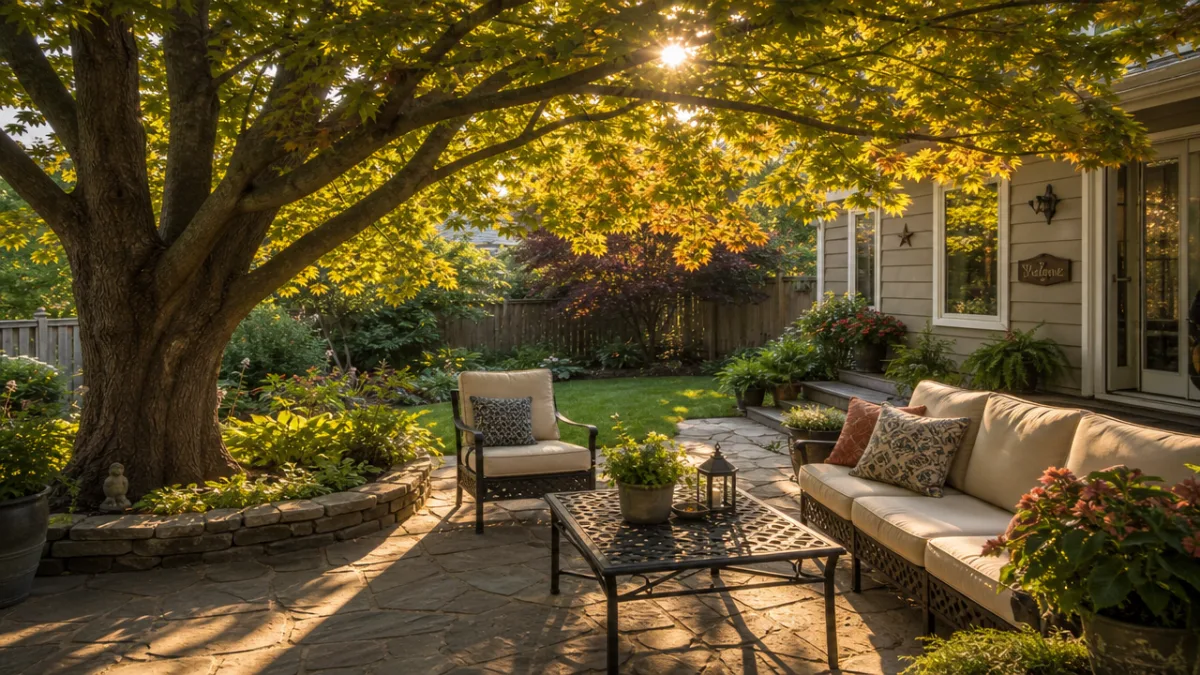
Among the most celebrated choices for residential shade is the red maple, which offers stunning fall color, a wide canopy, and relatively shallow but non-destructive roots when planted at a sensible distance from structures. The honeylocust is another outstanding option, particularly its thornless cultivars, as it casts a light, filtered shade that allows grass and garden plants to thrive beneath it while still providing meaningful relief from the afternoon sun. For smaller spaces, the serviceberry and Japanese zelkova offer graceful form and manageable scale without overwhelming an intimate patio area.
When positioning a shade tree, the cardinal rule is to think about the sun’s path across your specific outdoor space at different times of day and different seasons. A tree planted to the southwest of a deck will provide the most relief during the brutal late-afternoon hours of a summer day, which is typically when patio shade is most desperately needed. Most experts recommend planting shade trees no closer than fifteen to twenty feet from a structure’s foundation, balancing the desire for canopy coverage with the need to protect the home from root interference and falling limbs during storms.
- Red Maple (Acer rubrum): Fast-growing, brilliant fall color, wide canopy, suitable for most climates in USDA zones 3–9.
- Thornless Honeylocust (Gleditsia triacanthos): Filtered, dappled shade, tolerates urban conditions, minimal leaf litter.
- Serviceberry (Amelanchier spp.): Multi-season interest with spring blossoms, summer berries, and fall color; ideal for smaller spaces.
- Japanese Zelkova (Zelkova serrata): Vase-shaped canopy, disease resistant, excellent urban tree for medium to large yards.
- Tulip Tree (Liriodendron tulipifera): Exceptionally fast growth, tall and stately, best for large properties with room to spread.
Climbing Vines and Pergolas: Fast Shade with Character
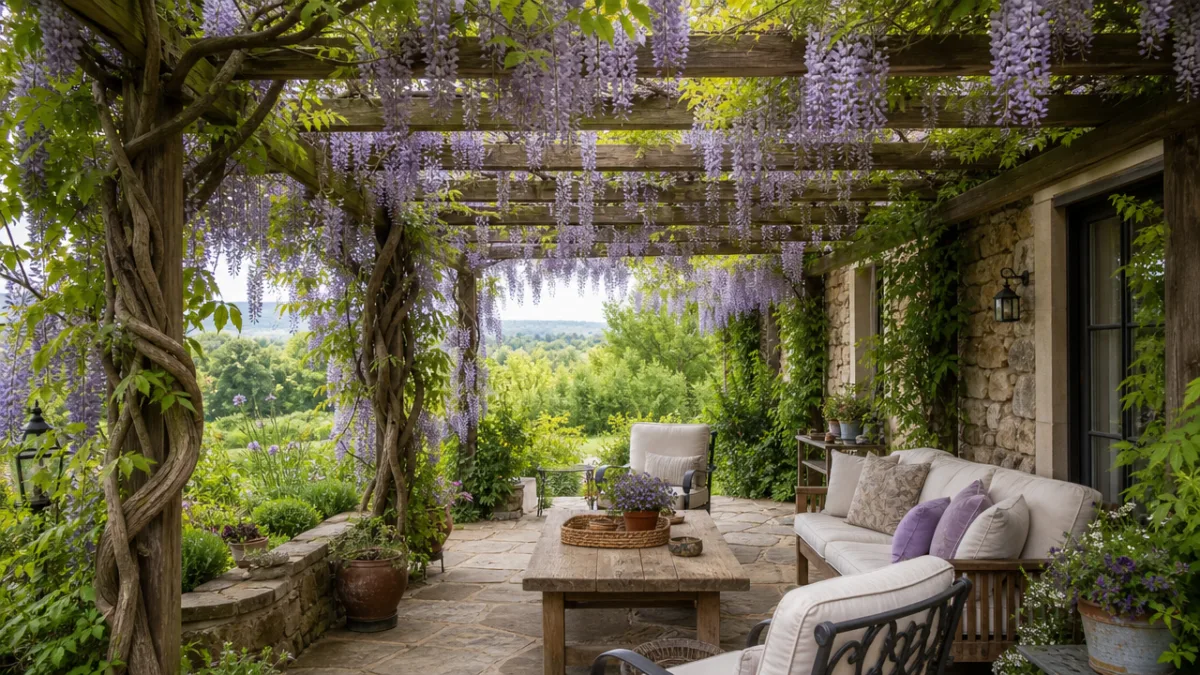
For homeowners who cannot wait a decade for a tree to mature, climbing vines trained over a pergola or overhead trellis offer one of the fastest routes to meaningful shade. A well-built pergola provides the structural skeleton, and the right vine fills it with lush, living coverage in as little as two to three growing seasons. This combination is enormously flexible, allowing you to control the density of shade, the aesthetic character of the structure, and even the seasonal timing of when coverage begins and ends each year.
Wisteria is perhaps the most dramatic of all pergola vines, capable of covering a large structure with cascading purple or white flower clusters in spring, followed by a dense summer canopy that provides deep shade. However, it demands a very sturdy structure capable of bearing significant weight, and it requires consistent pruning to prevent it from taking over surrounding plants and structures. For gardeners seeking something less assertive, the trumpet vine offers equally fast growth and spectacular hummingbird-attracting blooms in shades of orange and red, with somewhat more manageable habits.
Edible options are among the most rewarding choices for pergola shade. Grape vines have been trained over outdoor structures since antiquity, providing generous shade during summer while producing fruit that can be harvested, eaten fresh, or used for juice and wine. Kiwi vines, both the standard hardy kiwi and its smaller-fruited relatives, are equally vigorous and provide a lush, tropical-looking canopy in climates where they might not be expected to thrive. Combining practicality with beauty, these edible climbers transform a simple outdoor structure into a productive garden feature that rewards you with food as well as comfort.
Structural Considerations for Supporting Climbing Shade
No vine-based shade plan succeeds without a structure engineered to bear the load. Many homeowners underestimate just how heavy a mature climbing vine can become, particularly after a rain soaks its leaves or when winter ice accumulates on persistent stems. A pergola intended to support a wisteria or established grape vine should be built from pressure-treated lumber of substantial dimensions, or from rot-resistant wood species such as cedar or redwood, with posts anchored firmly in concrete footings below the frost line.
The spacing of overhead rafters matters enormously for both structural integrity and the eventual density of shade. Rafters spaced six to eight inches apart will catch and support vine growth far more effectively than those spaced a foot or more apart, and they will create a more even, cohesive canopy as the plant matures. Many gardeners also install wire or mesh panels between rafters to give young vines something to grip while they establish, removing these supports once the woody stems have become self-sustaining and the canopy is fully filled in.
Maintenance access is another consideration that is easy to overlook during the planning phase. A pergola draped in mature vines requires annual pruning to keep the structure sound, allow air circulation, and prevent the buildup of dead material that can harbor pests and disease. Designing the structure with this in mind, perhaps with removable panels or slightly wider spacing between posts, makes the annual maintenance task considerably more manageable and helps ensure the longevity of both the structure and the plants growing over it.
Container Plants and Living Privacy Screens for Smaller Spaces
Not every deck or patio has the square footage to accommodate a large shade tree, and not every homeowner has the latitude to modify the landscape in ways that suit a permanent planting. Container gardening and portable privacy screens offer an elegant solution for renters, those in urban settings, and anyone working with a compact outdoor footprint. With the right plant choices and containers of sufficient size, it is entirely possible to create a meaningful sense of enclosure and overhead softening that transforms even a small balcony into a green sanctuary.
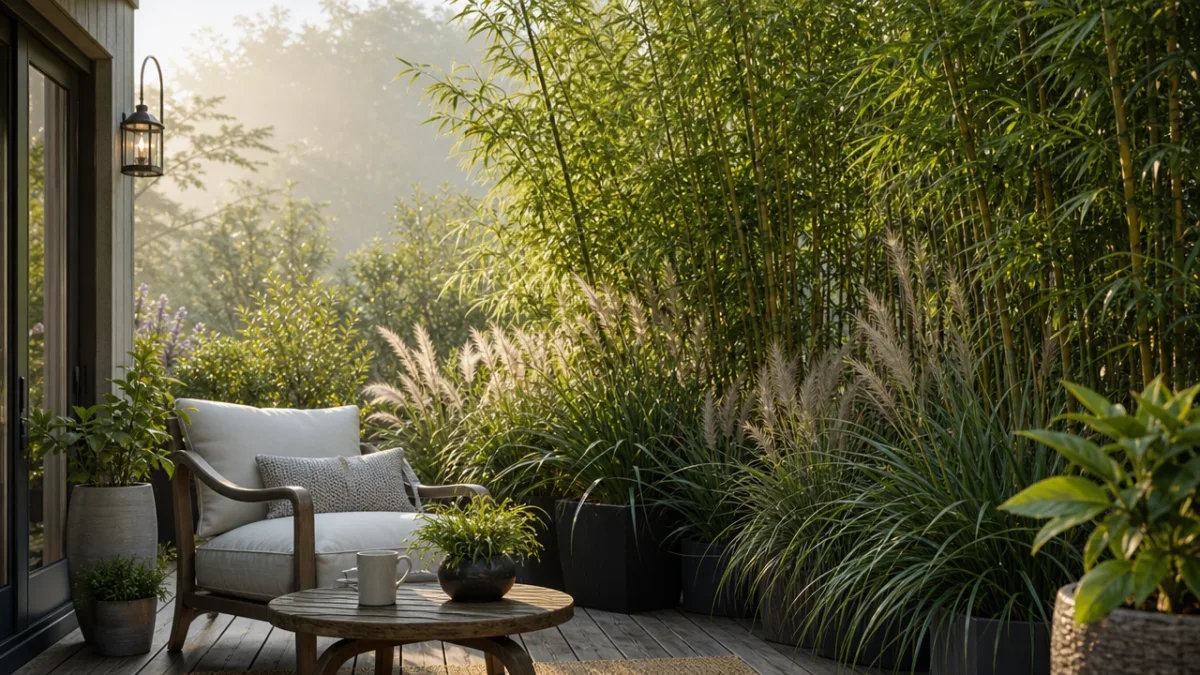
Large specimen shrubs and small ornamental trees grown in substantial containers can provide significant lateral shade and privacy screening along the edges of a deck. Japanese maples in large ceramic or fiberglass planters are a perennial favorite, offering beautiful foliage in colors ranging from lime green to deep burgundy, along with a graceful branching structure that becomes more refined each year. Bamboo, when grown in containers that restrict its spread, provides an almost instant privacy screen with an exotic, rhythmic quality as its canes move in the breeze, though it requires consistent watering and occasional thinning to remain at its best.
Tall ornamental grasses such as miscanthus and pennisetum offer another avenue for adding visual height and movement to a contained patio environment without the commitment of a permanent planting. These grasses can reach six to eight feet in a single season, creating a soft, naturalistic screen along deck railings or at the corners of a patio. Combined with flowering perennials in smaller pots and a few climbing plants trained up trellises secured to walls or fences, container gardening can create a surprisingly lush and shaded outdoor room even within the most constrained urban spaces.
Choosing Containers That Work Hard
The container is as important as the plant it holds, particularly when growing large specimens capable of providing meaningful shade or screening. A tree or large shrub planted in too small a container will exhaust its soil resources quickly, suffer heat stress as the roots overheat in a small volume of growing medium, and potentially topple in wind due to a top-heavy profile. For specimens expected to reach more than five or six feet, containers of at least twenty-five gallons are the practical minimum, with larger volumes being better for long-term health and stability.
Material choice affects both the plant and the practicality of maintaining the arrangement over time. Terracotta is beautiful but porous and heavy, making it prone to cracking in cold climates unless plants are moved to shelter before hard frost. Modern fiberglass containers mimic the look of stone, wood, or ceramic at a fraction of the weight, making them ideal for rooftop gardens or decks where structural load is a concern. Self-watering containers with built-in reservoirs are particularly valuable for large specimens, as they buffer against the rapid drying that can stress container-grown plants during hot summer weather.
Mobility is a strategic advantage of container planting that deserves deliberate exploitation. A collection of large containers on wheeled caddies can be rearranged as the season changes or as entertaining needs shift, allowing you to create dense shade in one corner for afternoon relaxation and then open the space for evening gatherings. This flexibility is something no fixed planting or permanent structure can match, and it makes the container approach particularly appealing for those who enjoy evolving their outdoor spaces from season to season rather than committing to a single permanent layout.
Establishing and Caring for Your Living Shade
The work of creating a living shade garden does not end at planting, and the establishment phase in the first two to three years is arguably the most critical period in the life of any shade-producing tree, shrub, or vine. During this time, the plant is focusing its energy on root development rather than above-ground growth, making it more vulnerable to drought, competition from weeds, and damage from insects or disease. Consistent watering, mulching, and monitoring during these early seasons is the difference between a plant that eventually fulfills its shade-giving potential and one that lingers in mediocrity or fails entirely.
Watering newly planted trees and large shrubs deeply and infrequently is far more beneficial than shallow daily watering. Deep watering encourages roots to grow downward in search of moisture, creating the extensive root system that will eventually anchor a large tree and allow it to withstand drought conditions. A practical approach is to water slowly at the base of the plant for an extended period once or twice a week during dry spells in the first two growing seasons, gradually reducing frequency as the plant shows signs of vigorous independent growth.
Mulching is one of the most underappreciated practices in shade garden establishment. A generous layer of organic mulch two to four inches deep, kept away from the trunk or stem of the plant, conserves soil moisture, moderates soil temperature extremes, suppresses weed competition, and gradually enriches the soil as it decomposes. Wood chip mulch is particularly effective for trees and shrubs, and it has the added benefit of giving a planting a finished, intentional appearance that enhances the overall aesthetic of the patio or deck area even while the shade plants are still developing toward their mature form.
Pruning for Optimal Shade Coverage
Strategic pruning shapes a shade tree or vine to provide coverage exactly where it is most needed rather than simply growing in whatever direction nature prefers. For trees, this means selectively removing lower branches over time to raise the canopy to a comfortable head height, while encouraging lateral spread in the directions that benefit the deck or patio most directly. This process, known as crown raising and directional training, is best done gradually over several years rather than in a single aggressive session, allowing the tree to respond and heal between interventions without undue stress.
Climbing vines on pergolas benefit from annual pruning at the right time of year, which varies by species. Wisteria, for example, is best pruned twice a year, once in late summer to reduce the long whippy growth that has extended beyond the structure, and once in late winter to further shorten these same shoots to two or three buds, which encourages the formation of the short flowering spurs that produce the spectacular spring blooms. Grape vines follow a different but equally precise pruning calendar tied to their fruiting cycle, and understanding the specific needs of your chosen vine prevents the common mistake of inadvertently removing the wood that would have produced next season’s flowers or fruit.
The long-term vision of a living shade garden is one that rewards patience with a richness no constructed canopy can fully replicate. A mature shade tree casting its broad shadow over a deck on a July afternoon, the sound of wind moving through leaves overhead, the smell of warm earth and green growth surrounding an outdoor sitting area — these are the rewards that unfold over years and decades of thoughtful planting and care. Beginning that journey, even with a single young tree or a modest vine-covered trellis, is an act of optimism and generosity toward your future self and everyone who will eventually sit beneath the living shade you grew.








What do you think?
It is nice to know your opinion. Leave a comment.