










Creative Summer Garden Decor Ideas: Transform Your Outdoor Space
1. Setting the Stage: Planning Your Summer Garden Aesthetic
Before you plant a single thing or hang a single light, the best thing you can do for your summer garden is slow down and actually think it through. A beautiful, cohesive outdoor space rarely happens by accident — it comes from making real decisions about color, texture, scale, and how you actually want to spend time out there. It doesn’t matter if you’re working with a big backyard, a cozy patio, or just a balcony — the same design principles apply. Start by asking yourself what you want this summer to look like outside, and let that answer drive every choice you make from there.
Color is probably your single most powerful tool when it comes to decorating a summer garden. Warm palettes — terracotta, burnt orange, golden yellow, coral — feel festive and full of energy, which is perfect if you’re planning to host a lot. Cooler tones like soft lavender, pale blue, sage green, and white create something that feels more like a retreat, almost refreshing on a hot afternoon. And you don’t have to pick just one direction. Some of the most gorgeous gardens mix warm and cool tones together, weaving a palette through plants, textiles, ceramics, and painted accents in a way that feels layered and considered rather than matchy-matchy.
Once you have a color direction in mind, it’s time to think about the structural pieces that give your garden its backbone. Raised beds, pergolas, trellises, pathways, outdoor furniture — these are the bones of the space, and they deserve careful thought because they’re both the priciest and the most impactful things you’ll add. A pergola draped with climbing vines can completely change the feeling of a plain backyard. Even something as simple as a gravel path edged with low-growing herbs can add real structure and visual interest without costing much or requiring any professional help.
2. Lighting the Way: Outdoor Lighting Ideas for Magical Summer Evenings
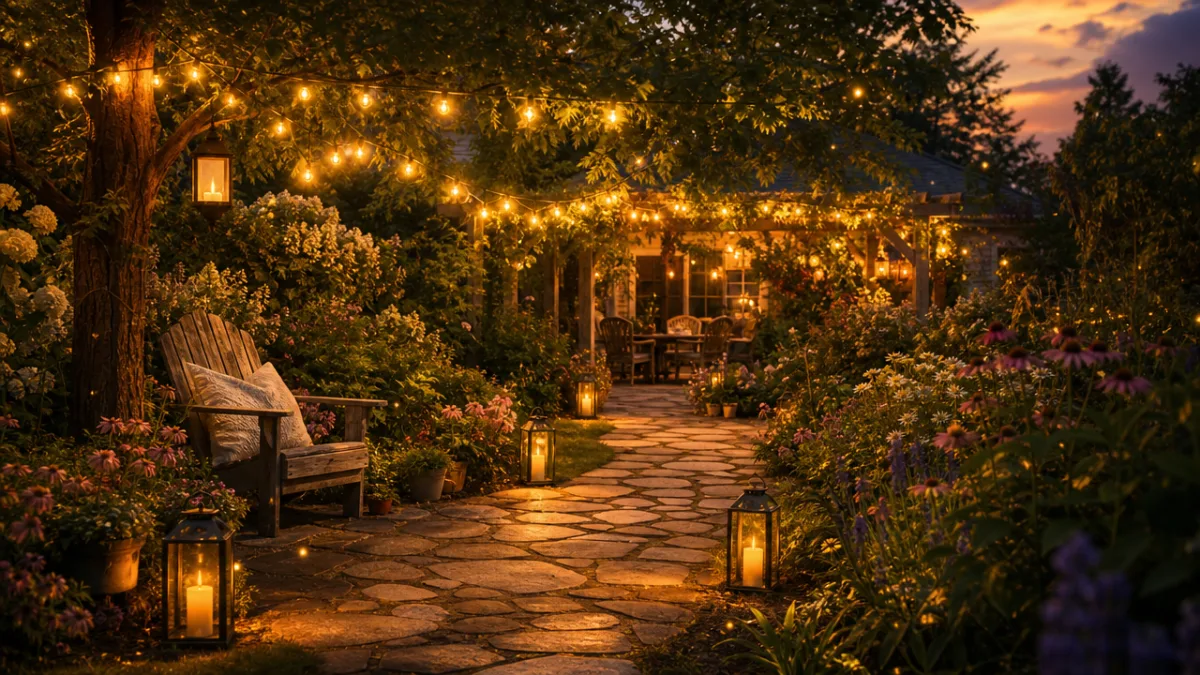
Summer evenings are one of the season’s best things, and good outdoor lighting is what lets you actually enjoy them. String lights are as popular as ever, and honestly, for good reason — they cast that warm, flattering glow that makes any gathering feel like something worth savoring. Drape them overhead between fence posts, wrap them around pergola beams, or weave them through shrubs and the effect is simple but genuinely magical. Solar-powered string lights have gotten impressively good in recent years too, so if you don’t have a convenient outlet nearby, they’re a real option now rather than a compromise.
But string lights alone won’t do everything. Layering different types of lighting is what gives a garden real depth and atmosphere after dark. Pathway lights help guests navigate safely while also showing off your plants and hardscape in a nice way. Uplighting at the base of trees or large architectural plants creates dramatic shadows and gives the whole garden a slightly theatrical quality — in the best way. Lanterns are wonderfully flexible; hang them, stack them, line them along steps, and move them around depending on the occasion. Battery-operated candles inside lanterns are a great practical swap if you’d rather not worry about fire risk but still want that warm flicker.
If you love a DIY project, outdoor lighting is a fantastic place to get creative. Mason jars filled with tiny solar fairy lights and hung from shepherd’s hooks make charming, budget-friendly luminaries. Wine bottles with LED string lights threaded inside are genuinely stunning as a table centerpiece. Even a row of terracotta pots with battery-operated tea lights tucked inside can create a lovely soft glow along a garden border. The trick with any of these approaches is consistency — repeating the same light source at regular intervals gives the space a rhythm that makes it feel intentional rather than thrown together.
3. Furniture and Seating: Creating Comfortable Outdoor Living Rooms
The gardens that feel most inviting are the ones that genuinely feel like an extension of the house — and nothing does that better than comfortable, well-arranged furniture. The outdoor furniture market has exploded in recent years, so you’ll find solid options at pretty much every price point, from affordable resin wicker sets to teak and powder-coated aluminum pieces that’ll outlast your mortgage. Whatever your budget, prioritize comfort first. Cushion depth, seat height, back support — all of that matters just as much outside as it does in your living room, maybe more so when you’re hoping people will stick around for hours.
How you arrange your furniture matters just as much as what you choose. Rather than lining everything up along the edges of a patio, try pulling pieces together into conversation clusters where people can actually face each other and talk. A central coffee table or fire pit works well as an anchor for chairs and sofas to gather around. In a larger garden, you might create two or three distinct zones — a dining area near the back door, a lounge area under a shade structure, a quiet reading nook in a corner with just a chair and a small table. That kind of layering makes the garden feel like it has personality and depth, like there’s always another spot to discover.
Outdoor textiles have come a long way and are now one of the easiest ways to add color and comfort to your seating area. Fade-resistant cushions, throw pillows, and rugs are available in an incredible range of colors and patterns these days, and an outdoor rug in particular might be the single most transformative thing you can add to a patio. It immediately defines the space, softens the hard surface underfoot, and makes everything feel more finished. Put a striped rug under a woven coffee table with a few cushioned chairs around it and a plain concrete patio suddenly feels like a real, decorated room.
4. Plants and Planters: The Living Heart of Your Summer Garden Decor
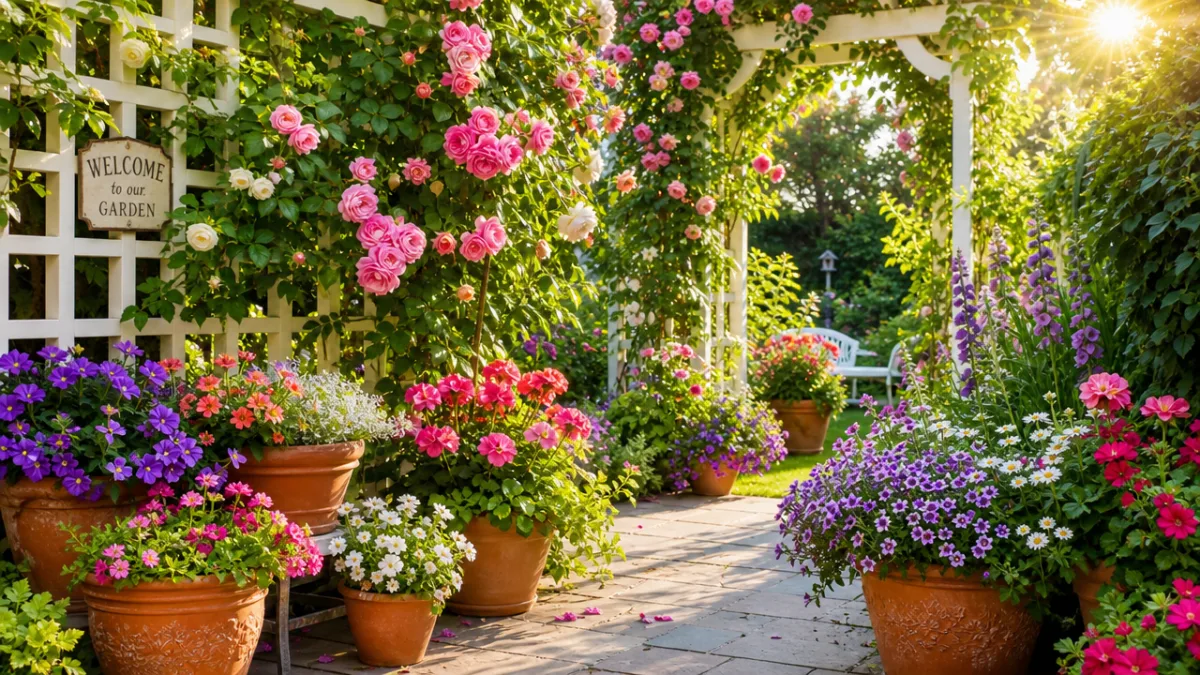
No amount of furniture or accessories can replace what living plants bring to a summer garden. They add color, fragrance, movement, and something that genuinely can’t be faked or bought off a shelf. For summer, the options are almost overwhelming in the best way. Annuals like zinnias, petunias, marigolds, and impatiens bloom their hearts out all season and can be swapped out when you want a fresh look. Perennials like lavender, coneflower, salvia, and black-eyed Susan come back every year and give your garden reliable structure without much effort on your end.
The containers you plant in are just as much a part of the decor as the plants themselves. Matching terracotta pots arranged at different heights give you that classic Mediterranean look that works especially well with herbs and trailing succulents. An oversized glazed ceramic urn in cobalt blue or deep teal on either side of a doorway makes a real statement. Repurposed containers — old watering cans, wooden crates, vintage colanders, galvanized buckets — add a lot of personality and give forgotten objects a second life. The only real limit is figuring out your drainage situation, and honestly that’s usually pretty easy to solve.
Vertical gardening is one of the most exciting ways to make the most of limited space, and it works at any scale. A wooden trellis against a fence can turn a flat, boring wall into a stunning vertical garden full of climbing roses, jasmine, or morning glory. Pocket planters let you grow herbs, strawberries, or trailing flowers on a fence without any woodworking involved. Tiered plant stands let you display a whole curated collection in a small footprint while creating interesting layers of height and depth. Here are some vertical options worth considering:
- Climbing plants on trellises: Roses, clematis, jasmine, and morning glory all thrive with vertical support and put on a spectacular show when they really get going.
- Hanging basket arrangements: Pair trailing plants like fuchsia or sweet potato vine with something more upright for full, lush hanging displays that look great from every angle.
- Wall-mounted pocket planters: Perfect for herbs and succulents, they create a living wall that’s genuinely beautiful and practical at the same time.
- Tiered plant stands: A great way to show off multiple plants in a small footprint while giving the display some real visual dimension.
- Repurposed ladders: An old wooden ladder leaned against a wall and fitted with potted plants makes one of the most charming, rustic displays you can put together for almost no money.
5. Decorative Accents and DIY Touches: Personalizing Your Outdoor Space
Decorative accents are where your garden stops looking like a catalog and starts looking like yours. Summer is a particularly good season for this kind of thing. Wind chimes bring in a whole other sense — suddenly even a light breeze becomes part of the experience. Garden sculptures, whether they’re modern abstract pieces, classic figures, or something a little quirky and whimsical, pull the eye and invite people to wander. Even something as understated as a beautiful ceramic bowl filled with smooth river stones placed at the intersection of two paths creates a small moment of visual delight that makes the whole garden feel more intentional.
DIY projects are some of the most satisfying and affordable ways to put real meaning into your garden. Painted river stones used as herb markers are a lovely example — they’re practical, they’re creative, and making them is actually fun. Mosaic stepping stones, where you embed broken tiles or glass pieces into concrete, become permanent colorful accents along a path that feel genuinely personal. Macramé plant hangers have had a big comeback lately, and for good reason — hung at different heights from a patio or pergola, they give a space a handcrafted, bohemian warmth that’s hard to replicate any other way. There’s something about the slight imperfection in anything handmade that gives a garden a character no store-bought piece can quite match.
Water features are worth a mention here too, because they deliver an outsized impact for their size and cost. The sound of moving water is genuinely calming and has the practical bonus of softening traffic noise or other city sounds. A small tabletop fountain on an outdoor side table is all you need — just a standard outdoor outlet and you’re done. Birdbaths work beautifully as garden sculpture and get even more interesting when you choose them in a striking material, like hammered copper, rough stone, or glazed ceramic in an unexpected color. And if you want something really simple, a galvanized trough or wide ceramic bowl filled with water, floating candles, and cut flowers is stunning in its straightforwardness.
6. Entertaining in Style: Garden Decor That Works for Summer Gatherings
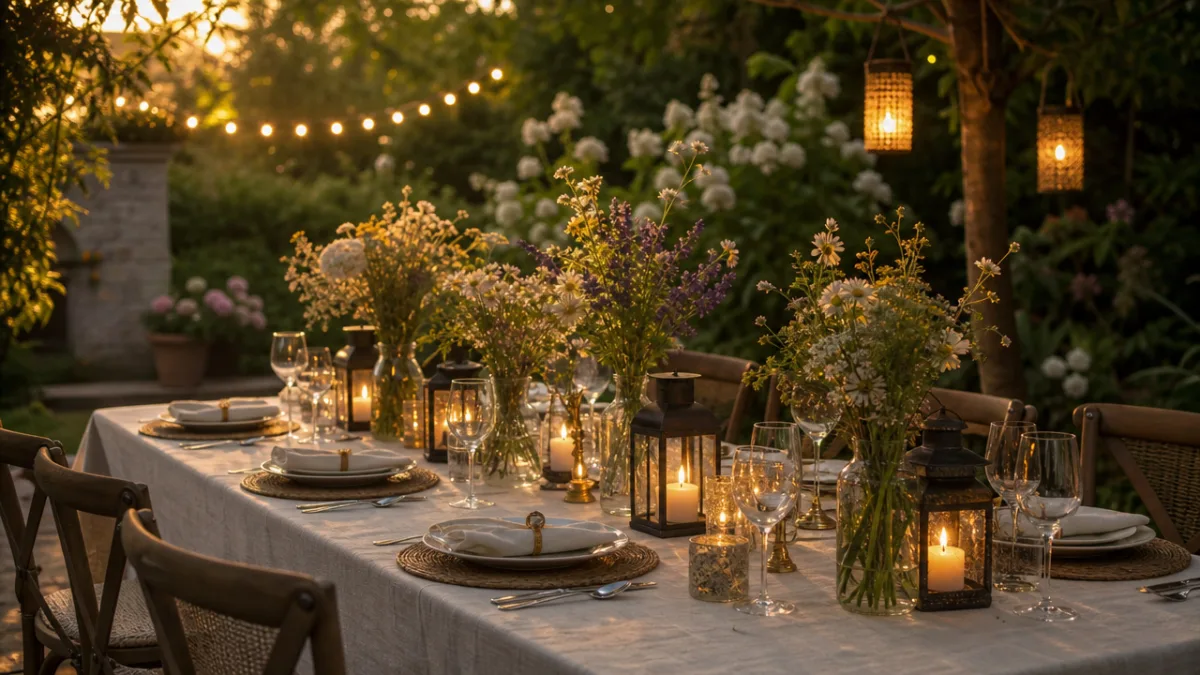
A summer garden really comes alive when it’s full of people you love, and the right decor makes entertaining outside feel easy and special rather than stressful. The outdoor dining table is where summer gatherings tend to live or die, so it’s worth styling it with some care. Start with a simple linen tablecloth in a natural muted tone — it’s relaxed and beautiful without demanding much. Layer a woven jute or printed cotton runner on top, then build a centerpiece from garden-cut flowers arranged in a collection of mismatched glass bottles or jars. The mix of textures — rough linen, smooth glass, soft petals — creates a table that feels abundant and considered without looking like you spent three hours on it.
Think beyond the table too. A dedicated drinks station keeps things flowing and stops everyone from crowding into the kitchen. A bar cart, a repurposed dresser, even a clever wooden crate arrangement — any of these work. Add a small chalkboard menu, some interesting glassware, and a couple of herbs in small pots and you’ve got a setup that people naturally gravitate toward and end up talking in front of all evening. A few mosquito-repelling candles or a citronella torch positioned around the entertaining area takes care of the bug problem in a way that actually adds to the atmosphere rather than detracting from it.
The details of outdoor entertaining are honestly where you can have the most fun. Here are a few ideas worth trying at your next summer gathering:
- Personalized place settings: Tie a small sprig of rosemary or lavender to a name card with a bit of twine — fragrant, memorable, and it costs almost nothing.
- Outdoor blanket basket: A big wicker basket filled with lightweight throws tells guests they’re welcome to stay long after the temperature drops. It’s a small thing that signals a lot of warmth.
- Ambient music setup: A weatherproof Bluetooth speaker tucked among the plants keeps music going all evening without any visible technology cluttering up your space.
- Activity corner: A small table with lawn games, a puzzle, or even a simple guest book gives people something to do in between conversations.
- Signature scent: Burning a bundle of dried rosemary or sage deters insects and fills the garden with a beautiful, natural fragrance that becomes something guests associate with evenings at your place.
What makes a summer garden gathering truly memorable has nothing to do with perfection. It’s about creating a space that feels genuinely welcoming — one where the plants reflect what you love, the DIY touches show real care, the lights were strung with thought, and the chairs are actually comfortable enough to stay in. When guests walk into that kind of space, they feel it immediately. They know the garden was made with real attention and real affection, and that feeling is more powerful than any expensive piece or perfectly executed design. Summer goes fast. A garden that’s loved, used, and shared is the best garden there is.








What do you think?
It is nice to know your opinion. Leave a comment.