










Budget-Friendly Outdoor Fence Ideas: Transform Your Yard Without Breaking the Bank
Why Your Outdoor Fence Matters More Than You Think
A fence is far more than a simple boundary marker around your property. It defines the character of your outdoor space, establishes privacy from neighbors, keeps children and pets safely contained, and adds a significant layer of curb appeal that can genuinely increase your home’s market value. Despite all of these benefits, many homeowners put off fencing projects because they assume the costs will be prohibitive, often imagining the price tags associated with professionally installed wood or wrought iron structures. The good news is that creative, budget-conscious approaches to fencing have never been more accessible or attractive.
When you invest thoughtfully in your outdoor fence, you’re making a decision that pays dividends across multiple areas of your life. Privacy in your backyard means you can relax, entertain, and let the kids play without feeling exposed to the street or neighboring properties. Security increases substantially when you establish clear, physical boundaries around your home. Even a modest, inexpensive fence sends a signal to passersby and potential intruders that this is a well-maintained, cared-for property, which itself acts as a deterrent. The psychological comfort of having a defined outdoor sanctuary is genuinely difficult to put a price on.
The variety of budget-friendly fencing options available today is truly remarkable. From repurposed pallets and bamboo rolls to simple wire mesh and decorative garden edging, the spectrum of affordable solutions runs from the purely functional to the surprisingly elegant. What ties all of these approaches together is the possibility of doing much of the work yourself, dramatically reducing labor costs that can often represent the largest portion of a traditional fencing bill. Throughout this guide, we’ll explore the most effective, attractive, and affordable ways to define, beautify, and secure your outdoor space without the expense most people fear.
Pallet Fencing: The Ultimate Upcycled Solution
Wooden shipping pallets have emerged as one of the most popular materials in the DIY and budget home improvement communities, and for excellent reason. They are frequently available for free or at minimal cost from local businesses, grocery stores, garden centers, and warehouses that would otherwise pay to have them hauled away or disposed of. A standard pallet is already a structurally sound, weather-exposed piece of lumber, meaning it can handle outdoor conditions with relatively little treatment or modification. Collected in sufficient quantity and set side by side along a fence line, they create a solid, rustic wooden fence that genuinely rivals more expensive alternatives in both function and aesthetic charm.
The construction process for a pallet fence is surprisingly manageable for anyone with basic DIY skills and a weekend afternoon to spare. The most common approach involves setting sturdy wooden or metal posts at regular intervals along your fence line, then attaching individual pallets vertically between each pair of posts using exterior screws or heavy-duty staples. Before installation, it’s worth spending time selecting pallets of similar dimensions and checking that each one is stamped with “HT” (heat-treated) rather than “MB” (methyl bromide treated), as the latter involved chemical treatment you don’t want in your living spaces. Sanding rough edges, applying a coat of exterior wood stain or paint, and adding a weatherproofing sealant transforms raw pallets into a polished, durable fence that looks intentional and attractive.
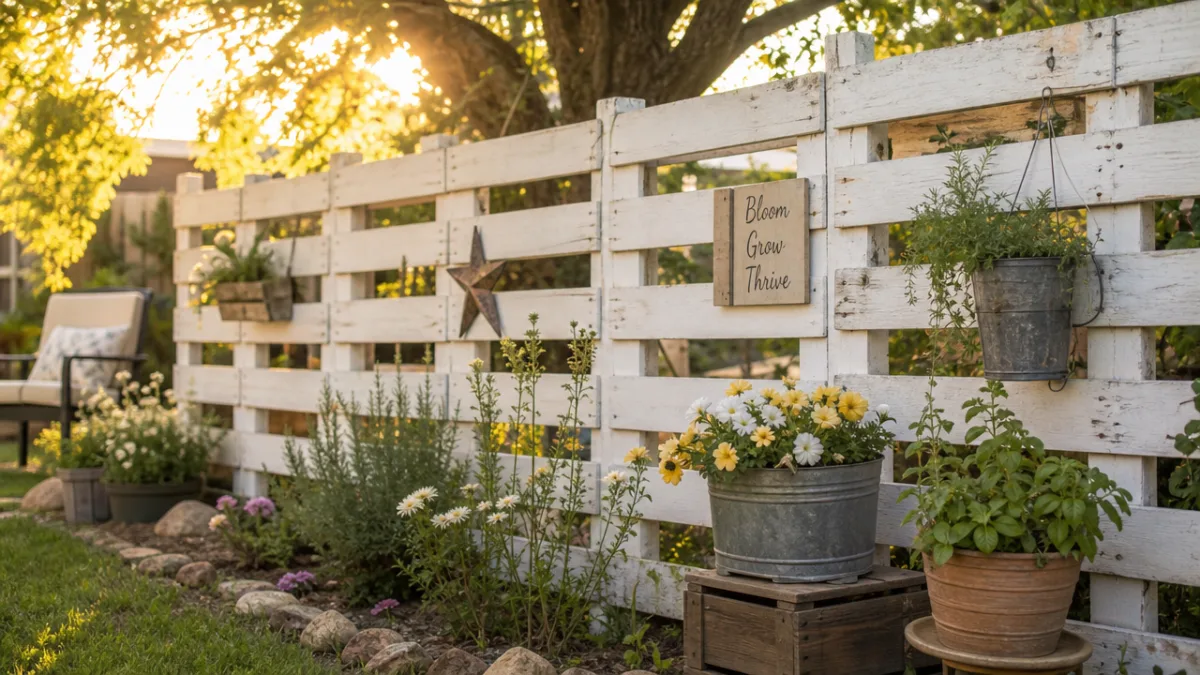
Customization is where pallet fencing truly shines as a creative project. You can paint each pallet a different color for a cheerful, eclectic garden border, or apply a uniform weathered gray stain for a sophisticated farmhouse look. Some homeowners leave gaps between pallets deliberately for a more open, semi-private design that allows light and airflow while still establishing a clear boundary. Others attach small planter boxes directly to the pallet slats, growing herbs, flowers, or trailing vines that transform the fence itself into a vertical garden. With a little imagination and modest materials, a pallet fence can become one of the most unique and personally expressive features of your entire property.
- Source free or low-cost pallets from local grocery stores, hardware stores, and online community boards like Craigslist or Facebook Marketplace.
- Always check pallet stamps: HT (heat-treated) is safe for residential use; avoid MB (methyl bromide) pallets entirely.
- Use exterior-grade wood screws and hardware to ensure the structure holds up through rain, wind, and seasonal temperature changes.
- Apply a quality exterior sealant annually to significantly extend the life of your pallet fence and maintain its appearance.
Bamboo and Reed Fencing: Natural, Fast, and Affordable
Bamboo roll fencing is one of those materials that manages to feel simultaneously exotic and approachable, bringing a natural, organic warmth to any outdoor space at a price point that fits almost any budget. Available in rolls of varying heights and lengths at most home improvement stores and garden centers, bamboo fencing can be installed in an afternoon with nothing more than wire ties, zip ties, or staples to attach it to an existing chain-link fence or a series of simple wooden posts. The result is an instant transformation of an ugly utilitarian boundary into something that looks thoughtfully designed and beautifully natural. Roll fencing typically costs a fraction of what comparable wooden fencing would run in both materials and installation.
One of the most popular applications for bamboo roll fencing is as a cover for existing chain-link fences, which are functional but visually unappealing to most homeowners. By simply unrolling bamboo panels along the length of your chain-link and securing them with wire or zip ties at regular intervals, you can completely change the visual character of your yard boundary within a few hours. This approach costs dramatically less than removing and replacing the existing fence, and it’s completely reversible if you change your mind or move to a new property. The chain-link beneath continues doing the structural heavy lifting, while the bamboo provides the attractive, private finish that makes the space feel like a genuine outdoor retreat.
Reed and willow fencing panels operate on the same principle as bamboo rolls but offer a slightly different texture and visual character that some homeowners find even more appealing. Willow fencing in particular has a wonderfully organic, woven appearance that suits cottage gardens, naturalistic landscaping styles, and informal outdoor entertaining areas beautifully. Both reed and willow panels can be purchased in standard sizes and simply staked into the ground or attached to posts for a quick, attractive border. While neither material lasts as long as treated wood or metal fencing without some maintenance, annual applications of a wood preservative or sealant can extend their lifespan significantly, keeping your investment looking good for many seasons.
Wire and Post Fencing: Functional Simplicity at Its Best
Wire fencing in its various forms represents perhaps the most cost-effective fencing solution available, and while it may lack the decorative appeal of wood or bamboo on its own, it forms an excellent foundation that can be enhanced, softened, and beautified in numerous creative ways. Welded wire mesh, hardware cloth, chicken wire, and hog panel fencing all offer strong, durable boundaries at very low material costs, and all can be installed by a single person with basic tools over the course of a weekend. For homeowners primarily concerned with containing pets, protecting garden beds, or establishing a property line without a significant financial investment, wire fencing is a deeply practical and underappreciated option.
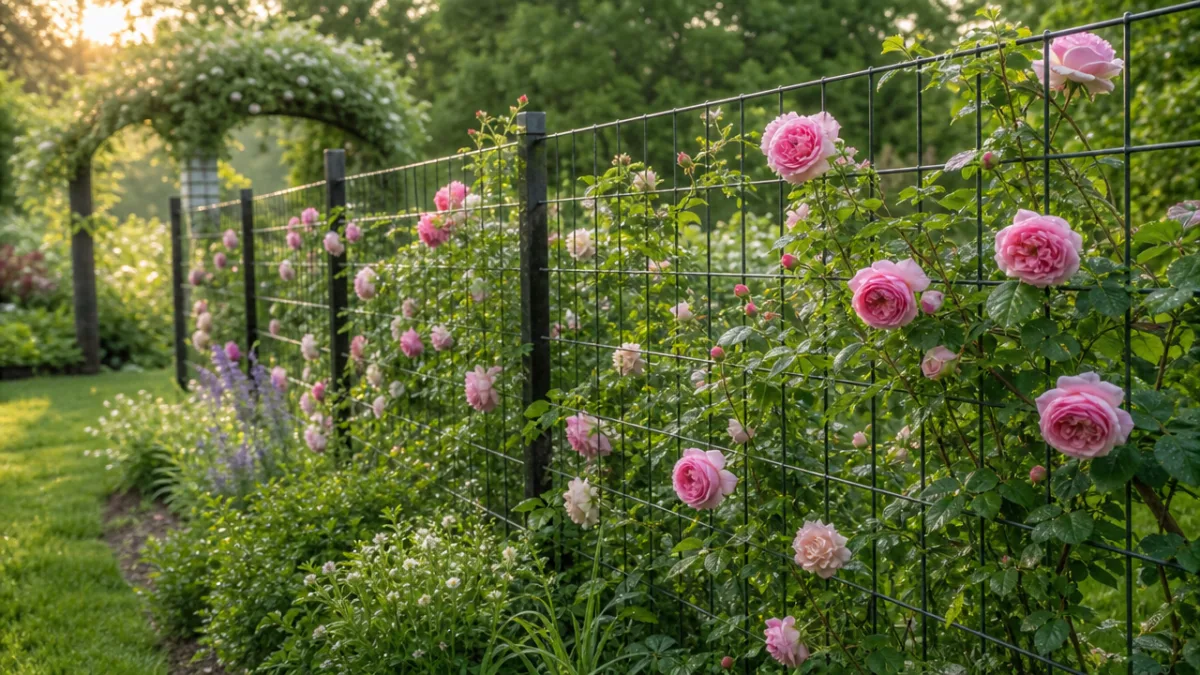
Hog panel fencing has developed something of a cult following in the DIY landscaping community over the past decade, and it’s easy to understand why. These heavy-gauge wire panels, originally designed for livestock enclosures, are remarkably sturdy, long-lasting, and available at farm supply stores for a surprisingly modest price per panel. When set between simple wooden or metal posts and left as-is or trained with climbing plants, they create a fence that feels both contemporary and industrial-chic, fitting comfortably into modern farmhouse and minimalist landscape design aesthetics. The grid pattern of hog panels also makes them ideal supports for climbing roses, jasmine, clematis, and other flowering vines that will eventually soften and beautify the structure further.
For a more decorative wire option, consider ornamental garden fencing in powder-coated steel or iron, which is available in short panels at most garden centers and big-box home improvement stores at very accessible price points. These panels are typically designed to be staked directly into the soil, making installation genuinely effortless, and they come in a range of styles from simple scalloped tops to more intricate decorative patterns. While not suitable as privacy fencing or a serious security barrier, ornamental wire fencing works beautifully as a border for garden beds, a boundary between lawn and planting areas, or a charming decorative accent that adds structure and visual definition to an otherwise undifferentiated outdoor space.
- Measure your fence line carefully before purchasing materials to avoid waste and ensure you have enough supplies to complete the project.
- Set posts deeply — at least one-third of the post’s total length should be below ground for stability, especially in areas with freeze-thaw cycles.
- Use a post-hole digger or rented power auger to make post installation significantly faster and more accurate.
- Plant fast-growing vines like clematis, honeysuckle, or morning glory along wire fencing to add color, fragrance, and privacy over time.
- Inspect wire fencing annually for rust spots, loose attachments, and bent sections that could compromise the structure’s integrity.
Living Fences: Plants as Your Privacy Solution
A living fence — a dense, continuous planting of shrubs, hedges, trees, or tall grasses used to define a boundary and create privacy — is one of the most beautiful, sustainable, and potentially cost-effective fencing solutions available to homeowners with patience and a willingness to plan ahead. Unlike any manufactured fence material, a living fence actually improves with age, becoming denser, taller, and more attractive as the years pass. It provides habitat for birds and beneficial insects, absorbs carbon, produces oxygen, and can even contribute to lower energy bills by acting as a windbreak that reduces heating costs in cold climates. The upfront cost of plant material can be quite modest, especially when you start with smaller specimens or propagate plants yourself from cuttings.
The choice of plants for a living fence depends significantly on your climate, soil conditions, desired height, and the level of maintenance you’re willing to commit to. In warmer climates, fast-growing options like privet, viburnum, and leyland cypress can achieve impressive height and density within just two or three growing seasons. In cooler regions, native shrubs like arrowwood viburnum, American holly, and serviceberry are excellent choices that support local wildlife while establishing strong, attractive boundaries. For the most budget-conscious approach, look for native plant sales hosted by local conservation organizations, which typically offer healthy specimens at a fraction of nursery prices. You can also ask neighbors, friends, and community garden members whether any of their established shrubs are due for division, which can yield free planting material.
Ornamental grasses deserve special mention as an underutilized living fence option that is fast, inexpensive, and visually spectacular. Varieties like miscanthus, pampas grass, and maiden grass can grow to impressive heights within a single season, creating a graceful, swaying curtain of privacy that is dramatically different from the rigid, formal look of a traditional fence. Grasses are generally among the most affordable plants at any nursery, they require minimal care once established, and they provide year-round interest with their seed heads, winter silhouettes, and spring emergence. Planted in a staggered double row, ornamental grasses can provide a genuinely effective privacy screen for a fraction of the cost of any manufactured fencing material, while adding a dynamic, naturalistic beauty that no wooden plank or vinyl panel can replicate.
Decorative Accents and Finishing Touches That Elevate Any Fence
Whatever budget-friendly fencing solution you choose for your outdoor space, the finishing touches you apply can make the difference between something that looks merely adequate and something that looks genuinely designed and intentional. Paint and stain are among the most powerful and affordable transformation tools available to any homeowner. A uniform coat of crisp white exterior paint turns even the most rudimentary wooden fence into something that feels clean, bright, and welcoming. Bold colors like deep navy, sage green, or charcoal gray can make a simple fence into a dramatic design statement that sets the entire tone for your outdoor entertaining area. The cost of a can of exterior paint or stain is negligible compared to the visual impact it delivers.
Fence post caps are a small detail that carries disproportionate visual weight and are available at most hardware stores for just a few dollars each. Installing simple pyramid-shaped or decorative ball-top caps on the posts of your fence immediately makes the structure look more finished, professional, and expensive than it actually was to build. Similarly, adding a simple gate — even one you build yourself from reclaimed wood or leftover fence materials — transforms a fence from a passive boundary into an active, welcoming entry point that gives your outdoor space a genuine sense of arrival and intention. Solar-powered post lights attached to fence posts add evening ambiance and a sense of elegance that makes outdoor entertaining and quiet evening relaxation exponentially more enjoyable.
Climbing plants and vertical garden attachments are among the most transformative additions you can make to any fence, regardless of the underlying material. Attach simple trellis panels, strips of wire mesh, or lengths of jute twine to your fence and plant climbing roses, passionflower, jasmine, or annual sweet peas at the base, and within a season or two you’ll have a living, fragrant, flowering wall that is one of the most beautiful features imaginable in any garden. Hanging small planters, pocket organizers filled with herbs, or painted tin cans planted with succulents along your fence face adds personality, color, and creative expression that makes the space uniquely yours. None of these additions requires significant investment, but together they can transform a simple, functional fence into the most distinctive and memorable element of your entire outdoor space.
- Use exterior-grade paint or stain specifically formulated for outdoor wood surfaces to ensure maximum durability and weather resistance.
- Add solar post cap lights for attractive, energy-free evening illumination along your fence line without any electrical wiring.
- Attach a simple wooden or metal trellis panel to your fence to support climbing plants and add visual depth and texture.
- Hang small planters, window boxes, or repurposed containers along fence rails to add color, fragrance, and gardening space.
- Install a DIY gate using reclaimed lumber and basic hardware to create a welcoming entrance that completes the look of your fence.
The most important thing to remember as you plan and execute your budget-friendly fencing project is that creativity and personal investment in the process are what truly determine the outcome. A fence built thoughtfully from inexpensive or reclaimed materials, finished with care, and adorned with plants and personal touches will always outshine an expensive fence installed carelessly and left to weather without attention. Your outdoor space is an extension of your home and your personality, and the fence that defines it should reflect the same creativity, care, and pride that you bring to every other part of the place you call home. With the ideas, approaches, and practical guidance explored throughout this article, a beautiful, budget-friendly outdoor fence is absolutely within your reach.








What do you think?
It is nice to know your opinion. Leave a comment.