










21 Lovely DIY Décor Ideas Emphasized by Creative Pebbles Art
The Timeless Appeal of Pebble Art in Home Décor
There’s something about pebbles that just puts you at ease. Whether you pick them up along a riverbank, find them scattered across a beach, or spot them nestled in a garden bed, these smooth little stones have a quiet beauty that people have been drawn to for thousands of years. Lately, DIY enthusiasts and creative homemakers have been rediscovering just how much you can do with them — they’re versatile, basically free, and way more expressive than you might expect. As natural, handcrafted interiors have come back into fashion, pebble art has found itself right at the heart of the whole movement.
Part of what makes pebble art so appealing is that anyone can do it. You don’t need special tools, pricey supplies, or years of crafting experience. Pebbles are literally everywhere — a trip to the coast, a weekend hike, or even a walk through the park can turn into a supply run. That’s what makes this craft so genuinely inclusive. A grandmother, a kid, a seasoned crafter, and someone picking up a paintbrush for the very first time can all sit down together and walk away with something they’re proud of.
There’s also a deeper reason pebble art resonates right now. It fits naturally into a broader shift toward sustainable, mindful living. Choosing natural materials over plastic, handmade over mass-produced, personal over generic — a piece of pebble art on your wall quietly says all of that. It’s not just decoration; it carries a little bit of intention with it. That’s something a factory-made print simply can’t replicate, no matter how nice it looks.
Gathering and Preparing Your Pebbles: A Foundation for Success
Before you dive into any of the 21 ideas in this article, it’s worth spending a little time on the basics — specifically, how you gather and prep your stones. The variety and quality of your collection will make a real difference in how your finished projects look. When you’re out collecting, try to grab a mix of sizes, shapes, and colors. Flat pebbles are great for framed mosaic art, rounder uniform stones work well for pathway edging or candle arrangements, and thin elongated ones are perfect for sculpted figures and character designs.
Once you’ve got your haul home, cleaning comes first — no skipping this step. Soak the stones in warm, soapy water for at least thirty minutes to loosen up any dirt, sand, or organic buildup, then scrub each one with an old toothbrush, paying extra attention to any crevices or rough spots. Rinse thoroughly and let them air dry completely before you do anything else. Wet pebbles won’t bond well with adhesives, and damp stones can cause paint to crack and peel down the line. A little patience here saves a lot of frustration later.
If you’re planning to paint or seal your pebbles, it’s worth going one step further in the prep process. A light sanding on any unusually slick stones gives them a bit of texture so paint and adhesive actually grip the surface. Once you’ve painted your design, seal it with at least two coats of clear acrylic sealant — this protects your work from moisture, UV exposure, and everyday handling. That finishing step is what takes a cute craft project and turns it into something durable enough to display for years. Get the prep right, and everything else falls into place.
Framed Pebble Mosaic Art: Bringing Nature Indoors
If you’re looking for a pebble project with real visual impact, framed mosaic art is hard to beat. The idea is simple: arrange stones within a picture frame or on a mounted board to build up an image, pattern, or abstract design. What makes these mosaics so great is how adaptable they are — you can go small for a bedside accent or go big for a statement piece above the fireplace. They feel at home in rustic farmhouse rooms, coastal-themed spaces, Zen-inspired corners, and sleek minimalist interiors where the organic texture adds exactly the kind of warmth that’s otherwise missing.
To get started, you’ll want a deep shadow box frame or a wooden panel as your base. Lightly sketch your design onto the backing — trees, birds, mandalas, waves, fish, florals, and family silhouettes are all popular choices. Then apply a generous layer of strong craft or tile adhesive to small sections at a time and press your pebbles firmly into place. Work outward from the focal point, mixing stone sizes to fill gaps naturally and keep things visually interesting. Let each section cure before moving on so nothing shifts while you work.
Color is where things really get fun. Natural pebbles have a surprisingly wide palette on their own — creamy whites, warm tans, slate grays, rusty reds, muted greens, deep charcoals. Once you start training your eye to see those variations, you can create shading and depth without ever picking up a paintbrush. If you want bolder, more graphic designs, painting individual pebbles beforehand opens up a nearly unlimited range of color. Either way, the finished mosaic has a handcrafted warmth and physical texture that flat printed art just can’t match.
Pebble Garden Features: Outdoor Décor That Weathers Beautifully
The garden is arguably where pebble art feels most at home, and the options for working stones into an outdoor space are nearly endless. What makes pebbles especially well-suited to garden use is that they’re naturally weather-resistant — no special treatment needed to handle rain, wind, or sunshine. That practical durability is a genuine bonus, not just a nice side effect. From intricately patterned pathways to playful stepping stones, the garden becomes a living canvas that shifts and evolves with the seasons.
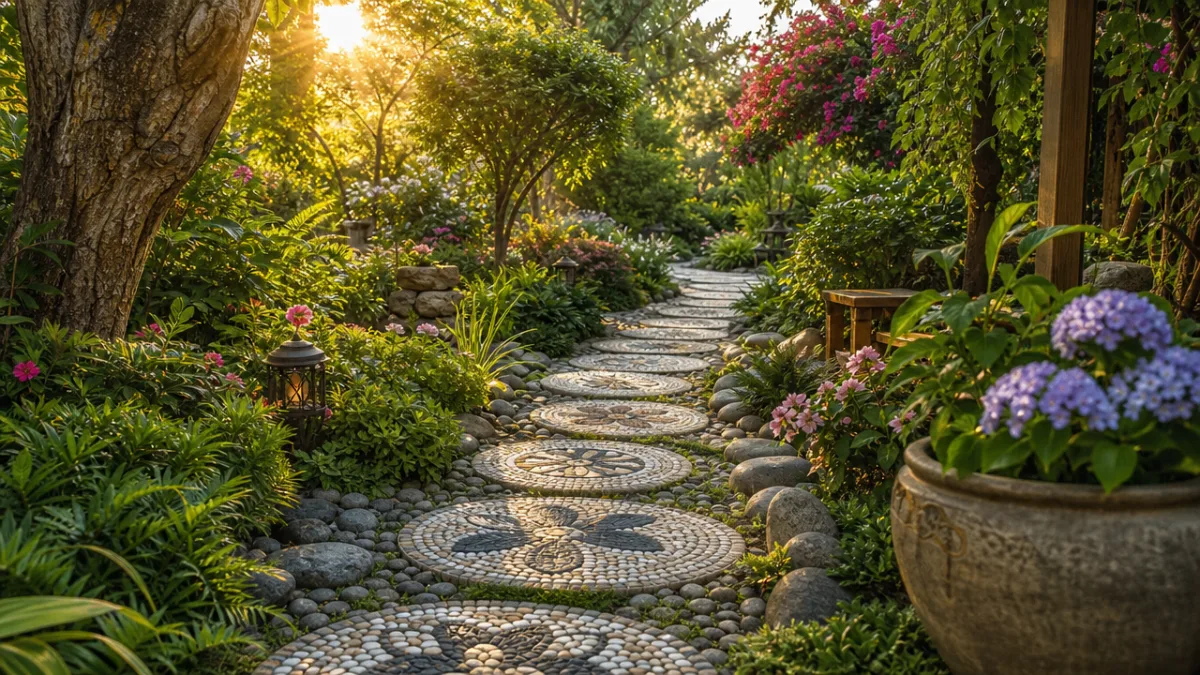
Mosaic stepping stones are probably the most popular outdoor pebble project around, and once you try them, it’s easy to see why. You cast your own concrete discs using simple molds — available at garden centers or improvised from cake pans — then press your pebble design into the surface before the concrete sets. Geometric patterns, floral medallions, spirals, and compass roses are all perennial favorites. These personalized stones add real character to paths, patios, and lawn borders, and they make incredibly thoughtful housewarming or milestone gifts. Each one is unique, functional, and built to last for decades with almost no maintenance required.
Beyond the pathway, pebbles can define garden beds, border water features, or create dry river effects that handle drainage while looking great doing it. Larger rocks painted with ladybugs, hedgehogs, owls, or uplifting words are enormously popular tucked among planting beds — they reward visitors who wander slowly and look closely. Stacked pebble cairns near a garden entrance or beside a pond bring a meditative quality that manages to feel both ancient and completely current. The best gardens, like the best pebble art, are the ones that invite you to slow down and pay attention.
Pebble Figures and Storytelling Characters
One of the most beloved corners of the pebble art world is painted figures and characters — small stones that, alone or grouped together, tell a story. It’s genuinely remarkable how expressive a smooth river stone can be once you put the right design on it. A sleeping fox, a family portrait, a tiny bouquet of sunflowers, a miniature coastal village scene — the possibilities are wide open, and the appeal cuts across every age group. Kids are enchanted by them, and adults are too, usually more than they expect to be.
The technique takes a little patience but is much more approachable than it looks. Start with a base coat of white or light acrylic paint — this makes your colors pop and appear true rather than muddy. Then build up your design in layers using fine-tipped acrylic paint pens or thin brushes, letting each layer dry before adding the next. Begin with the largest color areas and work your way toward the fine details: eyes, whiskers, leaf veining, the tiny buttons on a coat. A magnifying glass is surprisingly helpful when you’re working on very small stones.
The versatility of these painted figures is part of what makes them so appealing. A collection of family member stones on a windowsill or bookshelf becomes something genuinely personal — more meaningful than almost anything you could buy. Seasonal sets — pumpkins and ghosts for fall, snowmen for winter, chicks and flowers for spring — give you an easy, low-cost way to refresh your décor throughout the year. Animal stones make wonderful paperweights, bookends, or garden ornaments. And for kids, a set of story-character pebbles is essentially an open-ended toy that encourages quiet, imaginative play. It’s hard to think of another craft that delivers this much expressive range from materials this simple.
Functional Pebble Art: Beauty With a Purpose
Decorative pebble art is deeply satisfying on its own, but some of the most impressive projects take things a step further by pairing visual appeal with genuine everyday usefulness. When craftsmanship and function come together, the result feels less like a hobby and more like thoughtful design. Functional pebble projects also tend to win over people who don’t usually go in for ornamental crafts — there’s something particularly satisfying about making something that looks beautiful and actually does something. It’s also one of the best categories for gifting, since whoever receives it gets both aesthetic pleasure and practical value.
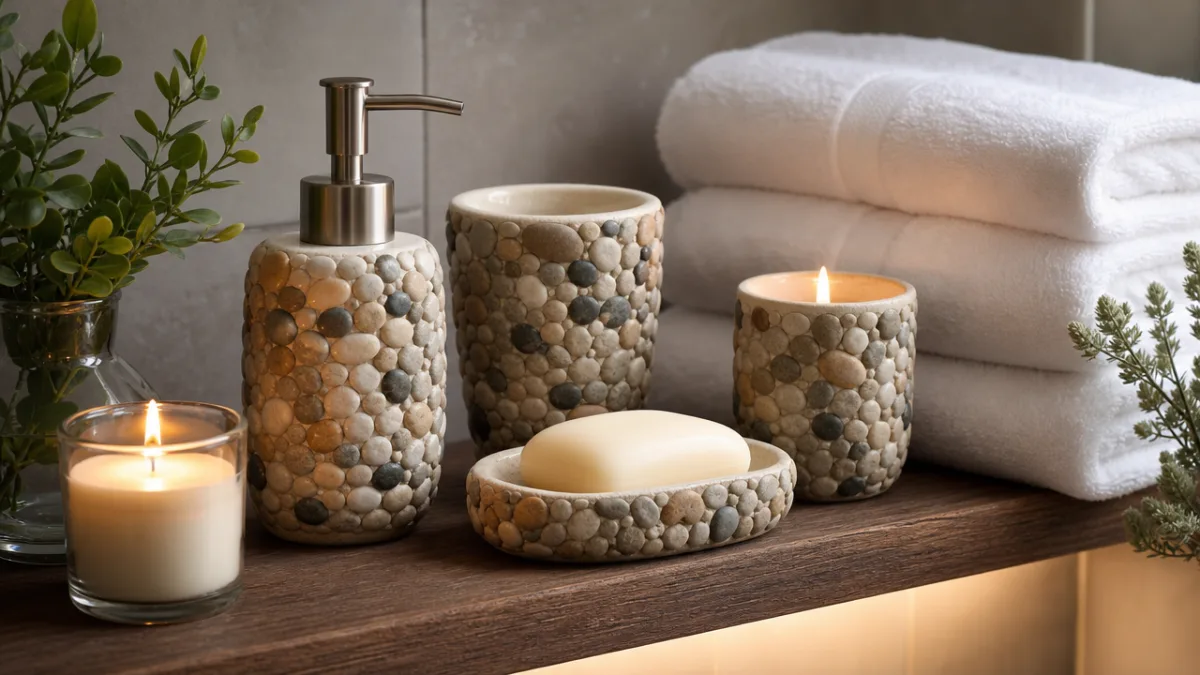
A pebble-covered flowerpot is a perfect starting point for beginners. Take a terracotta or ceramic pot and adhere pebbles to the outside using waterproof glue, working your way up in horizontal rows from the base. Mix stone sizes and alternate colors or shapes to create natural-looking pattern bands. The finished pot is heavier, more stable, and more resistant to everyday bumps and scrapes than a plain one, and it develops a beautifully weathered quality over time. These work just as well on a windowsill as on a patio, and they look particularly charming paired with potted herbs, succulents, or flowering plants.
Other highly practical pebble projects include the following popular options that combine artistry with everyday usefulness:
- Pebble-framed mirrors — Surround a bathroom or hallway mirror with carefully arranged pebbles adhered to the frame for a spa-like, natural aesthetic that complements both contemporary and traditional interiors.
- Stone coasters — Arrange and adhere flat pebbles to cork backing to create heat-resistant, water-tolerant coasters that protect furniture while adding artisan character to any table setting.
- Pebble photo frames — Cover a wooden or cardboard frame with pebbles to create a unique surround for a treasured photograph, adding organic texture to what might otherwise be a generic piece of décor.
- Candle holders — Fill a glass vase or hurricane lantern with small, uniform pebbles and nestle a pillar candle within them for a centerpiece that glows warmly while anchoring the arrangement with natural weight and texture.
- Soap dishes — A shallow dish filled with smooth pebbles provides excellent drainage for a bar of soap while creating an attractive, spa-inspired bathroom accent that requires no crafting skill whatsoever.
The one thing to get right with functional pebble art is your adhesive. For lightweight indoor projects, standard craft glue or hot glue will do the job, but anything heavier — or anything destined for a bathroom or outdoor setting — needs a waterproof, weather-resistant option like construction adhesive or marine-grade epoxy. It’s worth getting this right from the start. Using the wrong glue is the most common reason pebbles start falling off over time, and fixing a half-finished project is far more annoying than just choosing the right product upfront.
Getting Started: Tools, Tips, and Inspiration for Your Pebble Art Journey
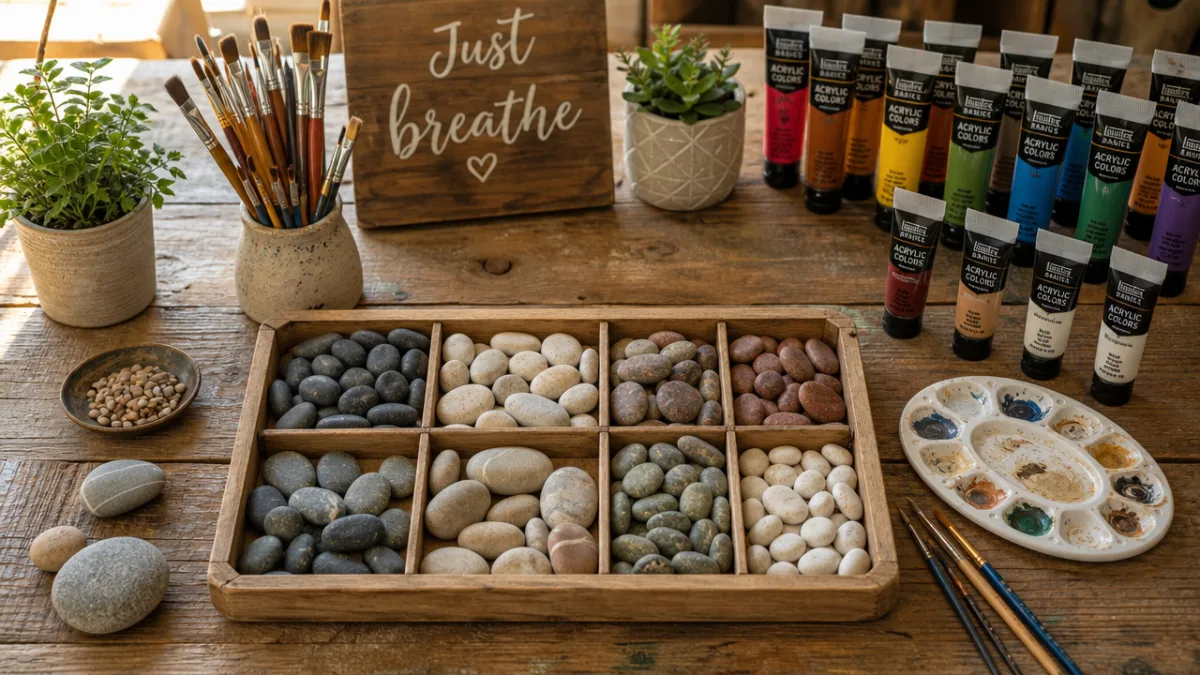
One of the best things about pebble art is how little you need to get going. A solid starter kit looks something like this: a collection of assorted pebbles, acrylic paints in the primary colors plus black and white, a few paintbrushes in different sizes, a fine-tipped paint pen for detail work, clear acrylic sealant in matte and gloss, and a good craft adhesive. That’s genuinely it. Everything on that list is available at any craft store or online for very reasonable prices, and from that small foundation, the creative possibilities really do open up in almost every direction.
If a blank pebble feels a little intimidating at first, that’s completely normal — and there are some straightforward ways to build your confidence. Sketching your design onto the stone in pencil or chalk before picking up a brush takes a lot of the uncertainty out of those early moments. Practicing your design on paper first helps you work out proportions and color choices before you’re committing to stone. Keeping a reference photo nearby — of an animal, a plant, a pattern, whatever you’re painting — gives you something to follow rather than trying to hold everything in your head. And perhaps most importantly: lean into the imperfection. Pebble art is handmade, and the slight irregularities are part of what makes it charming. Chasing mechanical precision usually produces less satisfying results than just relaxing into the process.
The pebble art community is alive and thriving across social media, and it’s one of the best resources you have as you develop your skills. Pinterest boards dedicated to stone painting showcase thousands of ideas, from simple beginner designs to jaw-dropping compositions that would challenge even experienced artists. Instagram communities of stone painters share techniques openly, cheer each other on, and offer real encouragement through the learning curve. If you prefer in-person connection, local craft groups and workshops focused on natural materials can provide hands-on guidance and the kind of creative energy that’s hard to replicate alone. Wherever you find your people in this craft, you’ll find them warm, generous, and genuinely excited to welcome someone new.








What do you think?
It is nice to know your opinion. Leave a comment.