










15 Budget-Friendly Backyard Landscaping Ideas That Make Your Yard Look Expensive
Why Your Backyard Deserves a Transformation Without Breaking the Bank
Most homeowners assume that a beautifully landscaped backyard requires either a professional designer or a budget that rivals a small home renovation project. The reality, however, is far more encouraging. With thoughtful planning, a bit of creativity, and a willingness to put in some weekend effort, you can completely transform your outdoor space into something that looks polished, intentional, and genuinely impressive — all without spending a fortune.
The secret lies in understanding what makes a yard look expensive in the first place. It is rarely about the price tag of individual elements. Instead, it is about cohesion, contrast, clean lines, and the impression of deliberate design. A yard with well-defined borders, a consistent color palette, and layered planting feels expensive because it feels considered. That kind of thoughtfulness costs time, not necessarily money.
This guide walks you through fifteen proven landscaping ideas that deliver maximum visual impact at minimal cost. Whether you are starting from a patchy lawn and bare beds or simply looking to elevate what you already have, these strategies will help you work smarter, prioritize your investments wisely, and end up with a backyard that draws genuine compliments from everyone who sees it.
Setting Realistic Goals Before You Begin
Before picking up a shovel or heading to the garden center, it pays to spend time simply observing your backyard. Walk through it at different times of day and take note of where sunlight falls, which areas drain poorly after rain, where foot traffic naturally flows, and which sections feel visually chaotic. These observations will directly inform which projects will deliver the most impact and which might be money wasted if tackled out of sequence.
Sketch a rough overhead map of your yard on paper. Mark existing trees, structures, utility lines, and garden beds. Identify two or three zones you want to prioritize — perhaps a seating area, a planting border, and a pathway. Focusing your budget and energy on these zones rather than spreading resources thin across the entire yard is one of the most effective strategies budget landscapers can adopt. Concentrated effort creates finished-looking spaces rather than a yard that is uniformly mediocre everywhere.
Finally, set a realistic budget and divide it into categories: hardscaping materials, plants, soil amendments, and tools. Many beginners overspend on plants and have nothing left for mulch or edging, which are actually the finishing details that make everything look polished. A general rule of thumb is to allocate roughly thirty percent of your budget to edging, mulching, and clean-up materials because these items do the heavy lifting in terms of making your yard look professionally maintained.
Defining Edges and Creating Clean Lines
If there is one single landscaping technique that delivers more visual bang per dollar than any other, it is clean edging. The line between your lawn and your garden beds is where untended yards reveal themselves immediately. Blurry, grass-invaded borders make even expensive plants look unkempt, while crisp, well-defined edges make even modest plantings look intentional and high-end. This is not an exaggeration — edging is genuinely transformative.
You do not need expensive metal edging to achieve this effect, though it is worth the investment if you can manage it. A simple flat spade or a manual half-moon edger creates a clean vertical cut between lawn and bed. Follow the existing curves of your borders, or reshape beds into gentle, flowing curves if your current borders are awkward or asymmetrical. Avoid overly complex shapes with sharp interior angles, as these are difficult to maintain and look fussy rather than elegant.
Once edges are established, maintaining them becomes a regular but quick task. A quick pass with an edger every two to three weeks during the growing season keeps borders looking sharp with minimal effort. Combine crisp edging with a two-to-three-inch layer of fresh mulch in your garden beds and the overall effect is remarkably professional. The contrast between the dark mulch, the green grass, and the vertical edge line creates depth and structure that is immediately recognizable as intentional landscaping.
Choosing the Right Mulch for Maximum Impact
Not all mulch is created equal, and the type you choose will significantly affect both the look and the practicality of your garden beds. Shredded hardwood bark and double-shredded bark mulch are among the most popular choices for a reason: they break down slowly, suppress weeds effectively, retain moisture, and have a rich, dark appearance that sets off plants beautifully. Avoid dyed red or orange mulches unless they genuinely complement your home’s exterior, as these can easily look garish rather than elegant.
Pine straw is an excellent and often cheaper alternative in regions where it is locally available, and it has a naturalistic quality that works particularly well in woodland-style plantings. Gravel and river rock mulch are worth considering for low-maintenance areas or for creating visual contrast in a design scheme, though they are less beneficial for soil health than organic mulches. Whatever material you choose, consistency across your property is key — mixing mulch types in different beds tends to fragment the visual unity of the yard.
When applying mulch, depth matters. Too thin, and weeds push through easily while the visual effect is underwhelming. Too thick, and you risk smothering plant roots and creating conditions for fungal issues. Two to three inches is the sweet spot for most applications. Pull mulch slightly away from the base of plant stems and tree trunks to prevent rot. Fresh mulch applied at the start of the growing season is one of the most cost-effective ways to make your entire yard look freshly tended and professionally maintained.

Strategic Planting: Using Plants Like a Designer
Professional landscapers do not simply plant what they like wherever there is space. They think in terms of layers, repetition, seasonal interest, and texture. Adopting even a basic version of this approach will dramatically elevate the look of your backyard plantings. The layered approach involves placing taller plants at the back or center of beds, medium plants in the middle, and low-growing ground covers or border plants at the front, creating depth and a sense of abundance even when the actual plant count is modest.
Repetition is perhaps the most underused tool in the amateur gardener’s kit. Repeating the same plant or plant grouping at intervals along a border creates rhythm and a sense of designed intention that catches the eye favorably. You do not need to plant in strict patterns — a looser repetition, perhaps every six to eight feet, is enough to create visual cohesion without feeling rigid. Choose two or three anchor plants that you genuinely love and repeat them throughout your main borders rather than buying one of everything at the garden center.
Texture and contrast are what make a planting come alive. Pair fine, feathery foliage against bold, broad leaves. Place silvery or gray-leafed plants next to deep green ones. Use tall, vertical forms like ornamental grasses or upright shrubs next to mounding or spreading plants to create dynamic silhouettes. These contrasts read as sophisticated planting design and cost nothing extra — they are simply a matter of choosing your plants with some intention before you buy.
Budget-Friendly Plant Sourcing Strategies
Full-price plants from garden centers can quickly exhaust a landscaping budget, but there are many ways to build a lush planting scheme without paying retail for every specimen. Native plant societies, local botanical garden sales, and community plant swaps are excellent sources of healthy, locally adapted plants at a fraction of nursery prices. Perennials divide readily after a season or two of establishment, meaning one purchased plant can become three or five within a couple of years — a genuinely compounding investment.
Shopping at the end of the season is another reliable strategy. Most garden centers dramatically discount remaining stock in late summer and fall to avoid overwintering it. Plants at this stage may look a little tired, but they establish beautifully when planted in fall and will return vigorously the following spring. Buying native perennials, ornamental grasses, and shrubs this way can yield savings of fifty percent or more compared to peak-season pricing.
Online plant marketplaces and local buy-nothing groups have become excellent sources for gardeners looking to stretch their dollars. Neighbors who are dividing hostas, daylilies, or ornamental grasses are often happy to give them away simply to save themselves the trouble of disposal. These established divisions frequently outperform nursery starts because they already have developed root systems. Building a planting through a combination of strategic purchases, divisions, and community sourcing is genuinely the way experienced budget landscapers create lush, layered gardens.
Hardscaping on a Budget: Paths, Patios, and Borders
Hardscaping — the non-plant elements of a landscape including paths, patios, walls, and steps — tends to make up a significant portion of landscape budgets, and for good reason: these elements provide structure, functionality, and a sense of permanence that plants alone cannot deliver. The encouraging news for budget landscapers is that the appearance of high-end hardscaping can often be achieved with more affordable materials and some careful installation effort.
Gravel paths are among the most cost-effective hardscaping options available and, when installed correctly, look genuinely sophisticated. Pea gravel, crushed granite, and decomposed granite are all relatively inexpensive and create a loose, naturalistic path surface that works well in informal garden settings. For a cleaner, more formal look, use a border of steel, aluminum, or pressure-treated lumber to contain the gravel and prevent spreading. Edged gravel paths through a planted garden read as a classic, considered design choice.
For patio surfaces, concrete pavers offer an excellent balance of cost, durability, and appearance. Standard gray concrete pavers are relatively inexpensive compared to natural stone, and when laid in an interesting pattern — herringbone or basketweave rather than simple grid — they have a crafted quality that elevates the overall look. Consider mixing two sizes of pavers for visual interest. A patio of this kind, properly installed with a compacted gravel base, will last decades and anchors an outdoor living area in a way that no furniture arrangement alone can achieve.
DIY Retaining Walls and Raised Beds
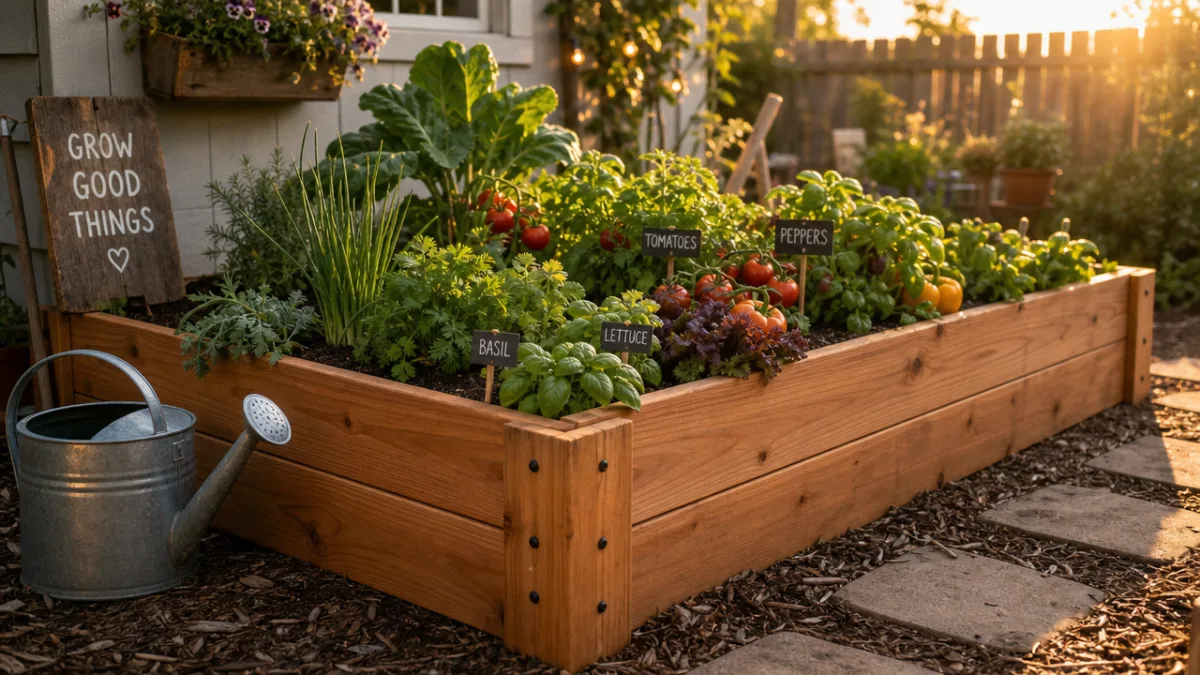
Retaining walls and raised beds add tremendous structural interest to a backyard while also solving practical problems like slope management and poor soil quality. Timber raised beds built from untreated cedar or pine are among the most accessible DIY projects in landscaping. A simple rectangular raised bed constructed from two-by-ten boards, filled with quality amended soil, immediately transforms a flat, featureless lawn into a productive and visually interesting space.
For retaining walls on sloped lots, dry-stacked stone or large concrete block offers a naturalistic, sturdy solution that homeowners with basic skills can install themselves on gentle slopes. The key is proper base preparation — the first course of stone or block must be partially buried and perfectly level for the wall to remain stable over time. A modest retaining wall that creates two level terraces in a sloped yard dramatically changes its functionality and visual character, making it feel like a deliberate, designed landscape rather than an unmaintained hillside.
Combinations of raised beds and low retaining walls, particularly when connected by simple gravel or stepping stone paths, create the impression of a fully designed garden room even in modest backyards. The sense of enclosure, level change, and defined purpose that these elements create is precisely what distinguishes a professionally landscaped yard from an amateur effort. And because these projects can be built incrementally over multiple seasons, they are genuinely achievable on a stretched budget.
Lighting, Focal Points, and the Finishing Touches
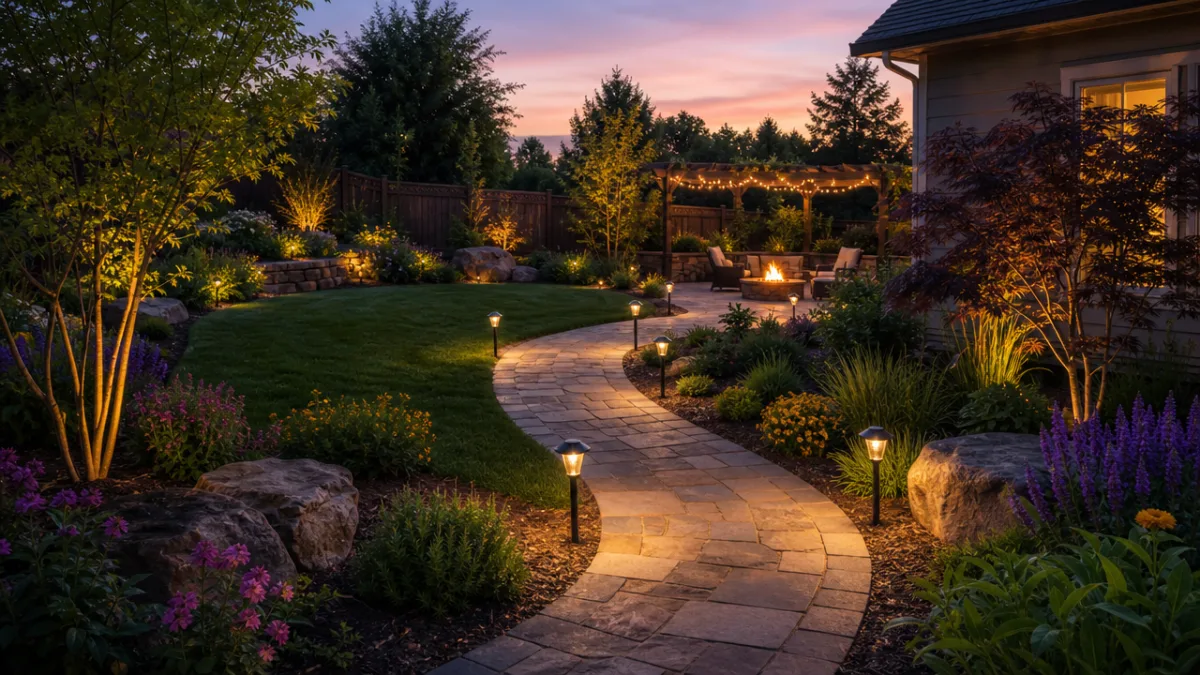
Landscape lighting is perhaps the most underestimated budget landscaping tool available. Solar-powered path lights, uplights, and string lights have improved enormously in quality and affordability over the past several years, and the visual transformation they enable is genuinely dramatic. A yard that looks pleasant in daylight can become magical at night with thoughtfully placed lighting, extending the visual enjoyment of your outdoor space to the evening hours and making the yard visible and appealing from inside the house after dark.
Focal points are the anchoring moments that draw the eye and give a landscape its sense of composition. Every well-designed yard has at least one or two: perhaps a striking specimen tree, a decorative urn, a birdbath, a water feature, or a well-placed bench. The key is to be selective. One well-chosen focal point in a planting bed has far more visual power than five mediocre ones scattered around the yard. Thrift stores, estate sales, and online marketplaces are excellent sources for interesting decorative garden elements at very low prices.
Furniture arrangement matters more than furniture quality in most backyard settings. A well-arranged seating area with budget furniture can look more inviting and deliberate than an expensive set placed without thought. Create a clear sense of enclosure — with plantings, a pergola, a low fence, or even just a rug defining the space — and position seating to take advantage of the best views and natural shade. Add a few coordinating cushions in a consistent color palette and the space immediately reads as styled and welcoming regardless of what the furniture cost.
Water Features and Sound Design
The sound of moving water has a profoundly positive effect on the experience of a backyard, masking urban noise, attracting wildlife, and creating a sense of calm that no visual element alone can replicate. Small, self-contained fountain features powered by solar pumps are now available at very accessible price points and require no plumbing or electrical expertise to install. Even a modest bubbling urn or a small recirculating bowl tucked among plantings adds an experiential dimension to the garden that visitors invariably notice and comment on.
For those with more ambition, a simple constructed pond using a preformed liner or flexible EPDM rubber liner can be a weekend project that becomes a long-term asset in the garden. Water gardens attract beneficial insects, birds, and frogs, creating a living ecosystem within your backyard. The surrounding planting opportunities — marginal plants, moisture-loving perennials, and ornamental grasses — are among the most dramatic and interesting in the plant world. A water feature establishes your backyard as a destination rather than simply a lawn to be maintained.
Even without a pump or liner, a simple decorative basin filled with water and aquatic plants creates the presence of water in a garden. A large glazed pot sealed at the base and filled with water hyacinth or dwarf papyrus is an elegant, zero-maintenance water garden solution that costs very little. Position it where sunlight will reflect off the surface and place it centrally within a planting arrangement to give it maximum visual weight. These small moments of water in a garden register as design sophistication that most visitors cannot quite name but immediately feel.
Lawn Care as Landscape Design
Your lawn itself is a significant design element, and investing time in its health and appearance pays dividends across the entire yard. A thick, green, weed-free lawn makes everything adjacent to it — plantings, paths, structures — look better by comparison. Core aeration, overseeding thin areas, and consistent fertilization are relatively inexpensive interventions that dramatically improve lawn appearance over one to two growing seasons. Mowing height matters too: most lawns look best kept at three to four inches, which shades out weeds and stays greener in heat and drought.
Consider reducing lawn area strategically rather than maintaining a struggling lawn in difficult conditions. Deep shade, steep slopes, and consistently wet or dry areas are poor candidates for lawn grass and typically produce thin, patchy turf no matter how much effort is applied. Replacing these areas with shade-tolerant ground covers, mulched naturalistic plantings, or hardscaping elements eliminates a source of visual frustration and replaces it with something that genuinely thrives in its conditions.
The edges where lawn meets beds, paths, or structures are where your landscape is most closely scrutinized. A perfectly mowed, well-edged lawn with healthy color communicates care and competence more powerfully than almost any other single factor. Before spending money on new plants or structures, ensure your existing lawn is as healthy and well-maintained as it can be. This foundational work creates the canvas against which all your other landscaping investments are viewed, and a good canvas makes everything else look better.
Bringing It All Together: Creating a Cohesive Backyard Design
Individual landscaping improvements can each be satisfying in isolation, but the true goal is a yard where every element feels like it belongs to the same story. Cohesion in landscape design comes from consistent choices about color, material, and style carried across the entire space. If you choose natural stone for one path, use stone accents elsewhere. If your planting palette leans toward blues, purples, and silvers, carry those tones through multiple beds rather than having one themed area and several unrelated ones.
Think about your backyard as a series of outdoor rooms connected by pathways and transitions. A seating area near the house, a productive kitchen garden in a sunny corner, a naturalistic wildflower planting along the back fence — each of these can have its own character while still belonging to the same overall design through shared materials, plants, and a logical sense of flow between them. Paths that connect these areas are more than just functional; they create a narrative journey through the space that makes it feel larger and more intentional than it may actually be.
Maintenance planning is an honest and important part of any design decision. The most beautiful landscape is only as good as the time and energy you can realistically commit to maintaining it. Choose plants with growth habits that suit your space rather than requiring constant cutting back. Install mulch thickly enough to genuinely suppress weeds rather than thin enough to require constant hand weeding. Design paths and edges that you can maintain quickly and easily on a regular schedule. A realistic approach to maintenance will keep your beautiful yard beautiful year after year rather than becoming another source of weekend overwhelm.
Seasonal Interest and Year-Round Appeal
A backyard that looks wonderful in July but bare and drab from November through March has missed an opportunity. Designing for year-round interest is not complicated, but it does require deliberate plant selection. Include at least some evergreen shrubs or trees to provide structure and color through winter. Choose deciduous shrubs and trees that have multiple seasons of interest — spring flowers, summer berries, fall color, and interesting winter bark or branching habit. Ornamental grasses, which look spectacular from late summer through winter before being cut back in spring, are among the most valuable plants in a four-season landscape.
Bulbs represent perhaps the best value in all of gardening for the impact they deliver relative to their cost. A bag of fifty tulip bulbs or three hundred daffodil bulbs planted in fall costs very little compared to most landscape expenditures but delivers a spectacular spring display that would cost many times more to replicate with nursery plants. Bulbs naturalize over time in most settings, spreading and multiplying without any additional investment. Planting bulbs in generous drifts beneath deciduous shrubs or at the front of borders where their dying foliage will be hidden by emerging perennials is a classic and highly effective approach.
The goal is not to have your backyard in peak bloom at every moment — that is impossible — but to ensure that at any given time throughout the year, there is something genuinely beautiful to observe from inside the house or during a walk through the garden. Seasons of restraint and dormancy are natural and even beautiful in their own way, particularly when evergreen structure, interesting plant forms, and well-designed hardscaping carry the visual interest during the quieter months. A thoughtfully designed budget landscape can truly be a source of year-round pleasure, proving conclusively that a beautiful yard and a manageable budget are not mutually exclusive goals.








What do you think?
It is nice to know your opinion. Leave a comment.