










15+ Affordable Garden Gate Ideas for Your Home
A garden gate is about so much more than just getting in and out — it’s the first thing people notice about your outdoor space, and it sets the tone for everything behind it. Whether you’re fencing in a veggie patch, putting a frame around a flower garden, or just trying to give your front yard a little more character, the right gate can completely change how your home looks from the street. And here’s the thing: you don’t have to spend a lot to get something genuinely beautiful. With some creativity and smart material choices, you can end up with a gate that looks like it came from a high-end landscaping catalog — without the price tag to match.
A lot of homeowners assume that a nice-looking gate means calling in a professional and dropping serious money on premium materials. But honestly, some of the most charming gates you’ll come across — the ones you’d see in a country garden or a Pinterest-worthy cottage yard — were built by regular people on a weekend using reclaimed wood, basic hardware, and a bit of elbow grease. The ideas in this guide cover everything from quick beginner projects to ones that take a bit more ambition, but they all have one thing in common: great results without the custom landscaping bill.
To make things easy, we’ve organized everything by material, style, and roughly how much effort is involved, so you can zero in on what actually fits your home and your comfort level with tools. We’re talking classic wooden picket designs, upcycled metal creations, rustic farmhouse arches, sleek modern panels — the whole range. By the time you’re done reading, you should have a solid sense of which direction appeals to you and what it’ll realistically take to pull it off.
Classic Wooden Garden Gates
Wood is still the go-to material for garden gates, and it’s not hard to understand why. It’s easy to find, reasonably priced, simple enough to work with, and incredibly flexible in terms of style. Depending on how you finish it, a wooden gate can look completely different — stained a rich walnut brown for something traditional, painted bright white for a cottage feel, or left to weather naturally if you’re going for that relaxed, rustic vibe. Cedar and pressure-treated pine are particularly good picks for outdoor use since they hold up well against rot and insects without needing a ton of ongoing care.
The classic picket gate is probably the most familiar design out there. Those evenly spaced vertical slats with their pointed or rounded tops have a timeless, feel-good quality that works beautifully alongside flower beds and white picket fences. Building one yourself really only requires basic carpentry — cut your pickets to size, mount them on two horizontal rails, add a diagonal brace so the whole thing doesn’t sag, and hang it on solid posts. You can often knock the whole thing out in an afternoon, and materials typically run somewhere between thirty and eighty dollars depending on the wood and the size of the gate.
If you want something with a little more weight and presence, a board-and-batten design is worth considering. Wide horizontal planks are fixed to vertical battens on the back, which gives the gate a solid, substantial feel along with more privacy and a more architectural look. These work really well in cottage gardens or kitchen gardens where a bit of enclosure feels cozy rather than closed-off. Throw on a simple wrought iron latch and some decorative strap hinges, and it’ll look like you spent far more than you actually did.
Repurposed and Upcycled Gate Designs
If you want to keep costs as low as possible while also doing something good for the environment, repurposing materials is the way to go. Old wooden pallets, salvaged fence sections, vintage headboards, reclaimed doors — all of these have been turned into genuinely stunning garden gates by homeowners who were willing to think a little outside the box. The upcycled gate trend has really taken off over the past decade, and it’s easy to see why: you get something totally unique that no store-bought gate could ever replicate, and often for next to nothing.
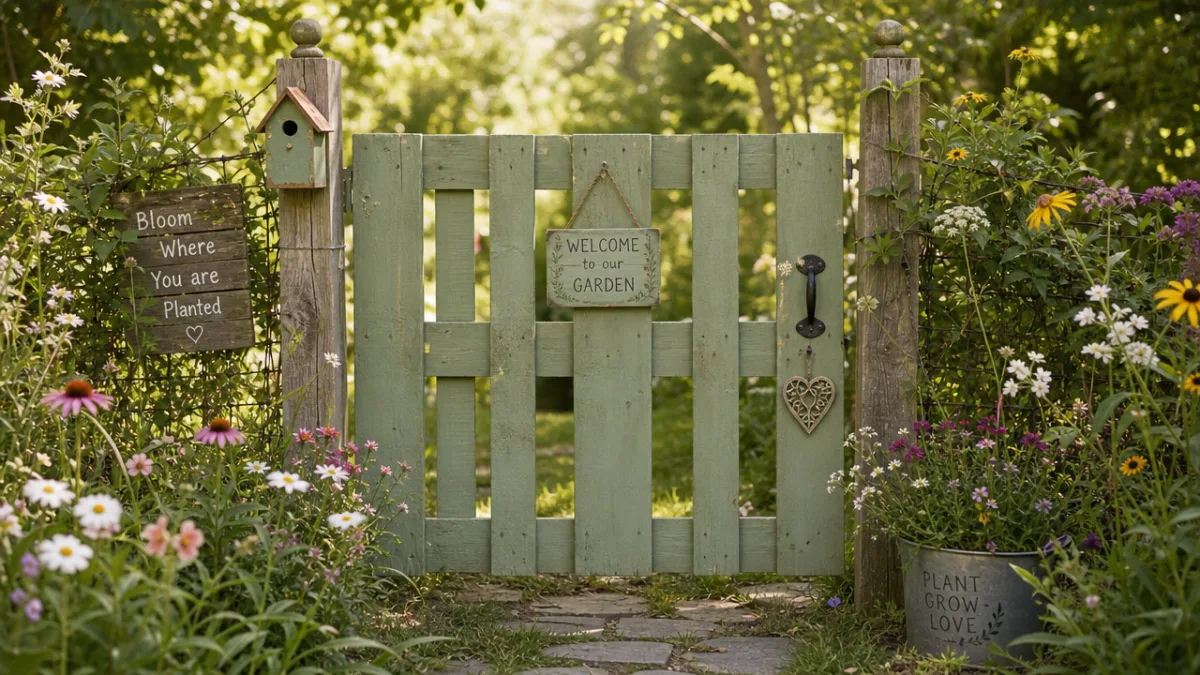
Pallets are probably the most accessible starting point. Hardware stores, garden centers, and warehouses often give them away for free since they’d otherwise just be thrown out. A single pallet, cut down and sanded, can actually become a surprisingly attractive gate. Slap on a coat of exterior paint in something bold — a deep sage green, navy blue, or barn red — and nobody would ever guess what it used to be. The one thing to watch out for is quality; pallet wood varies a lot, so take the time to pick through and find the straightest, most consistent boards before you start building.
Old interior doors rescued from renovations or salvage yards are another fantastic option, and honestly some of the most dramatic-looking gates you’ll ever see come from this approach. The solid construction, the paneled details, the beautiful worn patina — all of that character takes decades to develop naturally, and you’re getting it for free. Strip the old hardware, treat the wood with a waterproof sealant or outdoor paint, swap in heavy-duty gate hinges, and you’ve got an entrance that genuinely makes people stop and look twice. Check architectural salvage yards and Facebook Marketplace or Craigslist — you can often find beautiful old doors for well under twenty dollars.
Metal and Wrought Iron Inspired Gates
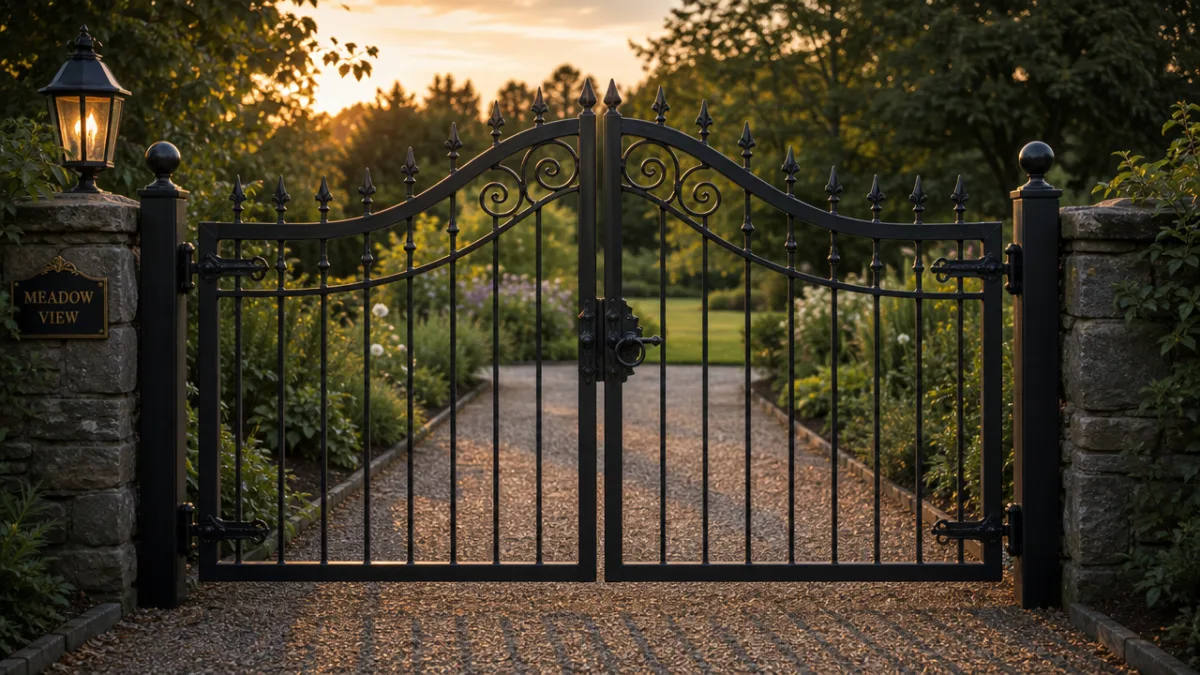
There’s a kind of permanence and elegance to metal garden gates that wood just can’t quite match. Classic wrought iron with its scrolling details and intricate patterns has been a staple of grand entrances for centuries. Genuine hand-forged wrought iron isn’t cheap, but modern alternatives — steel tube gates, aluminum powder-coated panels, cast iron reproductions — give you most of the same visual impact at a fraction of the cost. Plenty of home improvement stores now carry pre-made metal gate panels that fit a standard opening for well under two hundred dollars.
For those really watching the budget, repurposed metal opens up some wonderful possibilities. Ornate iron headboards from Victorian or Edwardian beds, for instance, make surprisingly beautiful garden gates with barely any modification at all. The decorative metalwork that was originally designed for a bedroom translates almost perfectly to a cottage garden or romantic outdoor setting. Estate sales, thrift stores, and online secondhand sites are your best hunting grounds here — it takes some patience, but the finds can be genuinely remarkable, and the prices are often just as remarkable in a good way.
Steel flat bar is another budget-friendly metal option, especially if you’re after something cleaner and more contemporary. With a welder — or access to a local maker space — you can put together custom geometric gates using flat bar stock arranged in chevrons, horizontal bands, diamond grids, or simple vertical lines. These can be powder-coated in any color you like, and matte black in particular has become incredibly popular in modern and industrial-style garden designs. If welding isn’t something you do, many local fabricators will build a simple design to your specs for a pretty reasonable custom fee.
Arched and Decorative Gate Styles
An arched top is one of those details that immediately lifts a garden gate from purely functional to genuinely architectural. There’s something about that curve that creates a real sense of arrival — it frames whatever lies beyond it, marks a clear threshold, and hints that something worth seeing is on the other side. The good news is you don’t need to be an experienced carpenter to pull this off. Many lumber yards will cut arched tops to your specifications, and there are pre-made arched gate kits available through garden supply retailers that are really just assembly jobs. The visual impact you get from that curved top is way out of proportion to the extra effort involved.
A moon gate — a circular opening cut into a wall or fence — is one of the more striking design ideas you can borrow, originally from traditional Chinese garden architecture. A full masonry moon gate is more of a serious investment, but smaller versions can be built using bent rebar or flexible PVC pipe formed into a circle and set into a wooden gate frame. The circular cutout becomes an instant focal point that naturally draws your eye toward whatever’s beyond it — a flower border, a winding path, a garden bench. Done creatively, it’s a dramatic effect that doesn’t have to cost much at all.
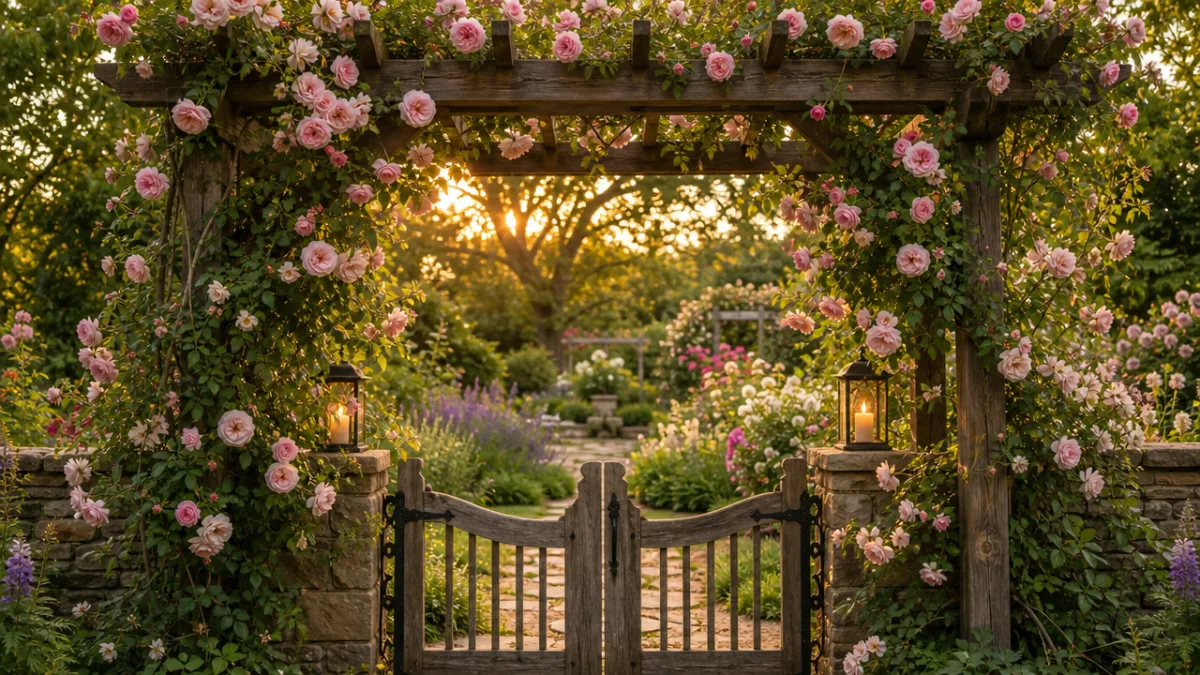
Pergola-style gate structures take the arch idea even further by adding a full overhead framework that climbing plants can take over. A simple timber pergola gate built from pressure-treated lumber and basic joinery, planted with climbing roses, jasmine, wisteria, or clematis, becomes something truly spectacular within a season or two. The plants fill in, the gate blooms and scents the air, and it changes with the seasons in ways that no purely built structure ever could. The timber and hardware costs are modest upfront, and then the plants just do the decorating for you — year after year, for free.
Low-Maintenance and Modern Gate Solutions
If the idea of a beautiful garden gate appeals to you but the ongoing upkeep doesn’t, low-maintenance materials are the answer. Vinyl PVC gates have come a long way — they’re available in styles that convincingly mimic wood, and they genuinely require almost no maintenance beyond an occasional rinse with the garden hose. No rotting, no warping, no splintering, no repainting. That makes them a really practical choice in wet climates, or just for anyone who’d rather spend their weekend actually enjoying the garden instead of working on it.
Composite materials hit a nice middle ground between the warmth of wood and the toughness of synthetics. Made from a mix of wood fiber and recycled plastic, composite boards come in a range of colors and finishes, hold up well against moisture and insects, and look great for years without much fuss. Building a gate from composite decking boards works essentially the same way as building with timber, so if you’re comfortable with basic woodworking the transition is pretty seamless. The upfront cost is a bit higher than basic timber, but you’ll save on maintenance and replacement costs over time — so it tends to make good sense in the long run.
Bamboo gates are another option worth knowing about, especially if you’re drawn to something with a more organic, tropical feel. Bamboo poles can be lashed or wired together in all kinds of patterns — vertical screens, diagonal latticework, horizontal layering — to create gates that are both lightweight and surprisingly solid. Bamboo is naturally moisture-resistant and grows so fast that it’s one of the most sustainable building materials you can use. It fits particularly well in Asian-inspired gardens, tropical plantings, or as a naturalistic backdrop for ornamental grasses and big bold-leafed plants.
Hardware, Finishing Touches, and Installation Tips
Even a beautifully designed gate can fall flat if the hardware is cheap or the installation is off. The hinges, latch, and any decorative ironwork you choose aren’t just afterthoughts — they’re a real part of what makes the finished gate work both functionally and visually. For wooden gates, heavy-duty strap hinges or T-hinges are the classic choice: they spread the weight of the gate effectively and add a decorative detail that ties the gate to its post in a satisfying way. Stick to galvanized or stainless steel hardware to avoid rust stains bleeding into your wood over the years.
Getting the installation right from the start is what separates a gate that works great for decades from one that starts sagging and sticking within a couple of years. The most common mistake is not setting posts deeply enough, or skipping the concrete. A good rule of thumb: gate posts should go at least a third of their total length into the ground — a six-foot post needs at least two feet buried — and they should sit in concrete, not just packed earth. Make absolutely sure posts are plumb and spaced correctly before the concrete sets, because fixing that afterward is genuinely miserable.
How you finish the gate will have a huge impact on how long it looks good and stays functional. For wood, that means a solid exterior primer followed by two coats of exterior paint or a UV-protective penetrating stain. Don’t skip the end grain — those cut ends soak up moisture fastest and are where rot usually starts. Metal gates need a rust-inhibiting primer before any paint or powder coating goes on. Come back every two to three years to touch up any spots where the finish has worn through, and your gate will genuinely hold up for decades.
- Always use exterior-grade hardware — galvanized, stainless steel, or powder-coated finishes hold up against rust and staining far better than bare metal or zinc-plated alternatives.
- Install a diagonal brace running from the bottom hinge corner to the top latch corner on any wooden gate wider than three feet; this prevents sagging over time.
- Consider adding a self-closing spring hinge if you have children or pets, so the gate always returns to a closed position without requiring active management.
- For a polished finishing touch, add a house number plaque, a small lantern, or a decorative knocker to your gate post — these small details make a disproportionately large impression.
- If your gate will be used frequently, invest in a quality latch with a smooth, reliable action — a stiff or temperamental latch becomes frustrating very quickly and often signals that the gate is beginning to rack or sag.
Color is one of the most cost-effective tools you have for making your whole garden entrance feel intentional and pulled-together. Deep charcoal grey against a white fence comes across as contemporary and confident. Warm terracotta or burnt orange alongside natural timber feels Mediterranean and welcoming. Glossy black works on almost any gate style and adds an instant hit of elegance. Don’t overthink it or play it too safe — a garden gate is a relatively small surface, and a bold color choice reads as design confidence, not excess. Go for it.








What do you think?
It is nice to know your opinion. Leave a comment.