










Trumpet Vine: The Bold, Beautiful, and Slightly Wild Climber Every Garden Needs
What Is Trumpet Vine and Why Gardeners Love It
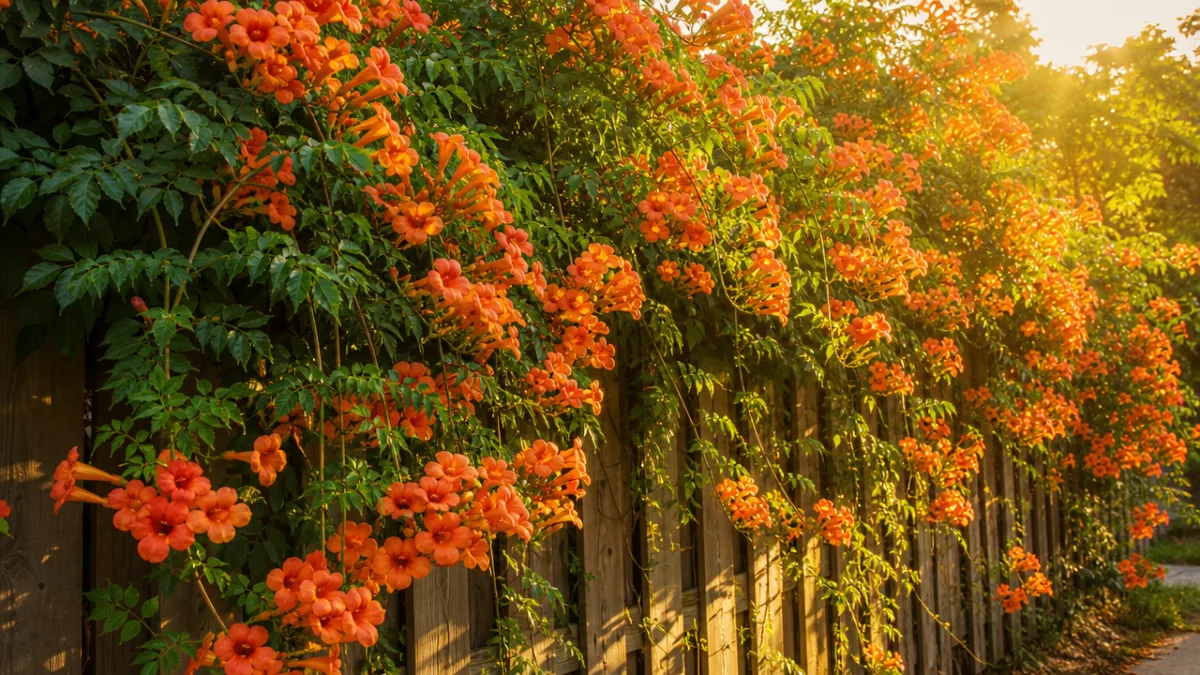
Trumpet vine — or Campsis radicans if you want to get botanical about it — is one of North America’s most eye-catching native climbers. Those clusters of vivid orange, red, and yellow blooms shaped like tiny trumpets have been stopping gardeners in their tracks for centuries, and honestly, it’s not hard to see why. Draped over an old fence, winding up a pergola, or spilling across a stone wall, trumpet vine brings a lush, almost tropical energy to even the most ordinary backyard.
Native to the eastern United States, trumpet vine has built up a devoted following among wildlife gardeners and casual backyard growers alike. Its flowers put on a show from midsummer all the way into early fall — right when a lot of other plants are starting to look tired and done. Those nectar-packed blooms are basically a hummingbird magnet, which is why trumpet vine consistently tops the list for anyone who wants to bring those tiny, jewel-colored birds into their garden on a regular basis.
On top of how good it looks, trumpet vine is tough as nails. Drought, poor soil, scorching heat, months of neglect — it shrugs off conditions that would wipe out far more pampered plants. If you’re newer to gardening and want something that delivers a big visual payoff without demanding constant attention, or if you’re a seasoned grower hunting for a real statement climber, trumpet vine is hard to beat. That said, getting to know its habits before you plant is genuinely important — this is a vine with opinions, and you want it working with you, not running the show.
Growing Conditions: Where Trumpet Vine Thrives Best
Trumpet vine is pretty easygoing about where it grows, but it really hits its stride in full sun. Give it at least six to eight hours of direct light a day and you’ll get dense foliage and an absolute explosion of flowers. In shadier spots, the plant will still grow — sometimes a little too enthusiastically — but flower production takes a noticeable hit, and the stems tend to get leggy and stretched as they reach upward hunting for light.
Soil-wise, trumpet vine is wonderfully uncomplicated. It’s actually happier in poor to average soil than in rich, heavily amended ground — too much fertility and it puts all its energy into leafy green growth rather than flowers. The one thing it does care about is drainage. Roots sitting in soggy soil for too long will rot, so if your spot tends to hold water, it’s worth amending or finding a different location before you plant.
As for climate, trumpet vine is cold-hardy in USDA zones 4 through 9, which covers an enormous chunk of North America. Once it’s settled in, it handles drought remarkably well and only really needs supplemental water during the worst dry stretches. Even in colder zones where the top growth freezes back completely in winter, the roots hunker down underground and push out strong new shoots come spring. It’s the kind of plant that just keeps coming back, which is either reassuring or alarming depending on your perspective.
Planting and Establishing Your Trumpet Vine
Spring is the sweet spot for planting trumpet vine — once the last frost has passed and the soil is warming up. That gives the roots a full growing season to get established before winter arrives. You can start one from seed, rooted cuttings, or a nursery transplant, though seed-grown plants can take several years before they bloom. Most gardeners find it much more satisfying to pick up a young plant from a local nursery, since you’ll typically see flowers in the first or second season and skip the long wait entirely.
Choosing your planting spot deserves some real thought, because trumpet vine is not a plant you want to move around. Dig a hole about twice as wide as the root ball and the same depth, set the plant at the same level it was growing in its container, and backfill with your native soil rather than a lot of rich compost. Water it in well, add a light layer of mulch to keep moisture in during those first few weeks, and you’re off to a good start. Just be mindful of what’s nearby — this vine will claim territory if given the chance.
Strong support from day one is non-negotiable. Trumpet vine climbs by gripping rough surfaces with tiny aerial rootlets, a bit like English ivy does, so it needs something substantial to hold onto. Put up a sturdy trellis, arbor, pergola, or fence right away and loosely tie young stems to point them in the direction you want. The key word here is “sturdy” — a mature trumpet vine gets genuinely heavy, and a flimsy trellis will eventually buckle under the weight. Cedar posts, wrought iron arbors, and thick wooden pergolas are all solid options that can actually stand up to the job long-term.
Caring for Trumpet Vine Through the Seasons
Once established, trumpet vine is pretty low-maintenance — but giving it some seasonal attention keeps it healthy, good-looking, and contained to where you actually want it. Early spring, just before new growth kicks in, is prime time for a hard prune. Don’t be shy about it: cut the stems back aggressively, even to within a foot or two of the ground if things have gotten out of hand. Trumpet vine blooms on new wood, so a serious haircut in spring actually leads to more flowers later in the season, not fewer.
Through summer, deep watering during long dry spells helps, especially in the first couple of years while the root system is still expanding. Once it’s fully established, the plant can handle real drought, but some moisture during the peak of summer heat does encourage better blooming. Hold off on fertilizing — if your soil is even halfway decent, you don’t need it, and extra nitrogen just produces a thick curtain of leaves with barely a flower to show for it. Not the outcome you’re after.
Fall cleanup is simple. After frost takes the foliage down, you can either cut the plant back to the ground or leave the woody stems standing through winter for a bit of structure and some wildlife cover. Take a moment to check over your support structure and tighten anything that’s worked loose. Come spring, clear away any winter-damaged wood and watch the plant take off again almost before you’re ready for it. One of the genuinely satisfying things about trumpet vine is how reliably it comes back every year, stronger than ever and ready to put on another summer show.
Managing Trumpet Vine’s Vigorous Growth Habit
It wouldn’t be right to talk about trumpet vine without being upfront about its reputation. This plant is vigorous — genuinely, enthusiastically, sometimes aggressively vigorous — and knowing that going in makes all the difference. Left to its own devices, it will spread through underground runners, drop seeds, and root itself wherever a stem touches soil. In the right setting, that drive is a real asset. In the wrong one, it becomes a project in itself.
Staying on top of pruning is the most important habit you can build. Deadhead spent flowers before seed pods have a chance to form, and pull up or cut back any suckers that pop up away from the main plant as soon as you spot them — a sharp spade works well for severing those underground runners. In smaller gardens, it’s worth installing a root barrier: a deep edging material sunk 12 to 18 inches into the soil around the planting area can go a long way toward keeping things contained without stressing the plant at all.
It’s also smart to think carefully about what’s growing near your trumpet vine. Keep it away from wooden house siding, gutters, and roof edges — those aerial rootlets can find their way into gaps and do real damage over time. Give trees you care about plenty of distance too, since a well-established vine can smother smaller specimens entirely. Where trumpet vine really shines is on freestanding structures: a pergola out in the yard, a solid masonry wall, or a sturdy post-and-rail fence where it can do its thing without muscling out anything you’d rather keep.
- Prune hard in early spring before new growth begins — this encourages the fresh flowering stems that give you the best summer display.
- Remove seed pods before they mature to keep the plant from spreading seedlings throughout the garden.
- Dig up underground suckers as soon as they appear, following the root back far enough to sever it cleanly.
- Install root barriers around the base to limit underground spreading, especially in smaller or tighter spaces.
- Keep the vine well away from wooden siding, roof edges, gutters, and any trees you value.

Trumpet Vine’s Role in Supporting Wildlife and Pollinators
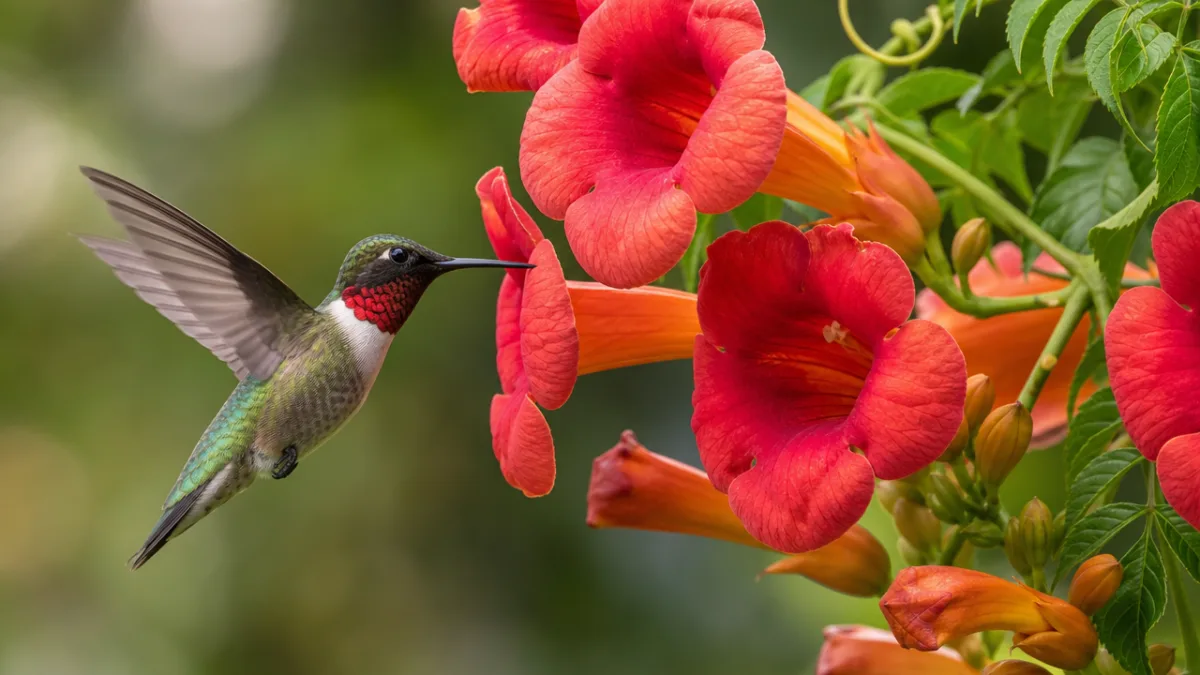
If you need one more reason to grow trumpet vine, the wildlife argument is pretty hard to argue with. Those deep, tubular flowers are practically custom-built for hummingbirds — the shape is just right for a long beak and tongue to reach the nectar inside. Ruby-throated hummingbirds in particular go absolutely crazy for them, and planting trumpet vine is one of the most reliable moves you can make if you want hummingbirds showing up in your garden consistently throughout the eastern half of North America.
It doesn’t stop with hummingbirds, either. Bumblebees have been spotted “nectar robbing” — chewing a small hole at the base of the flower to get to the good stuff rather than going in through the front, since the flower isn’t really shaped for them. Orioles stop by for nectar too, and the dense leafy growth gives all kinds of birds a sheltered spot to nest and rest through the season. One well-placed trumpet vine can quietly become a whole little wildlife hub in your garden.
There’s also a deeper ecological angle worth appreciating. Trumpet vine is native to eastern North American ecosystems, and native plants support native insects and birds in ways that exotic ornamentals just can’t replicate — those relationships have been building for thousands of years. Growing trumpet vine isn’t just a nice aesthetic choice; it’s a small but real contribution to the ecological fabric of your local environment. For anyone drawn to habitat gardening, conservation landscaping, or simply wanting their garden to do some genuine good, that’s a pretty meaningful thing to be able to say about a flowering vine.
Popular Varieties and Cultivars Worth Growing
The straight species of Campsis radicans is widely available and absolutely worth growing, but there are also some cultivated varieties that bring something a little different to the table — whether that’s a different flower color, a calmer growth habit, or a particular look you’re going for. Knowing what’s out there helps you pick the right fit for your space and style.
- ‘Flava’ — This one swaps the classic orange-red for soft, warm golden-yellow blooms. Hummingbirds love it just as much as the species, and it has a sunny, naturalistic feel that works beautifully with lush green foliage.
- ‘Madame Galen’ — A hybrid cross between Campsis radicans and Chinese trumpet creeper (Campsis grandiflora), with large, showy salmon-orange flowers. It’s generally considered a bit less rampant than the straight species, though don’t let that lull you into skipping the regular maintenance.
- ‘Crimson Trumpet’ — If you want drama, this is your vine. The flowers are a deep, rich red with an intensity of color that’s really striking against green foliage or a stone wall.
- ‘Indian Summer’ — A newer variety with unusually large blooms in a warm orange-red, and a growth habit that’s a little more restrained than the species — a nice combination for gardeners working with tighter spaces.
- ‘Judy’ — One of the more compact selections available, making it a good option if you love the look of trumpet vine but don’t want to take on the full management commitment that the species can require.
When you’re choosing a variety, be realistic about your space, your climate, and how much pruning you’re actually willing to do each year. All of them need the same basic care — same approach to pruning, watering, and structural support — so the main differences come down to flower color, overall size, and how vigorously the plant tends to grow. Matching those factors to your specific spot and design vision makes a real difference in how happy you are with the plant long-term.
Wherever possible, buy from a reputable local nursery or a native plant specialist. You’ll get a plant that’s already well-adapted to your region’s climate, and if you’re going for the species form, you’re also supporting the native plant trade, which is a good thing. Local native plant societies and horticultural groups often hold plant sales too, and trumpet vine tends to show up at reasonable prices. Starting with a healthy, well-sourced plant is the best foundation you can give this vine — and given how long and reliably it can grow, it’s an investment that pays off season after season.








What do you think?
It is nice to know your opinion. Leave a comment.