










14 Backyard Shade Ideas That Make Outdoor Spaces More Usable
Why Backyard Shade Transforms the Way You Live Outside
There’s a big difference between a backyard you admire through a window and one you actually hang out in. And honestly, the thing keeping most people from spending more time outside isn’t the landscaping, the furniture, or even the budget — it’s the sun. When the afternoon heat turns your patio into a griddle and your lounge chairs into something you can barely sit on, even the nicest outdoor setup becomes pretty much useless for hours at a time.
Adding shade to your backyard isn’t just a comfort upgrade — it’s a usability upgrade. Studies consistently show that shaded outdoor spaces get used far more often than unshaded ones, especially during peak summer when you most want to be outside but the conditions are the most brutal. Families with kids, pet owners, and anyone who cooks or entertains outdoors will feel the difference almost immediately, even with a relatively simple shade solution.
The good news is that backyard shade comes in a genuinely wide range of styles, price points, and levels of effort. You could put up a freestanding umbrella on a Saturday afternoon, or go all-in on a full pergola with a retractable canopy that becomes a real architectural feature of your yard. This article walks through fourteen of the best options available today, organized by type, so you can find what fits your space, your budget, and the look you’re going for.
Classic Shade Structures: Pergolas, Gazebos, and Pavilions
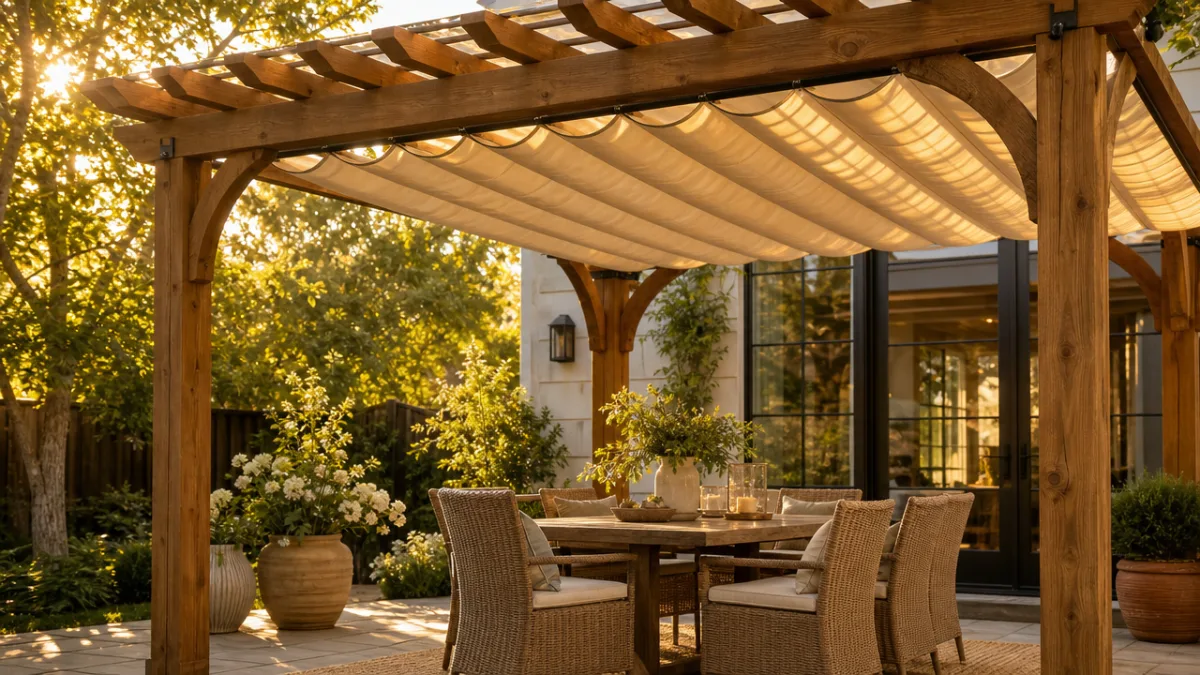
Pergolas are one of the most popular permanent shade structures out there, and it’s easy to see why. A well-built pergola creates a defined outdoor room that feels like it belongs there — intentional and architectural rather than thrown together. Traditional pergolas have open-beam roofing that casts partial shade through the pattern of the rafters, while modern versions can be fitted with retractable fabric canopies, polycarbonate panels, or adjustable louvered aluminum slats you can control with a hand crank or a remote. That means you can go from dappled sunlight to full shade depending on the time of day or the vibe you want.
Gazebos take things a step further by enclosing the space with a solid roof and open or screened walls. Because the coverage is consistent no matter what angle the sun is at, a gazebo is especially practical for yards that face south or west and get hammered by afternoon light. Many prefab gazebo kits now come in wood, vinyl, and powder-coated steel, and plenty of homeowners manage to put one up over a single weekend without hiring anyone. The enclosed design also shields you from wind and light rain, which adds up to a lot more usable days throughout the year.
Pavilions sit somewhere between a pergola and a gazebo — typically a fully solid roof supported by posts at each corner, but with completely open sides. You get dependable overhead protection without sacrificing airflow, which makes pavilions a great pick for hot climates where you need shade but still want to catch a breeze. They scale well too, from a cozy dining nook to a large entertainment space that can hold a crowd. And because a well-designed pavilion reads as genuine outdoor architecture rather than an afterthought, it can add real value to your property while making the backyard a place people actually want to spend time.
Flexible Shade Solutions: Umbrellas, Shade Sails, and Canopies
If you want shade without committing to a permanent structure, there are some really versatile options that don’t require any major installation. The classic market umbrella — a large round canopy on a central pole — is still one of the most cost-effective and widely available choices out there. But today’s versions have come a long way from the basic pool umbrella. Cantilever umbrellas, which mount the pole off to the side rather than through the middle of the table, let the canopy float over any seating arrangement without getting in anyone’s way. Many of them now rotate a full 360 degrees, tilt in multiple directions, and even have LED lights built into the ribs for when the evening rolls around.
Shade sails have become hugely popular over the past decade, especially in urban backyards and small courtyard spaces where a traditional umbrella feels too bulky and a pergola isn’t structurally practical. A shade sail is a tensioned triangle or quadrilateral of UV-blocking fabric, anchored to walls, posts, or trees and stretched into a taut geometric plane above your outdoor area. The angular, asymmetrical look is very much a modern aesthetic, and you can layer multiple sails at different heights and angles to create something visually striking while shifting the coverage as the sun moves. Good quality shade sails use HDPE fabric that blocks up to 98 percent of UV radiation while still letting air circulate underneath.
Pop-up canopy tents and freestanding canopy structures round out this category. Pop-ups are perfect for one-time events — a graduation party, a summer cookout, a kids’ birthday — because you can get them up in minutes and break them down just as fast. Freestanding steel or aluminum canopies with solid or fabric roofs are at the higher end of this category and feel close to permanent, though most homeowners just pick a spot and leave them there for the season. Whatever fabric-based shade solution you go with, it’s really worth spending a little more on materials rated for outdoor UV exposure and moisture resistance — cheaper fabrics can fade and fall apart within a single summer.
Natural Shade: Trees, Vines, and Living Structures
Nothing manufactured quite matches the quality of light that filters through a real tree canopy. Natural shade is cooler, more alive, and somehow just easier on the mind than anything built from aluminum or fabric. A mature tree can drop the temperature beneath its canopy by 10 to 15 degrees Fahrenheit compared to unshaded spots nearby. If your yard is short on established trees, planting for shade is one of the best long-term investments you can make. Fast-growing species like red maple, tulip poplar, thornless honey locust, and river birch can start providing real canopy coverage within five to seven years — and they’ll keep delivering for generations.
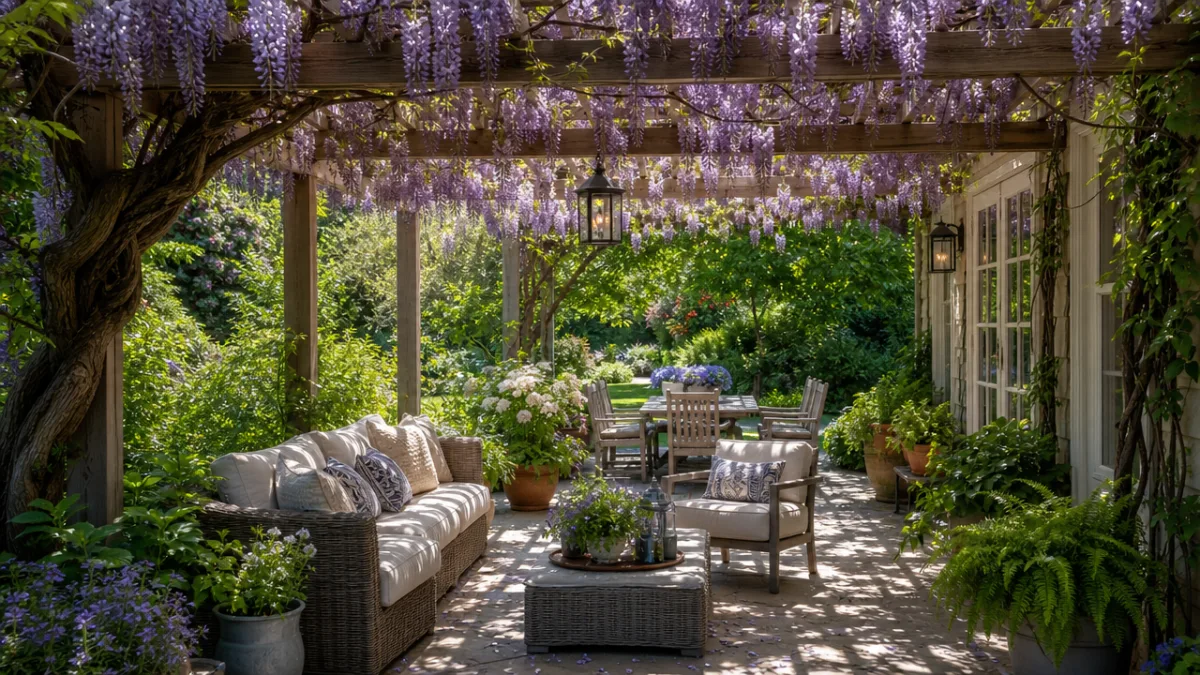
If you can’t wait years for a tree to mature, or your yard just isn’t big enough for one, vines trained over pergolas, trellises, and wire structures are a much faster path to living shade. Wisteria, trumpet vine, Virginia creeper, and climbing hydrangea are all popular choices for covering pergola beams and trellis panels. They grow fast, get dense, and create a lush ceiling of foliage that blocks direct sun while adding fragrance, texture, and a little wildlife habitat to the mix. Wisteria in full bloom especially is something else — cascading purple flowers that can make even a modest pergola look like something out of a magazine.
Green wall systems and living canopy structures are a newer category that’s starting to appear in more residential backyards. A green roof pergola, for example, uses a lightweight growing medium on top of the roof beams to support a carpet of sedum, herbs, or ornamental grasses. The result is a genuinely beautiful, ecological shade structure that insulates, manages rainwater, supports pollinators, and provides shade all at once. It’s more complex and more expensive than a conventional pergola, but the biodiversity and visual impact are in a completely different league from anything inanimate.
Innovative Modern Shade: Louvered Roofs and Smart Shade Systems
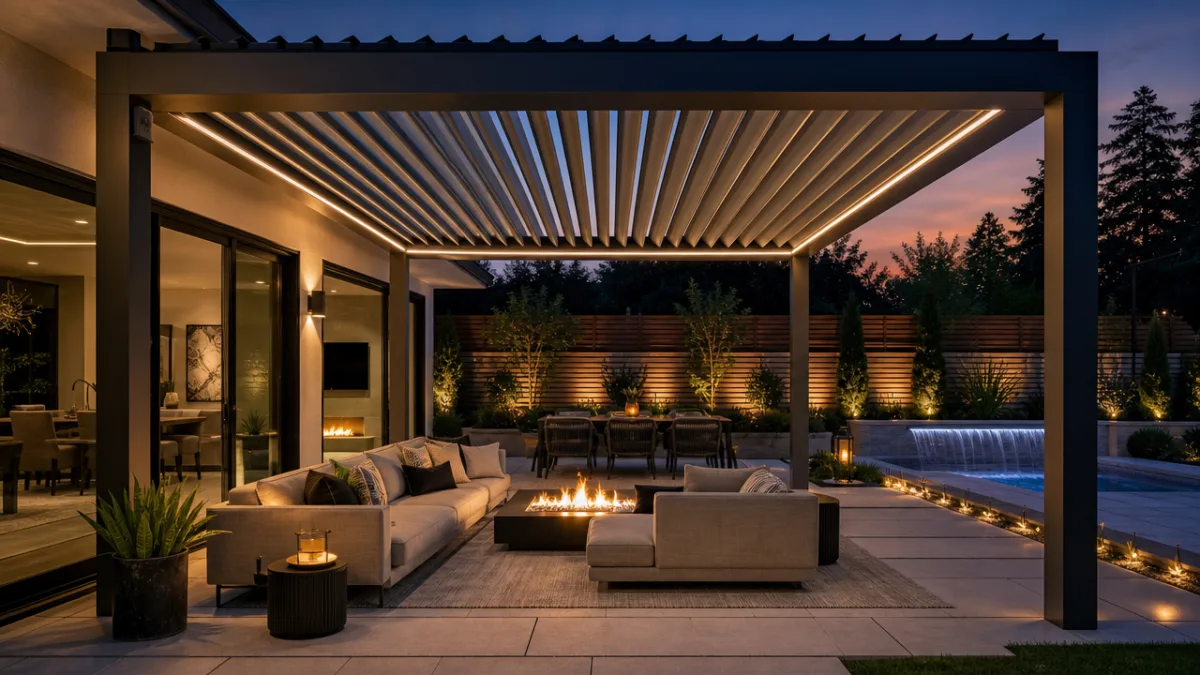
The premium end of the residential shade market has gotten genuinely exciting over the past several years, thanks to advances in aluminum fabrication, motorized hardware, and home automation. Louvered roof systems are the standout development. These structures use a series of adjustable aluminum slats — louvers — mounted horizontally across a rigid frame. Open them up and you get full sunlight and airflow. Close them and you have a weather-tight roof that sheds rain and blocks the sun completely. You can set them anywhere in between, which gives you precise control over how much shade, light, and ventilation you’re getting at any given moment.
Many louvered roof systems now come fully motorized and integrate with smart home platforms like Google Home, Amazon Alexa, and Apple HomeKit. That means you can adjust the louver angle, turn on integrated LED lighting, activate heating elements in the beams, or deploy perimeter curtains for wind protection and privacy — all with a voice command or a tap on your phone. Some systems even have rain sensors that automatically close the louvers when it starts to rain, protecting your furniture and equipment without you having to think about it. At that point, your shade structure isn’t just a passive architectural feature; it’s an active, responsive part of how your outdoor space works.
Retractable awning systems have also made some significant leaps that put them squarely in the modern shade conversation. Today’s motorized retractable awnings use articulated aluminum arms that extend and retract smoothly across spans of twenty feet or more. Premium models have sun and wind sensors — the awning deploys automatically when light hits a certain intensity threshold, and retracts before wind speeds get dangerous. The fabrics used in high-end awnings are solution-dyed acrylics that resist fading, mildew, and UV degradation for ten years or more, making them a real long-term investment. Add LED lighting strips along the valance and you’ve got a setup that makes outdoor evenings feel just as comfortable as the daytime hours.
Shade Planning and Design Tips for Maximum Impact
Before you buy anything, it really helps to understand how sunlight actually moves across your backyard throughout the day and across the seasons. A yard that gets gentle morning sun might be totally comfortable without any shade at all, while a west-facing patio that bakes in direct afternoon sun from two o’clock until sunset is genuinely unusable during those hours without some kind of intervention. Spend a few days noticing where the shadow line falls at different times — say, eight in the morning, noon, three in the afternoon, and six in the evening — and map that against the parts of the yard you most want to use. That simple exercise will tell you both how much coverage you actually need and exactly where to put a structure for it to do the most good.
Layering multiple shade approaches almost always works better than relying on just one. A large shade tree can provide baseline overhead coverage while a pergola with a retractable canopy creates a dedicated dining or lounge zone underneath it. Shade sails can fill in gaps where the tree canopy thins out, and a freestanding umbrella can cover a single seating group that the permanent structures don’t quite reach. This kind of layered approach builds visual depth and texture into your backyard landscape while making sure no corner is left exposed and uncomfortable during the hottest parts of the day.
Consider these key factors when evaluating any backyard shade idea for your specific situation:
- Sun orientation: South and west-facing yards need the most robust shade solutions, while north-facing yards may need very little additional coverage.
- Wind exposure: Open, exposed backyards need shade solutions built to handle wind loads; fabric-based options should always be retracted or secured when it gets gusty.
- HOA and permit requirements: Permanent shade structures often require building permits and need to comply with HOA guidelines; always check before buying materials.
- Maintenance commitment: Natural and fabric-based solutions need regular upkeep; aluminum and vinyl structures are much more maintenance-free over the long haul.
- Budget and timeline: Costs range from under a hundred dollars for a basic umbrella to over twenty thousand for a fully motorized louvered roof system; set a realistic budget before you start shopping.
And finally, try to think of shade as an investment in how livable your home actually is, not just a nice exterior accessory. A well-designed shaded outdoor space effectively adds square footage to your functional living area during the warmer months. For families who grill, entertain, garden, or just want a place to unwind outside, a comfortable backyard pays off over and over — in more evenings spent outdoors, better gatherings, and a genuine connection to the space around your home. Whatever solutions you choose from this list, the most important step is simply deciding that your backyard deserves to be comfortable, beautiful, and actually usable every day of the season.








What do you think?
It is nice to know your opinion. Leave a comment.