










13 Garden Fence Art Ideas That Turn Plain Fences Into Focal Points
Why Your Fence Deserves More Than a Coat of Paint
Most homeowners think of their garden fence as nothing more than a boundary — a practical necessity that keeps pets in and neighbors at a comfortable distance. But if you actually stop and look at your outdoor space, that long stretch of wood, metal, or vinyl is one of the largest unbroken surfaces in your entire yard. It’s basically a blank canvas just sitting there, and leaving it bare is honestly one of the biggest missed opportunities in outdoor design.
Garden fence art has taken off over the past decade, and it makes total sense. As outdoor spaces get smaller and people invest more in their yards, everyone’s looking for clever ways to squeeze more beauty and personality out of every square foot. When you transform a plain fence into a real focal point, it doesn’t just look better — it changes the whole feel of the space. It goes from something you glance past to something that actually makes people stop and say something. Guests notice it the moment they walk in, and it sets the tone for the entire garden.
The good news? You don’t need to hire a professional artist or spend a fortune to pull this off. Some of the most impressive fence makeovers out there used simple, inexpensive materials and a bit of creative thinking. Whether your style is rustic farmhouse, clean and modern, or boldly bohemian, there’s an approach that’ll feel right at home in your space. The ideas in this article span everything from a quick weekend project to something a little more involved, so there’s genuinely something here no matter your skill level or budget.
Painted Murals and Geometric Designs
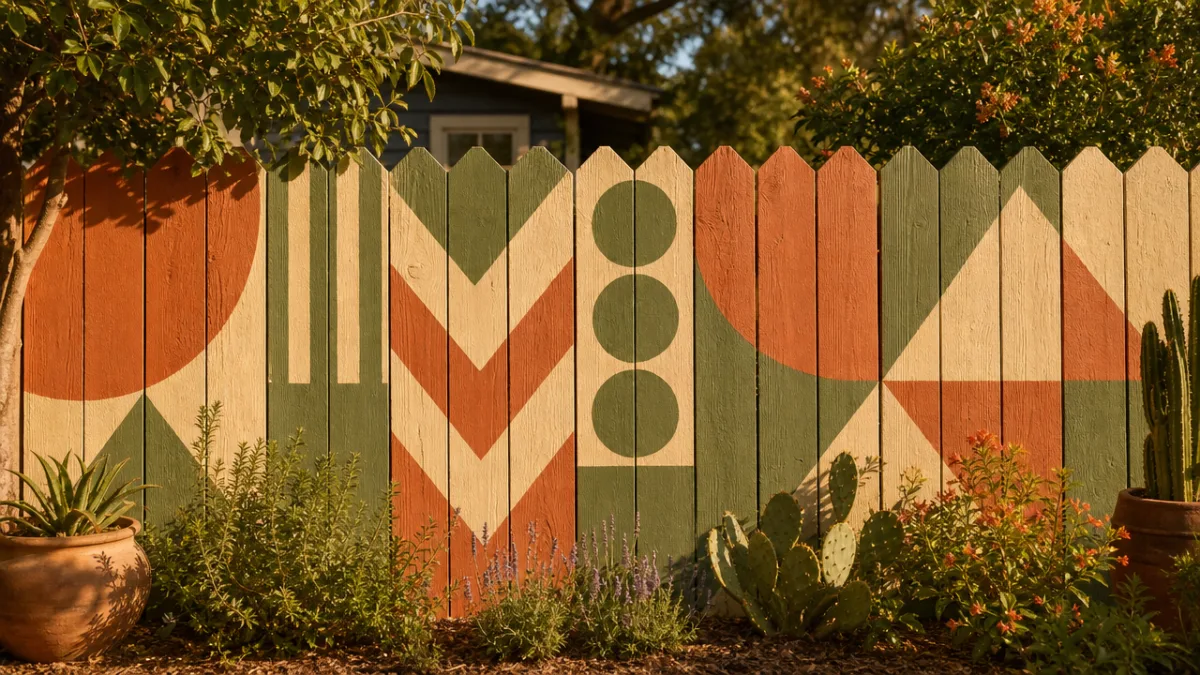
The most direct way to turn a fence into art is simply to paint it — not just slapping on a flat color, but doing something with real depth, personality, or visual punch. Murals have a long history in public art, and that same energy works beautifully in a private garden. You could bring in a local muralist to paint a sweeping landscape that makes your yard feel twice as large, or grab some exterior paint and stencils and tackle it yourself. Either way, you end up with a fence that starts conversations.
Geometric designs are especially popular right now because they work with almost any garden style and you really don’t need any artistic talent to pull them off. A series of overlapping triangles in warm earthy tones, a bold chevron, or a set of concentric diamond shapes can make a plain wooden fence look like something out of an upscale outdoor showroom. The trick is picking colors that actually work with what’s already growing in your garden — pull shades from your existing flowers and foliage and the whole thing feels cohesive instead of like an afterthought.
If you want something more figurative, nature-inspired motifs are a great bridge between the painted fence and the living garden around it. Oversized botanical illustrations, bird silhouettes, abstract tree forms, or whimsical insect portraits all reinforce that organic outdoor feeling while adding a layer of storytelling. Just make sure you’re using weather-resistant exterior paint and finishing with a UV-protective topcoat — that’s what keeps your mural looking vibrant after a few seasons of sun, rain, and frost.
Vertical Gardens and Living Walls
One of the most spectacular things you can do with a fence is make it literally come alive. Attaching pocket planters, repurposed pallets, or modular growing systems to the fence surface creates this lush, layered installation that’s both art and garden at the same time. A well-done vertical garden has a richness that paint or sculpture can’t quite match — it changes with the seasons, looks better as it matures, and brings fragrance and movement into the space in a way nothing else does.
Choosing plants for a fence-mounted vertical garden means thinking about sun exposure, how you’ll water everything, and the vibe you’re going for. Trailing plants like ivy, string of pearls, or creeping jenny give you that cascading, romantic look. Compact herbs — thyme, basil, oregano, mint — are both gorgeous and practical, essentially turning your fence into a kitchen garden you can snip from right outside the back door. For more drama, mix in flowering plants like petunias, nasturtiums, or calibrachoa for bursts of color that shift throughout the season.
The structural elements of a vertical garden can be just as decorative as the plants themselves. Reclaimed wooden pallets with a distressed finish have an easygoing rustic charm. Wrought iron grids or copper pipe frames bring an industrial elegance. Woven wicker or bamboo panels add an earthy, natural texture. Even repurposed everyday objects — old colanders, painted tin cans, vintage wooden crates — can work as planting vessels that add personality while giving materials a second life. That mix of function and creativity is a big part of what makes vertical gardens so satisfying.
Metal Sculptures and Hanging Decorations
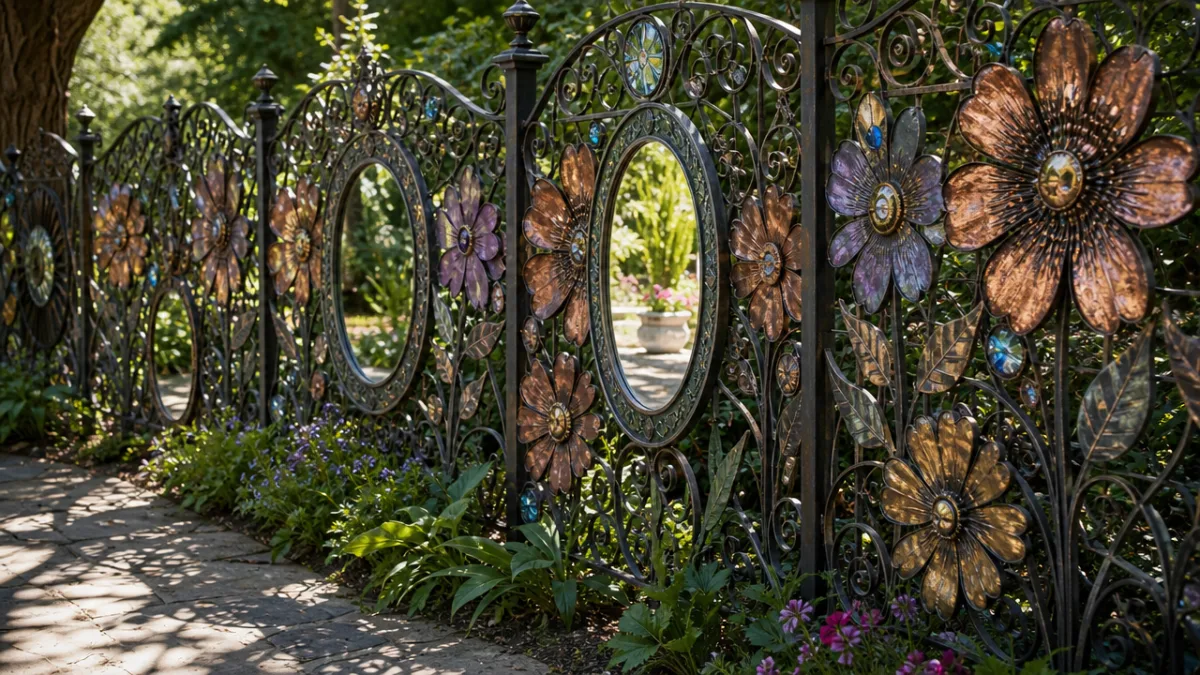
Three-dimensional art on a fence creates shadow, texture, and depth that flat paint simply can’t. Metal wall art is widely available at every price point these days, from affordable garden center finds to custom pieces made by a local blacksmith. Large-format metal flowers, abstract organic forms, geometric panels with cutout patterns, or celestial motifs like suns and moons can anchor a fence visually and give a garden that unmistakable “designed” quality rather than something that just happened.
Wind spinners and kinetic sculptures bring a whole other dimension — actual movement and sound. Copper or stainless steel wind catchers spin in the breeze and catch the light in constantly changing ways. Clusters of small hanging ornaments — glass beads, ceramic discs, driftwood, or even vintage silverware — can be assembled into mobile-style arrangements that chime softly and sway whenever the air moves. This kind of installation is especially nice in a seating area or shaded corner where you actually sit and linger, because the sensory richness is something you appreciate up close.
For a more eclectic look, try building a curated gallery wall on your fence using a mix of metal art, mirrors, and other weather-resistant objects. Outdoor-rated mirrors in ornate frames reflect the garden back at you and create the impression of more space, while drawing extra light into darker spots. Mixing scales — a large central piece flanked by smaller ones — creates visual rhythm and keeps the eye moving across the fence the same way a well-styled interior gallery wall does. The only real rule is to leave enough breathing room between pieces so it reads as intentional, not just crowded.
Mosaic and Tile Art Installations
Mosaic art has been adorning walls and surfaces for thousands of years, and it brings a timeless, jewel-like quality to garden fences that nothing else quite replicates. The basic idea is embedding small pieces of glass, ceramic tile, stone, or mirror into a weather-resistant adhesive and grout to build up images or patterns that glitter and shift depending on the light and where you’re standing. Morning light hits a mosaic panel completely differently than dusk light does, which means it rewards repeated viewing and keeps the garden feeling fresh in a subtle, ongoing way.
You don’t need to cover the whole fence in mosaic to make a real impact. A single large mosaic medallion, or a series of repeating tile insets spaced along an otherwise painted fence, creates a collected, artisan quality — like each panel is a treasured object that’s been deliberately worked into the design. Popular motifs include mandala-style circular patterns, fish or sea creatures for a coastal theme, abstract color field designs inspired by mid-century art, or botanical images that echo the plants actually growing nearby. There’s something really pleasing about that dialogue between the depicted and the real.
Making your own mosaic fence art is more achievable than it sounds, even if you’ve never tried it before. Starter kits are easy to find, and there’s something almost meditative about breaking tiles and arranging the pieces — small imperfections in the cutting often add character rather than ruining anything. Reclaimed materials make the whole project cheaper and more environmentally satisfying too: broken china, chipped mugs, stained glass offcuts, sea glass from the beach — all of it can find a second life as mosaic elements. Finish with an exterior-grade grout sealer to keep moisture out and you’ll have something that holds up beautifully through many winters.
Upcycled and Found Object Fence Art
Some of the most characterful, conversation-starting fence installations are made entirely from things that would otherwise have been thrown away. The upcycled aesthetic is all about resourcefulness and creative vision — taking the ordinary and recontextualizing it into something extraordinary. Old garden tools fanned out into a sunburst pattern, vintage window frames painted in chalk colors and hung in a row, clusters of colorful birdhouses arranged like a tiny village, or weathered driftwood pieces stacked and wired into sculptural relief — these installations are deeply personal and carry a narrative weight that something you bought off a shelf just can’t match.
Repurposed musical instruments make for particularly charming fence art. Old guitars, mandolins, or violins — too worn to play but too beautiful to toss — can be mounted on the fence and planted with trailing succulents or small flowering plants tumbling from their bodies. Vintage metal signs, license plates, or old enamel advertising placards arranged in a grid have a nostalgic, pop-art energy that works really well in a more eclectic garden. The patina and wear on found objects gives them an authenticity and warmth that new materials rarely have, and knowing the story behind each piece adds another layer of enjoyment every time you’re out in the garden.
When working with upcycled materials, it’s worth spending a few minutes on durability and safety. Treat any raw wood with exterior preservative to prevent rot. File down or cover sharp edges on metal pieces. Avoid materials that might leach anything harmful near edible plants. With those basics covered, the possibilities really are wide open. Flea markets, estate sales, salvage yards, and online resale platforms are full of material for this kind of project. The end result is a fence that genuinely tells your story — a backdrop for the garden that could only exist in your space.
Lighting as Fence Art
Fence art doesn’t have to disappear when it gets dark. Thoughtfully placed outdoor lighting can turn a fence into a completely different kind of installation after sunset, stretching your enjoyment of the garden well into the evening and creating an atmosphere that feels warm, intimate, and intentional. String lights draped along the top of a fence or woven through a trellis are one of the easiest ways to achieve that instant sense of warmth and festivity. Solar-powered fairy lights make it even easier — no wiring needed, so anyone can do it regardless of their outdoor electrical setup.
More architectural lighting approaches can be just as striking. Uplighting fixtures mounted at the base of a fence and angled upward cast strong shadows and silhouettes, turning the fence structure and anything decorative attached to it into a dramatic nighttime display. LED strip lighting hidden behind batten strips or within routed channels in wooden fencing creates a sleek, glowing effect that suits contemporary garden styles really well. And playing with colored lighting — deep amber, soft blue, vibrant purple — completely changes the mood and lets the same fence feel festive one night and serene the next.
Lanterns hung at intervals along a fence sit in a nice sweet spot between purely functional lighting and decorative art. Moroccan-style punched metal lanterns throw intricate shadow patterns onto nearby surfaces. Oversized glass globe lanterns filled with pillar candles or fairy lights have a genuinely romantic quality. Vintage-style Edison bulb fixtures on industrial wall brackets feel fresh while nodding to early twentieth-century aesthetics. The real magic happens when you combine lighting with other fence art elements — letting light play across a mosaic, cast shadows through a metal sculpture, or wash a painted mural in a warm glow. Done well, it multiplies the impact of everything and makes the garden feel worth lingering in at any hour.
Bringing It All Together: Planning Your Fence Art Project
With this many good options, the tricky part usually isn’t finding inspiration — it’s narrowing things down and making a plan you’ll actually be happy with long-term. The most important thing to do first is think honestly about your garden’s overall style and how any fence art will sit alongside the plants, furniture, and other elements already there. A striking modern geometric mosaic might feel out of place next to a cottage garden overflowing with roses and lavender, while a rustic found-object installation could look a bit lost in a sleek, minimalist courtyard.
Practical considerations matter just as much as the aesthetic ones. Look at your fence material and condition before you commit to anything. A rotting wooden fence needs fixing before art goes on it, not after. A metal fence will need different attachment methods than a masonry wall. Think about upkeep — how easy is it going to be to touch up paint, water vertical garden plants, or clean mosaic panels a couple of years down the line? Consider your climate and make sure whatever you choose is actually rated for outdoor use in your conditions. A beautiful installation that falls apart after one winter is a lot more frustrating than a simpler one that still looks great in ten years.
Finally, give yourself permission to let the installation evolve over time. The most beloved gardens rarely came from a single grand plan executed all at once — they grow gradually, with pieces added, moved around, and occasionally swapped out as tastes shift and seasons change. Pick one section of fence and one idea that genuinely excites you, and start there. Live with it through a full season, watch how the light falls across it at different times of day, notice which moments make you glad it’s there. Then build on it, adjust it, or let it spark something new in the next section over. A fence treated as an ongoing creative project becomes something that truly feels alive — a reflection of who you are and how you live in your outdoor space.








What do you think?
It is nice to know your opinion. Leave a comment.