










Yarrow: A Powerhouse of Beauty and Benefits for Your Garden
Introduction to Yarrow: Nature’s Garden Ally
Yarrow (Achillea millefolium) is one of the most rewarding plants you can welcome into your garden. With its feathery, fern-like foliage and flat-topped clusters of tiny flowers, yarrow has graced gardens, meadows, and wild landscapes for thousands of years. Whether you are an experienced gardener or just beginning to cultivate your outdoor space, yarrow offers a compelling combination of visual charm, ecological value, and practical utility that few other plants can match. Its presence alone can transform a garden into a thriving, balanced ecosystem.
Native to temperate regions of Europe, Asia, and North America, yarrow has naturalized itself across much of the world, adapting with remarkable resilience to a wide range of climates and soil conditions. It blooms in shades of white, yellow, pink, red, and lavender depending on the cultivar, making it a versatile addition to any color palette. The flowers appear in broad, umbrella-like clusters called corymbs, creating a wide landing platform that is irresistible to a staggering variety of beneficial insects. Few plants earn their place in the garden as thoroughly and generously as yarrow does.
Beyond its ornamental appeal, yarrow carries a rich history of human use stretching back to ancient Greece and beyond. Legend holds that the warrior Achilles used yarrow to staunch the wounds of his soldiers on the battlefield — a story that lives on in its Latin name. Herbalists across centuries have valued it for its medicinal properties, and modern gardeners prize it as a cornerstone plant in permaculture, pollinator gardens, and cottage-style landscapes. Understanding yarrow fully means appreciating the layers of history, science, and practical wisdom woven into every feathery leaf.
Why Yarrow Belongs in Every Pollinator Garden
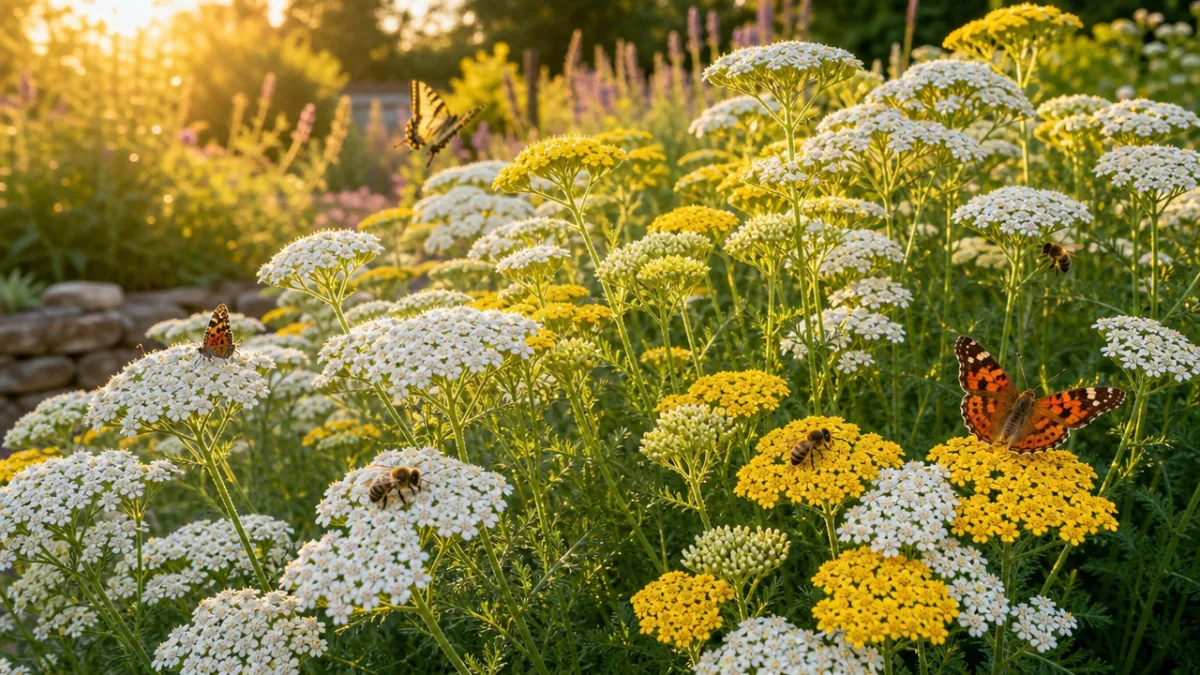
If there is one plant that deserves the title of “pollinator magnet,” yarrow may well be it. The wide, flat flower heads are perfectly engineered by nature to serve as landing pads for a remarkable diversity of insects. Because the individual florets are small and accessible, yarrow does not discriminate — it welcomes pollinators of all sizes, from the tiniest parasitic wasps to bumblebees, honeybees, and large swallowtail butterflies. A single yarrow plant in full bloom can host dozens of different insect species on any given summer day, making it a biodiversity hotspot in miniature.
Bees, in particular, are strongly attracted to yarrow. Both honeybees and native bees visit the flowers enthusiastically to collect nectar and pollen. Because yarrow blooms over an extended period — often from late spring through early autumn — it provides a reliable food source during times when other flowering plants may have finished their season. Gardeners who are serious about supporting healthy bee populations understand that continuous bloom succession is essential, and yarrow fills critical gaps in that calendar with extraordinary consistency and abundance.
Beyond bees, yarrow is a host plant and nectar source for a wide array of beneficial predatory insects, including hoverflies, lacewings, ladybugs, and parasitic wasps. These insects are natural pest controllers, preying on aphids, caterpillar eggs, whiteflies, and other garden nuisances. By planting yarrow, you are essentially hiring an army of natural defenders for your garden. This makes yarrow not just a pretty addition but a functional, strategic one — a plant that actively contributes to the long-term health and balance of your entire growing space.
Growing Yarrow: Soil, Sun, and Simplicity
One of yarrow’s most beloved qualities is its unfussy, adaptable nature. It thrives in full sun — at least six hours of direct sunlight per day — and performs best in well-drained soils. In fact, yarrow has a remarkable tolerance for poor, dry, and even rocky soils where other plants would struggle or fail entirely. Overly rich or heavily fertilized soil actually works against yarrow, causing it to produce lush foliage at the expense of flowers and making the stems flop under their own weight. Lean soil keeps yarrow compact, upright, and abundantly flowering.
Planting yarrow is straightforward whether you start from seed, division, or nursery transplants. Seeds can be started indoors six to eight weeks before the last frost date, or direct-sown into the garden after frost danger has passed. Division of established clumps is typically done in spring or fall, and it is one of the easiest ways to multiply your yarrow collection quickly and for free. Transplants from the nursery establish readily when planted at the correct depth and given a thorough initial watering. Once established, yarrow demands very little attention beyond occasional division every few years to keep it vigorous.
Watering needs are minimal once yarrow is established in the garden. It is genuinely drought-tolerant and will often outperform many other perennials during dry summer stretches. Overwatering is a more common mistake than underwatering and can lead to root rot or disease. In terms of care, deadheading spent flower clusters encourages continued blooming and prevents excessive self-seeding, though leaving some seed heads standing in autumn provides food for birds and adds winter interest to the garden. Yarrow’s low-maintenance profile makes it an ideal choice for gardeners of all experience levels.
Companion Planting with Yarrow: Strategic Placement for Maximum Benefit
Yarrow is a celebrated companion plant in permaculture and organic gardening circles, valued for its ability to improve the health and productivity of nearby plants. When grown alongside vegetables, herbs, and other flowering plants, yarrow attracts the beneficial insects that pollinate crops and control pest populations. It is particularly effective when planted along the edges of vegetable beds, in hedgerow strips between garden sections, or interspersed throughout ornamental borders where it can serve multiple functions simultaneously without crowding its neighbors.
Research and long-standing gardening tradition both suggest that yarrow can positively influence the aromatic intensity and essential oil content of nearby herbs such as lavender, sage, and thyme. It has also been noted in permaculture literature as a dynamic accumulator — a plant with deep roots that draw up minerals from subsoil layers, which are then returned to the surface when leaves decompose or are added to compost. This means that yarrow contributes to soil fertility over time, enriching the growing environment for everything planted near it in a slow, steady, and natural way.
When planning companion plantings, consider pairing yarrow with the following plants for harmonious and productive combinations:
- Roses: Yarrow deters aphids and attracts ladybugs, which are among the most effective natural aphid predators, helping protect rose bushes organically.
- Tomatoes and peppers: The hoverflies and parasitic wasps attracted by yarrow prey on common vegetable garden pests including aphids, whiteflies, and hornworm eggs.
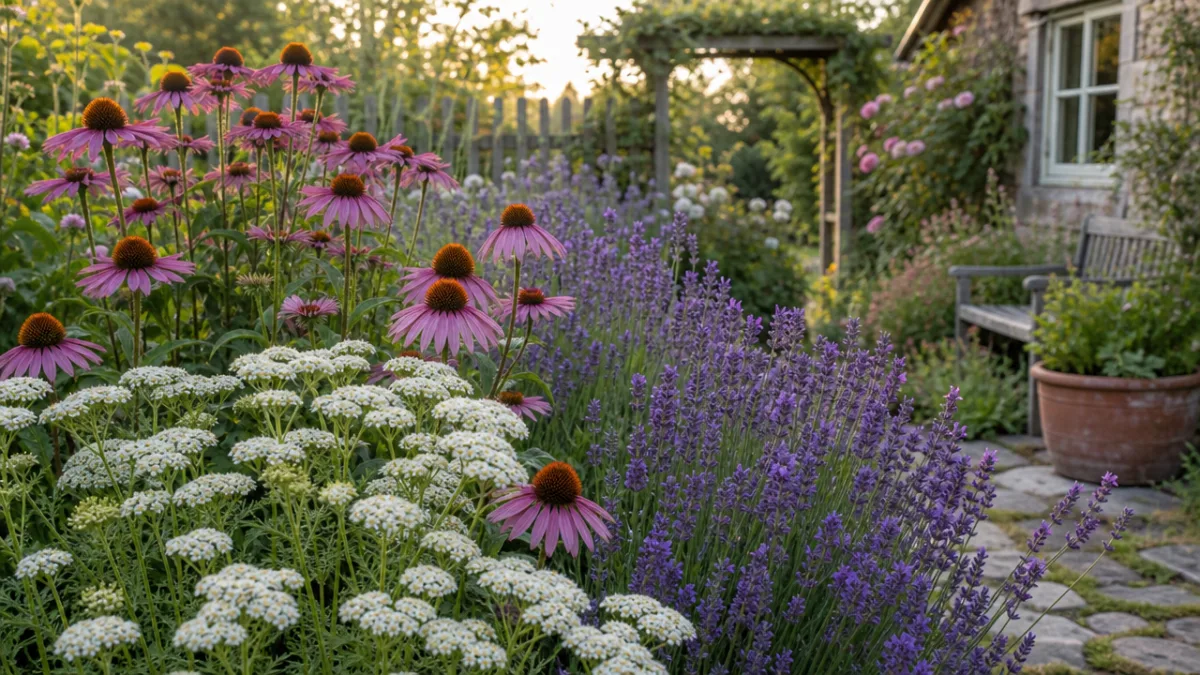
- Lavender and echinacea: Together these plants create a long-blooming, insect-friendly border that covers the entire growing season with complementary colors and textures.
- Meadow grasses: Naturalistic plantings of yarrow with ornamental grasses create low-maintenance, drought-resistant beds that mimic wild meadow ecosystems beautifully.
- Fruit trees: Planted beneath or around fruit trees, yarrow helps build populations of predatory insects and improves overall orchard ecosystem balance.
Careful placement of yarrow in relation to plants that may be sensitive to its vigorous spreading habit is also worth considering. Yarrow can be assertive in spreading by rhizome and self-seeding, so giving it defined space or using edging to contain its roots will prevent it from overwhelming smaller or slower-growing neighbors. With thoughtful placement, yarrow becomes one of the most generous and functional plants in the garden toolkit, giving back far more than it requires in return.
Yarrow Varieties Worth Growing: A Colorful Spectrum
The world of yarrow cultivars is far richer and more colorful than many gardeners initially realize. While the classic wild species produces clusters of pure white flowers, modern breeding has expanded the palette dramatically to include deep reds, warm corals, soft peachy tones, bright lemon yellows, and vivid magentas. This color diversity makes yarrow one of the most design-flexible perennials available, capable of fitting seamlessly into cottage gardens, prairie-style landscapes, formal borders, and contemporary minimalist plantings with equal ease and elegance.
Among the most popular and widely available yarrow cultivars are several standout performers that have earned devoted followings among gardeners and landscape designers. Achillea millefolium ‘Paprika’ produces rich red and orange bicolor flowers that fade gracefully to salmon and gold as they age, creating a multi-toned display on a single plant. ‘Moonshine’ is a beloved variety featuring silvery-gray foliage and clear yellow flowers, making it one of the most striking yarrow options for foliage interest throughout the growing season. ‘Saucy Seduction’ and other Seduction Series cultivars offer vibrant pinks and reds with improved heat tolerance and longer bloom duration.
For gardeners interested in the traditional herbal and medicinal uses of yarrow, the straight species — Achillea millefolium in its natural white-flowered form — is the most appropriate choice, as it retains the full concentration of the plant’s active compounds without the genetic modifications introduced through ornamental breeding. However, all yarrow varieties offer the same general ecological benefits in terms of pollinator attraction and companion planting function. Choosing among varieties then becomes largely a matter of aesthetic preference, garden style, and the specific bloom colors that will best complement your existing plantings and design vision.
Yarrow in Herbal Practice and Beyond: Historical and Modern Uses
Yarrow’s relationship with humanity stretches back millennia. Archaeological evidence suggests that Neanderthals may have used yarrow medicinally, and the plant features prominently in the herbal traditions of cultures ranging from ancient Greece and Rome to traditional Chinese medicine, Native American healing practices, and European folk herbalism. Its most famous traditional use was as a wound herb — applied to cuts and abrasions to staunch bleeding and prevent infection. This use is reflected in its many folk names, including “soldier’s woundwort,” “nosebleed plant,” and “herbe militaire.”
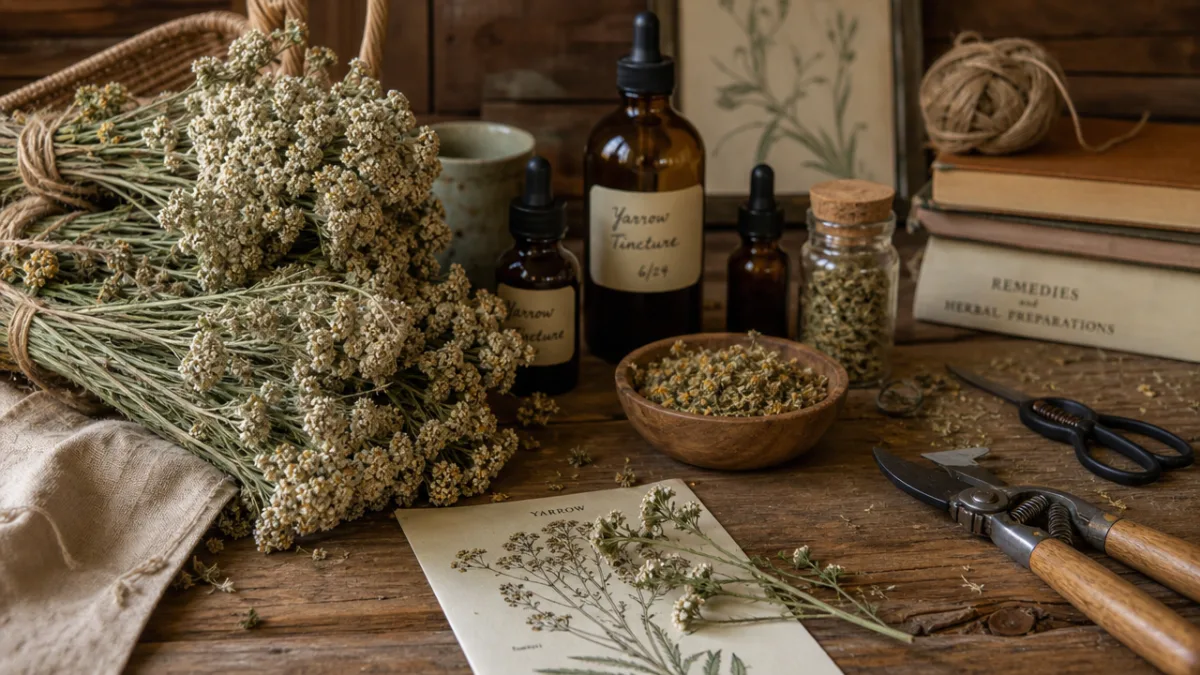
Modern herbalists continue to work with yarrow for a range of applications, most commonly in the form of teas, tinctures, and topical preparations. Its active constituents include flavonoids, alkaloids, sesquiterpene lactones, and volatile oils, many of which have demonstrated anti-inflammatory, antimicrobial, and antispasmodic properties in scientific studies. Yarrow tea is traditionally used to support fever management by promoting perspiration, to ease digestive discomfort, and to support the female reproductive system. As with all herbal remedies, individuals should consult a qualified healthcare professional before using yarrow medicinally, particularly during pregnancy or when taking pharmaceutical medications.
In the modern garden and home, yarrow finds additional uses that extend beyond the strictly medicinal. The flowers dry exceptionally well and are prized by floral designers and crafters for dried arrangements, wreaths, and botanical art projects, retaining much of their color even after drying. Yarrow also makes a valuable addition to compost piles, where it acts as an activator, speeding decomposition and enriching the resulting compost with a range of beneficial minerals. Liquid fertilizer can even be made by steeping yarrow leaves in water, creating a nutrient-rich foliar spray or soil drench that supports plant health in a completely natural way.
Seasonal Care and Long-Term Management of Yarrow
Managing yarrow through the seasons is a simple and satisfying process that rewards even minimal attention with reliable performance year after year. In spring, as new growth emerges from the base of established plants, it is a good time to divide any clumps that have become overcrowded or have developed dead centers — a natural progression in older plantings. Dividing every three to four years keeps yarrow vigorous, encourages abundant flowering, and gives you additional plants to spread through the garden or share with fellow gardening enthusiasts who will inevitably admire its performance.
Throughout the summer blooming season, deadheading — removing spent flower clusters — prolongs the display and prevents excessive self-seeding, which can become a nuisance in tidy garden settings. However, leaving some seed heads intact benefits birds like goldfinches and sparrows that feed on the seeds during late summer and autumn. Cutting plants back by about one-third after the first flush of bloom is a technique that encourages a second, often more abundant flowering period later in the season. This practice of “the Chelsea chop” — named after the famous Chelsea Flower Show tradition — works exceptionally well with yarrow and extends its garden value considerably.
In autumn, gardeners face a choice between cutting yarrow back to the ground or leaving the stems standing through winter. Both approaches have merit. Cutting back gives the garden a tidier appearance and removes any diseased material before winter sets in. Leaving stems standing provides structural interest in the winter garden, offers shelter for overwintering beneficial insects such as solitary bees that nest in hollow stems, and provides food for seed-eating birds. A middle approach — cutting back roughly half the plants while leaving others standing — balances tidiness with ecological generosity and is increasingly recommended by wildlife gardening advocates as the most ecologically sound practice.
Conclusion: Making Yarrow a Garden Staple
Yarrow represents the finest qualities of what a garden plant should be: beautiful, resilient, ecologically generous, historically rich, and remarkably easy to grow. Whether your primary interest is in supporting pollinators, creating a low-maintenance perennial border, exploring herbal traditions, or simply adding lasting color and texture to your outdoor space, yarrow delivers on every front with quiet consistency. It asks little and gives back abundantly, enriching every garden it inhabits in ways both visible and invisible.
As part of a broader strategy for creating a beneficial, biodiverse garden, yarrow works in concert with other flowering plants to build the kind of layered, insect-supporting landscape that modern gardens so urgently need. The global decline of pollinator populations makes plants like yarrow more important than ever before — not as a luxury addition but as a genuine ecological contribution. Every garden that includes yarrow becomes a small refuge for bees, butterflies, and beneficial insects, and every gardener who grows it participates in something larger than their own plot of land.
If yarrow is not already part of your garden, this season is an ideal time to introduce it. Start with one or two plants in a sunny, well-drained spot and observe how quickly the surrounding ecosystem responds. You are likely to find bees visiting within days of planting, and by the time your yarrow reaches full bloom, you will wonder how you ever gardened without it. This is a plant that earns its place in every sense — through beauty, through function, through history, and through the simple, joyful act of making any garden more alive.








What do you think?
It is nice to know your opinion. Leave a comment.