










Forest Rain: The Enchanting World of Pine & Fern Handmade Candles
The Art of Capturing Nature in a Flame
You know that smell — the one that hits you when rain finally breaks over a forest, all damp earth and pine resin and crushed ferns underfoot. It’s one of those scents that stops you in your tracks. People have always wanted to bring that feeling indoors, and honestly, a really well-made candle comes closer than almost anything else. The “Forest Rain” pine and fern candle is exactly that kind of thing: a genuine attempt to bottle the atmosphere of an ancient woodland and bring it into your home on an ordinary Tuesday evening.
Handmade in England, this candle is part of a growing world of artisan fragrance-making where authenticity and craft actually mean something. There are no synthetic shortcuts here, no factory lines churning out approximations of natural scents. These candles are made in small batches, with real attention paid at every step — choosing the wax and wicks, blending the fragrance, pouring each vessel by hand. You can feel the difference when you hold one. It has a warmth to it that manufactured things just don’t.
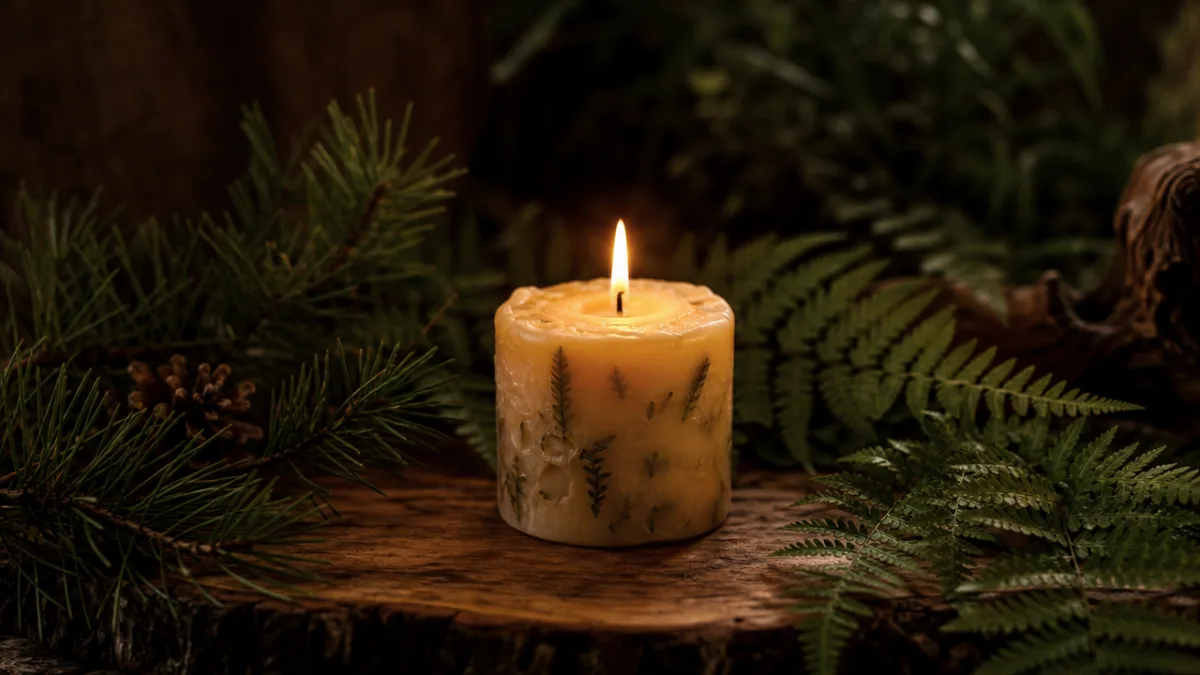
The visual identity of the candle is just as considered as the scent. Pine and fern aren’t just fragrance notes — they carry a whole mood with them. There’s something about the image of a rain-soaked forest, light filtering through tall conifers, ferns catching mist in the undergrowth, that speaks to a deep craving for quiet and wildness that a lot of us carry around without quite naming it. This candle is, in a small but real way, a door to that place — and all you have to do is strike a match.
Understanding the Fragrance Profile: Pine, Fern, and Rain
To really get what makes “Forest Rain” work as a fragrance, it helps to look at each component on its own. Pine is one of the oldest scents in our collective memory — that sharp, resinous hit comes from terpene compounds in the needles that get released when they’re warmed or bruised. In a candle, good pine fragrance oil captures both the bright, almost citrusy top end and the deeper balsamic warmth underneath. It’s the kind of smell that makes you feel like you can breathe more deeply.
Fern is a fascinating one. In perfumery, the whole family of fern-inspired scents is called “fougère” (French for fern), and it’s been a cornerstone of Western fragrance since 1882, when Fougère Royale changed everything. Real fern has a green, slightly mossy, almost cool-water quality — it smells like deep shade and the particular kind of dampness you find at the base of a woodland floor. In a blend, fern notes give the brighter pine elements something to rest against. They add mystery and a real sense of place.
Rain is trickier to pin down because it isn’t really one smell at all — it’s a whole sequence of them. Petrichor is the earthy hit you get when rainwater meets dry soil. Geosmin, produced by soil bacteria, adds that deep, almost mineral quality. Then there’s the ozone-like freshness in the air during a downpour that makes everything smell cleaner and wilder. Pulling all of that together into a single coherent candle fragrance takes serious skill — you need a really well-trained nose to balance those competing elements without losing the thread of the whole thing.
- Top notes: Fresh pine needle, rain ozonic accord, green leaf
- Heart notes: Fern frond, forest moss, crushed herb
- Base notes: Cedarwood, damp earth, soft musk, amber resin
The Craft of Handmade Candle-Making in England
England has always had a strong tradition of artisan making, and candle-making goes back further than most. For centuries, before electric light was a given, chandlers — the traditional name for candle-makers — held genuine social importance, and the knowledge of how to make a good candle was passed carefully from person to person. That tradition is alive today in a new form, with small independent makers across the country combining old techniques with modern fragrance knowledge and a real eye for contemporary design. “Forest Rain” belongs to that lineage.
When candles are made by hand rather than machine, every single stage involves a human decision. The wax has to reach exactly the right temperature before you add the fragrance oil — too hot and the scent degrades, too cool and it won’t bind properly. The wick needs to sit perfectly centred. The vessel needs pre-warming. The pour has to be slow and controlled, or you end up with air pockets and sinkholes once the wax cures. None of this is complicated in theory, but doing it consistently and well takes months of practice — sometimes longer. That’s the skill you’re paying for when you buy handmade.
There’s also something quietly meaningful about where this candle is made. The English landscapes that immediately come to mind — the Lake District, the New Forest, the old woodland of Dartmoor — are exactly the landscapes that “Forest Rain” is trying to evoke. The people making these candles aren’t imagining a forest from a mood board; they grew up around this kind of rain and green and grey light. That connection between place and product adds a layer of authenticity that’s hard to manufacture, no matter how good your marketing is.
- Wax selection — typically natural soy, rapeseed, or coconut blends for clean, even burning
- Fragrance blending — carefully measured ratios of essential and fragrance oils
- Temperature control — precise heating and cooling to preserve scent integrity
- Hand-pouring — slow, steady pours into pre-prepared vessels
- Curing time — allowing the candle to rest for 48 to 72 hours before quality testing
The Rise of the Forest Aesthetic and Cottagecore Culture
This candle didn’t appear in a vacuum. It’s part of a wider cultural moment that’s been building for several years now, particularly among younger people who’ve found nature-inspired imagery to be a genuine antidote to the relentless noise of digital life. The cottagecore, dark academia, and forest bathing aesthetics that took off on Pinterest and Instagram created a real hunger for products that feel unhurried, grounded, and genuinely made. A candle that smells of pine rain and forest ferns fits right into that world — not because someone engineered it to, but because the longing those aesthetics tap into is real.
Pinterest in particular is worth mentioning here, because its format — all atmosphere and mood boards and feeling — is almost perfectly suited to this kind of product. A single well-composed image of a glowing candle beside a rain-streaked window, surrounded by pine cones and autumn leaves, can communicate an entire emotional universe instantly. “Forest Rain” pins beautifully for exactly that reason. The colours, the textures, the associations it carries — they do a lot of the work before anyone even reads a word of description.
But the appeal isn’t just visual. There’s a growing body of research showing that time spent in forests — or even sensory experiences that replicate being in forests — genuinely reduces stress hormones, lowers heart rate, and lifts mood. The Japanese practice of Shinrin-yoku, or forest bathing, has been studied extensively with measurable results. So when you burn a candle that smells authentically of a rain-soaked woodland, you’re not just enjoying a nice scent — you’re giving yourself a small, accessible version of something your nervous system actually responds to. That’s a more meaningful thing to keep on your coffee table than it might first appear.

Why Handmade Candles Make the Perfect Gift
There are some gifts that just say something, and a handmade candle is one of them. Choosing something crafted with real skill and intention tells the person you’re giving it to that you thought about them properly — that you didn’t just grab the first thing you saw. Candles have always been a popular gift, but a handmade one with a genuinely distinctive fragrance is a different category of thing. “Forest Rain,” with its carefully layered woodland scent and its considered aesthetic, is the kind of gift people actually mention later. “That pine candle you gave me” — you know the one.
What makes candles particularly good gifts is how personal the sensory experience is. Unlike a book or a jumper, a candle works on multiple levels at once — the soft warmth of the light, the gradual unfurling of the scent, the satisfying weight of a well-made vessel in your hands. When you give someone a candle that smells of pine rain and forest fern, you’re giving them a whole experience, not just an object. Every time they light it, they get a few minutes of being somewhere else — somewhere cooler and greener and quieter. For something that fits in a gift bag, that’s a pretty generous thing to offer.
The fact that “Forest Rain” ships to both the UK and the US makes it especially useful as a long-distance gift — the kind of thing you can send to a friend across the Atlantic or a sibling in a different city when you want to give them something that doesn’t feel like it was chosen in a hurry. The forest aesthetic translates easily across those geographies too. Whether someone is in rural England or a flat in New York, the pull of damp green woodland and quiet mornings is something most people feel. A candle that captures that travels well in every sense.
- Ideal for birthdays, housewarmings, and seasonal celebrations
- Suitable for nature lovers, hikers, and outdoor enthusiasts
- A meaningful self-care gift for those navigating stressful periods
- Perfect for anyone with a fondness for cottagecore or forest aesthetics
- Available with UK and US shipping for easy international gifting
How to Get the Most from Your Forest Rain Candle
A good handmade candle is worth looking after properly, and the single most important thing you can do is get the first burn right. When you light it for the first time, leave it burning until the entire surface of the wax has melted from edge to edge — this is called a full melt pool, and it usually takes between one and three hours depending on how wide the vessel is. If you blow it out too soon, you’ll get tunnelling: a narrow channel burning straight down through the middle while thick walls of unmelted wax build up on either side. A tunnelled candle throws far less fragrance and, frankly, looks a bit sad. One patient first burn saves you from all of that.
Trimming your wick is the other thing most people skip but really shouldn’t. Before every burn, trim it down to about five millimetres. A wick that’s too long produces a big, restless flame that throws off more soot than scent and can stress the vessel with excess heat. A properly trimmed wick gives you a steady, even burn that lets the fragrance build gradually and fill the room at the right pace — not too fast, not too faint. A small wick trimmer costs almost nothing and makes a noticeable difference to how long your candle lasts and how good it smells.
Where you put the candle matters too. For “Forest Rain” to really come alive, think about the setting — a quiet corner of the living room on a grey afternoon, maybe beside some books and a warm drink, with rain on the window if you’re lucky. That kind of environment does more than you’d expect to deepen the sensory experience. Avoid draughty spots, which make the flame unsteady and cause uneven burning. Keep it out of direct sunlight, which fades the wax and dulls the fragrance over time. And always, always burn it on a heat-resistant surface — safety is what makes the whole ritual possible.
- Always achieve a full melt pool on your first burn to prevent tunnelling
- Trim the wick to 5mm before every burn for a clean, even flame
- Burn in a sheltered spot, away from draughts and direct sunlight
- Never burn for more than four hours at a time to protect the vessel
- Allow the candle to cool completely before trimming the wick or moving it
- Store unused candles in a cool, dark place to preserve fragrance integrity
And beyond the practical stuff — there’s something worth saying about the ritual itself. Striking a match, touching it to the wick, watching that first curl of scented smoke rise — it’s a small but deliberate act of choosing to slow down, and we don’t get many of those in a normal day. “Forest Rain,” with its deep, grounding, woodland scent, is a particularly good companion for that kind of pause. Light it while you read, or write, or do nothing at all. Just let it do its thing.








What do you think?
It is nice to know your opinion. Leave a comment.