










Pop Tab Keychains: The Ultimate Guide to Crafting, Creativity, and Sustainability
What Are Pop Tab Keychains and Why Are They So Popular?
Pop tab keychains are handcrafted accessories made from the small aluminum pull tabs found on soda cans, beer cans, and other canned beverages. These tiny metal rings, which most people toss away without a second thought, have become the foundation of a surprisingly vibrant crafting community. By linking, weaving, or decorating these discarded tabs, crafters create functional and eye-catching keychains that carry both personal expression and an eco-conscious message. The humble pop tab has transformed from landfill-bound waste into wearable art.
The popularity of pop tab crafts has surged in recent years, largely driven by social media platforms like Pinterest, TikTok, and Instagram, where creators share their colorful, inventive designs to millions of followers. What makes these keychains particularly appealing is their accessibility — the raw materials cost absolutely nothing if you simply collect your own tabs, and the tools required are minimal. Whether you are a seasoned crafter or a complete beginner looking for a weekend project, pop tab keychains offer a satisfying entry point into the world of upcycled jewelry and accessories.
Beyond the crafting appeal, pop tab keychains have a cultural history worth appreciating. For decades, charitable organizations have collected pop tabs — most famously for the Ronald McDonald House Charities, which recycles them to fund housing for families of hospitalized children. Crafters who work with pop tabs often feel connected to this larger tradition of giving everyday objects a second life with purpose. The keychain you make at home carries a quiet lineage of community, creativity, and resourcefulness that makes it far more meaningful than a mass-produced accessory from a big-box store.
Gathering and Preparing Your Pop Tabs
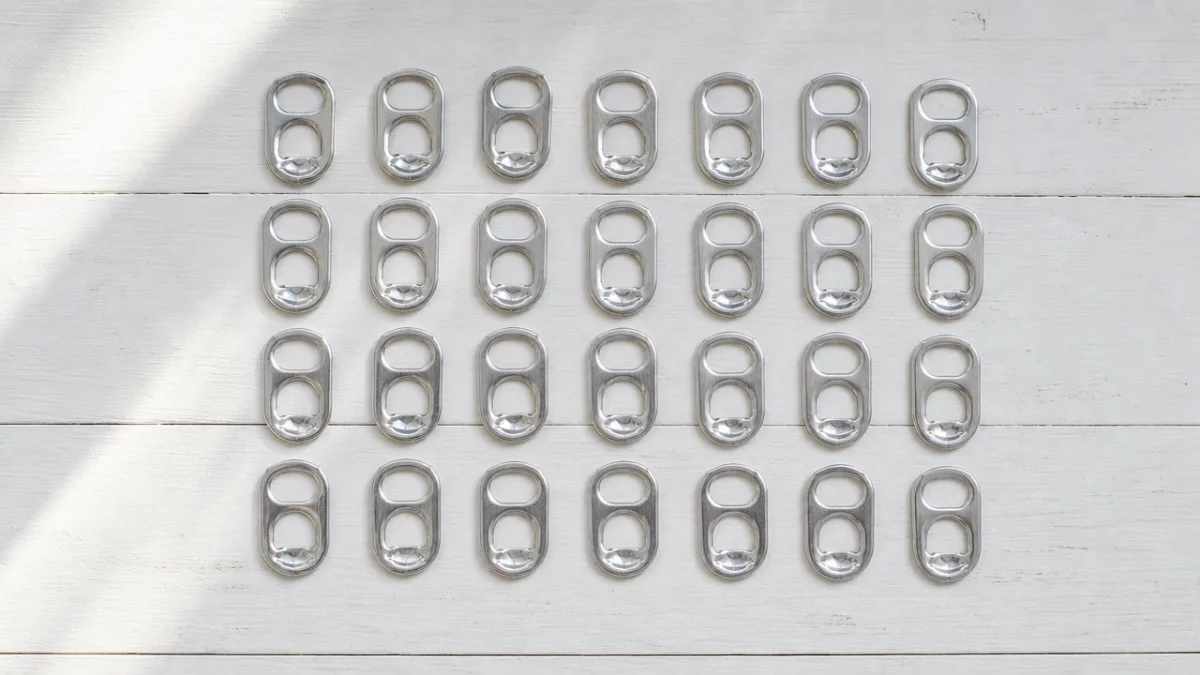
The first step in making pop tab keychains is collecting enough tabs to work with. Depending on the complexity of your design, a single keychain might require anywhere from five to twenty or more tabs. Start saving tabs from your own household — every soda, sparkling water, energy drink, or canned food opens with a pull tab ready for repurposing. Let friends, family, and coworkers know about your project, and you will likely find yourself swimming in donated tabs within just a few weeks. Schools, offices, and community centers are also excellent collection points.
Once you have a collection of tabs, preparation is key to ensuring your finished keychain looks polished and lasts a long time. Begin by rinsing each tab thoroughly under warm water to remove any sticky residue from the beverage inside. A soft brush — even an old toothbrush — works wonderfully for scrubbing away grime from the small crevices. After washing, lay the tabs out on a clean towel and allow them to air dry completely before you begin crafting. Skipping this step can lead to sticky, discolored finished pieces that attract dirt over time.
You may also want to sort your tabs by condition before starting. Some tabs will have small burrs or sharp edges from how they were removed from the can; these should be smoothed carefully using a fine-grit nail file or a small piece of sandpaper. Tabs with significant bending or warping can be gently flattened by pressing them between two firm surfaces. Taking the time to curate a clean, uniform batch of tabs means every component of your keychain will sit evenly and link smoothly, giving the finished piece a professional, store-quality appearance that surprises people when they learn it’s handmade.
Essential Tools and Materials for Pop Tab Keychains
One of the greatest advantages of pop tab keychain crafting is how little you need to get started. At its most basic, you only need the tabs themselves and a keychain ring — the kind you can find in any craft store, dollar store, or online marketplace for just a few cents each. Split rings, lobster claw clasps, and carabiner-style rings all work well depending on your intended use. A keychain that will hold heavy car keys benefits from a sturdier ring, while a decorative bag charm can get away with something lighter and more delicate.
For more elaborate designs, a few additional supplies open up enormous creative possibilities. Jump rings — small loops of wire sold in craft and jewelry-making sections — allow you to connect tabs in different orientations and create layered or dangling effects. Jewelry pliers, particularly round-nose and flat-nose varieties, are invaluable for opening and closing these rings cleanly without distorting their shape. Elastic cord, thin ribbon, or embroidery floss can be woven through the holes in the tabs to add bursts of color, turning a simple metal keychain into something vivid and personalized.
Decorating materials deserve their own consideration when planning your project. Nail polish is a crafter’s secret weapon for pop tab projects — it adheres beautifully to aluminum, dries quickly, and comes in every imaginable color and finish, including glitter and holographic options. Permanent markers in metallic or opaque colors work well for adding designs, initials, or small illustrations directly onto the tab surface. Resin crafters have taken pop tab keychains to an entirely new level by embedding tabs within clear resin poured into molds, creating one-of-a-kind pendants that look almost like professional costume jewelry.
Step-by-Step Guide to Making Your First Pop Tab Keychain
Making your first pop tab keychain is easier than it might look when you see a beautifully finished example online. The simplest design — a straightforward linked chain of tabs — requires no special tools at all. Start by taking one tab and threading a second tab through the top opening of the first, then folding it down so the two tabs interlock. Repeat this process, threading each new tab through the top hole of the previous one and folding it into place. After five or six tabs, you will have a satisfying little chain that can be finished with a keyring through the final link.
For a slightly more polished beginner project, try the classic single-tab keychain with decorative embellishment. Take one clean, prepared tab and attach it directly to a split key ring through its top loop. Then use nail polish to paint the flat face of the tab in your chosen base color, allowing it to dry completely — usually around ten to fifteen minutes. Once dry, add a second coat for opacity, let it cure, and then use a fine-tip nail art brush or a toothpick dipped in contrasting nail polish to add dots, stripes, or simple designs. Finish with a clear top coat to seal and protect your artwork.
As you grow more confident, you can explore these popular design variations to challenge yourself and expand your portfolio of styles:
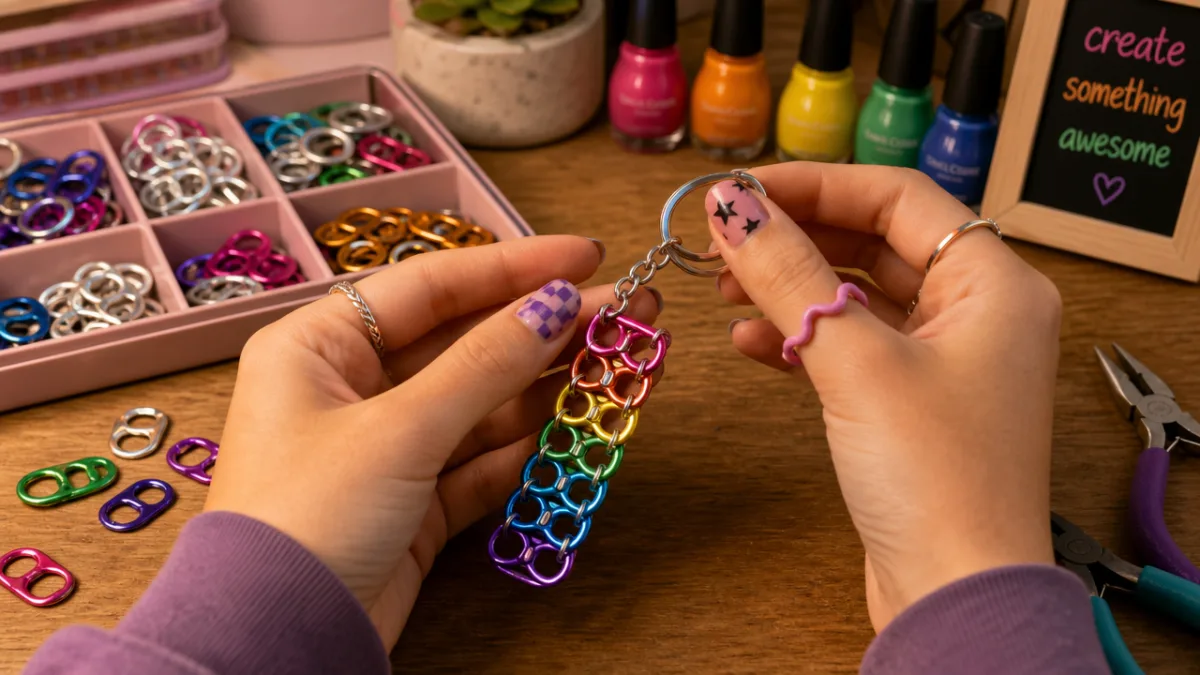
- Woven tab keychains: Multiple tabs linked in a grid pattern using jump rings, creating a scale-like texture reminiscent of chainmail jewelry.
- Tassel keychains: A top tab attached to a keyring, with several individual tabs hanging down on short lengths of chain or cord, creating a fringe effect.
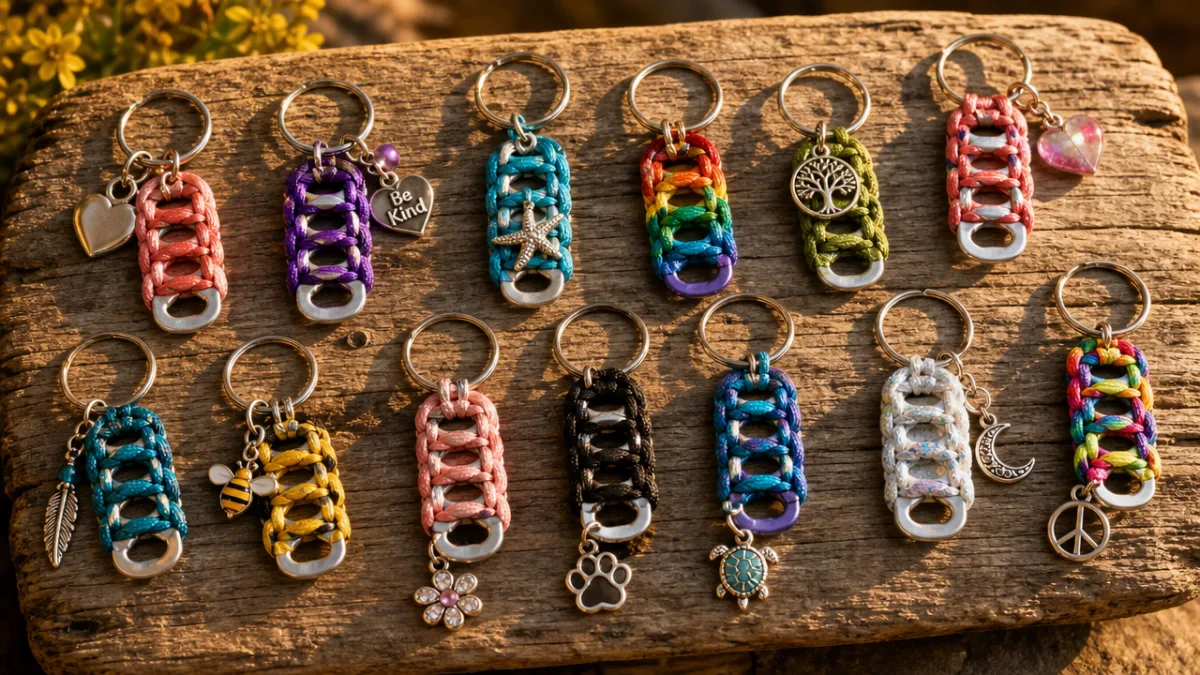
- Braided cord and tab keychains: Tabs used as decorative accents threaded along a braided paracord or macramé base.
- Resin-coated keychains: Tabs sealed under domed UV resin for a glossy, water-resistant finish that also allows embedding of glitter, dried flowers, or foil flakes.
- Personalized initial keychains: Tabs decorated with painted or stamped letters, making them ideal for gifts and party favors.
Once you have experimented with several styles, you will develop an intuitive sense for what works structurally and aesthetically. The learning curve is gentle, and mistakes are rarely catastrophic — a tab that bends the wrong way can usually be reshaped or simply replaced. The best advice for any new pop tab crafter is to embrace the process of experimenting freely, because the constraints of working with a uniform material actually push you toward creative problem-solving in ways that more forgiving media never quite do.
Creative Design Ideas and Personalization Tips
The design possibilities for pop tab keychains are genuinely broader than most beginners anticipate. Color is the most obvious variable to play with — coordinating tabs painted in a gradient from light to dark creates a sophisticated ombre effect, while alternating two contrasting colors across a woven design produces a graphic, geometric pattern that looks intentional and modern. Themed color palettes make pop tab keychains excellent seasonal crafts: think orange and black for Halloween, red and green for Christmas, or pastel shades for spring gifting occasions.
Texture and mixed materials elevate simple designs into something truly unique. Wrapping sections of the keychain chain in embroidery floss using a simple friendship bracelet technique adds softness and warmth to what would otherwise be an entirely cool, metallic piece. Mixing pop tabs with wooden beads, acrylic charms, or natural materials like shells or dried flower heads produces interesting contrasts between industrial and organic aesthetics. These mixed-media approaches are particularly popular among crafters who sell their work, because they result in pieces distinctive enough to stand out in an online marketplace or at a craft fair table.
Personalization transforms a pop tab keychain from a craft project into a heartfelt gift. Consider these ideas for customizing keychains for the people in your life:
- Stamp or paint a recipient’s initial or name onto the feature tab using alphabet stamps and acrylic paint.
- Choose a color palette that reflects the person’s favorite sports team, school colors, or personal aesthetic.
- Add a small charm that reflects their hobby or personality — a tiny book charm for a reader, a paw print for an animal lover, a star for an aspiring performer.
- Write a short message or date on the back of a tab using a fine-point permanent marker before sealing with resin.
- Incorporate birthstone-colored beads or rhinestones alongside the tabs for a jewelry-inspired look.
The personalization possibilities mean that pop tab keychains scale beautifully as a group activity. Teachers have used them for classroom projects that combine art and environmental education. Party planners have set up pop tab crafting stations at birthday parties and bridal showers where guests create custom favors to take home. Youth groups and summer camps have used them to teach basic craft skills while sparking conversations about recycling and creative reuse. In every setting, the simplicity of the core concept leaves plenty of room for individual expression, making the activity inclusive and enjoyable for participants of all skill levels.
The Sustainability Story Behind Pop Tab Crafting
At its core, pop tab crafting is an act of environmental creativity. Aluminum is one of the most recyclable materials on earth — it can be melted down and reformed indefinitely without losing quality — yet billions of pull tabs still end up in landfills each year simply because they are too small for many recycling sorting systems to capture reliably. By diverting even a small number of these tabs into handmade crafts, makers participate in a meaningful, if modest, form of waste reduction. The environmental benefit multiplies when you consider that each keychain you create displaces a commercially produced accessory that might have been made from virgin plastic or other resource-intensive materials.
The sustainability narrative around pop tab crafts also connects to broader conversations about the culture of making and repairing versus buying and discarding. When you invest time and skill into creating something from materials that others throw away, you develop a different relationship with objects and resources. Crafters who work regularly with upcycled materials often report becoming more conscious consumers overall — more likely to repair a broken item than replace it, more likely to think creatively about the second life of everyday waste, and more attuned to the hidden value embedded in what our throwaway culture considers worthless. A keychain made from a soda tab carries all of this philosophy in miniature.
For those who want to extend the sustainability impact of their pop tab hobby, there are several meaningful directions to explore. Donating collected tabs to organizations like Ronald McDonald House Charities turns your crafting surplus into charitable currency — these organizations sell the aluminum by weight and use the proceeds to fund family support programs. Gifting handmade pop tab keychains instead of purchasing packaged gifts reduces consumption at both ends of the transaction. And sharing your process openly — through social media, community workshops, or simple conversations — spreads the ethic of creative reuse to others who might never have considered that a soda tab could become something beautiful.
Selling Your Pop Tab Keychains: Turning a Hobby Into a Business
Many crafters who begin making pop tab keychains purely for personal enjoyment eventually realize they have something others want to buy. The combination of low material costs, high visual appeal, and a compelling sustainability story makes these keychains surprisingly marketable. Online platforms like Etsy are full of successful sellers who have built steady side incomes from handmade pop tab accessories, and the market shows no signs of saturation — because each maker brings a unique design sensibility, there is always room for fresh perspectives and distinctive styles to find their audience.
Pricing handmade items can feel uncomfortable for new sellers who are tempted to charge only the cost of materials and undervalue their time. A useful framework for pricing pop tab keychains is to calculate your material costs (keychain rings, jump rings, cord, nail polish, resin, etc.), multiply by a standard markup factor (commonly two to three times for materials), and then add a fair hourly rate for your labor time. Even at prices that seem high compared to mass-produced keychains, handmade pop tab pieces often sell well because buyers are paying for uniqueness, craftsmanship, and the satisfaction of supporting an independent creator with an eco-conscious practice.
Marketing your pop tab keychains effectively means leaning into what makes them genuinely special. Photography is paramount — well-lit, styled images against clean, attractive backgrounds communicate quality and intentionality far more effectively than snapshots. Social media content that shows the making process, from the raw tabs through the finished piece, tends to perform strongly because viewers are drawn into the transformation narrative. Craft fairs and local markets provide invaluable face-to-face selling experience and community connection, and many sellers find that having a physical presence at even a few events per year significantly boosts their online visibility as well, as customers share photos and tag the maker on social media long after the event has ended.








What do you think?
It is nice to know your opinion. Leave a comment.