










Introduction: The Enchanting Spider Lily and Its Place in Water Gardens
The Spider Lily, known botanically as Hymenocallis or sometimes referred to by its aquatic cousin Crinum americanum, is one of the most visually dramatic and structurally fascinating plants you can introduce to a pond or water garden. With its long, spidery petals radiating outward like the legs of an elegant arachnid, this plant commands attention in any aquatic setting. Whether you are a seasoned water gardener or a newcomer exploring the possibilities of pond landscaping, the Spider Lily offers a combination of beauty, ecological benefit, and surprisingly manageable care that makes it an outstanding choice for gardens of nearly any size or style.
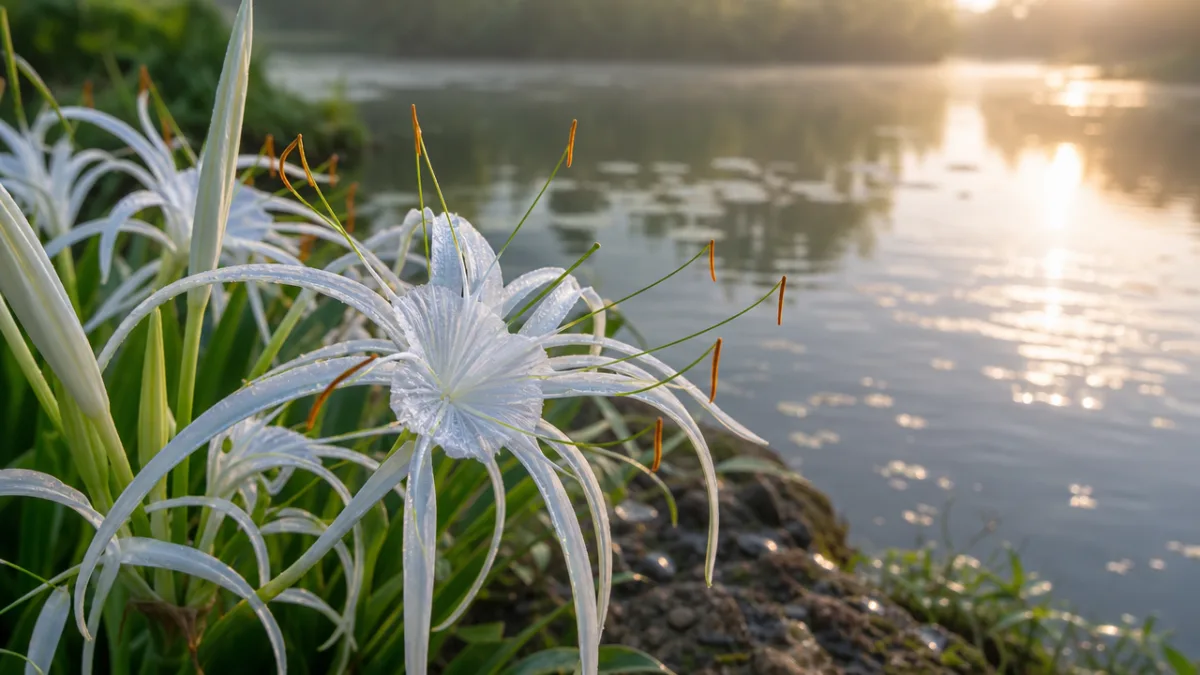
Water gardens thrive on contrast and layering — the broad, floating pads of water lilies, the vertical spears of cattails, the delicate fronds of water ferns — and the Spider Lily fits into this layered ecosystem with remarkable grace. Its slender, strap-like leaves emerge directly from the water’s edge or from shallow marginal zones, creating a lush, tropical visual effect that softens hard pond edges and bridges the gap between the aquatic and terrestrial worlds. The blooms themselves, which appear in late spring through summer, are nothing short of spectacular: white, star-shaped flowers with a gossamer membrane connecting their slender petals, giving the plant its common name.
Beyond its purely ornamental appeal, the Spider Lily brings a rich cultural and historical lineage to the garden. In many Asian traditions, spider lilies — particularly the red Lycoris radiata — carry deep symbolic meaning related to transformation, memory, and the passage between worlds. Even the white aquatic varieties evoke a sense of ethereal beauty and timeless elegance that resonates across cultures. Gardeners who choose to incorporate this plant are not merely adding greenery; they are weaving a living symbol of natural artistry into their outdoor spaces, creating a web of beauty that draws the eye, calms the mind, and invites wonder.
Understanding the Spider Lily: Varieties Best Suited for Pond Environments
Before planting, it is important to understand which species and varieties of spider lily are best suited to true pond and water garden environments, as the broader “spider lily” category includes plants from several distinct genera. Hymenocallis species, particularly Hymenocallis liriosome (the spring spider lily) and Hymenocallis caroliniana (the Carolina spider lily), are native to the southeastern United States and are naturally adapted to wet soils, stream banks, and shallow water margins. These are the workhorses of the water garden world — hardy, floriferous, and tolerant of the fluctuating water levels that characterize most backyard ponds.
Crinum americanum, often sold under the common name “swamp lily” or “string lily,” is another excellent pond-side candidate that is frequently grouped with spider lilies due to its similar long-petaled white blooms. It thrives in USDA hardiness zones 8 through 11 and can be grown as a marginal plant with its roots submerged in just a few inches of water. For gardeners in cooler climates, Hymenocallis bulbs can be treated as seasonal plants — planted in spring, enjoyed through summer, and lifted and stored indoors once temperatures drop below freezing. This flexibility makes the spider lily accessible to gardeners well beyond its native subtropical range.
For those seeking added color or textural variation, tropical hybrids such as Hymenocallis ‘Sulphur Queen’ offer soft yellow blooms with the same distinctive spider-like structure, providing a warm counterpoint to the predominantly white-flowered species. When selecting varieties for your specific pond, consider the following factors to ensure the best match:
- Climate zone: Native southeastern species are hardier and more suitable for zones 6–9, while tropical hybrids prefer zones 9–11 or container growing in cooler areas.
- Water depth tolerance: Most Hymenocallis prefer boggy margins rather than deep water; position bulbs where roots stay moist but crowns remain above the waterline.
- Bloom period: Species vary from early spring bloomers to midsummer performers — planting a mix extends the visual interest across the season.
- Size and spread: Some varieties reach 24 to 36 inches in height, while more compact forms stay under 18 inches, allowing thoughtful scaling to your pond’s proportions.
Understanding these distinctions empowers you to make informed purchasing decisions and set realistic expectations for how your spider lily planting will develop over time. A well-chosen variety placed in the right microhabitat will reward you with vigorous growth, reliable annual blooming, and increasing beauty as the clumps mature and multiply over successive seasons.
Planting and Positioning: Creating the Ideal Aquatic Home
Successful spider lily cultivation in a pond setting begins with thoughtful placement and correct planting technique. Unlike fully submerged aquatics, spider lilies occupy the marginal zone — that transitional band between dry land and open water that is so often the most ecologically dynamic and visually rich part of a water garden. Aim to position your spider lily bulbs or divisions where the soil or growing medium remains consistently moist and where the plant will receive at least six hours of direct sunlight each day. Most species tolerate partial shade but will produce fewer blooms in lower light conditions, so when in doubt, prioritize the sunnier section of your pond’s perimeter.
For in-ground ponds with natural earthen margins, planting is straightforward: loosen the soil, enrich it with organic matter if needed, and set bulbs at a depth of about two to four inches below the soil surface. In lined ponds, where there may be no true soil margin, spider lilies can be grown in aquatic baskets or containers filled with a heavy, clay-based aquatic planting medium. These baskets can then be positioned on marginal shelves — the shallow ledges built into many pond designs specifically for this purpose — at a depth that keeps roots submerged but leaves foliage above water. This container approach also makes it easy to lift and divide clumps every two to three years, which encourages more vigorous blooming and prevents overcrowding.
Water pH and overall pond water quality can also influence spider lily performance. These plants prefer slightly acidic to neutral water conditions (pH 6.0–7.0) and are sensitive to chemical imbalances caused by excess algae treatments or fertilizer runoff from nearby garden beds. Before introducing spider lilies, test your pond water and address any significant imbalances. Once established, the plants themselves contribute to water quality by absorbing excess nutrients through their root systems — a welcome ecological benefit that actually helps keep the pond environment stable over time.
Spacing is another critical consideration. Individual spider lily plants can spread significantly over time through the production of offsets (small daughter bulbs that form around the parent), so give each planting station adequate room — typically 12 to 18 inches between bulbs at the time of initial planting. This may seem sparse at first, but within two to three growing seasons, well-sited clumps will fill in beautifully, creating the lush, layered marginal planting that makes a water garden feel truly alive and cohesive.
Care and Maintenance: Keeping Your Spider Lily Thriving
One of the most appealing aspects of growing spider lilies in a pond setting is their relative ease of care once they are established. These are not fussy, high-maintenance plants; rather, they are robust growers that, given the right foundational conditions, largely tend to themselves. The primary care tasks involve fertilization, division, winter management in colder climates, and vigilance against the small number of pests and diseases that occasionally trouble this genus. With a modest investment of time and attention, you can maintain a spider lily planting that looks spectacular year after year.
Fertilization needs are moderate. Aquatic slow-release fertilizer tablets pushed into the planting medium near the base of the plant once in early spring and again in midsummer will support vigorous foliage growth and maximize bloom production. Avoid over-fertilizing, which encourages excessive leaf growth at the expense of flowers and can contribute to algae problems in the surrounding pond water. Organic options such as composted manure incorporated into the planting basket at the time of planting provide a gentle, sustained nutrient source that mimics the rich alluvial soils these plants naturally inhabit in the wild.
Division is a straightforward process that pays significant dividends. When a clump becomes crowded — typically every two to three years — carefully remove the entire basket or root ball from the water in early spring before new growth emerges. Separate the individual bulbs by hand, discarding any that appear rotted or soft, and replant the healthiest specimens at appropriate spacing. Divided offsets can be potted up and shared with friends, donated to garden clubs, or planted elsewhere around your property. This generative quality — one plant becoming many over time — adds real long-term value to the initial purchase.
In zones where winter temperatures regularly drop below 20°F (-6°C), spider lily bulbs should be lifted after the first frost kills the foliage, cleaned of soil, dried for a few days, and stored in dry peat moss or vermiculite in a cool, frost-free location such as a garage or basement. Key maintenance tasks through the season include:
- Remove spent flower stalks promptly to maintain a tidy appearance and redirect the plant’s energy toward bulb development rather than seed production.
- Trim yellowing or damaged foliage at the base using clean, sharp scissors to prevent potential fungal issues from decaying plant material.
- Check containers periodically throughout summer to ensure adequate water levels and that baskets have not shifted or become dislodged by wind or wildlife activity.
- Monitor for aphids and spider mites, which occasionally colonize the strap-like leaves; these can usually be managed with a strong jet of water or insecticidal soap applied carefully to avoid harming pond fish or other aquatic life.
Ecological Benefits: How Spider Lilies Support Pond Health and Wildlife
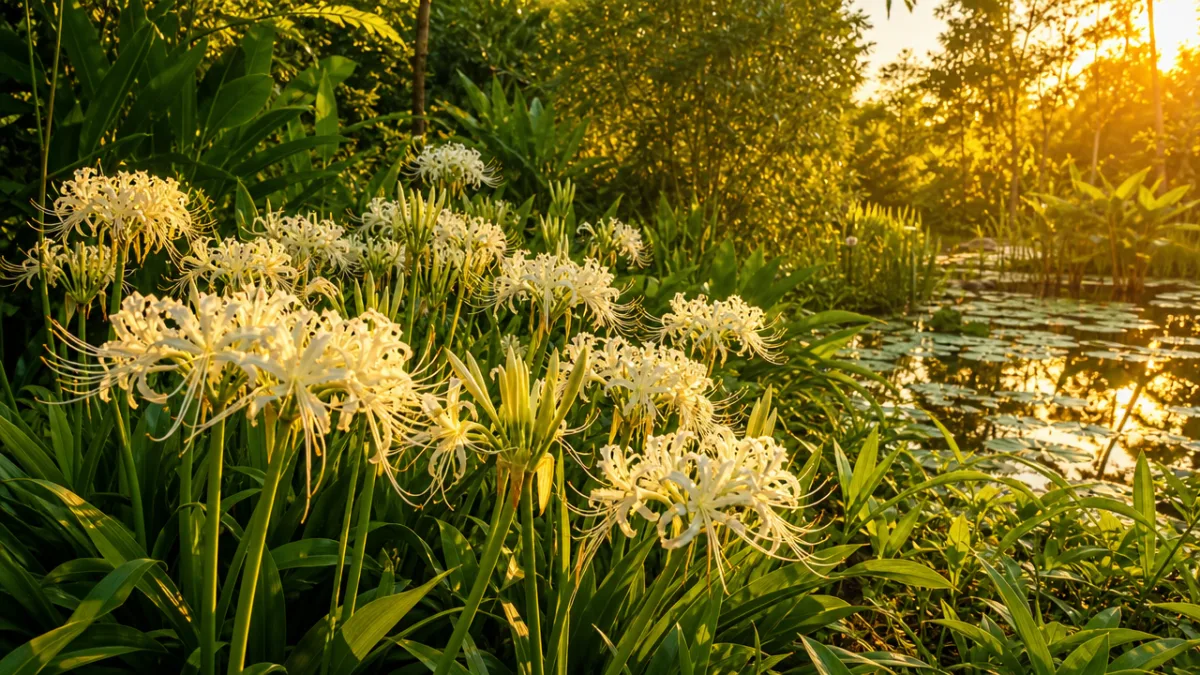
The spider lily is not merely a decorative addition to your water garden — it is a genuinely functional member of the pond ecosystem, delivering a suite of ecological benefits that support water quality, biodiversity, and overall habitat health. Marginal aquatic plants like spider lilies play a critical role in what ecologists call the “littoral zone,” the shallow-water edge habitat that serves as a nursery, feeding ground, and shelter for a disproportionately large share of aquatic biodiversity. By establishing a robust marginal planting that includes spider lilies, you are actively investing in the ecological vitality of your pond in ways that go far beyond aesthetics.
Nutrient uptake is one of the most immediate and measurable ecological benefits. Spider lily root systems are highly active biological filters, absorbing nitrogen and phosphorus compounds from the water column and surrounding substrate. These nutrients, if left unchecked, fuel algae blooms that can choke a pond, deplete oxygen levels, and create conditions hostile to fish and other aquatic life. By competing directly with algae for these dissolved nutrients, spider lilies help maintain the chemical balance that keeps pond water clear and oxygenated. Ponds with healthy marginal plantings consistently outperform bare-edged ponds in water clarity tests, and spider lilies are reliable contributors to this dynamic.
From a wildlife perspective, the value of spider lilies is substantial and multifaceted. The fragrant white blooms are outstanding nectar sources for native pollinators, attracting sphinx moths, swallowtail butterflies, and various native bee species during their peak summer flowering period. The dense foliage provides critical cover for frogs, toads, and small turtles seeking to bask or shelter at the water’s edge. Herons and other wading birds patrol marginal plantings in search of small fish and invertebrates that use the root masses as habitat. Even the spent flower structures and seed heads contribute food and nesting material for birds during the late season. The spider lily, in this sense, functions as a keystone element of a thriving pond ecosystem.
Erosion control is another practical benefit that is easy to overlook but profoundly important for pond longevity. Bare soil at the water’s edge is vulnerable to bank erosion from rain, foot traffic, and the wake of swimming wildlife. Spider lily root systems, particularly those of mature clumps, bind and stabilize marginal soils effectively, reducing silt runoff into the pond and helping to maintain the clean, defined pond edge that makes a water garden look intentional and well-tended. Over time, established spider lily plantings can literally reshape and stabilize the pond margin in ways that no hard landscaping material can fully replicate.
Design Inspiration: Weaving Spider Lilies Into Your Water Garden Aesthetic
The real artistry of water gardening lies in composition — in the thoughtful arrangement of form, color, texture, and scale that transforms a collection of individual plants into a cohesive, living landscape. Spider lilies, with their distinctive architectural silhouette and pristine white blooms, are extraordinarily versatile design elements that can play multiple roles in a water garden composition. They can serve as dramatic focal points, graceful fillers, textural contrasts to broad-leaved aquatics, or elegant transition plants linking the pond to adjacent dry garden beds. Understanding how to deploy them effectively is what separates a merely attractive pond from a truly memorable one.
For maximum visual impact, consider planting spider lilies in bold clusters of five or more bulbs rather than scattering them individually around the pond perimeter. Grouped plantings create the kind of lush, naturalistic effect that suggests an abundant, self-sustaining ecosystem rather than a carefully tended collection, even though thoughtful design is very much at work. Position these clusters at the “shoulder” of a curved pond edge — that slightly convex point where the eye naturally comes to rest — to create visual anchors that give the composition structure and intentionality. Intersperse individual plants or smaller groups at secondary points around the pond to create rhythmic repetition without monotony.
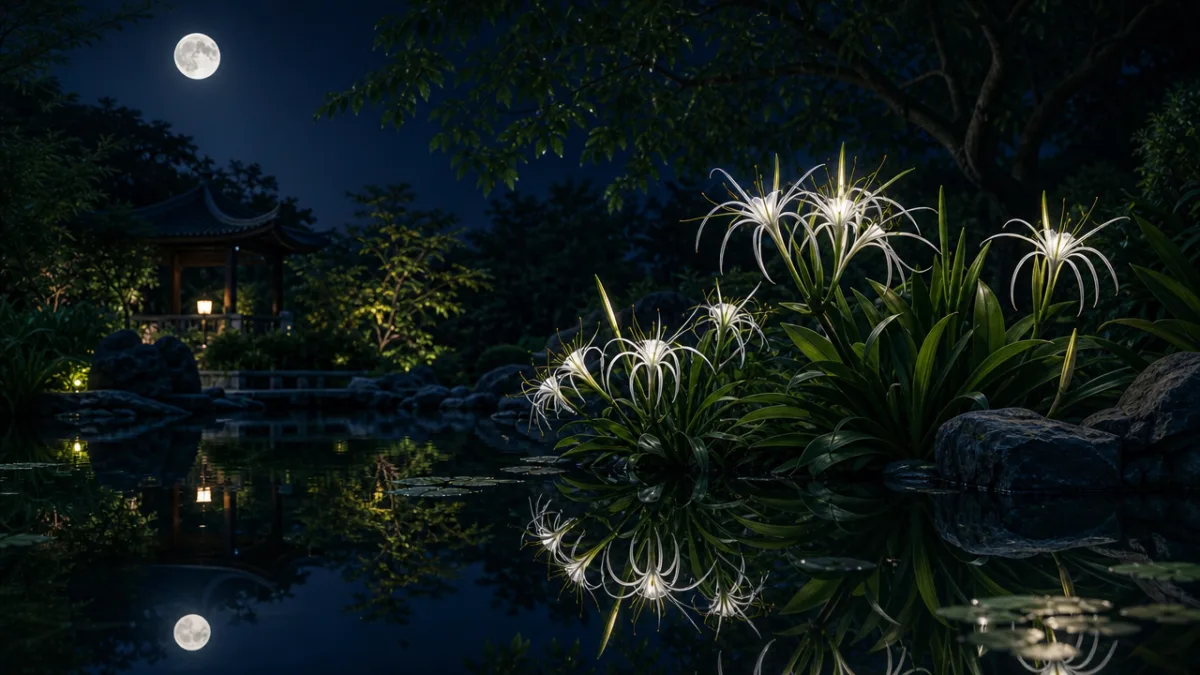
Color pairing is another rich area for creative exploration. The pure white blooms of spider lilies are extraordinary team players, harmonizing effortlessly with the full spectrum of pond plant colors. They cool down the hot pinks and deep purples of water hyacinths and certain water lily cultivars, brighten compositions dominated by the moody blue-greens of pickerelweed and blue flag iris, and create elegant contrast against the rich burgundy foliage of red-stemmed aquatics. For a sophisticated monochromatic scheme, pair white spider lilies with white water lilies, white-variegated sweet flag, and silver-grey rushes for a serene, luminous effect that is especially striking in evening light or under moonlit conditions.
Night gardens have become an exciting trend in water garden design, and spider lilies are ideally suited to this concept. Their white flowers are naturally luminous in low light, practically glowing under moonlight or soft outdoor lighting. The fragrance, which is most intense in the evening hours, adds a powerful sensory dimension that transforms a nighttime garden walk into a genuinely evocative experience. Installing subtle underwater or uplighting near spider lily clusters enhances this effect dramatically, creating a shimmer on the water surface that animates the entire garden after dark. For gardeners who spend summer evenings outdoors, this is an investment in daily-use pleasure that pays off with every warm summer night.
Conclusion: A Living Web of Beauty Worth Cultivating
The spider lily earns its place in the water garden not through a single, singular quality but through an impressive convergence of attributes that together make it one of the most rewarding marginal aquatic plants available to gardeners today. It is beautiful in an unusual, architectural way that photographs exquisitely and inspires genuine admiration in garden visitors. It is ecologically useful, improving water quality, supporting pollinators, sheltering wildlife, and stabilizing pond margins in ways that actively enhance the health of the entire garden ecosystem. It is manageable and adaptable, available in varieties suited to a range of climates, and forgiving of the occasional cultural oversights that are inevitable in any busy garden.
Perhaps most significantly, the spider lily is a plant that rewards patience and long-term thinking. In its first season, a newly planted bulb may produce modest foliage and a handful of blooms — enough to hint at the beauty to come. By the second and third seasons, established clumps bloom more freely, spread more confidently, and take on the look of permanence and intention that distinguishes a mature, thoughtfully designed water garden from a collection of recently purchased plants. This progressive unfolding of beauty over years and seasons is one of the deepest satisfactions gardening can offer, and the spider lily delivers it reliably.
Whether your pond is a grand formal feature anchoring a large estate garden or a modest container water garden on an urban patio, there is a spider lily variety and planting approach suited to your space and circumstances. The investment in time, effort, and initial cost is modest by any measure, and the returns — in visual beauty, ecological vitality, wildlife activity, and personal enjoyment — are generous and enduring. To plant a spider lily at your pond’s edge is to cast a thread of natural beauty that, over time, weaves itself into a web of living artistry you will be glad to have created.
The water garden is, at its best, a mirror of the natural world — a place where the boundaries between the cultivated and the wild blur, where seasonal rhythms play out in miniature, and where beauty arises not from rigid control but from the dynamic interplay of living things in a shared, carefully tended space. In this context, the spider lily is more than a plant. It is a participant in an ongoing, ever-changing living composition, a thread in the web of beauty that makes the water garden one of the most rewarding and endlessly fascinating forms of horticulture that a gardener can pursue.








What do you think?
It is nice to know your opinion. Leave a comment.