










Neofinetia Falcata: The Beloved Samurai Orchid and Why Growers Adore It
A Storied History Rooted in Japanese Culture
Neofinetia falcata, commonly known as the Fuukiran or “wind orchid,” carries with it centuries of cultural reverence that few plants in the world can claim to rival. Originating from Japan, Korea, and parts of China, this small but captivating orchid was treasured by Japanese samurai and nobility who cultivated it as a symbol of status, refinement, and spiritual devotion. Its association with the warrior class gave rise to its popular nickname, the “Samurai Orchid,” and the tradition of growing it in ornate ceramic pots became an art form in its own right known as Fuukiran culture.
During the Edo period in Japan, Neofinetia falcata became so prized that rare varieties could exchange hands for sums equivalent to a samurai’s annual stipend. Collectors developed elaborate systems for categorizing and valuing different cultivars based on leaf variegation, growth habit, root characteristics, and flower color. This tradition, far from disappearing, has only grown more refined over the centuries. Today, Japanese collectors maintain meticulous records of named cultivars, some of which trace their documented lineage back hundreds of years, preserving a living horticultural heritage unlike anything else in the plant world.
For modern growers around the world, discovering this history is often what transforms a casual interest into a lifelong passion. When you grow Neofinetia falcata, you are not simply tending a houseplant; you are participating in an unbroken cultural tradition that connects you to feudal Japan, to artisans who crafted the pots, to poets who wrote verses about the flowers, and to generations of devoted hobbyists who passed their prized divisions to trusted friends and successors. That depth of meaning resonates powerfully with collectors who want their hobby to mean something beyond the botanical.
The Irresistible Charm of Its Flowers and Fragrance
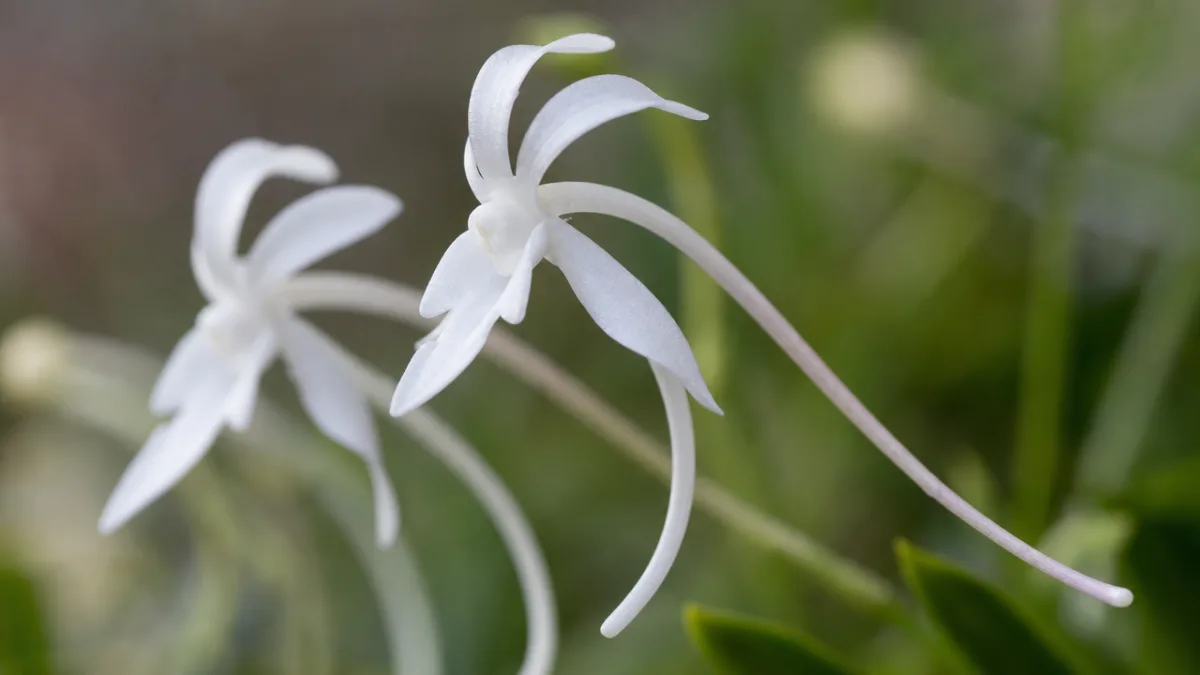
At the heart of every grower’s devotion to Neofinetia falcata is the flower itself, a delicate, star-shaped bloom of extraordinary elegance that defies the plant’s modest size. The white flowers of the standard form are pristine and architectural, with a long curving nectar spur that gives the plant its species name, falcata, meaning sickle-shaped. Each bloom is small enough to sit comfortably on a fingertip, yet the inflorescence typically carries three to twelve flowers that together create an effect of airy, weightless beauty that larger, showier orchids sometimes struggle to achieve despite their scale.
What truly sets Neofinetia falcata apart from the vast majority of orchid genera is its fragrance, which is widely described as one of the most intoxicating scents in the entire orchid world. The fragrance is nocturnal, intensifying dramatically in the evening hours when the plant’s natural pollinators, hawkmoths, would be active. Growers consistently describe the scent as a blend of jasmine, vanilla, and something uniquely cool and ethereal that defies easy comparison. Walking into a room where even a single plant is in bloom on a warm evening is an experience that many describe as transformative, a moment that permanently deepens their commitment to growing the species.
Beyond the classic white form, Neofinetia falcata offers collectors a remarkable spectrum of flower color variation. Named cultivars exist with flowers in soft pink, deep magenta, pale lilac, and warm cream tones. Some varieties produce striped or bicolored blooms, while others offer unusual petal shapes or an increased number of flowers per spike. This diversity within a single species means that even dedicated collectors with hundreds of plants can continue discovering new forms that surprise and delight them, fueling an endless and deeply satisfying pursuit of variety.

The Unique Appeal of Cultivar Collecting
One of the most distinctive and compelling aspects of growing Neofinetia falcata is the rich tradition of named cultivar collecting, a practice with no real parallel in Western horticulture. Japanese enthusiasts have identified, named, and documented hundreds of distinct cultivars over the centuries, each recognized by a specific combination of traits including leaf shape, variegation pattern, root color and texture, stem length, flower characteristics, and overall growth habit. Learning to identify and appreciate these subtle distinctions is itself a rewarding intellectual pursuit that keeps collectors deeply engaged with their plants.
Variegated forms, known collectively as Fuukiran, are among the most highly prized and expensive plants in the orchid hobby worldwide. Variegation in Neofinetia can take many forms, from the delicate white edge striping of classic Seikai types, to the bold central stripe of Kogetsu, to the complex brocade patterning of rare and ancient cultivars that command prices in the thousands of dollars per plant. This creates a remarkable tiered collecting culture where beginners can start affordably with green species-form plants while experienced collectors pursue investment-grade specimens that represent the pinnacle of the hobby.
The community that has built up around cultivar collecting is itself one of the joys of growing Neofinetia falcata. Online forums, specialty vendors, Japanese import auctions, and dedicated societies connect growers across the world who share the same passion for these plants. Experienced collectors generously share their knowledge of cultivation, help identify unknown cultivars, and facilitate trades and sales that allow rare plants to find appreciative new homes. For many growers, this community is inseparable from the plants themselves, forming friendships and connections that extend far beyond the greenhouse.
Growing Conditions: Accessible Yet Endlessly Refined
Despite its reputation as an elite collector’s plant, Neofinetia falcata is surprisingly adaptable and relatively forgiving in cultivation, particularly when compared to many other orchid genera. In its native habitat it grows as an epiphyte on rocky outcrops and tree branches in regions with distinct seasonal temperature variation, warm humid summers, and cool dry winters. Understanding these natural conditions provides an excellent foundation for cultivation, but the plant’s inherent toughness means that growers in a wide range of climates and living situations have succeeded in growing it beautifully with some reasonable accommodations.
Light is one of the most important factors in successful Neofinetia cultivation, and getting it right makes an enormous difference to plant health and flowering. Most growers recommend bright indirect light equivalent to an east or west-facing window, with protection from harsh midday summer sun that can scorch the leaves. Plants grown under artificial lighting also thrive when given appropriate spectrum and duration. Sufficient light encourages compact, sturdy growth and reliable annual flowering, while insufficient light leads to etiolated, weak plants that rarely bloom and are more susceptible to rot and other problems.
Watering philosophy is perhaps the most discussed topic among Neofinetia growers, and it reflects a broader truth about the plant’s needs. Many collectors grow their plants mounted or in very open, free-draining media such as kanuma, pumice, or sphagnum moss, and water generously during the growing season while reducing water significantly in winter. The roots of Neofinetia falcata are famously beautiful, thick, and bright green when wet, with a brilliant white velamen coat when dry, and learning to read the roots as an indicator of the plant’s hydration needs is a skill that develops naturally with experience and brings its own quiet satisfaction.
- Kanuma or pumice-based media provide excellent drainage and root aeration, closely mimicking the plant’s rocky native habitat and encouraging the thick, healthy root systems collectors prize.
- Sphagnum moss is widely used for mounting or potting and retains moisture well, making it suitable for growers in drier climates or those who cannot water as frequently.
- Traditional Japanese cultivation often uses ornate glazed ceramic pots called Nanban, which are prized as aesthetic objects in their own right and contribute to the overall presentation of the plant.
- Fertilizing lightly but regularly during the growing season with a balanced, dilute orchid fertilizer supports healthy growth without the salt buildup that can damage sensitive roots.
- A cool, dry winter rest period of six to eight weeks encourages reliable blooming the following spring and mirrors the plant’s natural seasonal cycle in its native range.

The Meditative and Aesthetic Dimensions of the Hobby
For many growers, the appeal of Neofinetia falcata extends well beyond botany and collecting into something that functions more like a meditative practice. The plant’s small size, slow growth, and sensitivity to subtle changes in care reward close, attentive observation in ways that larger, faster-growing plants do not. Checking daily on a cherished Fuukiran, noticing the emergence of a new leaf, the thickening of a developing root tip, or the first swelling of a flower bud creates a rhythm of mindful attention that many growers find genuinely calming and centering in the midst of busy modern lives.
The aesthetic dimension of Neofinetia cultivation is equally important and deeply satisfying. Choosing a pot to complement a particular plant’s form and coloration, selecting appropriate moss to dress the surface of the medium, and positioning the plant to display its best angle are all considered integral parts of the hobby in the Japanese tradition. This integration of horticulture and visual art means that a well-grown and well-presented Neofinetia falcata is not simply a healthy plant but a composed object of beauty that reflects the taste and sensibility of its grower, much as a bonsai arrangement does.
Many growers speak of a particular kind of pride and satisfaction that comes from successfully flowering a Neofinetia falcata, especially a rare cultivar, that is qualitatively different from the pleasure of flowering other orchids. Because the plants bloom annually with a relatively predictable seasonal rhythm, each flowering season carries a sense of anticipation and occasion. Photographing the blooms, sharing images with the community, and noting any differences from previous seasons all contribute to a rich, ongoing relationship with individual plants that can span decades, with some collectors growing the same prized specimens for twenty, thirty, or even more years.
Why Growers Keep Coming Back: Community, Challenge, and Beauty
When you ask experienced Neofinetia growers what keeps them devoted to the species after years or even decades, the answers almost always center on three interlocking themes: the beauty of the plants, the depth of the cultural tradition, and the warmth and generosity of the community that has formed around them. These three elements reinforce and amplify each other in ways that make the hobby unusually sticky and meaningful. A grower who might eventually lose interest in a purely horticultural challenge is sustained by the cultural richness and the human connections, while someone who primarily values community is drawn deeper into the plants themselves by the example of passionate fellow enthusiasts.
The challenge of mastering Neofinetia cultivation also plays an important role in sustaining long-term engagement. While the plants are more forgiving than many orchids, achieving truly outstanding results, growing a rare variegated cultivar to its full potential, coaxing a reluctant bloomer into flower, or bringing a struggling plant back to vibrant health through careful adjustment of conditions, requires real skill, patience, and dedication. The learning curve is steep enough to remain interesting over many years but not so unforgiving that beginners are driven away before they can experience the rewards that keep long-term growers devoted.
Perhaps most fundamentally, Neofinetia falcata offers its growers a living connection to something ancient and beautiful that feels increasingly precious in the contemporary world. In an era of rapid technological change and disposable consumer culture, investing years of care and attention in a small orchid whose cultural significance stretches back centuries represents a deliberate choice to value depth, continuity, and craftsmanship. For the many thousands of growers around the world who have fallen under the spell of the Samurai Orchid, this choice brings a quality of quiet joy and satisfaction that few other hobbies can match, and that keeps them returning to their plants day after day, season after season, for the rest of their lives.
Getting Started with Neofinetia Falcata
For those inspired to begin their own journey with this remarkable orchid, the path forward is more accessible than the plant’s prestigious reputation might suggest. Many specialty orchid vendors now offer healthy, well-established plants in the standard green form at reasonable prices, providing an ideal starting point for learning the basics of cultivation before investing in rarer or more expensive cultivars. Joining an online community such as the Orchid Board or dedicated Neofinetia groups on social media platforms connects new growers immediately with experienced mentors who are genuinely happy to share their knowledge and help beginners avoid common pitfalls.
- Begin with one or two healthy green-form plants from a reputable vendor to learn the basics of watering, lighting, and seasonal care without significant financial risk.
- Study the traditional Japanese cultivation methods, even if you ultimately adapt them to your own climate and growing conditions, as they represent centuries of accumulated wisdom about the plant’s needs.
- Join an online community and introduce yourself; experienced growers are generally welcoming to newcomers and eager to share divisions, knowledge, and enthusiasm.
- Invest in quality ceramic or decorative pots early, as the presentation of Neofinetia plants is integral to the tradition and adds enormously to the aesthetic pleasure of the hobby.
- Be patient; Neofinetia falcata rewards slow, attentive cultivation over many years, and the growers who ultimately develop the deepest connection with their plants are those who approach the hobby with a long-term perspective from the beginning.
The world of Neofinetia falcata is one where horticulture, history, art, and human connection converge in a uniquely rich and rewarding way. Whether you are drawn by the extraordinary fragrance, the fascinating cultivar diversity, the meditative rhythm of daily care, or the warmth of a global community of like-minded enthusiasts, the Samurai Orchid has a way of becoming not just a hobby but a genuine passion that enriches life in ways its small and unassuming appearance gives no hint of until you are already, happily, deeply under its spell.








What do you think?
It is nice to know your opinion. Leave a comment.