










Sweet Cicely (Myrrhis odorata): A Complete Guide to the Fragrant Woodland Herb
Introduction to Sweet Cicely
Sweet Cicely, or Myrrhis odorata if you want to get formal about it, is one of those herbs that feels like a well-kept secret. Native to the mountain regions of central and southern Europe, it has feathery, fern-like leaves, pretty little white flower clusters, and a scent that stops you in your tracks — warm, sweet, unmistakably anise-like. Foragers, herbalists, and gardeners have been quietly appreciating it for centuries. It belongs to the Apiaceae family, which puts it in good company alongside carrots, parsley, and fennel, and it carries a culinary and cultural history that goes all the way back to ancient times.
What makes Sweet Cicely really stand out is that every part of it is edible and useful. The pale green leaves appear early in spring, the large ridged seeds develop through summer, and at nearly every stage of its life cycle the plant is offering something to the cook or forager. The flavor runs consistently sweet and anise-like throughout — softer and more layered than licorice, with a slightly nutty edge that makes it work in both sweet and savory cooking.
It also has a long history as a medicinal herb across Europe, where people turned to it for its digestive benefits, its gentle tonic qualities, and — interestingly — its ability to stand in as a natural sweetener for those who needed to cut back on sugar. Today it holds a special place in wildflower gardens and herb borders, loved by gardeners who want plants that pull their weight in more ways than one. It’s also genuinely forgiving, which makes it a great choice whether you’re an experienced grower or just getting started with heritage and medicinal plants.
Botanical Characteristics and Identification
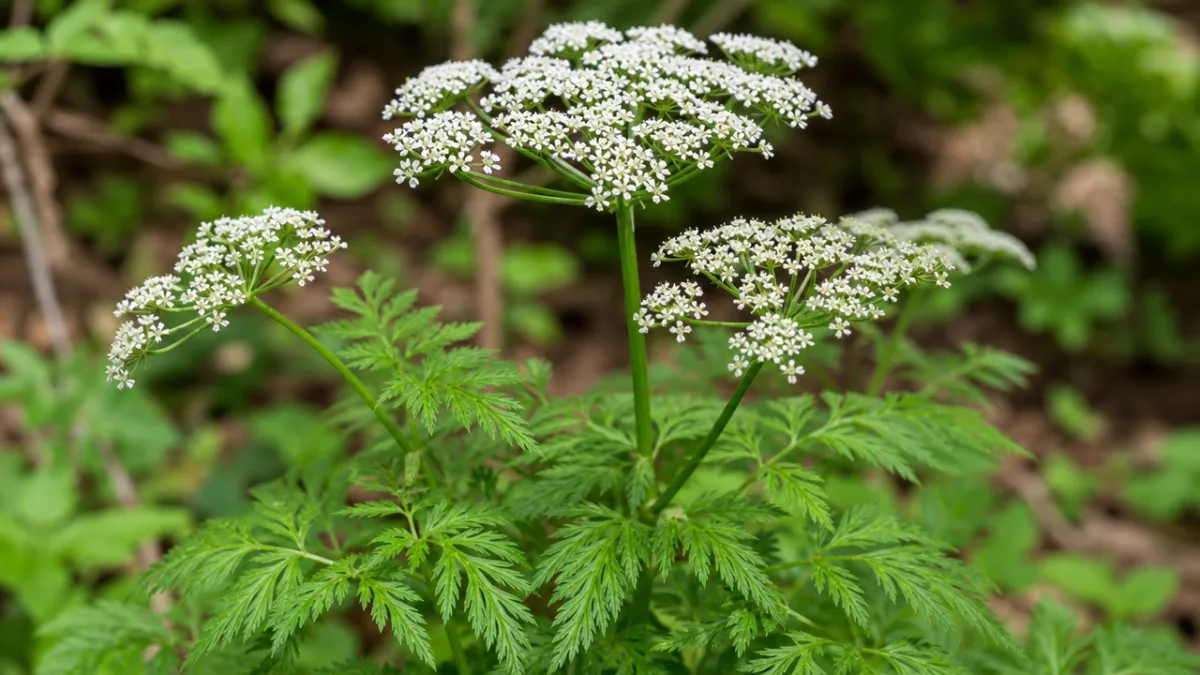
Sweet Cicely is a sturdy, clump-forming perennial that can reach anywhere from 60 to 180 centimeters tall, depending on how rich and moist the soil is. The first thing most people notice is the foliage — large, pinnately compound leaves that are soft to the touch and have a slightly silvery-green quality. Each leaf is finely divided into lots of small leaflets, giving the whole plant a lacy, almost fern-like look that’s genuinely attractive even when there are no flowers in sight. Flip a leaf over and you’ll find the underside is noticeably paler and sometimes lightly hairy.
The flowers come in late spring to early summer, usually May through June, and they form those characteristic umbrella-shaped clusters — compound umbels — that are the family signature of the Apiaceae. Each umbel is packed with dozens of tiny bright white flowers that make quite a show above the foliage. Pollinators love them, especially early-season bees and hoverflies, so having Sweet Cicely in the garden is a genuine contribution to local biodiversity.
The seeds are one of the most distinctive features for identification purposes. They’re long, ribbed, and unusually large for the family — up to 2.5 centimeters — starting out green before darkening to a glossy brown or near-black as they ripen. Crush one at any stage and you get a hit of sweet anise fragrance that’s even more concentrated than the leaves. That scent, along with the hollow ribbed stems, is one of the key things that sets Sweet Cicely apart from potentially dangerous lookalikes you might encounter in the wild.
- Height: Typically 60–180 cm at full maturity
- Leaves: Large, soft, pinnately compound with a silvery-green color
- Flowers: Small, white, in compound umbels; blooms May through June
- Seeds: Long, ribbed, turning from green to dark brown when ripe
- Scent: Strongly anise-like throughout all plant parts
- Root: Deep, fleshy taproot with a sweet, carrot-like fragrance
Growing Conditions and Cultivation
Sweet Cicely rewards gardeners who take the time to understand what it actually wants — and once you do, it’s surprisingly easy to keep happy. In the wild you’ll find it in cool, moist woodland edges, along stream banks, and on shaded mountain slopes, and those natural habitats are your best guide for growing it at home. It genuinely thrives in partial to full shade, which is fairly unusual for an aromatic herb. In warmer spots or where the afternoon sun is intense, the plant tends to bolt, put out less foliage, and generally lose the lush, leafy habit that makes it so useful and attractive.
Getting the soil right from the start makes a real difference. Sweet Cicely wants deep, humus-rich soil that holds moisture without becoming waterlogged. If you’re working with heavy clay, dig in plenty of well-rotted compost or leaf mold before planting. Sandy or free-draining soils benefit from the same treatment to help them hold a bit more moisture. A slightly acidic to neutral pH — roughly 6.0 to 7.0 — is ideal. The plant is reasonably tolerant of variation once it’s settled in, but those first-season conditions do matter and will show in how quickly and strongly it establishes.
Germination is probably the trickiest part of growing Sweet Cicely from seed. The seeds have a complex dormancy that requires a prolonged cold period — cold stratification — before they’ll sprout reliably. The simplest way to handle this is just to sow seeds directly outside in autumn and let the winter do the work for you; they’ll come up the following spring. If you’d rather start them indoors, you can refrigerate the seeds in moist sand or peat moss for 8 to 12 weeks before sowing in early spring. Once the plant is established, though, you can largely forget about it — it self-seeds freely, persists for years, and gradually spreads into the kind of naturalistic colony that looks like it’s always been there.
Water during dry spells is worth the effort in the first year while the taproot is getting established. After that, Sweet Cicely is fairly drought-tolerant, though extended dry periods can cause yellowing and early dormancy. A mulch of leaf mold or wood chip around the base does a lot of good work — it holds moisture, steadies soil temperature, and keeps competing weeds down. Feeding requirements are minimal; a top-dressing of compost in early spring each year is really all it needs to keep growing vigorously.
Culinary Uses and Flavor Profile
The culinary appeal of Sweet Cicely comes down to two things: how versatile it is, and how it manages to sweeten and lift other flavors without getting in the way. The leaves are the gentlest of all the anise-flavored herbs — softer than fennel, nothing like the sharpness of star anise — and that mildness means you can use them in real quantity without overwhelming a dish. The young spring leaves are the best eating, tender and full of flavor, and they’re ideal scattered fresh over salads, stirred into yogurt, or used with fruit where you want a sweet herbal note that complements rather than dominates.
Probably the most celebrated thing Sweet Cicely does in the kitchen is reduce your need for added sugar. The plant contains natural compounds that enhance the perception of sweetness, which means that adding leaves to fruit compotes, crumbles, jams, and pies lets you cut the sugar by a noticeable amount — sometimes as much as a quarter — without the finished dish tasting any less sweet. This was well understood in historical European cooking, and it’s being rediscovered now by cooks who are mindful of sugar intake. It pairs especially well with tart fruits like gooseberries, rhubarb, and plums, where the natural sourness would otherwise demand a lot of sugar to balance.
The green seeds are worth getting to know as a separate ingredient altogether. Picked while still soft and green, usually in late spring or early summer, they have a concentrated, nutty anise flavor with a pleasant chew. Eat them raw, toss them through a grain salad, or fold them into bread or pastry dough. Once fully ripe and dried, the dark seeds make a lovely spice that can be ground and used much like anise or fennel seed. And don’t overlook the root — it can be sliced raw into salads or cooked as a root vegetable, with a sweet, aromatic flavor that’s a bit like a licorice-scented parsnip.
- Add fresh young leaves to fruit salads and desserts to enhance natural sweetness
- Use leaves in rhubarb or gooseberry crumble to reduce required sugar by 20–25%
- Stir chopped leaves into cream, yogurt, or soft cheese for a subtly sweet herbal flavor
- Harvest green seeds to use raw in salads or cooked into breads and pastries
- Dry mature dark seeds and grind them as an aromatic spice replacement for anise
- Infuse leaves and stems into spirits or cordials for homemade liqueurs
- Cook the roots as a vegetable or add raw slices to salads for an anise-flavored crunch

Medicinal History and Traditional Uses
The medicinal history of Sweet Cicely is a long and genuinely interesting one, running from the herbal texts of ancient Rome through the great European herbalists of the Renaissance and into the folk traditions of Britain, Scandinavia, and the Alpine regions. It was widely used as a gentle digestive tonic — thought to warm the stomach, ease cramping, and relieve wind. It was also given as a general strengthening tonic for elderly or frail patients, valued precisely because it was considered mild and supportive rather than harsh. The herbalist John Gerard, writing in the sixteenth century, was enthusiastic about its ability to comfort the stomach and heart.
Traditional medicine also put Sweet Cicely to work as a mild expectorant and cough remedy, particularly for children and older people dealing with bronchial complaints. The root would be boiled and the resulting liquid used to help loosen mucus and ease the kind of persistent coughs that came with winter colds. In some regional traditions the leaves were used as a mild antiseptic wash, and the fresh root was occasionally applied as a poultice to minor wounds or skin irritations. Most of this sits in the realm of folk tradition rather than clinical evidence, but the plant’s reputation for being gentle and safe made it a trusted household remedy across much of Europe for a very long time.
One of the most fascinating threads in Sweet Cicely’s medicinal story is its documented use as a dietary aid for people who needed to limit sugar. Records from eighteenth and nineteenth century Britain describe it being used to prepare food for diabetics and others on reduced-sugar diets — well before anyone understood why it worked. Modern phytochemical research has since identified anethole and related compounds as the likely contributors to its sweetness-enhancing effect, which lends some scientific credibility to what those earlier practitioners had figured out through observation. Sweet Cicely isn’t a treatment for any medical condition, but its role in the history of European herbal medicine is a compelling one, and it’s worth knowing.
Ecological Value and Use in Wildflower Gardens
From an ecological standpoint, Sweet Cicely does a lot of good. As one of the first large-flowered umbels to bloom each year, it provides nectar and pollen at a moment when early-emerging pollinators really need it and many other plants haven’t yet opened. Bumblebees, honeybees, solitary bees, and hoverflies are all regular visitors, and in gardens or semi-wild areas where late spring nectar can be scarce, a patch of Sweet Cicely can make a meaningful difference to the insects trying to get established after winter.
It also plays a useful structural role in naturalistic and woodland garden planting. The big, lush foliage creates solid ground cover beneath trees and shrubs, helping to hold moisture in the soil and keep weeds down in the kind of shaded spots where many other plants give up. When it dies back in autumn, the decomposing leaves add organic matter to the soil and gradually improve its structure — so the plant is actually building the growing conditions around it rather than just using them up. That kind of quiet generosity makes it a genuinely regenerative addition to a garden.
Wildflower specialists like Naturescape Wildflower Farm have long included Sweet Cicely as a key component in woodland and hedgerow planting mixes, and it’s easy to see why. It sits beautifully alongside other shade-tolerant British and European natives — wood anemone, wild garlic, foxglove, red campion — filling the understory layer naturally and doing real ecological work at the same time. The seeds also provide food for certain seed-eating birds through late summer and into autumn, which is one more reason to let a few plants run to seed rather than cutting everything back.
- Supports early bees, hoverflies, and other pollinators in May and June
- Provides dense, weed-suppressing ground cover in shaded garden areas
- Enriches soil through annual decomposition of foliage and root matter
- Offers seed food for garden birds through late summer and autumn
- Integrates naturally into woodland, hedgerow, and wildflower garden schemes
- Tolerates deep shade where few other productive or ornamental herbs will grow
If you’d like to grow Sweet Cicely yourself, specialist wildflower nurseries and seed suppliers are your best bet — mainstream garden centers rarely stock it. Try to get seeds as fresh as possible, since viability drops noticeably with storage, and sow them directly outside in autumn so the winter cold can break their dormancy naturally. After that, the plant largely takes care of itself. Given a good spot, a single specimen will self-seed and spread over time into a thriving colony that keeps rewarding you — with beauty, with food, and with genuine value to the garden ecosystem — for years to come.








What do you think?
It is nice to know your opinion. Leave a comment.