










Spring Flowers That Landscape Designers Swear By
Why Spring Flowers Are the Foundation of Great Landscape Design
Ask any landscape designer where they start when planning a new property, and spring flowers will almost always come up first. It’s not just about color — these plants set the whole mood of an outdoor space. They tell you what season it is, they make you feel something, and when they’re chosen well, they can make even a pretty ordinary yard feel like it was thoughtfully put together. That’s a harder thing to pull off than it sounds.
Professionals tend to talk about spring blooms in terms of structure and drama — and they mean it literally. Unlike summer annuals that kind of fill space with flat color, spring flowers have a theatrical quality to them. Bulbs shouldering up through cold soil, branches suddenly covered in blossom, perennials slowly unfurling after months of doing nothing — there’s a sense of arrival to all of it. Designers pay close attention to that, placing early bloomers where they’ll catch your eye from a window or greet you along a path.
There’s a practical side to this too. A lot of the best spring bloomers are genuinely low-maintenance once they get settled — they come back year after year without much fussing. For a designer managing a property over the long haul, that kind of dependability is worth a lot. Good spring plantings become the bones of a garden that other seasonal plants can build around as the year moves on.
The Designer-Approved Bulbs That Never Disappoint
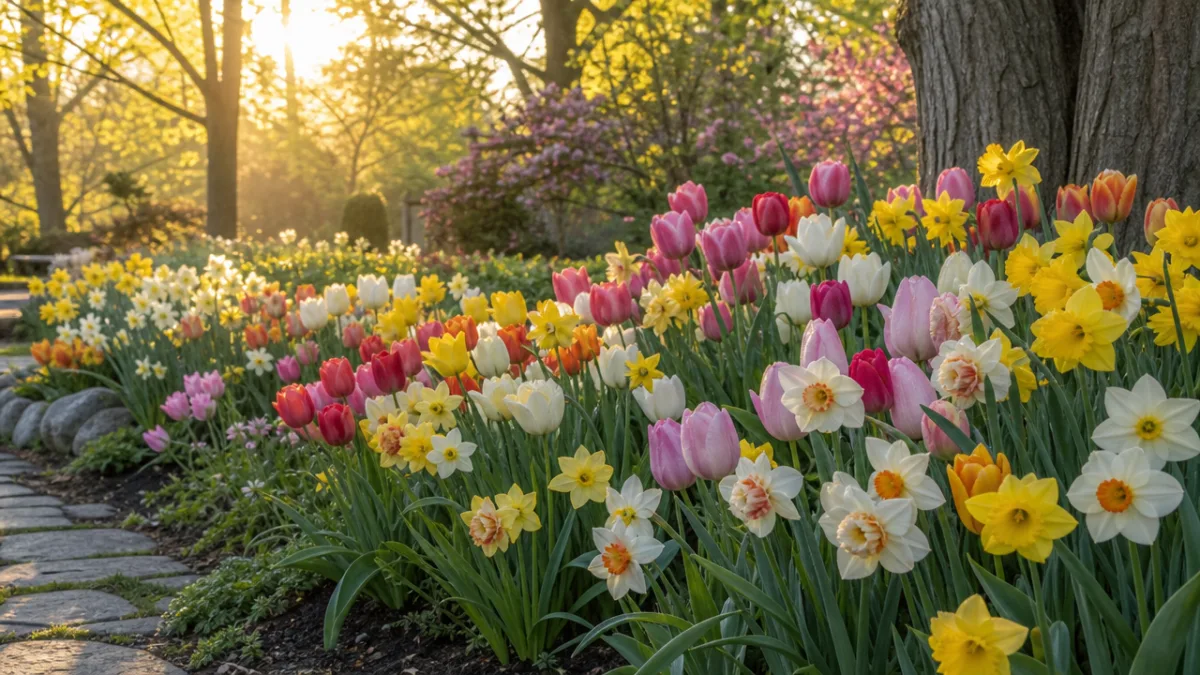
If there’s one category of plant that designers lean on most for spring, it’s bulbs. Tulips, daffodils, alliums, hyacinths, muscari — you plant them in fall, mostly forget about them, and come spring they deliver. What designers love about bulbs is the predictability. You know when they’ll bloom, how tall they’ll get, what color they’ll be. That kind of control is genuinely useful when you’re trying to orchestrate a whole property’s worth of planting.
Tulips have had a real comeback in professional landscaping. Designers have largely moved on from those stiff, bright-red rows you’d see outside office buildings, and are now working with naturalistic drifts of parrot tulips, lily-flowered varieties, and softer, more painterly color blends. Warm peach and apricot alongside deep burgundy or smoky purple — that combination photographs beautifully and feels genuinely sophisticated in person. It’s also not unusual for designers to plant tulips by the hundreds, or even thousands, on a single property. That scale is what gives you the sweeping, almost immersive effect that makes a spring garden memorable.
Daffodils and narcissus are the workhorses of the bulb world, and designers love them for good reason. Deer won’t touch them, rodents leave them alone, they naturalize over time, and the variety is almost overwhelming — from bold classic trumpets to delicate multi-headed Tazetta types to quiet cream-and-white poeticus forms. Experienced designers often layer several narcissus varieties with staggered bloom times, so the display stretches from early March all the way through late April without any awkward gaps.
- Tulipa ‘Apricot Beauty’ — soft peachy salmon tones, excellent for romantic, warm-palette schemes
- Narcissus ‘Thalia’ — elegant white flowers with swept-back petals, works beautifully in naturalistic settings
- Allium ‘Purple Sensation’ — tall, globe-shaped purple flowers that bridge spring and early summer
- Muscari armeniacum — low-growing cobalt blue carpets perfect for underplanting trees or edging paths
- Hyacinthus orientalis — intensely fragrant, available in deep blue, pink, white, and ivory
Perennials That Landscape Designers Return to Every Spring
Bulbs get a lot of the attention, but perennials are really the backbone of a well-designed spring garden. They come back every year, spread gradually, and get better-looking with age. For a designer working on a property over the long term, that compounding effect is a big deal — a border planted with the right perennials five years ago will look dramatically more lush and established than one that’s been replanted with annuals season after season.
Peonies are near the top of almost every designer’s list, and it’s not hard to see why. Those enormous, fragrant blooms — ranging from pure white through soft blush, deep rose, and nearly-black crimson — have a richness that clients consistently fall for. Designers treat them as anchor plants, putting them somewhere they’ll make a statement during their May peak while their handsome dark foliage earns its keep for the rest of the season. Itoh peonies (the intersectional hybrids between herbaceous and tree types) have gotten particularly popular lately for their longer bloom time and exceptional flower quality.
Bleeding heart, or Lamprocapnos spectabilis, shows up on virtually every serious designer’s plant list for shaded and semi-shaded spots. Those arching stems hung with tiny heart-shaped flowers in pink and white have an almost dreamlike quality that’s hard to replicate with anything else. Designers particularly value it for the way it bridges the woodland feel and the more formal garden — it brings romance and movement to plantings under big deciduous trees. The fact that it goes dormant by midsummer is easily managed by pairing it with hostas, ferns, or astilbe, which fill in right as the bleeding heart disappears.
Other spring perennials that come up again and again in professional design work: hellebores for their very early blooms and evergreen foliage, creeping phlox for those cascading mats of color along slopes and walls, and salvia nemorosa cultivars like ‘Caradonna’ and ‘May Night’ for their upright violet spikes that pollinators can’t get enough of. The real skill is understanding each plant’s habits — its bloom sequence, height, spread, and what it looks like before and after flowering — so you can combine them into something that holds interest across the whole season rather than peaking all at once and then looking like a mess.
Flowering Shrubs and Trees That Define Spring in the Landscape
No spring garden design feels complete without flowering shrubs and ornamental trees. These are the plants that provide real scale and structure — and the kind of drama that smaller plants simply can’t match. When a mature cherry tree comes into full bloom or a row of forsythia suddenly ignites against bare winter stems, it’s genuinely transformative. It gives a property a signature, something that makes it recognizable and memorable. Designers work so extensively with woody plants because, unlike anything herbaceous, these are permanent presences that anchor everything else.
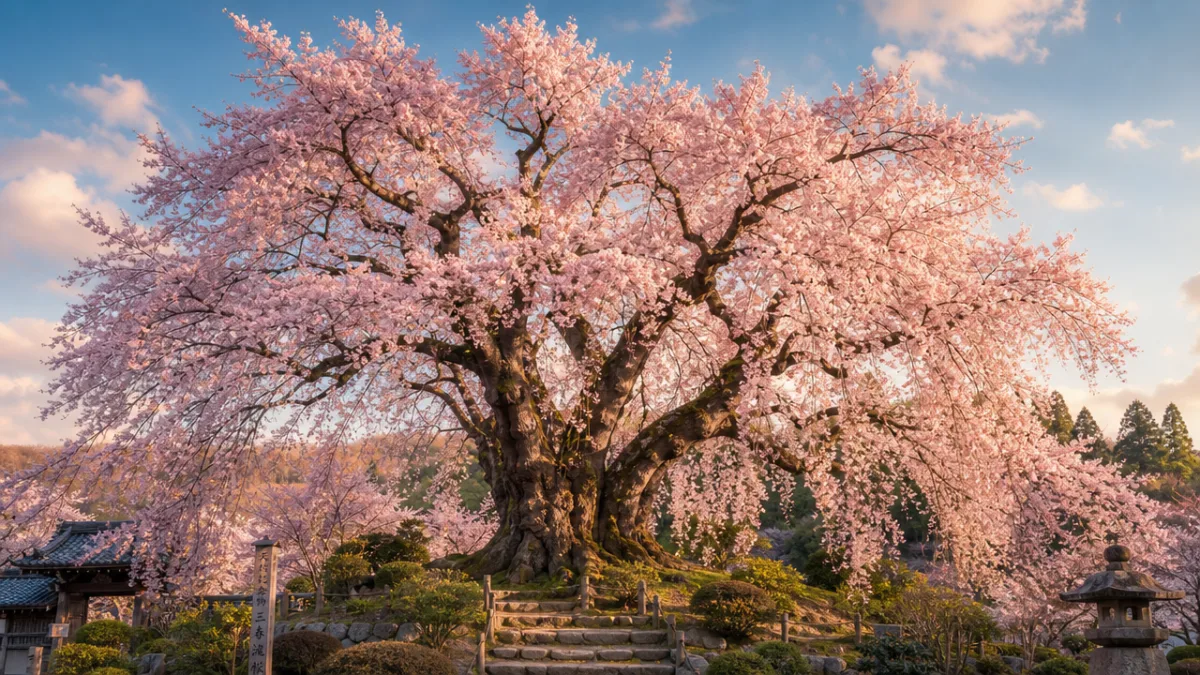
Ornamental cherries — Prunus ‘Yoshino,’ ‘Kwanzan,’ and the weeping Prunus subhirtella ‘Pendula’ — are among the most requested plants in residential landscape design, and for good reason. Their bloom period is brief, but it’s spectacular, and it becomes something homeowners look forward to every single year. Designers are deliberate about where they place specimen cherries — in view of a living room window, at the end of a garden axis, near a seating area where you can actually sit underneath them as the petals fall. That fleeting quality is part of the whole point, and good designers lean into it rather than treating it as a drawback.
Flowering shrubs give designers the ability to build layered, three-dimensional compositions that stay interesting long after the flowers are gone. Viburnum is a particular favorite — Viburnum carlesii for its incredible fragrance, Viburnum plicatum f. tomentosum ‘Mariesii’ for its stunning horizontal branching covered in white lacecap flowers, and Viburnum opulus for the bright berries that follow the spring bloom and hang on well into winter. Lilacs, azaleas, rhododendrons, and the increasingly popular Fothergilla round out the spring shrub palette, each one bringing something distinct — a specific color, texture, fragrance, or form — that makes the spring garden feel genuinely complete rather than just colorful.
- Prunus serrulata ‘Kwanzan’ — double pink flowers, vase-shaped form, ideal as a focal point or avenue tree
- Viburnum carlesii ‘Aurora’ — intensely fragrant pink buds open to white, compact rounded habit
- Syringa vulgaris cultivars — classic lilacs in purple, white, pink, and magenta with legendary fragrance
- Fothergilla gardenii — bottlebrush white flowers in spring, outstanding fall color, native to eastern North America
- Azalea ‘Encore’ series — reblooming azaleas that flower in spring and again in fall, exceptional versatility
Color Theory and Composition: How Designers Build a Spring Palette
Knowing how to put spring flowers together into something that actually looks intentional is really what separates professional landscape design from just buying things at the garden center and hoping for the best. Designers think about color the way a painter would — hue, value, saturation, and how different colors interact with each other and with everything around them. The color of the house, the tone of the paving, the quality of light in different parts of the garden, the client’s own taste — all of that feeds into decisions about which plants go where and in what combinations.
One of the most effective approaches in contemporary design is what’s often called a “restrained palette” — picking just two or three colors and weaving them throughout the whole planting scheme in varying shades and intensities. A white, soft blue, and silver palette, for instance, might pull together white tulips, blue muscari, white bleeding heart, silver lamb’s ear foliage, pale blue hyacinths, and white-flowering viburnum. The result is serene and unified — it reads clearly from a distance and rewards you with subtle variation when you get closer. That kind of disciplined editing is actually harder than it looks, and it’s one of the things that distinguishes genuinely skilled design work from something that just feels busy.
Designers also spend a lot of time thinking about bloom succession — the order in which things flower throughout the season — so that the garden stays interesting from the first warm days of late winter all the way through the shift into summer. A well-thought-out spring sequence might open with snowdrops and hellebores in February, move into early daffodils and forsythia in March, hit its peak with tulips, cherry blossoms, and peonies in April and May, and then ease into early summer with alliums, salvia, and iris picking up the thread. Getting that right takes real knowledge and long-term thinking — and it’s what makes a spring garden feel alive rather than like it had one good week.
Practical Tips for Homeowners Inspired by Designer Planting Schemes
You don’t need a designer on retainer to pull off a beautiful spring garden. The same principles and plant choices professionals rely on are completely within reach for anyone willing to do a bit of planning. The single most consistent piece of advice you’ll hear from designers is this: plant in quantity. One tulip doesn’t do much. Fifty tulips of the same variety planted in a naturalistic drift? People will stop on the sidewalk to look. Buying bulbs and perennials in larger quantities — which usually means real savings when you buy by the bag or in bulk — is the most straightforward way to get that polished, professional look.
Soil preparation is the other thing that separates a successful spring display from a frustrating one. Bulbs and perennials want well-draining soil that’s been enriched with compost, and the time you put into preparing your beds before planting pays off for years. Designers routinely spend as much on soil improvement as on the plants themselves, because they know that even an expensive, beautiful plant will just sit there and sulk in compacted, nutrient-poor, or waterlogged soil. Raised beds, amended borders, and adding organic matter over a few seasons can genuinely transform even difficult ground into something that grows healthy, vigorous plants.
The last thing worth embracing is the idea of layering — combining plants of different heights, textures, bloom times, and habits so the garden has real depth rather than looking flat. Planting bulbs beneath perennials, underplanting shrubs with groundcovers, mixing early, mid, and late-season bloomers in the same border — these are techniques designers use constantly to create planting schemes that look effortless but are actually the result of a lot of careful thought. The good news is that you can build toward it gradually. Pay attention, take notes, move things that aren’t working, and over time you’ll end up with a spring garden that can genuinely hold its own against what the professionals put together.
- Plant bulbs in fall for the best spring results — most spring-blooming bulbs require a cold period to flower
- Deadhead spent flowers but allow foliage to die back naturally, as this feeds the bulb for next year
- Use the “bulb lasagna” technique — layering different bulbs at different depths in the same hole for extended bloom
- Record what blooms when and what combinations work well, as this information is invaluable for future planning
- Visit botanical gardens and public landscapes in spring to gather ideas and observe plants in mature, well-designed settings








What do you think?
It is nice to know your opinion. Leave a comment.