










Simple Flower Vase: A Complete Guide to Choosing, Styling, and Caring for Your Floral Displays
The Timeless Appeal of the Simple Flower Vase
There’s something quietly magical about a simple flower vase sitting on a windowsill, a dining table, or a bedside shelf. You don’t need a special occasion, an elaborate arrangement, or a professional florist to pull it off. One stem tucked into a modest glass vessel can completely shift the feel of a room, bringing in color, texture, and a little of that subtle natural fragrance we all secretly love. A simple flower vase is one of those rare objects that manages to be both useful and genuinely beautiful — and that’s a combination worth celebrating.
People have been putting flowers in vessels and setting them around their homes for thousands of years — ancient Egypt, China, Greece, you name it. What’s stayed constant across all those cultures and all that time is the same basic impulse: bring the beauty of the outside world in, appreciate the fleeting nature of a bloom, and find little moments of joy in everyday life. There’s a reason this practice has never gone out of style. The simplicity of the vase is exactly what makes it so powerful.
Even in today’s world of maximalist trends and constantly evolving design aesthetics, a simple flower vase holds its own. Whether your home is rustic farmhouse, sleek Scandinavian, or cheerfully eclectic, a well-chosen vase with a thoughtful bunch of flowers will fit right in. It’s one of the most accessible ways to make your space feel more alive — and honestly, it costs very little but gives back a lot in terms of mood and atmosphere.
Choosing the Right Vase for Your Space
Picking the right vase isn’t just about finding something that holds water. The shape, height, material, and color all matter more than you might think. A tall vase with a narrow neck is perfect for long-stemmed flowers like roses, gladioli, or sunflowers — it holds them upright and lets the blooms fan out naturally at the top without everything collapsing sideways. A wide-mouthed bowl, on the other hand, is where peonies, hydrangeas, and garden roses really shine, giving those fuller blooms the space they need.
Material is worth thinking about too. Clear glass is endlessly versatile — you can see the stems through it, which can actually be a lovely visual detail, and it works with flowers of any color. Ceramic vases have a warmer, more handmade feel and come in everything from matte earthy tones to glossy jewel colors. Terracotta, stone, brass, old wine bottles, mason jars — each one brings its own character. There’s no single right answer, which is half the fun.
Proportion is something a lot of beginners don’t think about, but experienced decorators pick up on intuitively. A good rule of thumb: your flowers should be roughly one and a half to two times the height of the vase. A tiny bud vase with a single stem looks charming and intentional on a small side table. A large statement vase with dramatic branches or a lush mixed arrangement commands the room as a centerpiece. Getting the scale right — matching your vase to both your flowers and your furniture — makes everything feel naturally balanced without you having to explain why.
- Tall cylindrical vases suit long-stemmed flowers like roses, dahlias, and snapdragons
- Wide-mouthed bowls work best for full, round blooms such as peonies and hydrangeas
- Bud vases are perfect for single stems or delicate wildflowers
- Geometric or angular vases add a modern, sculptural quality to minimal arrangements
- Rustic ceramic or terracotta vases complement loose, garden-style bouquets beautifully
Selecting the Best Flowers for a Simple Arrangement
Here’s the good news: there are no strict rules about which flowers belong in a simple arrangement. That said, knowing a few basics about how different blooms behave will help you make choices that look good and actually last through the week. If you’re just getting started — or you just want something low-maintenance that stays beautiful — go for flowers that are known to hold up well in water without much fuss.
Some of the most reliable options you’ll find at any florist or grocery store include tulips, which have gorgeous curves and come in nearly every color; sunflowers, which bring an almost impossibly cheerful energy to any room; eucalyptus and other foliage stems, which add texture and that lovely silvery green color; and chrysanthemums, which last longer than almost anything else and come in a huge range of shapes. Seasonal flowers are always a great choice too — they tend to be fresher, more affordable, and there’s something really satisfying about flowers that actually reflect the time of year.
When you’re mixing different types of flowers in one vase, a helpful way to think about it is in terms of three roles: focal flowers, filler flowers, and foliage. Focal flowers are your showstoppers — the ones that draw the eye first, like a large rose, a dramatic dahlia, or a bold protea. Filler flowers are the smaller, softer blooms that add fullness and fill in the gaps, like baby’s breath, wax flower, or sweet William. Foliage ties it all together and adds depth. Even a really simple one- or two-flower arrangement looks more finished with a few complementary leaves or branches tucked in.
The Art of Arranging Flowers in a Simple Vase
Arranging flowers doesn’t have to be complicated to look genuinely beautiful. In fact, some of the most stunning arrangements are the ones that look like they just happened naturally — like the flowers sort of fell into place on their own. Getting that effortless, organic look is actually a skill, and it gets easier the more you do it. The really encouraging thing is that flowers are incredibly forgiving. Even your first attempt will almost certainly produce something you’re happy to leave on the table.
Start by getting your flowers ready before you even think about arranging them. Fill the vase with fresh, cool water and add flower food if you have it — or a teaspoon of sugar and a few drops of bleach works just as well as a homemade alternative. Pull off any leaves that would end up below the waterline, since submerged foliage rots fast and introduces bacteria that will shorten the life of your whole arrangement. Then, using clean sharp scissors or garden shears, cut each stem at a 45-degree angle while holding it under running water or submerged in a bowl. The diagonal cut gives the stem more surface area to drink from and stops it sealing flat against the bottom of the vase.
When you start placing stems, put your foliage in first to build a loose framework, then add your focal flowers one at a time. Turn the vase as you go so you can see it from every angle — it’s easy to accidentally create a “front” that looks great while the back is a mess. Don’t feel like you have to pack the vase full; negative space is actually a powerful tool, and giving individual blooms room to breathe makes each one more visible. If a stem is too tall, cut it down. If something’s drooping, shorten it so the bloom sits closer to the water. Work intuitively, trust what your eye tells you, and remember that most problems have a simple fix.
- Fill the vase with clean, cool water mixed with flower food or a homemade preservative
- Strip all leaves from the lower portion of each stem to prevent bacterial growth
- Cut stems at a 45-degree angle under water using clean, sharp scissors
- Place foliage first to create a structural framework for your arrangement
- Add focal flowers one at a time, turning the vase to check balance from all sides
- Fill in gaps with filler flowers, maintaining natural-looking negative space
- Step back and make final adjustments, removing anything that disrupts the overall harmony
Styling Your Vase in Different Rooms and Settings
Where you place your vase matters just as much as what’s in it. A beautifully arranged bouquet can feel completely wrong in the wrong spot, while a single stem in a tiny bud vase placed just right on a bedside table can feel absolutely perfect. As you figure out where to put things, think about sight lines, where the natural light comes from, and the colors and textures already in the room. You want your flowers to feel like they belong there — like a considered part of the space, not something that just got set down and forgotten.
In the living room, a dining or coffee table arrangement works best when it’s low enough that people can actually see each other over it, but full enough to feel like it means something. A tall, dramatic arrangement is better suited to a console table, sideboard, or mantelpiece, where you can appreciate it from across the room. In the kitchen, small casual posies of herbs mixed with simple flowers have a wonderful informal charm — lavender, rosemary sprigs, and small roses tucked into a ceramic jug is a combination that’s hard to beat.
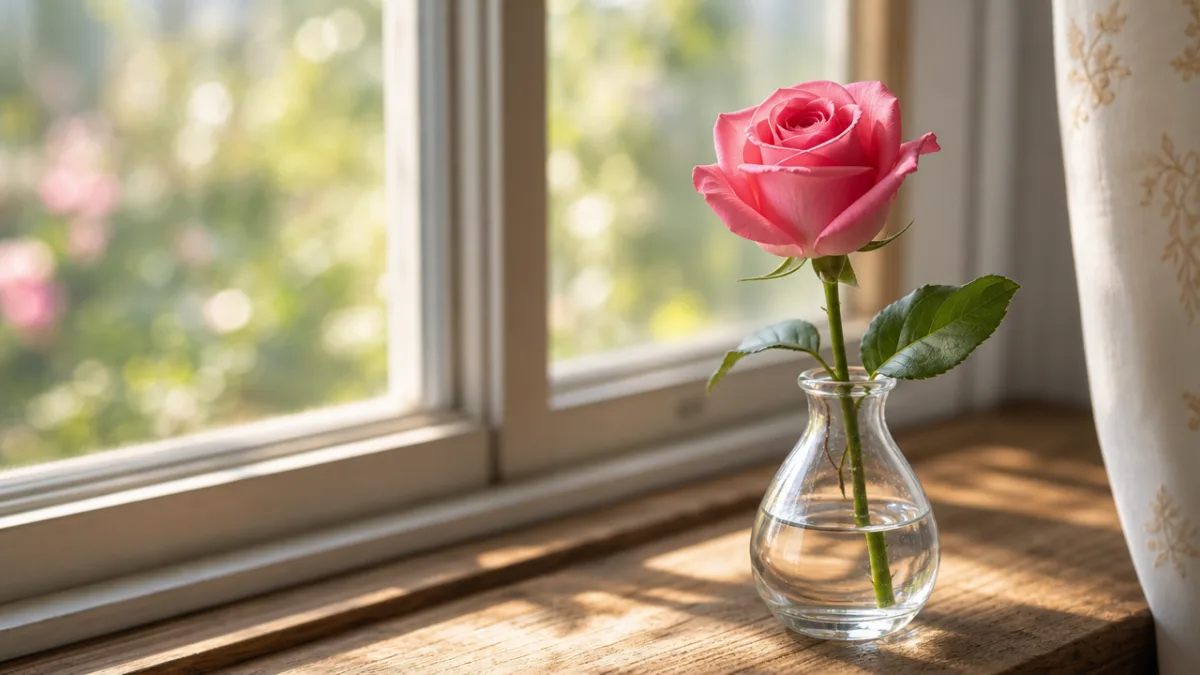
Bedrooms call for something quieter and more intimate — arrangements that feel calm and restful rather than bold. Soft pastel blooms, delicate wildflowers, or a single rose in a small clear glass near the window work beautifully, especially where the light can play off the petals. In a home office, there’s actually solid research showing that fresh flowers nearby boost mood, reduce stress, and help with creativity and focus — which is a compelling argument for keeping a small vase on your desk. And even in a bathroom, a little bud vase with a few resilient blooms like orchids or wax flowers can make the whole space feel unexpectedly lovely.
Caring for Your Flowers and Keeping Arrangements Fresh
Even the most gorgeous arrangement will fade fast if you don’t look after it — but the good news is that caring for cut flowers is much simpler than most people expect. The single biggest thing you can do is change the water every two days. Fresh water stops the bacterial buildup that blocks stems and speeds up wilting, and it makes a genuinely noticeable difference to how long your flowers last. Each time you change the water, trim a centimeter or so off the stems to open up a fresh cut and keep the water flowing.
Temperature and light have a bigger impact than most people realize. Cut flowers last longest in cool conditions — that’s why florists keep everything refrigerated. At home, keeping your vase away from direct sunlight, heating vents, and radiators will noticeably extend the life of your arrangement. Putting your flowers somewhere cool overnight, or even popping them in the fridge if you have room, can add several days to their lifespan. One more thing worth knowing: ripening fruit gives off ethylene gas, which makes flowers age faster. Keeping your vase away from the fruit bowl is a small habit that actually pays off.
As your arrangement gets older, some flowers will start to fade before others. Instead of waiting until the whole thing looks sad, get into the habit of editing as you go — pull out stems that have had their moment and let the remaining flowers breathe a little more. Sometimes an arrangement that’s lost a few stems is actually more beautiful in its sparser, edited form than it was when it was completely full. A single remaining flower moved into a smaller bud vase somewhere more intimate can extend the pleasure of your original bouquet by several more days.
- Change the vase water every two days and re-trim stems each time
- Keep flowers away from direct sunlight, heat sources, and ripening fruit
- Place flowers in a cool spot or refrigerator overnight to extend their lifespan
- Remove fading blooms promptly to preserve the freshness of remaining flowers
- Use flower food or a homemade sugar-and-bleach solution in the water
- Mist delicate blooms like hydrangeas lightly with water to prevent wilting
Sustainable and Budget-Friendly Approaches to Flower Arranging
Beautiful arrangements don’t have to cost a lot, and with a bit of creativity they can be surprisingly sustainable too. One of the best ways to have fresh flowers regularly without spending much is to grow a small cutting garden of your own. Even a few pots on a balcony or a small patch of ground planted with easy-going cutting flowers like zinnias, cosmos, sweet peas, and dahlias can keep you well supplied through the warmer months. You also get access to colors and varieties you’d never find at a supermarket — which is a genuine bonus.
Foraging is another approach that costs nothing and turns up some genuinely wonderful material. Depending on where you live and what time of year it is, there’s often more available than you’d expect along roadsides, in hedgerows, or in parks and woodland where foraging is allowed — cow parsley, blackberry branches, seed heads, ornamental grasses, wildflowers. A handful of foraged material can add extraordinary texture and character to an arrangement that might otherwise look a bit predictable. Just be responsible about it: take small amounts, and leave the majority of any plant intact.
It’s also worth thinking about where your cut flowers come from. A large proportion of commercially sold flowers are grown abroad under intensive conditions and flown in, which adds up to a significant carbon footprint. Choosing locally grown flowers — which are also likely to be fresher and longer-lasting — is one of the simplest ways to reduce the environmental impact of your flower habit. Farmers’ markets, local flower farms with pick-your-own options, and community-supported agriculture schemes that include flower shares are all great places to find seasonal, locally grown blooms that support your community at the same time.
And finally, it’s worth remembering that not every beautiful vase arrangement needs to have fresh flowers in it at all. Dried flowers have made a huge comeback in recent years, and for good reason — they last for months or even years, they need no water or upkeep, and they have a beautiful quality that’s completely different from fresh blooms but no less lovely. Pampas grass, strawflowers, lunaria, lavender, statice — a thoughtfully put-together dried arrangement in a simple ceramic vase is one of the most economical and sustainable decorating choices you can make, and it’s one that will look good for a very long time.








What do you think?
It is nice to know your opinion. Leave a comment.