










Red Jupiter’s Beard: A Complete Guide to Growing Centranthus ruber Coccineus
Introduction to Red Jupiter’s Beard
Red Jupiter’s Beard, known botanically as Centranthus ruber ‘Coccineus’, is one of the most captivating and resilient flowering perennials available to gardeners today. With its vivid crimson-red plumes rising above silvery-green foliage, this Mediterranean native brings an unmistakable dramatic flair to any landscape. High Country Gardens has long championed this plant as an essential selection for water-wise and xeriscape gardens across North America, recognizing its remarkable combination of beauty and toughness.
Native to the Mediterranean region, including parts of southern Europe and North Africa, Centranthus ruber has been cultivated in gardens for centuries. The species name “ruber” comes from the Latin word for red, while “Coccineus” describes its particularly intense scarlet coloring. The common name Jupiter’s Beard is thought to reference the dense, frothy clusters of tiny flowers that resemble a flowing beard, though some sources attribute the name to the plant’s ancient association with the king of the Roman gods, suggesting a grandeur befitting royalty.
What makes the ‘Coccineus’ cultivar particularly special is the depth and richness of its flower color. While the straight species can produce blooms ranging from pale pink to deep rose, ‘Coccineus’ delivers a true, saturated red that commands attention from across a garden. This intensity of color, combined with the plant’s long blooming season and adaptability to challenging conditions, has earned it a devoted following among gardeners who want maximum visual impact with minimal fuss. It is a plant that rewards the gardener generously while asking very little in return.
Plant Characteristics and Appearance
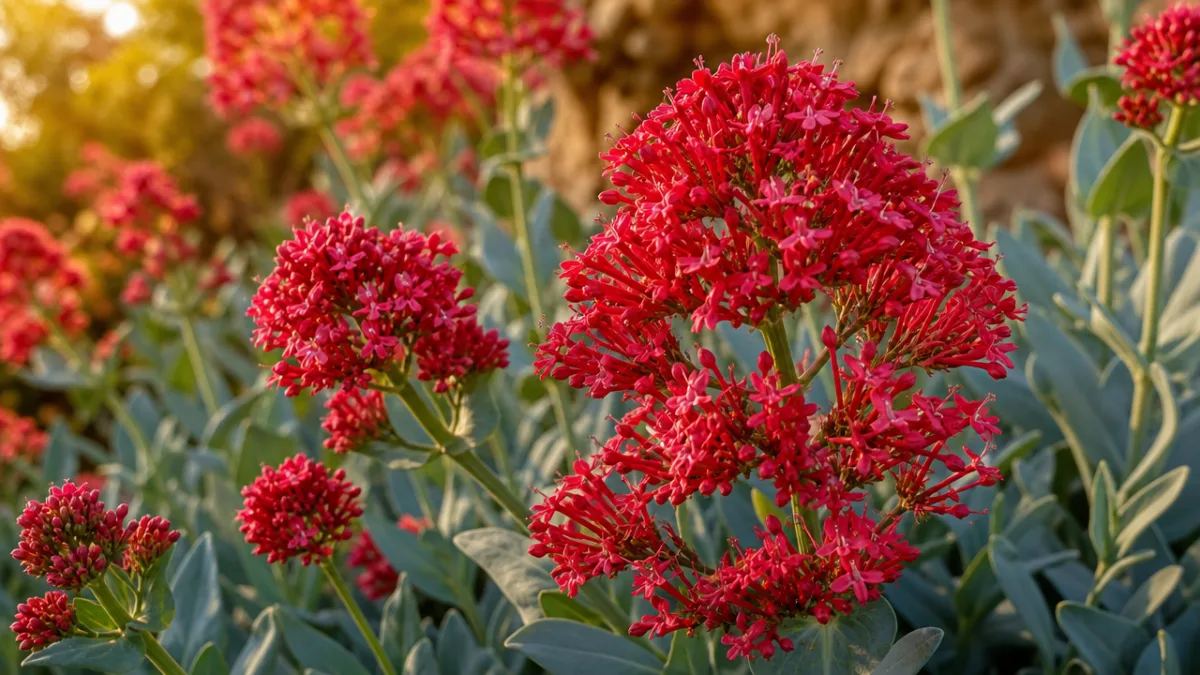
Red Jupiter’s Beard is a bushy, semi-woody perennial that typically grows between 18 and 36 inches tall and 18 to 24 inches wide at maturity. Its stems are upright but slightly arching, creating a graceful, rounded mound of growth that provides excellent structural interest even when the plant is not in bloom. The leaves are a distinctive blue-gray to grayish-green color, somewhat fleshy in texture, and arranged in opposite pairs along the stems. This glaucous foliage provides a beautiful contrast against the vivid red flowers and also signals the plant’s drought-adapted nature.
The flowers themselves are the true showpiece of this plant. Tiny individual blooms, each with a narrow tubular structure and a small spur at the base, are gathered into dense, domed clusters called corymbs that measure roughly two to three inches across. Each flower is a rich, saturated red-crimson that holds its color well in both full sun and partial shade. The blooms appear from late spring and can continue well into fall with proper deadheading, giving the plant an exceptionally long season of interest that few other perennials can match.
Beyond the flowers and foliage, the plant produces attractive seedheads after blooming that add a feathery, airy texture to the garden in late summer and fall. These seedheads carry small, dandelion-like tufts that allow the seeds to travel on the wind, which contributes to the plant’s ability to naturalize freely in suitable conditions. The overall habit of the plant is tidy but relaxed, making it equally at home in formal garden beds and informal cottage-style plantings. It brings a sense of effortless, naturalistic beauty that modern gardeners deeply appreciate.
Growing Conditions and Site Requirements
One of the most compelling qualities of Red Jupiter’s Beard is its remarkable adaptability to difficult growing conditions. This plant thrives in full sun, requiring a minimum of six hours of direct sunlight per day to perform at its best, though it can tolerate light afternoon shade in the hottest climates. It is exceptionally well-suited to the challenging conditions found throughout the American West, Southwest, and other regions where gardeners must contend with intense heat, limited rainfall, and poor, rocky soils that would defeat less resilient plants.
Soil drainage is the single most critical factor for success with Centranthus ruber ‘Coccineus’. This plant absolutely demands well-drained to sharply drained soil and will not tolerate standing water or consistently wet conditions, particularly in winter. In its native Mediterranean habitat, it often grows in rocky outcrops, dry hillsides, and even in the cracks of old stone walls, which tells us everything we need to know about its preferences. Gardeners planting in heavy clay soils should amend the bed generously with gravel or coarse sand, or consider raised beds to ensure adequate drainage.
Red Jupiter’s Beard is hardy in USDA Zones 5 through 9, giving it a wide range of applicability across the continental United States. In colder zones at the edge of its hardiness, the plant may die back to the ground in winter but will re-emerge vigorously from the root system in spring. In warmer zones, it may behave as an evergreen or semi-evergreen perennial, maintaining some foliage throughout the mild winter months. Gardeners in Zone 5 should consider providing a light layer of mulch over the crown in late fall to offer additional cold protection during the most frigid periods.
The following conditions represent the ideal growing environment for Red Jupiter’s Beard:
- Sun exposure: Full sun, at least 6 hours daily; tolerates light partial shade in hot climates
- Soil type: Poor to average fertility, well-drained to sharply drained; tolerates rocky and sandy soils
- Soil pH: Alkaline to neutral; does particularly well in limestone-rich soils
- Water needs: Low to moderate once established; drought-tolerant after the first season
- USDA Hardiness Zones: 5 through 9
- Temperature tolerance: Handles heat and cold with equal resilience
Planting and Care Instructions
Planting Red Jupiter’s Beard is a straightforward process that rewards a little upfront preparation. When planting from nursery containers, choose a location with excellent drainage and prepare the soil by incorporating coarse grit or gravel if the native soil is heavy or poorly draining. Dig a hole approximately twice as wide as the root ball and at the same depth, and avoid the temptation to enrich the soil with excessive compost or fertilizer. Like many Mediterranean plants, Centranthus ruber actually performs better in lean soils, producing more compact, sturdy growth and more abundant flowers when it is not overfed.
Water newly planted specimens regularly during the first growing season to help them establish a deep, robust root system. Once established, typically after one full growing season, the plant becomes significantly more drought-tolerant and will require only occasional supplemental irrigation during extended dry spells. In most climates with reasonable rainfall patterns, established plants will thrive with little to no additional watering. Overwatering is actually one of the most common mistakes gardeners make with this plant, and it can lead to root rot, poor performance, and significantly shortened lifespan.
Fertilization needs for Red Jupiter’s Beard are minimal. An application of a balanced, slow-release fertilizer in early spring as new growth emerges is usually sufficient for the entire growing season, and many gardeners skip fertilizing altogether with excellent results. The key maintenance task that truly makes a difference is deadheading — removing spent flower clusters promptly as they fade. This practice not only keeps the plant looking tidy but also encourages continuous flower production throughout the growing season, extending the display from early summer well into autumn.
Seasonal Care Calendar
- Early Spring: Cut back any dead or damaged stems from the previous season to just above new growth emerging at the base. Apply a thin layer of compost or balanced fertilizer if desired.
- Late Spring through Summer: Deadhead spent flower clusters regularly to encourage reblooming. Monitor soil moisture and water deeply but infrequently if conditions are very dry.
- Late Summer: Allow some seedheads to develop if you wish the plant to self-seed and naturalize in your garden. Cut back lightly to encourage a fresh flush of fall blooms.
- Fall: Enjoy the second wave of blooming. Begin to reduce watering as temperatures drop and plant activity slows.
- Winter: Leave the stems in place to protect the crown from cold. In Zone 5, apply a light mulch around the base after the ground freezes.
Landscape Uses and Design Applications
Red Jupiter’s Beard is an exceptionally versatile plant that lends itself to a wide range of garden styles and design applications. Its combination of bold flower color, attractive foliage, long bloom season, and tough constitution makes it a favorite among professional landscape designers and home gardeners alike. It is particularly well-suited to xeriscape and water-wise garden designs, where its drought tolerance and love of lean soils make it a natural choice for regions where water conservation is a priority or a necessity.
In mixed perennial borders, ‘Coccineus’ works beautifully as a mid-border plant, providing vertical interest and a vivid focal point without overwhelming its neighbors. Its crimson flowers create stunning contrasts when paired with blue and purple flowering plants such as salvia, catmint, or Russian sage, all of which share similar cultural requirements. It also complements yellow and gold-flowered plants like coreopsis and rudbeckia, creating warm, harmonious color combinations that evoke the look of a sun-drenched Mediterranean hillside. The gray-green foliage serves as an excellent unifying element, tying together diverse plant combinations with quiet elegance.
Cottage garden enthusiasts will find Red Jupiter’s Beard an indispensable addition to their planting schemes. Its tendency to self-seed and naturalize gives it the relaxed, romantic quality that defines the cottage garden aesthetic. It fills gaps effortlessly, weaves itself among other plants in a naturalistic way, and contributes to the layered, abundant look that cottage garden lovers prize so highly. For those who enjoy a wilder, more informal approach to gardening, allowing this plant to seed freely can result in beautiful, spontaneous combinations that no amount of deliberate planning could fully replicate.
Recommended Companion Plants
- Salvia nemorosa (Meadow Sage): Deep blue-purple spikes create a classic, bold color contrast with the crimson blooms
- Nepeta (Catmint): Soft lavender-blue flowers and silvery foliage harmonize beautifully with both the flowers and foliage of Centranthus
- Artemisia (Wormwood): Silvery, finely textured foliage provides a cool, elegant backdrop that makes the red flowers pop
- Coreopsis (Tickseed): Sunny yellow blooms create a warm, vibrant contrast that is visually dynamic and inviting
- Penstemon (Beardtongue): Tubular flowers in pink, purple, or white complement Centranthus while sharing its preference for dry, well-drained conditions
- Lavandula (Lavender): A classic Mediterranean companion with similar cultural requirements and beautiful fragrance
Wildlife Value and Ecological Benefits
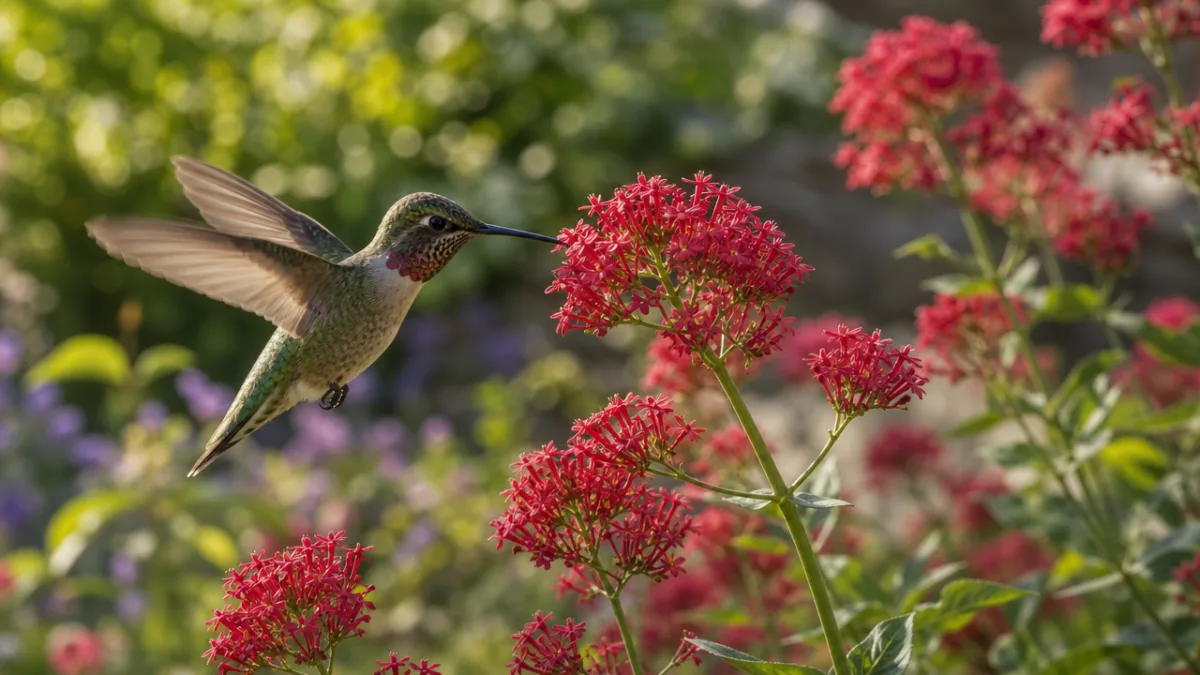
Beyond its ornamental qualities, Red Jupiter’s Beard provides significant ecological value in the garden. The tubular flowers, with their characteristic nectar spurs at the base, are particularly attractive to long-tongued pollinators including bumblebees, native bees, and various species of butterfly. Hummingbirds are reliably drawn to the vivid red blooms and will visit the plant repeatedly throughout the day when it is in flower. In areas where hummingbirds are present, planting several specimens of Centranthus ruber ‘Coccineus’ can transform a garden into a reliable hummingbird feeding station from late spring through fall.
The plant’s value to pollinators extends beyond simply providing nectar. Its long bloom season means it serves as a food source during periods when other garden plants may not be flowering, helping to support pollinator populations throughout the critical late spring, summer, and early fall months. This extended utility makes it a particularly valuable addition to pollinator gardens and habitat plantings designed to support native bee populations and other beneficial insects. Gardeners interested in creating ecologically meaningful landscapes will find Centranthus ruber an excellent and beautiful tool for supporting local food webs.
It is worth noting that while Red Jupiter’s Beard self-seeds freely and can naturalize aggressively in some climates, it does not appear on invasive species lists for most regions of the United States. In California, gardeners should be aware that the plant has naturalized in some coastal areas and may wish to deadhead consistently to prevent unwanted spread into natural areas. In most other regions, the self-seeding habit is more likely to be appreciated as a feature than considered a problem, particularly in dry, rocky areas where few other plants will grow as readily or as beautifully.
Propagation and Multiplication
Gardeners who fall in love with Red Jupiter’s Beard — and most do — will be pleased to discover how easily this plant can be propagated and multiplied. The most common and effortless method is simply to allow the plant to self-seed. Established plants produce abundant seeds each year that are dispersed by wind, and seedlings will emerge in the surrounding area the following spring. These volunteer seedlings can be transplanted to new locations when they are small, or simply thinned if too many appear in a given spot. This natural process of self-propagation makes it easy to establish large drifts of the plant over time at virtually no cost.
For gardeners who prefer more control over where the plant appears, seed can be collected from the spent seedheads in late summer and stored in a cool, dry location for spring sowing. Seeds germinate readily under warm conditions and do not typically require any special pre-treatment such as stratification. Starting seeds indoors six to eight weeks before the last frost date will produce transplant-ready seedlings by the time the soil has warmed sufficiently for outdoor planting. Direct seeding into a prepared bed in early fall is another successful approach, allowing seeds to stratify naturally over winter and germinate in spring.
Stem cuttings taken in late spring or early summer offer another reliable propagation method that produces plants genetically identical to the parent. Take cuttings of non-flowering shoot tips approximately three to four inches long, remove the lower leaves, and insert into a well-draining propagation mix. Maintain consistent moisture and warmth, and roots should develop within three to four weeks. This method is particularly useful for preserving the exact characteristics of a particularly fine specimen and for producing a larger number of plants in a shorter time than waiting for self-seeding to occur naturally.
Troubleshooting Common Issues
Red Jupiter’s Beard is a remarkably trouble-free plant that rarely suffers from serious pest or disease problems when grown in appropriate conditions. The most common issue gardeners encounter is root rot caused by excessive soil moisture or poor drainage, which manifests as wilting, yellowing foliage, and general decline despite adequate watering. The solution is almost always to improve drainage and reduce watering frequency. If root rot has already set in, the affected plant may need to be removed, the soil drainage corrected, and a healthy new plant established in its place.
Powdery mildew can occasionally affect the foliage during periods of high humidity combined with poor air circulation. This fungal condition appears as a white, powdery coating on the leaf surfaces and, while rarely fatal, can be unsightly. Improving air circulation around plants by ensuring adequate spacing and removing congested growth usually prevents the problem from recurring. Organic fungicidal sprays containing potassium bicarbonate or neem oil can help manage existing infections. Choosing a planting site with good airflow is the best long-term preventive measure against this issue.
Aphids occasionally target the tender new growth of Red Jupiter’s Beard in spring, clustering on shoot tips and flower buds. These soft-bodied insects are typically easy to manage with a strong jet of water from the garden hose, which physically dislodges them without the need for chemical intervention. Ladybugs and other beneficial insects usually keep aphid populations under control naturally once they become established in the garden. Avoiding excessive nitrogen fertilization, which produces the lush, soft growth that aphids prefer, is another effective preventive strategy that also contributes to more compact, attractive plant growth overall.
Common issues at a glance:
- Root rot: Caused by poor drainage or overwatering; prevent by ensuring excellent soil drainage
- Powdery mildew: Favored by humid conditions and poor airflow; prevent with adequate plant spacing
- Aphid infestations: Most common in spring on new growth; control with water jets or beneficial insects
- Winter dieback: Normal in colder zones; cut back in early spring and healthy regrowth will follow
- Leggy, floppy growth: Usually caused by too much shade or excess fertility; move to a sunnier spot with leaner soil








What do you think?
It is nice to know your opinion. Leave a comment.