










Medicago lupulina: The Complete Guide to Black Medick and Its Many Names
Introduction and Botanical Identity
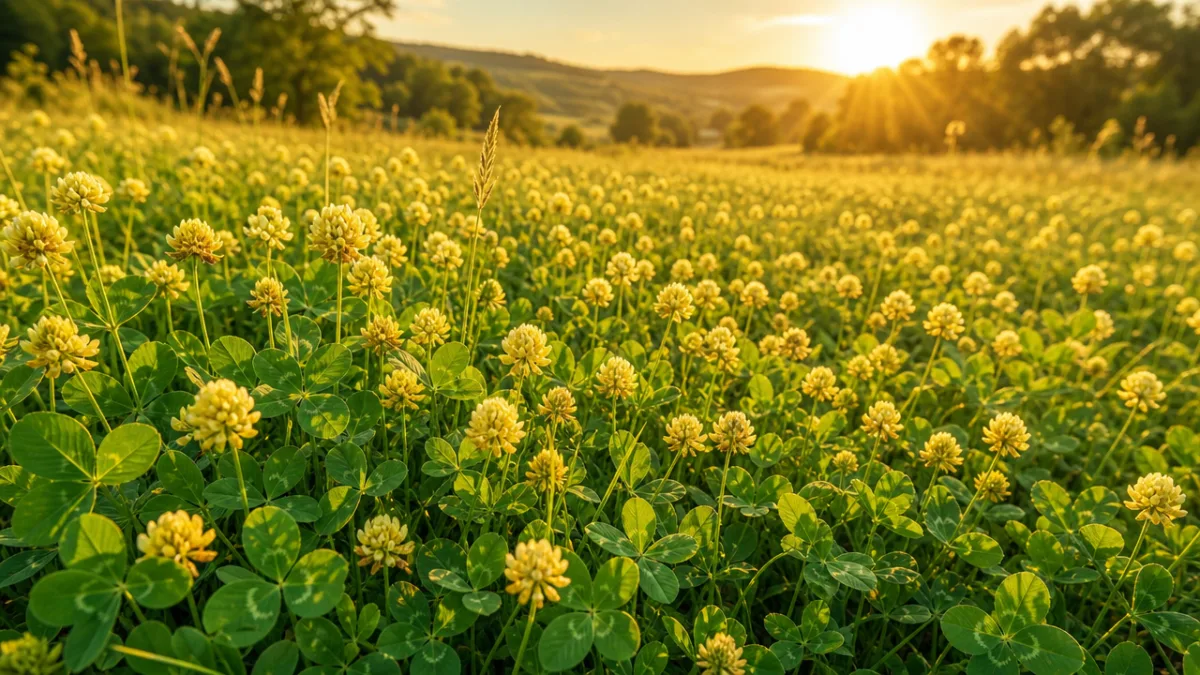
Medicago lupulina is one of those plants most people have walked past a hundred times without ever noticing — a small but surprisingly interesting member of the legume family (Fabaceae) that answers to an impressive list of common names: Black Clover, Black Medick, Black Nonesuch, Hop Clover, Trefoil, and Yellow Trefoil. Originally from Europe and western Asia, it’s since spread across temperate regions worldwide, including most of North America, where it’s settled in quite comfortably. You’ll find it in disturbed patches, along roadsides, tucked into lawns, and scattered through meadows — sometimes welcomed, sometimes decidedly not.
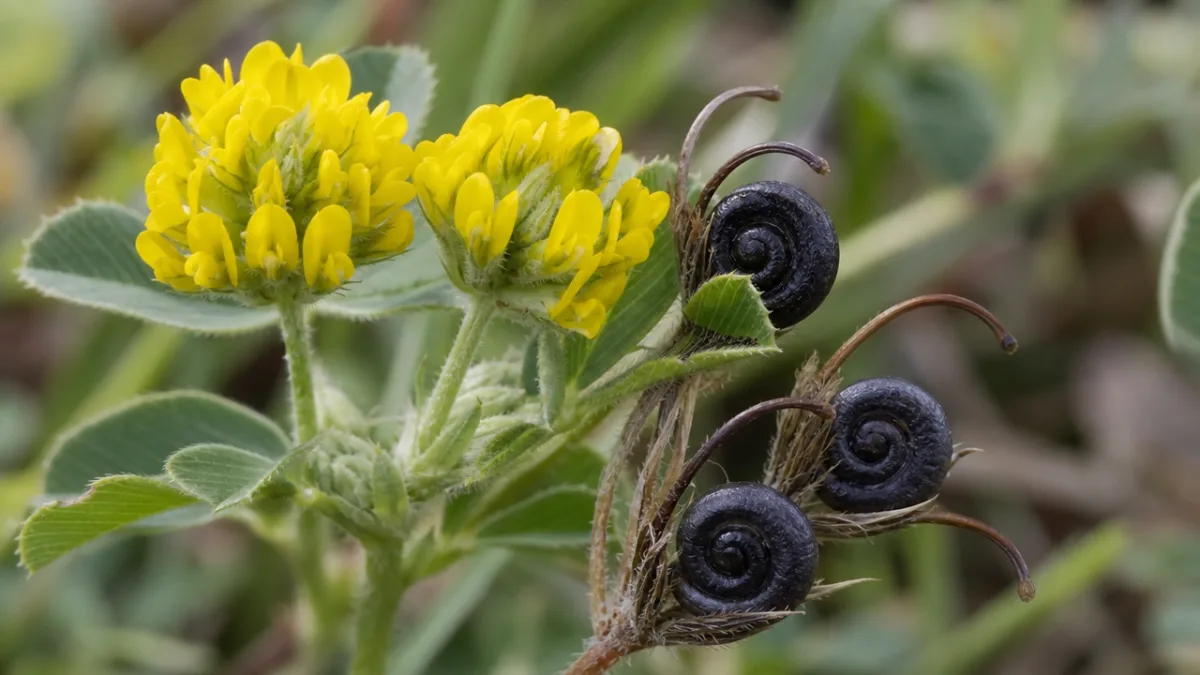
The scientific name actually tells you quite a bit about the plant if you know where to look. Medicago comes from the Latin word for alfalfa, which makes sense given how closely related they are. The species name lupulina means “resembling hops,” a nod to the plant’s small, spiraling seed pods, which do bear a passing resemblance to the hop cones used in brewing. It’s a fitting double identity for a plant that straddles the line between useful agricultural relative and common lawn weed — a tension that plays out in gardens and turf across North Carolina and the broader Southeast.
Like all legumes, Medicago lupulina has a few signature traits: compound leaves split into three leaflets, small but distinctive flowers, and the remarkable ability to pull nitrogen from the atmosphere through a partnership with soil bacteria. The leaflets are roughly oval, finely toothed near the tips, and the plant grows low and spreading, with stems anywhere from 10 to 60 centimeters long depending on how rich the soil is and how much light it gets. That sprawling, mat-forming habit is exactly why it can be both a handy ground cover and a genuinely stubborn lawn intruder.
Natural Habitat and Geographic Distribution
Medicago lupulina is native to Europe, western Asia, and North Africa, where it grows naturally in grasslands, meadows, and disturbed soils from sea level up into the foothills of mountain ranges. It made its way to North America during the colonial period — probably hitching a ride as a contaminant in hay or grain seed, or brought over deliberately as livestock forage. Either way, it’s thoroughly at home here now, naturalized across the continental United States and Canada and present in virtually every North Carolina county, from the coastal plain all the way up into the mountains.
In North Carolina and across the Southeast, Black Medick does best in open, sunny spots with well-drained soil. It has a particular affinity for disturbed ground — roadsides, old fields, garden edges, turfgrass lawns, the borders of cultivated land. It handles a wide range of soil types, from the sandy soils of the coast to the heavier clays of the Piedmont, though it’s happiest in neutral to slightly alkaline conditions. Its drought tolerance once established is a real asset in the warm, sometimes dry Carolina summers.
Where this plant shows up is closely tied to human activity. Disturbed, compacted, or low-fertility soil is basically an open invitation — Black Medick is often one of the first plants to move in. That’s not accidental. It germinates quickly, it can fix its own nitrogen so poor soil doesn’t hold it back, and it produces seeds prolifically enough to keep the population going even when conditions are tough. These traits have made it a successful global traveler and a consistent, if underappreciated, presence in disturbed plant communities around the world.
Morphological Characteristics and Identification
Getting a confident ID on Medicago lupulina means knowing what to look for, because it shares its habitat with plenty of similar-looking plants. The leaves are trifoliate — three leaflets, like true clovers in the genus Trifolium — but there are differences worth noticing. Black Medick’s leaflets tend to be more distinctly obovate, meaning they’re broader toward the tip than the base, and they’re finely toothed mostly near the top. If you have a hand lens handy, look for a tiny pointed tip, called a mucro, projecting from the center vein at the leaflet tip. It’s a small detail, but it’s genuinely useful for telling Medicago apart from similar genera.
The flowers are small, bright yellow, and packed into dense, rounded to oblong heads with anywhere from 10 to 50 individual blossoms each. Each flower is only about 2 to 3 millimeters long, with the classic pea-family structure — banner, wings, and keel. The flower heads rise on slender stalks from the leaf axils, and the plant blooms from spring through autumn, with the peak usually landing in late spring and early summer in North Carolina. That bright yellow color alone is often enough to distinguish it from white and red clovers at a glance.
The most distinctive feature of all, though, is the fruit. After the flowers fade, each one develops into a small, tightly coiled, kidney-shaped pod that starts out green and turns black as it matures — which is exactly where the names Black Clover and Black Medick come from. Each pod holds a single seed, and the surface is covered with a network of prominent veins. When you’re looking at a patch of Medicago lupulina up close with pods present, those clusters of tiny black coiled fruits are genuinely unmistakable. The overall plant tends to be spreading and somewhat downy or hairy, with stems that lie along the ground before curving upward at their tips.
Ecological Roles and Wildlife Value
Lawn weed reputation aside, Medicago lupulina actually pulls its ecological weight in meaningful ways — especially when it comes to pollinators. Those small yellow flowers are surprisingly popular with a wide range of native bees, including small sweat bees, bumblebees, and various solitary species. They offer both nectar and pollen, and the plant’s long blooming season — stretching from spring well into fall in mild climates — makes it a reliable food source during gaps when other wildflowers aren’t around. A lawn with some Black Medick in it is, ecologically speaking, richer than one made up entirely of turfgrass.
As a legume, Black Medick teams up with nitrogen-fixing bacteria in the genus Rhizobium. These bacteria colonize the plant’s roots, forming small nodules — pinkish or cream-colored bumps you can see if you pull a plant and look at the roots — and they convert atmospheric nitrogen into forms plants can actually use. When Black Medick dies back and decomposes, that fixed nitrogen goes into the soil, essentially giving surrounding plants a free fertility boost. It’s the same principle behind using legumes as cover crops or green manures, and it’s a genuinely useful service whether you asked for it or not.
The seeds and foliage feed a fair bit of wildlife too. Granivorous birds — sparrows, finches, doves — forage on the seeds in open areas where the plant grows. Rabbits, deer, and various invertebrates, including caterpillars of certain butterfly and moth species, browse the foliage. In agricultural settings, it serves as reasonable forage for cattle, sheep, and horses, and for a long time in Europe it was deliberately included in hay meadow and pasture seed mixes before more productive cultivated varieties of alfalfa and clover took over.
Cultivation, Management, and Agricultural Uses
Medicago lupulina occupies a somewhat contradictory position in agriculture and horticulture: depending on who you ask and where you’re standing, it’s either a useful tool or a persistent problem. As a cover crop or green manure, it has a lot going for it. It establishes quickly from seed, tolerates poor soils, fixes nitrogen, and produces solid biomass that can be tilled in to improve organic matter and fertility. It shows up in wildflower mixes and pollinator habitat seed blends for these exact reasons, and land managers looking for a low-maintenance, inexpensive addition to a pollinator planting often find it worth including.
In the lawn, though, Black Medick is generally treated as a weed that needs managing. Its low, spreading habit lets it duck under the mower, and it can establish stubborn patches in thin, compacted, or nutrient-poor turf. The most sustainable long-term approach is cultural — making conditions better for the grass rather than waging constant chemical warfare. That means:
- Maintaining proper mowing height — typically 3 to 4 inches for most cool-season and warm-season grasses — to shade out low-growing weeds
- Aerating compacted soils annually to improve drainage and root development
- Conducting soil tests and correcting pH and nutrient deficiencies to favor turfgrass over weedy legumes
- Overseeding thin or bare areas to fill in gaps where Black Medick readily establishes
- Applying pre-emergent herbicides in early spring before seeds germinate if chemical control is desired
- Hand-pulling or spot-treating small infestations before they set seed
For anyone interested in incorporating Medicago lupulina intentionally — in a naturalistic garden, wildflower meadow, or low-input lawn alternative — it asks very little once it’s in the ground. It’s drought-tolerant, needs no fertilizing thanks to its nitrogen-fixing partnership, and reseeds reliably to keep itself going year after year. In a meadow setting it can work as a living mulch or ground cover under taller wildflowers, adding some color when it blooms and quietly improving the soil in the background. The main thing to watch is that it doesn’t crowd out other plants you want — some periodic disturbance or competition from more vigorous neighbors usually keeps it in check.
Ethnobotanical History and Traditional Uses
Medicago lupulina has a modest but genuinely interesting ethnobotanical history, built up over centuries of close contact with European farming communities. It was never one of the major medicinal herbs of the Western tradition, but it did make appearances in folk medicine and herbalism in minor roles. Its primary identity, though, was always as a livestock forage plant. The common name “Hop Clover” reflects an old observation — farmers and botanists both noticed that the seed pods bore a resemblance to immature hop cones — even though the plant has no actual connection to brewing.
The young shoots and leaves are technically edible and have been used as a pot herb or salad ingredient during lean times, though “palatable” might be generous. It was never a food plant of significance for humans; that role belonged to its more productive agricultural relatives. Where it did earn consistent mention was in agricultural writing of the 17th and 18th centuries, recommended for temporary pastures and hay meadow improvement. John Gerard’s famous Herball of 1597 covers related Medicago species, and the plant was well known to early botanists picking their way through British fields and European grasslands.
The sheer variety of common names attached to Medicago lupulina says something about how widely known and widely distributed it was. “Black Medick” and “Black Clover” point to the seed pods. “Yellow Trefoil” describes the flowers. “Hop Clover” references the pod shape. “Black Nonesuch” is older and more obscure — the etymology is a bit uncertain, but it may reflect the sense that this plant was somehow distinct from true clovers, the “none such” suggesting it didn’t quite fit elsewhere. The accumulation of all these regional names is its own kind of evidence: this was a plant that ordinary people — farmers, gardeners, shepherds — knew well across many generations and many landscapes, on both sides of the Atlantic.
Conservation Considerations and Ecological Context
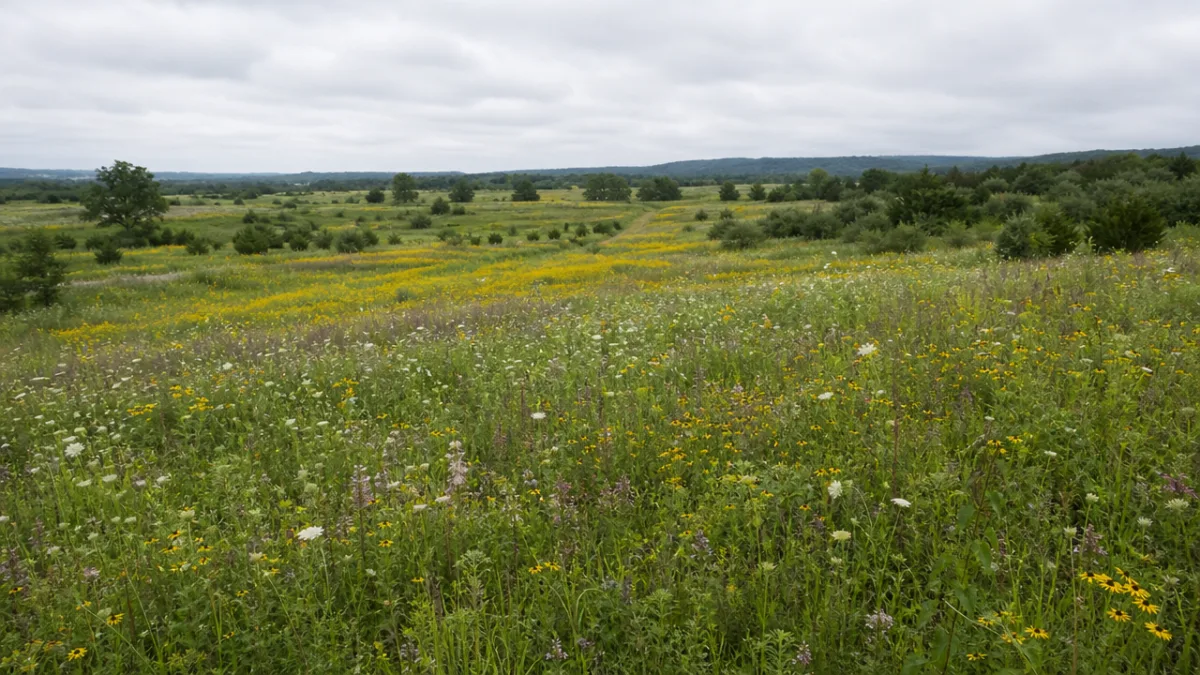
From a conservation standpoint, Medicago lupulina is genuinely complicated — it doesn’t fit neatly into “good plant” or “bad plant” categories. It’s not native to North American ecosystems, and it does compete with native plants for space, light, and soil resources. In high-quality native grasslands or prairies where the goal is protecting biodiversity, Black Medick would rightly be treated as an invasive species to be managed out, since native legumes and forbs support far more specialized relationships with native insects and wildlife. The North Carolina Extension Gardener Plant Toolbox documents plants like this precisely to give land managers and gardeners accurate information to make those calls.
At the same time, the landscapes most of us actually live in — suburban lawns, roadsides, agricultural margins, disturbed urban green spaces — are already so thoroughly altered that this calculus shifts. In those contexts, Medicago lupulina is filling niches that would otherwise go to bare dirt, compacted soil, or wall-to-wall turfgrass with essentially nothing to offer wildlife. There, its nitrogen-fixing and pollinator-supporting roles can represent a real net gain, and reaching for broad-spectrum herbicides to eradicate it may do more ecological damage than the plant itself ever would. A site-specific, context-aware approach to management makes a lot more sense than a blanket policy in either direction.
As interest in pollinator conservation, sustainable landscaping, and ecological gardening has grown, plants like Medicago lupulina have started getting a more nuanced look from horticulturalists, ecologists, and home gardeners alike. The recognition that even common, introduced plants can contribute meaningfully to urban and suburban biodiversity has changed how a lot of practitioners think. You don’t have to love Black Medick or make a place for it in your garden — but understanding what it actually does, how to identify it, and how to manage it thoughtfully, which is exactly what resources like the North Carolina Extension Gardener Plant Toolbox are built to help with, puts you in a much better position to make decisions that work for both your garden and the broader ecosystem around it.








What do you think?
It is nice to know your opinion. Leave a comment.