










15 Recycled Clothes Ideas: Creative Ways to Give Old Garments a New Life
Why Recycling Clothes Matters More Than Ever
The fashion industry is one of the most polluting industries on the planet, generating approximately 92 million tonnes of textile waste every single year. When garments end up in landfills, synthetic fabrics can take hundreds of years to decompose, leaching microplastics and chemical dyes into the soil and groundwater along the way. By choosing to recycle and repurpose old clothing instead of discarding it, each of us can play a meaningful role in reducing this staggering environmental toll.
Beyond the environmental benefits, recycling clothes is also a deeply practical pursuit. The average household contains dozens of garments that are no longer worn — items that have gone out of style, no longer fit, or have suffered minor damage that feels too small to repair but too significant to ignore. Rather than letting these pieces languish at the back of a wardrobe or be tossed into the trash, recycling gives them a second chapter. This is not just sustainability in action; it is a genuinely creative and rewarding process that can save money and spark genuine artistic expression.
There is also a cultural shift happening around how we think about consumption and ownership. The “fast fashion” model that dominated the early 2000s is increasingly being questioned by consumers who want their choices to reflect their values. Recycling and upcycling old clothes is one of the most tangible, hands-on ways to participate in that shift. Whether you are an experienced seamstress or a complete beginner, there are approaches here that will suit your skill level and lifestyle.
Upcycling Basics: Tools and Mindset for Getting Started
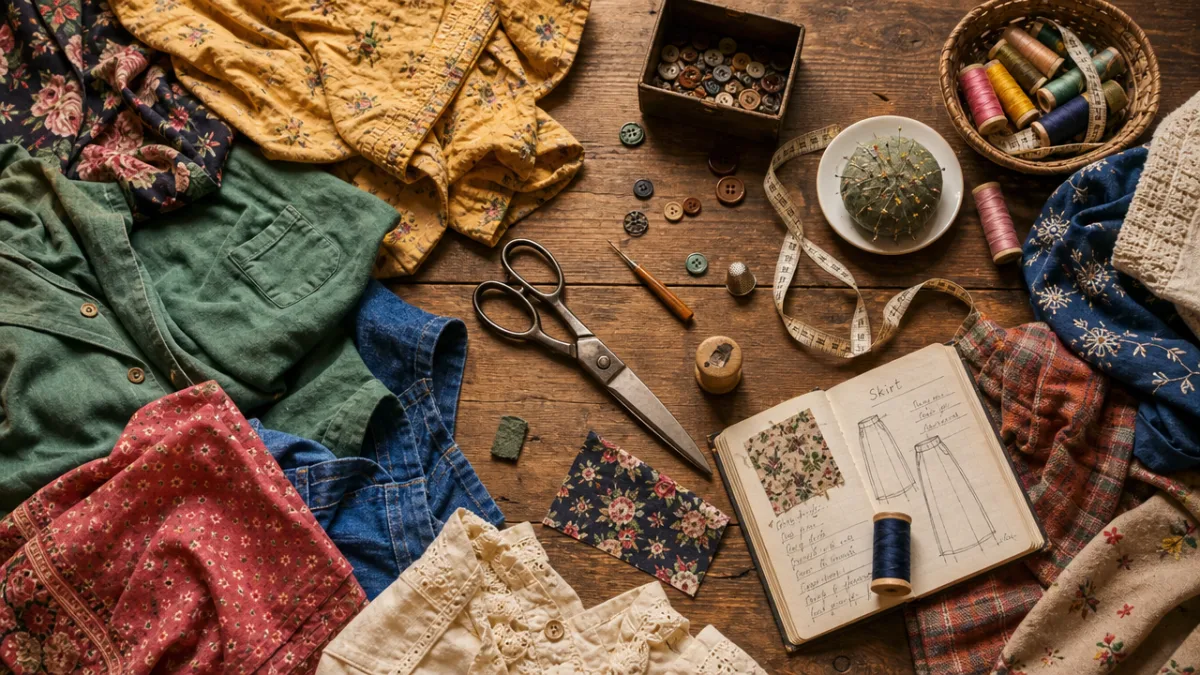
Before diving into specific projects, it helps to have a basic toolkit assembled and a flexible mindset firmly in place. At the most fundamental level, you will need a good pair of fabric scissors, a seam ripper, basic hand-sewing supplies such as needles and thread in a range of colors, and ideally access to a sewing machine for more ambitious projects. Fabric glue and iron-on hem tape are also invaluable for no-sew approaches, making upcycling accessible to people who have never threaded a needle in their lives.
The mindset shift is equally important. When you look at an old garment, try to see its components rather than the finished object. A worn-out pair of jeans is not simply a pair of jeans — it is a supply of durable denim fabric, two sturdy leg tubes, a waistband with existing hardware, and a collection of pockets and belt loops, each of which can serve a new purpose. This deconstructive way of seeing takes practice, but it quickly becomes second nature. Browsing inspiration on platforms like Pinterest before you begin can help train your eye to spot hidden potential.
It is also worth sorting your garments into categories before starting any project. Separate items by fabric type — cotton, denim, wool, silk, synthetic blends — because each material behaves differently and lends itself to different applications. Consider also the condition of each piece: a garment with a small stain might be perfect for a project that involves dyeing or painting, while one with a torn seam is an ideal candidate for deconstruction and reassembly. Good organization at the start saves frustration later and helps you match the right project to the right material.
Transforming Jeans and Denim: Five Ideas to Try
Denim is one of the most versatile and durable fabrics available, and old jeans in particular are a treasure chest of upcycling potential. One of the most popular transformations is turning full-length jeans into shorts or a denim skirt. Cutting jeans into shorts is as simple as marking the desired length, cutting across both legs, and finishing the raw edge with a simple hem or by intentionally fraying it for a casual look. For a denim skirt, cut down the inner seams, flatten the fabric, and sew a new central panel — a project that takes only a few hours and produces a genuinely wearable result.
Denim pockets are endlessly useful as standalone items. Carefully removed from old jeans, they can be stitched onto tote bags, plain jackets, or even framed as quirky wall art. The hardware from jeans — buttons, rivets, and zippers — can also be harvested and reused in other sewing projects, giving brand-new items a rugged, distinctive detail that would be expensive to purchase separately. Even the smallest scraps of denim can be collected and used to create patchwork projects, from potholders to full-sized quilts.
For a more fashion-forward approach, consider distressing or embellishing old denim rather than cutting it apart. Bleach painting, where diluted bleach is applied with a brush or sponge to create patterns and gradients, produces stunning effects on indigo denim at almost no cost. Embroidery is another beautiful option — floral designs stitched around the knees of jeans or along the hem of a denim jacket are both on-trend and deeply personal. Iron-on patches, whether purchased or made from other fabric scraps, add color and character while simultaneously covering worn patches or small holes.
T-Shirts, Knitwear, and Casual Wear: Reinventing the Everyday
Old t-shirts are perhaps the single most common item in any upcycling pile, and happily they are also among the easiest to transform. A basic t-shirt can become a tote bag with just two straight cuts and a few knots — no sewing required. Simply cut off the sleeves along their seams, cut a deep U-shape into the neckline to create handles, and either knot or sew the bottom closed. The resulting bag is stretchy, sturdy, and surprisingly spacious, perfect for grocery runs or beach days.
Knitwear — old sweaters, cardigans, and jumpers — offers a different kind of upcycling opportunity. Wool and knitted synthetic blends can be unravelled entirely, with the reclaimed yarn rewound and used in knitting or crochet projects. This is a slower process but intensely satisfying, particularly when working with a high-quality wool sweater that would produce enough yarn for an entirely new small garment. Alternatively, sweater sleeves can be cut and hemmed to make cozy boot toppers or wrist warmers, while the body of the sweater becomes fabric for tote bags, cushion covers, or even stuffed toys.
Casual shirts and blouses in cotton or linen can be reimagined in several directions. An oversized shirt that no longer flatters can be cropped, belted, or restructured into a wrap-style top with very little alteration required. Shirts with beautiful prints but damaged collars or cuffs can have those elements removed and replaced, giving the garment a fresh and deliberately modern look. Even fabric from shirts too worn to wear as clothing can be cut into squares and used as reusable cleaning cloths, replacing disposable paper towels in the kitchen and bathroom — a small change with a genuinely meaningful environmental impact over time.
Home Décor and Functional Items: Clothes Beyond the Wardrobe
Some of the most satisfying upcycling projects take clothing entirely out of the wardrobe and into the home. Old fabric — whether from shirts, dresses, curtains, or bed linens — can be transformed into an extraordinary range of household items. Quilts and patchwork blankets are perhaps the most traditional expression of this idea, and for good reason: they are warm, beautiful, deeply personal, and represent a genuine archive of the fabric of daily life. A quilt made from children’s outgrown clothing, for instance, becomes a keepsake of profound sentimental value.
Cushion covers are a faster and simpler project that can produce equally striking results. A single dress or skirt, once deconstructed, often provides enough fabric for two or three cushion covers. Choosing fabrics with interesting textures, colors, or patterns — a silk blouse, a printed cotton dress, a velvet evening top — and combining them in one cushion can produce a luxurious, eclectic aesthetic that would cost significantly more to achieve with new materials. Adding concealed zips or envelope closures makes covers easy to remove and wash, increasing their practical longevity.
Beyond soft furnishings, old clothing can contribute to functional household items in less obvious ways. Heavy denim and canvas garments can be upcycled into durable storage solutions — bags, baskets, and organizers that hang on doors or sit on shelves. Old neckties, beloved by many upcyclers for their narrow width and array of fabric types, can be stitched together side by side to create a table runner with extraordinary visual interest. Even old socks and stockings, rather than being thrown away, can be stuffed and used as draft excluders, or cleaned and used as soft applicator pads for shoe polish and furniture wax.
Dyeing, Printing, and Surface Treatments: Refreshing Fabrics Without Cutting
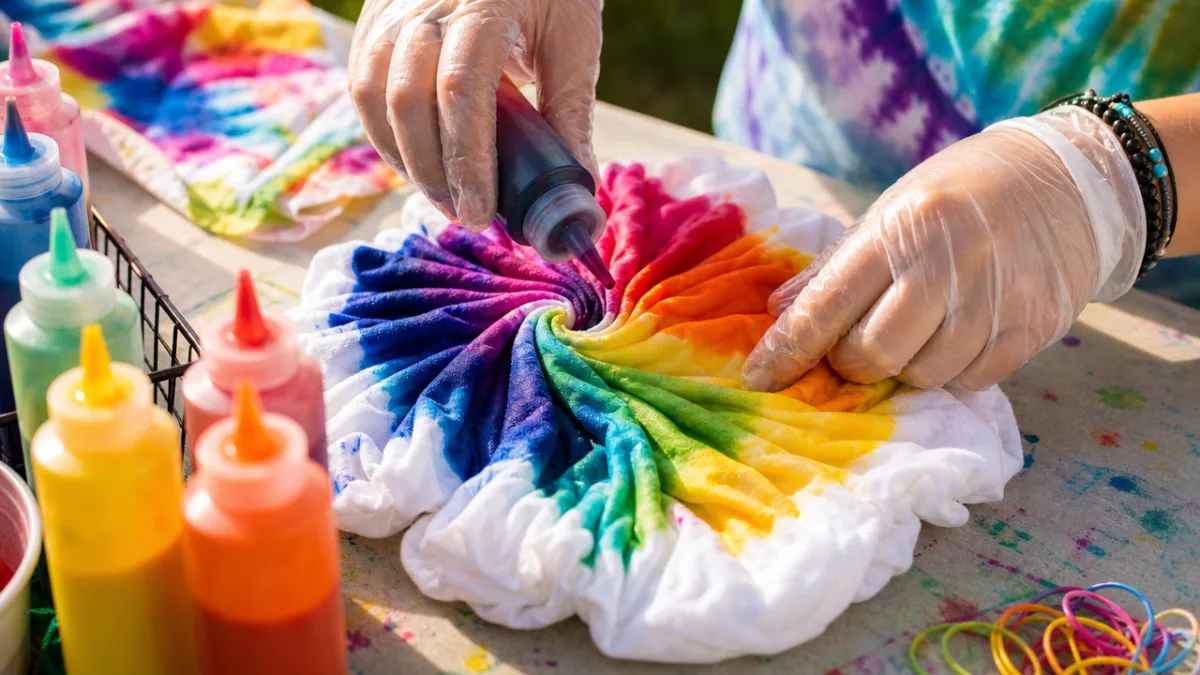
Not every garment needs to be physically reconstructed in order to be given a new life. Sometimes a piece of clothing is structurally perfect but simply looks tired, stained, or outdated in its coloring. In these cases, fabric dyeing is one of the most transformative and accessible techniques available to the home upcycler. All-over immersion dyeing in a single bold color can completely refresh a faded garment, while tie-dye and shibori techniques — which involve folding, twisting, and binding fabric before applying dye — produce striking patterns that are currently very fashionable and entirely unique to each piece.
Block printing is another surface treatment that requires minimal investment and produces beautiful results. A simple carved potato, a store-bought foam stamp, or even found objects like leaves or bottle caps can be pressed into fabric paint and applied repeatedly across the surface of a plain garment. The resulting pattern is handmade, irregular in the best possible way, and entirely one of a kind. This technique works particularly well on plain cotton t-shirts, tote bags made from old clothing, and flat items like cushion covers and table linens.
For those interested in a more textural approach, fabric manipulation techniques such as smocking, ruching, and pleating can completely change the silhouette and feel of a garment without requiring any new materials at all. An oversized dress can be smocked at the waist to create definition; a plain shirt can be ruched at the hem to give it a more contemporary crop. These techniques require some sewing skill but are well within reach of a motivated beginner, and the results are genuinely professional-looking. Combined with embroidery, beading, or the addition of trim salvaged from other garments, the creative possibilities are, quite literally, limitless.
- Tie-dye and shibori — fold, bind, and submerge fabric in cold-water dye for bold, organic patterns that are impossible to replicate exactly twice.
- Bleach painting — use diluted bleach with a brush or stencil on dark cotton or denim for a dramatic reverse-dye effect.
- Block and stamp printing — apply fabric paint with carved or found objects to add repeating motifs to plain garments.
- Embroidery and hand-stitching — add color, texture, and imagery to any fabric surface using nothing more than needle and thread.
- Iron-on transfers — print designs at home and heat-transfer them to fabric for sharp, detailed graphics without specialist equipment.
Building a Sustainable Wardrobe Practice for the Long Term
Individual upcycling projects are satisfying and impactful, but the greatest change comes from embedding recycling and sustainability into your everyday relationship with clothing. This begins at the point of purchase — choosing well-made, durable garments over cheap disposable ones means that the items entering your wardrobe are worth the investment of time and creativity that upcycling requires. It also means shopping secondhand and vintage first, before buying new, and being willing to buy items that need minor repair rather than demanding perfection from the start.
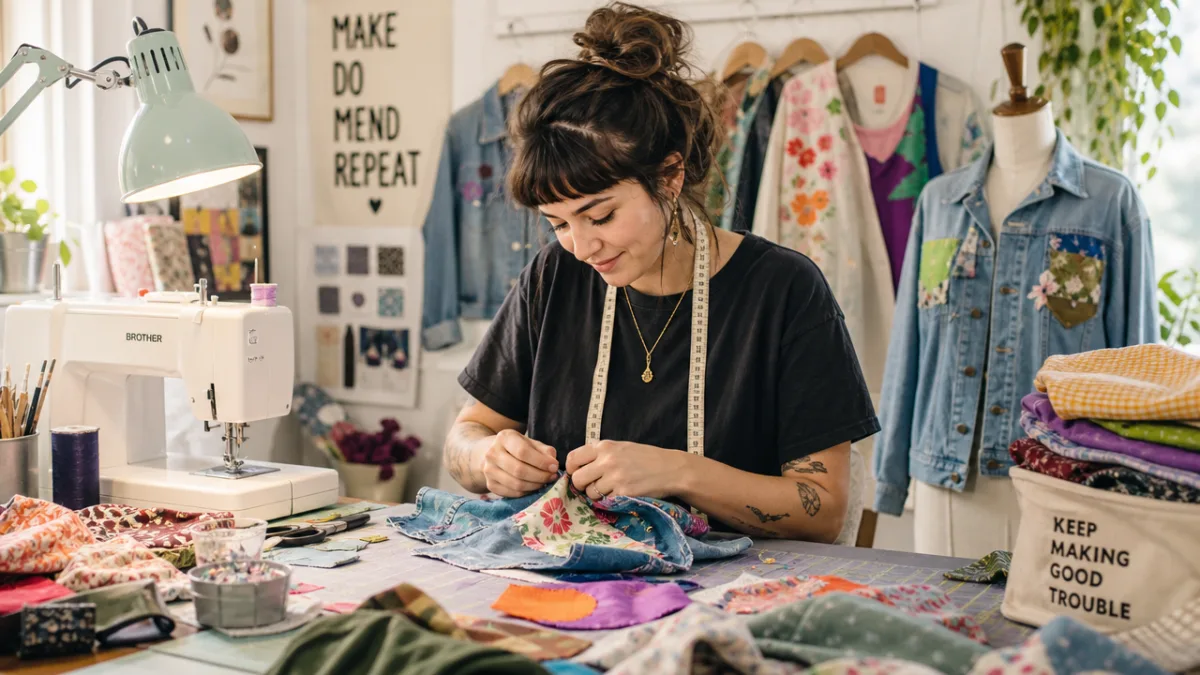
Creating a dedicated repair and upcycle station in your home — even a small shelf or basket with basic tools — dramatically lowers the barrier to action. When a button falls off or a seam opens, it is far easier to address the problem immediately if your needle and thread are within easy reach rather than buried at the back of a cupboard. The same applies to upcycling projects: keeping a collection of garments set aside for transformation, sorted and ready, means that on a rainy afternoon you can pick up a project without the friction of preparation slowing you down.
Finally, consider connecting with others who share your interest in sustainable fashion. Local repair cafes, community sewing circles, and online communities dedicated to upcycling and slow fashion offer inspiration, practical advice, and a sense of shared purpose that makes the practice more enjoyable and sustainable over the long term. Sharing your own finished projects — whether on social media, with friends, or at community events — contributes to a growing cultural conversation about the value of what we already own, and can inspire others to look at their own wardrobes with fresh, creative eyes. Every garment given a second life is a small but genuine act of resistance against a culture of waste, and a reminder that creativity and sustainability are not in tension — they are, at their best, the very same thing.








What do you think?
It is nice to know your opinion. Leave a comment.