










23 Upcycled Outdoor Planters and Containers: DIY Projects for Your Garden
Why Upcycling Is the Future of Garden Design
There has never been a better time to rethink the way we approach our gardens. As sustainability moves from a fringe conversation into mainstream culture, gardeners around the world are discovering that some of the most beautiful and characterful outdoor spaces are built not from expensive purchases at the garden center, but from objects that would otherwise end up in a landfill. Upcycled planters bring a sense of story and personality to any outdoor space, turning worn-out boots, rusted colanders, and cracked wooden crates into living, breathing works of art that celebrate creativity over consumption.
Beyond the environmental benefits, upcycling your garden containers is remarkably cost-effective. The materials are often free or nearly free, sourced from your own home, thrift stores, garage sales, or neighbors looking to declutter. A little imagination and some basic preparation work — drainage holes, a coat of weather-resistant paint, or a lining of burlap — can transform practically any vessel into a thriving home for plants. The result is a garden that reflects your individual taste rather than whatever happens to be trending at the local hardware store this season.
There is also a deeply satisfying creative dimension to this kind of gardening. Planning which plants will suit a repurposed object, how to arrange multiple upcycled containers for visual impact, and how to balance textures and colors across your outdoor space engages the mind in a way that simply buying matching pots never quite does. Each project becomes a small act of problem-solving and self-expression, and the finished result carries with it a sense of pride and meaning that mass-produced planters simply cannot replicate.
Household Items That Make Outstanding Planters
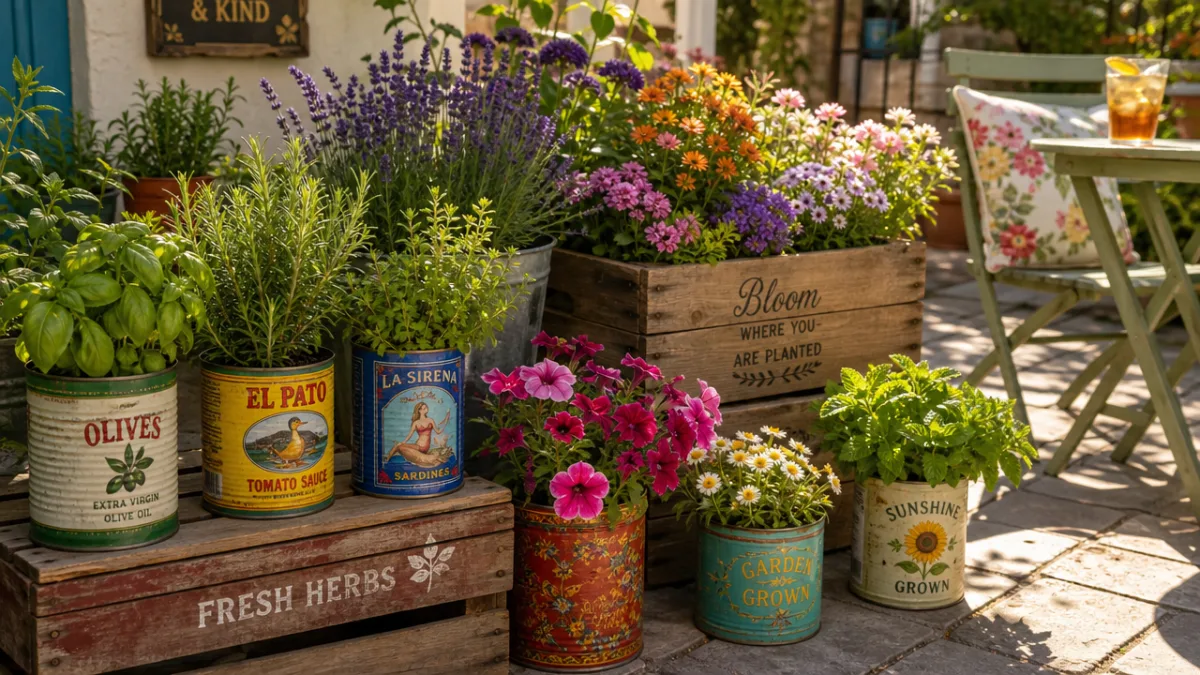
The first place to look for your next garden container is your own home. Kitchens, in particular, are treasure troves of upcycling potential. Old colanders are perhaps the most beloved of all kitchen-to-garden conversions, thanks to their built-in drainage holes that make them ideal for herbs and trailing plants. A worn-out colander filled with trailing thyme or colorful nasturtiums and hung from a fence or shepherd’s hook creates an instantly charming focal point that costs virtually nothing. Tin cans of all sizes are equally versatile — paint them in coordinating shades, punch drainage holes in the bottom, and cluster them together on a windowsill or garden wall for a playful, bohemian effect.
Wooden crates and wine boxes are another household staple that transitions beautifully into the garden. Line the interior with landscape fabric to retain soil while allowing water to drain, then fill with seasonal flowers or a mix of salad greens for a container that is as practical as it is attractive. The natural wood tones age gracefully outdoors, developing a weathered patina that adds character over time. If you want to prolong the life of the wood, a coat of outdoor-safe wood stain or sealant applied before planting will protect against moisture and sun damage through multiple growing seasons.
Old boots and rain boots deserve a special mention as upcycled planters, partly because of how deeply they capture the imagination of visitors and partly because they require almost no modification at all. Simply punch a couple of holes in the sole for drainage, fill with potting mix, and plant with something with a trailing habit — succulents, creeping Jenny, or miniature pansies all work wonderfully. A pair of mismatched Wellington boots lined up along a garden path or perched on a fence post becomes a whimsical, conversation-starting feature that children and adults alike find irresistible.
Furniture and Structural Items Transformed Into Garden Features
Old furniture offers some of the most dramatic upcycling opportunities available to the home gardener. A chest of drawers with its drawers pulled out to varying heights and filled with trailing plants creates a multi-tiered garden display that draws the eye and makes a genuine design statement. Similarly, an old wooden chair with its seat removed or replaced with a planted basket hanging from the frame adds vertical interest to a patio or garden corner without requiring any structural work. These large-scale pieces act as anchor points in your outdoor design, giving the garden a sense of composition and intentionality.
Ladders — particularly old wooden stepladders — have become iconic in upcycled garden design, and for good reason. Leaned against a wall or fence, they provide instant vertical planting space across multiple levels. Pots, tin cans, and hanging baskets can be hooked or tied onto each rung, creating a lush, layered display that makes excellent use of limited horizontal space. This approach works especially well in small urban gardens or on narrow balconies where every square foot counts. Paint the ladder in a bold color to turn it into a feature in its own right, or leave it raw and weathered for a more rustic aesthetic.
Old wheelbarrows and garden carts are perhaps the most naturally suited of all furniture and structural items to a second life as a planter, because they were already part of the garden ecosystem. A wheelbarrow that has seen better days on the vegetable patch can be cleaned out, given a fresh coat of paint, and filled with a riot of summer annuals to become a centerpiece on a lawn or patio. Its mobility is a genuine practical advantage, allowing you to wheel it into a sheltered spot during bad weather or reposition it as your seasonal displays change. These large containers also hold substantial volumes of soil, making them suitable for deeper-rooted plants than most smaller upcycled containers can accommodate.
Repurposed Industrial and Salvage Materials
Some of the most striking upcycled planters come not from the home but from industrial and salvage sources. Old oil drums, cut in half horizontally, make bold and durable containers for statement shrubs, small trees, or dramatic grasses. Their industrial heritage gives them an urban edge that works beautifully in contemporary garden designs, particularly when paired with architectural plants like phormium, agave, or ornamental bamboo. Many salvage yards and metal recyclers will sell these drums for next to nothing, and with a thorough clean and a few drainage holes drilled into the base, they can last for decades in a garden setting.
Galvanized metal buckets, water troughs, and feeding containers sourced from farm suppliers or salvage yards have a long tradition in cottage and country-style garden design. Their simple, honest forms complement traditional planting schemes perfectly, and the slightly muted silver tone of galvanized metal harmonizes effortlessly with both warm flower colors and cool, glaucous foliage. Group several buckets of different sizes together for a collected, informal look, or use a single large water trough as a dramatic centerpiece planted with a mixture of heights and textures for a lush, layered effect that carries interest through the seasons.
Salvaged pipes, guttering, and scaffolding boards open up further creative possibilities, particularly for wall-mounted displays. Lengths of old guttering attached horizontally to a fence or wall and filled with trailing herbs or alpines create a striking living installation that makes use of vertical space that would otherwise go to waste. Scaffolding boards, cut to size and assembled into simple rectangular frames, can be used to build raised planters that sit directly on a patio surface, adding growing space without requiring any ground-level construction. The weathered, industrial character of these materials gives garden spaces a sense of authenticity and depth that no brand-new planter can quite achieve.
Creative Plant Pairings for Upcycled Containers
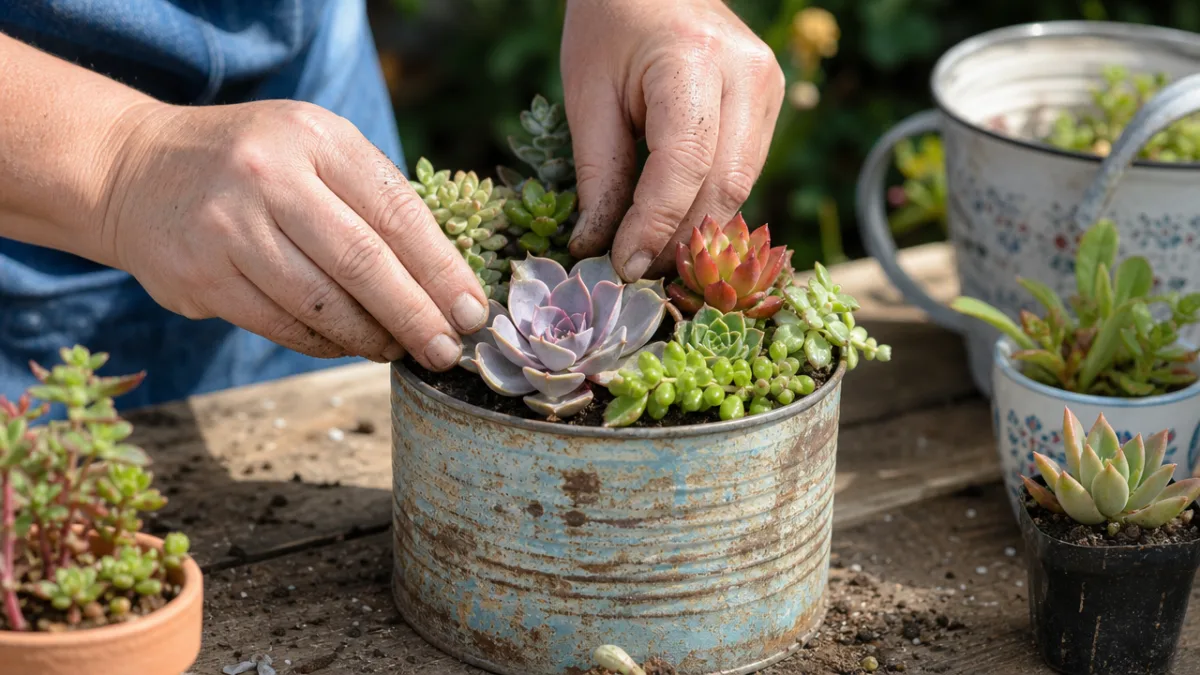
Choosing the right plants for your upcycled containers is every bit as important as the containers themselves, and thinking carefully about this pairing can elevate your displays from charming to genuinely spectacular. For smaller containers like tin cans, boots, and colanders, compact plants with interesting foliage or long flowering seasons work best. Herbs such as basil, mint, chives, and thyme are practical choices that look attractive and smell wonderful, while miniature succulents offer sculptural interest with minimal maintenance requirements. Trailing plants like lobelia, bacopa, or creeping Jenny add a sense of softness and movement that helps smaller containers feel abundant rather than sparse.
Larger containers like barrels, wheelbarrows, and metal troughs give you the opportunity to create mixed plantings with genuine depth and complexity. A classic approach is to follow the “thriller, filler, spiller” principle: choose one dramatic focal plant (the thriller) such as a tall ornamental grass, a standard rose, or a bold-leaved dahlia; surround it with medium-height plants that fill the container (the fillers), such as geraniums, petunias, or ferns; and finish with trailing plants (the spillers) that drape over the edges of the container, softening its outline and creating a sense of abundance. This simple formula produces consistently beautiful results across a wide range of container sizes and styles.
Seasonal rotation is another powerful tool for keeping your upcycled container garden looking its best throughout the year. Many of the most successful upcycled planters work equally well with spring bulbs, summer annuals, autumn-interest plants, and winter evergreens, making them flexible investments in your garden’s visual appeal. Planning ahead and preparing replacement plants in smaller pots ready to slot in as each season’s display begins to fade will keep your garden looking intentional and cared-for year-round, transforming your collection of rescued and repurposed containers into a dynamic, ever-changing garden feature that rewards regular attention and rewards visitors with something new to discover on every visit.
Practical Tips for Long-Lasting Upcycled Planters
However beautiful an upcycled planter may look at the outset, its longevity depends on a handful of practical considerations that are worth addressing before you plant anything. Drainage is the most critical factor: without adequate drainage holes, plant roots will sit in waterlogged soil and rot, no matter how carefully you water. For metal containers, a power drill with a metal-appropriate bit makes short work of this task. For ceramic or terracotta items, a masonry bit used at low speed with plenty of water to keep the drill cool will usually do the job without cracking the container. For soft materials like old bags, baskets, or wooden crates, lining the interior with burlap or landscape fabric before filling with soil will help retain the growing medium while still allowing excess water to escape.
Protecting your containers from the elements will dramatically extend their useful life in the garden. Wood benefits from a coat of exterior wood preservative or outdoor paint applied to all surfaces before planting. Metal containers, particularly those made from untreated steel or iron, should be treated with a rust-inhibiting primer and paint to slow the natural oxidation process, although many gardeners actively enjoy the rustic charm of a naturally rusting finish and choose to leave metals untreated. Plastic and rubber items — old trugs, water butts, or rubber boots — are inherently weather-resistant but may become brittle after prolonged exposure to ultraviolet light, so positioning them in partial shade will prolong their life considerably.
Watering and feeding requirements for container-grown plants are higher than for those grown in open ground, and this is especially true of smaller upcycled containers that dry out quickly in warm weather. Incorporating water-retaining crystals or gel into your potting mix when planting will help to even out the moisture supply and reduce the frequency of watering needed during dry spells. A slow-release granular fertilizer mixed into the compost at planting time will supply nutrients steadily through the growing season, but supplementing with a liquid feed every one to two weeks from midsummer onward will keep flowering plants performing at their best and help foliage plants maintain the lush, vibrant appearance that makes upcycled container displays so visually rewarding.
Inspiring Ideas to Spark Your Creativity
Sometimes the best way to get started with upcycled garden containers is simply to look at a curated list of ideas and allow your imagination to take over. The following examples represent just a fraction of what is possible when you approach your garden with an open, inventive mind and a willingness to see potential in objects that others might overlook. Each idea can be adapted, combined, and personalized in countless ways to suit your own garden’s style, scale, and the plants you most love to grow.
- Old colanders: Hang from shepherd’s hooks or fence posts, filled with trailing herbs or cascading flowers. The built-in holes provide perfect drainage without any modification.
- Wine crates and wooden boxes: Lined with burlap and planted with salad leaves, herbs, or seasonal flowers for a rustic, productive display on patios or steps.
- Vintage tin cans: Painted in coordinating or contrasting colors, clustered together on a wall-mounted board or garden shelf for a playful, eclectic display.
- Worn-out boots and wellies: Planted with trailing succulents or compact annuals and arranged along pathways, fences, or window ledges for whimsical garden humor.
- Old wheelbarrows: Planted with dramatic mixed arrangements and used as mobile centerpieces that can be repositioned as the garden’s needs change.
- Galvanized water troughs: Filled with deep-rooted perennials or shrubs for long-term displays that require minimal replanting from year to year.
- Stepladders: Used as tiered plant stands, with a different arrangement of pots and containers on each rung for maximum vertical impact in small spaces.
- Salvaged suitcases: Opened flat and lined, then planted with a living tapestry of mosses, sedums, and alpines for a truly unique garden artifact.
The most important rule in upcycled garden design is that there are no rules. Any object that can hold soil and be given adequate drainage has the potential to become a beautiful and productive planter. The best upcycled container gardens are those that reflect the genuine personality of the gardener who created them — full of surprises, rich with texture and color, and built on a foundation of creativity, resourcefulness, and genuine love for the natural world. Starting small with one or two projects will quickly build your confidence and inspire you to look at every object you encounter with fresh, inventive eyes.
Whether you are working with a large country garden or a tiny urban balcony, the principles of upcycled container gardening scale beautifully to suit your circumstances. The practice connects you to a long tradition of resourceful, inventive horticulture while simultaneously contributing to a more sustainable relationship with the material world around you. Each tin can planted with herbs on a kitchen windowsill, each wheelbarrow tumbling with summer color on a sunny patio, and each salvaged trough anchoring a border with year-round evergreen structure is a small but meaningful act of creative stewardship — one that enriches your outdoor space, reduces waste, and brings you closer to the deeply satisfying rhythm of growing things.








What do you think?
It is nice to know your opinion. Leave a comment.