










Machaeranthera tortifolia: A Comprehensive Guide to the Mojave Aster
Introduction to the Mojave Aster
Machaeranthera tortifolia, commonly known as the Mojave Aster, is one of the most visually striking wildflowers native to the arid landscapes of the American Southwest. This perennial herbaceous plant belongs to the family Asteraceae, a vast and diverse group of flowering plants that includes sunflowers, daisies, and chrysanthemums. The Mojave Aster has captured the attention of botanists, naturalists, and desert enthusiasts for centuries, owing to its remarkable ability to produce brilliant violet-purple blooms in one of the harshest environments on Earth.
The genus name Machaeranthera derives from the Greek words for “sword” and “anther,” referring to the sharp, spiny characteristics of the plant’s anthers. The species epithet tortifolia means “twisted leaves” in Latin, a nod to the distinctive way the plant’s foliage curves and spirals as it matures. These botanical naming conventions reflect the careful observation of early plant taxonomists who documented this species during explorations of the California and Nevada desert regions in the nineteenth century.
Far from being a simple desert weed, the Mojave Aster is an ecologically significant plant that plays a critical role in desert ecosystems. Its showy flowers attract a wide range of native pollinators, including specialized desert bees and butterflies, while its seeds provide nutrition for small mammals and birds. Understanding this plant in its full context — botanically, ecologically, and culturally — offers a window into the remarkable resilience and beauty of Mojave Desert life.
Botanical Characteristics and Identification
The Mojave Aster is a low-growing perennial that typically reaches between 20 and 60 centimeters in height, though exceptional specimens can exceed this range in particularly favorable conditions. The plant grows from a woody base and produces multiple branching stems that give it a somewhat sprawling, shrubby appearance. Its overall structure is adapted for water conservation, with a root system that penetrates deeply into rocky or sandy desert soils to access moisture far below the parched surface layer.
The leaves of Machaeranthera tortifolia are one of its most distinctive identifying features. They are narrow, oblong to spatula-shaped, and bear small but sharp teeth along their margins. The characteristic twisting or curling of the leaves — the trait that gives the plant its species name — is particularly evident on mature foliage exposed to intense sunlight. Leaf surfaces are often glandular and slightly sticky to the touch, covered with tiny hairs that help reduce water loss through transpiration and protect the plant from excessive solar radiation.
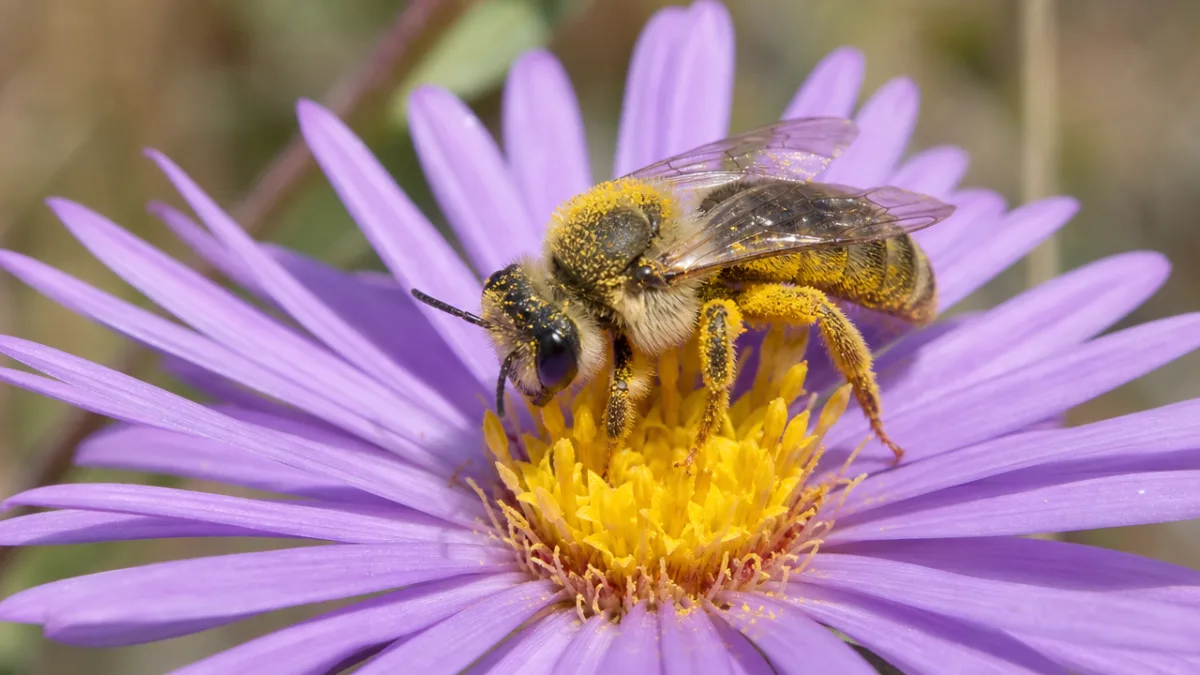
The flowers are undoubtedly the plant’s most celebrated feature. Each flower head consists of an outer ring of 15 to 60 violet to lavender ray florets surrounding a central disc of bright yellow tubular florets. This classic daisy-like structure is typical of the Asteraceae family, where what appears to be a single flower is actually a composite of many individual florets working together. The blooms measure approximately 3 to 5 centimeters in diameter and are held on long, slender peduncles that elevate them well above the foliage for maximum pollinator visibility.
Key identification features of the Mojave Aster include:
- Violet to lavender ray florets with yellow central disc florets
- Narrow, toothed leaves that twist characteristically along their length
- Glandular, slightly hairy stems and foliage
- Woody base with multiple branching stems
- Involucral bracts (phyllaries) that are green-tipped and somewhat spreading
- Achene fruits topped with a pappus of white bristles for wind dispersal
Native Habitat and Geographic Distribution
The Mojave Aster is, as its common name suggests, primarily a plant of the Mojave Desert, which spans southeastern California, southern Nevada, southwestern Utah, and the northwestern corner of Arizona. Within this geographic range, the plant thrives in a variety of arid and semi-arid habitats, from sandy desert washes and alluvial fans to rocky hillsides, canyon walls, and stabilized dunes. It is frequently encountered along roadsides and disturbed areas where other, less adaptable plants struggle to establish themselves.
Elevation plays an important role in the distribution of Machaeranthera tortifolia. The plant is most commonly found between 300 and 1,800 meters above sea level, occupying a broad elevation band that encompasses both low desert scrub communities and the transitional zones leading into Joshua Tree woodland and pinyon-juniper communities. At lower elevations, it often grows alongside creosote bush (Larrea tridentata) and white bursage (Ambrosia dumosa), while at higher elevations it may occur near desert willows, Mormon tea, and various species of yucca and agave.
Beyond the core Mojave Desert region, the species also extends into adjacent desert zones, including portions of the Sonoran Desert in California and the Great Basin Desert in Nevada. This relatively broad distribution reflects the plant’s ecological flexibility and its tolerance for a range of soil types, from coarse sandy loams to clay-rich desert hardpan. Populations in different parts of its range may show subtle variations in flower color, leaf morphology, and plant size, reflecting local adaptations to microclimatic and edaphic conditions.
The plant shows a notable preference for:
- Well-drained soils with low organic matter content
- Areas with full sun exposure throughout most of the day
- Sites with minimal competition from dense shrub cover
- Rocky or gravelly substrates that reflect and retain heat
- Elevations with cold winter temperatures that stimulate dormancy and flowering cycles
Ecological Role and Pollinator Relationships
In the intricate web of Mojave Desert ecology, the Mojave Aster occupies a role of surprising importance relative to its modest size. The plant’s flowering season, which typically spans from March through June and sometimes extends into the fall following late summer monsoon rains, fills a critical window in the desert calendar when other food sources for pollinators may be scarce. By producing abundant nectar and pollen during this period, the Mojave Aster serves as a vital resource for a community of native bees, flies, beetles, butterflies, and moths that depend on the desert’s scattered floral resources.
Native bees are among the most important pollinators of Machaeranthera tortifolia. Several species of specialist and generalist bees have been observed foraging on its flowers, including members of the genera Diadasia, Melissodes, and various halictid sweat bees. These insects collect pollen to provision their nests and, in doing so, transfer pollen between flowers and enable fertilization. The bright violet ray florets and yellow disc florets of the Mojave Aster function as a highly effective visual signal, attracting pollinators from considerable distances across the open desert landscape.
Beyond pollinators, the Mojave Aster supports desert wildlife in other ways as well. The plant’s seed heads, which develop in late spring and summer, provide nutritious achenes for small granivorous birds such as sparrows and finches, as well as for desert rodents like kangaroo rats and white-footed mice. The plant’s somewhat woody stems and dense branching structure can also offer micro-shelter for small arthropods and lizards seeking shade or protection from predators. In this sense, the Mojave Aster functions not merely as a food source but as a structural element of desert habitat.
Adaptations for Desert Survival
Surviving in the Mojave Desert requires an extraordinary suite of physiological and structural adaptations, and Machaeranthera tortifolia has evolved a remarkable toolkit for thriving in one of North America’s most challenging environments. The plant’s ability to go largely dormant during the hottest and driest periods of the year, reducing its metabolic activity to a minimum while maintaining its woody root crown, is one of its most fundamental survival strategies. When conditions improve — following winter rains or the onset of summer monsoons — the plant can rapidly produce new growth and flowers.
Water management is central to the Mojave Aster’s survival strategy. The plant’s deep root system can tap into subsurface moisture that remains unavailable to shallow-rooted competitors. Its narrow, somewhat succulent leaves minimize the surface area exposed to desiccating winds and intense sunlight, while the glandular hairs covering the leaf surfaces help reflect radiation and trap a thin layer of still air that reduces the rate of water evaporation. These structural adaptations work in concert to create an effective water conservation system that allows the plant to remain active and reproductive even during periods of severe drought stress.
Temperature extremes present another formidable challenge in the Mojave Desert, where ground temperatures can exceed 70 degrees Celsius in summer and plummet well below freezing in winter. The Mojave Aster is remarkably cold-hardy for a desert plant, capable of surviving hard frosts that would kill many of its tropical desert counterparts. Its woody base stores carbohydrates that fuel rapid regrowth when temperatures moderate in spring. The plant’s phenological timing — its careful calibration of germination, growth, flowering, and dormancy to the desert’s rhythms of temperature and precipitation — represents an evolutionary refinement accumulated over thousands of years of adaptation to Mojave conditions.
Cultural Significance and Human Uses
Indigenous peoples of the Mojave Desert region have long recognized and interacted with the Mojave Aster as part of their broader relationship with the desert landscape. The Mojave, Chemehuevi, and other Native American nations who have called this desert home for millennia possess sophisticated ethnobotanical knowledge of regional plants, including various species of asters and their relatives. While detailed documentation of specific traditional uses of Machaeranthera tortifolia is limited in published literature, the plant likely held significance within the broader context of desert plant knowledge passed down through generations of Indigenous stewardship.
In more recent times, the Mojave Aster has gained considerable popularity among native plant enthusiasts and xeriscaping practitioners — those who design water-wise landscapes suited to arid climates. The plant’s spectacular floral display, drought tolerance, and relatively compact growth habit make it an attractive choice for desert gardens, habitat restoration projects, and low-water landscaping in the American Southwest. Nurseries specializing in native plants increasingly offer Machaeranthera tortifolia for sale, and it is now commonly planted in desert botanical gardens, nature centers, and private gardens throughout its native range and beyond.
The aesthetic appeal of the Mojave Aster has not been lost on artists, photographers, and naturalists who seek out its blooms during the desert wildflower season. In years of exceptional winter rainfall, the Mojave Desert can erupt in extraordinary wildflower displays, and the violet masses of Mojave Aster are among the most photogenic and widely celebrated components of these superbloom events. These spectacular natural displays attract thousands of visitors to the desert each spring, contributing to local economies and fostering broader public appreciation for desert ecosystems and the plants that define them.

Conservation Status and Threats
The Mojave Aster is not currently considered a threatened or endangered species, and its populations remain relatively robust across much of its native range. However, like all plants endemic to the Mojave Desert region, Machaeranthera tortifolia faces a range of emerging threats that conservationists and land managers are increasingly monitoring with concern. Chief among these threats is climate change, which is altering precipitation patterns, increasing the frequency and intensity of extreme heat events, and shifting the timing of seasonal transitions in ways that can disrupt the finely tuned phenological relationships between plants and their pollinators.
Habitat loss and fragmentation represent ongoing pressures on Mojave Aster populations. The expansion of urban and suburban development into desert areas, the construction of utility-scale solar and wind energy facilities, and the proliferation of off-road vehicle use have all contributed to the degradation and outright destruction of desert plant communities across the Mojave region. While the Mojave Aster can colonize disturbed areas with relative ease, populations in highly fragmented or heavily impacted landscapes may face reduced genetic diversity and diminished resilience to environmental stressors.
Invasive plant species also pose a significant threat to native desert plants including the Mojave Aster. Non-native grasses such as Saharan mustard (Brassica tournefortii) and red brome (Bromus madritensis rubens) have invaded vast areas of Mojave Desert habitat, altering fire regimes, competing aggressively for limited water and nutrients, and transforming the structural character of native plant communities. Under natural conditions, the Mojave Desert rarely experiences widespread fires; invasive annual grasses create continuous fuel loads that enable destructive wildfires capable of killing native shrubs and perennials, including established populations of Machaeranthera tortifolia.
Conservation actions that benefit the Mojave Aster and its broader desert community include:
- Careful land use planning that identifies and protects core desert habitats from development
- Active management and removal of invasive annual grasses
- Restoration planting using locally sourced native plant material
- Monitoring of pollinator communities to detect declines in key native bee species
- Public education programs that encourage responsible recreation in desert environments
- Support for botanical research that improves understanding of Mojave plant ecology and resilience
Growing Mojave Aster in Cultivation
For gardeners and landscapers working in arid climates of the American West, Machaeranthera tortifolia is an outstanding candidate for low-water native plant gardens. The species is best suited to USDA hardiness zones 7 through 10, tolerating winter temperatures as low as approximately -15 degrees Celsius when established in well-drained soil. Planting in full sun is essential; like most desert natives, the Mojave Aster struggles in partial shade and tends to become leggy and produce fewer flowers when denied direct sunlight for most of the day.
Soil preparation is perhaps the most critical factor in successfully cultivating Mojave Aster outside its native habitat. The plant demands excellent drainage above all else, and will quickly succumb to root rot if planted in clay-heavy soils or in low spots where water pools after rain. Raised beds, hillside plantings, or the incorporation of coarse sand and gravel into native soil can all help create the well-drained conditions the plant requires. Supplemental irrigation should be minimal once the plant is established, with deep, infrequent watering mimicking the episodic rainfall patterns of the Mojave Desert proving far more beneficial than frequent shallow watering.
Propagation of Machaeranthera tortifolia is most reliably achieved from seed, which requires cold stratification to break dormancy before planting. Seeds can be sown in autumn directly in the garden or started indoors in late winter following a period of moist cold treatment lasting four to six weeks. Germination typically occurs within two to four weeks of sowing at temperatures between 15 and 20 degrees Celsius. Young plants grow relatively quickly in their first season and may produce flowers in their second year, ultimately developing into long-lived perennials that reward patient gardeners with stunning annual floral displays and an enduring connection to the wild beauty of the Mojave Desert.








What do you think?
It is nice to know your opinion. Leave a comment.