










26 Cute Small Wood Projects That Use Scrap Wood Perfectly
Why Scrap Wood Deserves a Second Life
If you’ve ever finished a big project and found yourself surrounded by offcuts, thin strips, oddly shaped blocks, and little pieces that feel too small to use but too pretty to throw away — you already know the feeling. Scrap wood is one of the most underappreciated things sitting in any workshop, garage, or backyard shed. Instead of bagging it up for trash day or tossing it into the fire pit, those leftovers can become something genuinely useful and beautiful with a few basic tools and a little imagination.
There’s also a real environmental argument for using up what you already have. Producing lumber takes a serious toll — energy, water, forest resources — and every piece that ends up in a landfill means all of that went to waste. Using your scraps is a small but meaningful way to be more sustainable, and honestly, there’s something extra satisfying about it. Pieces with a grain pattern you love, a deep color, an old nail hole — they carry a little history that brand-new boards just don’t have.
And then there’s the creative side of things, which might be the best part. Looking at a beat-up little piece of pine or oak and figuring out what it could become is its own kind of puzzle — part practical problem-solving, part art. The projects here are built around exactly that idea: working with what you’ve got, embracing its quirks, and ending up with something that actually adds value or character to your home. Whether you’ve been woodworking for years or you’re just getting started, there’s something in this list that’ll make you look at your scrap pile a little differently.
Simple Kitchen and Home Organization Projects
Your kitchen is a great place to start when it comes to small wood projects, because there are so many little things it needs that wood handles beautifully. A homemade knife block, for example, is simpler than it sounds — you just glue strips of scrap wood together with small gaps between them, then sand and finish the outside until it looks clean and intentional. No fancy joinery required, just some patience and wood glue. The result fits your counter perfectly, looks nothing like anything from a big box store, and actually feels like part of your kitchen instead of something you just bought.
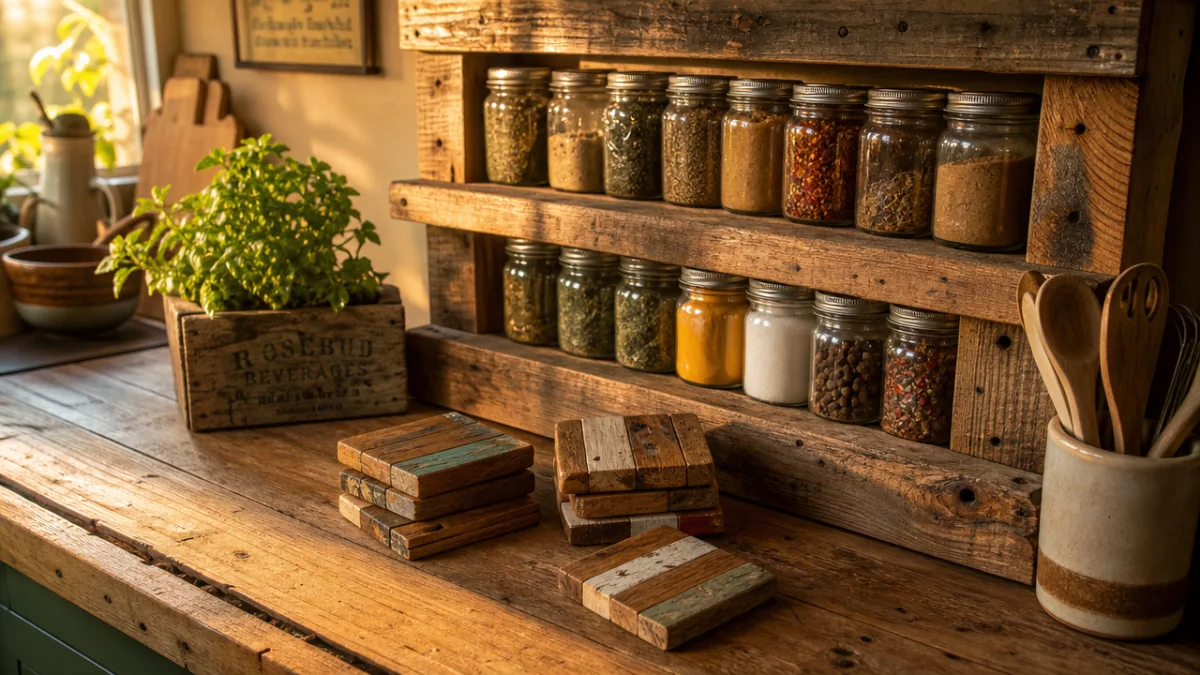
Spice racks and wall-mounted jar holders are another great use for thin scrap boards and short dowel pieces. A few small shelves mounted inside a cabinet door or along a kitchen wall can genuinely change how organized your cooking space feels. If you mix different wood species from your scrap pile, you can get a really nice patchwork look — especially with a clear finish that lets the grain and color variations show through. These projects are practical and pretty at the same time, which is a combination that’s hard to beat.
Coasters, trivets, and small serving boards are classics for a reason — scrap wood is perfect for all of them. A set of four coasters cut from the same board and finished with a simple burned or branded pattern makes a thoughtful handmade gift. Trivets put together from thin strips in a geometric pattern look great on any table. Even a basic cheese board, shaped from a wider piece of scrap and fitted with a small handle, can become one of those kitchen items you reach for all the time. Those tend to be the best kind.
Decorative Items and Home Accents
Decorative pieces made from scrap wood can honestly hold their own against anything you’d find in a boutique home goods store — and usually with more personality. Floating wall shelves are one of the most popular small wood projects out there, and it’s easy to see why. Cut from thicker scrap pieces and hung with hidden brackets, they’re endlessly useful and look really good. A collection of shelves in slightly mismatched but complementary wood tones gives a wall that warm, layered gallery feel that works in just about any room.
Picture frames are another wonderful scrap wood project, especially when you have pieces with interesting grain or natural edges. A live-edge frame built around a photo you love makes both the picture and the wood feel more significant together than they would apart. Frame-making is also genuinely useful for building skills — mitering corners, fitting backing boards — so it’s a great choice if you’re newer to woodworking and want to practice real techniques while making something you’ll actually display. Even thin stock can produce a frame with a proper recessed channel once you add a simple rabbet cut.
Wooden signs, word art, and decorative plaques are everywhere right now, and scrap wood gives you an ideal surface to work with. A wide flat piece of pine or cedar painted with chalkboard paint becomes a reusable message board for the kitchen or front hallway. Wood burning lets you add names, quotes, or botanical designs to any smooth scrap piece in a way that feels permanent and personal. Even basic geometric patterns done with paint and painter’s tape can turn a plain offcut into something striking. The trick is to work with the natural shape and texture of the wood rather than trying to fight it.
Outdoor and Garden Projects From Scrap Wood
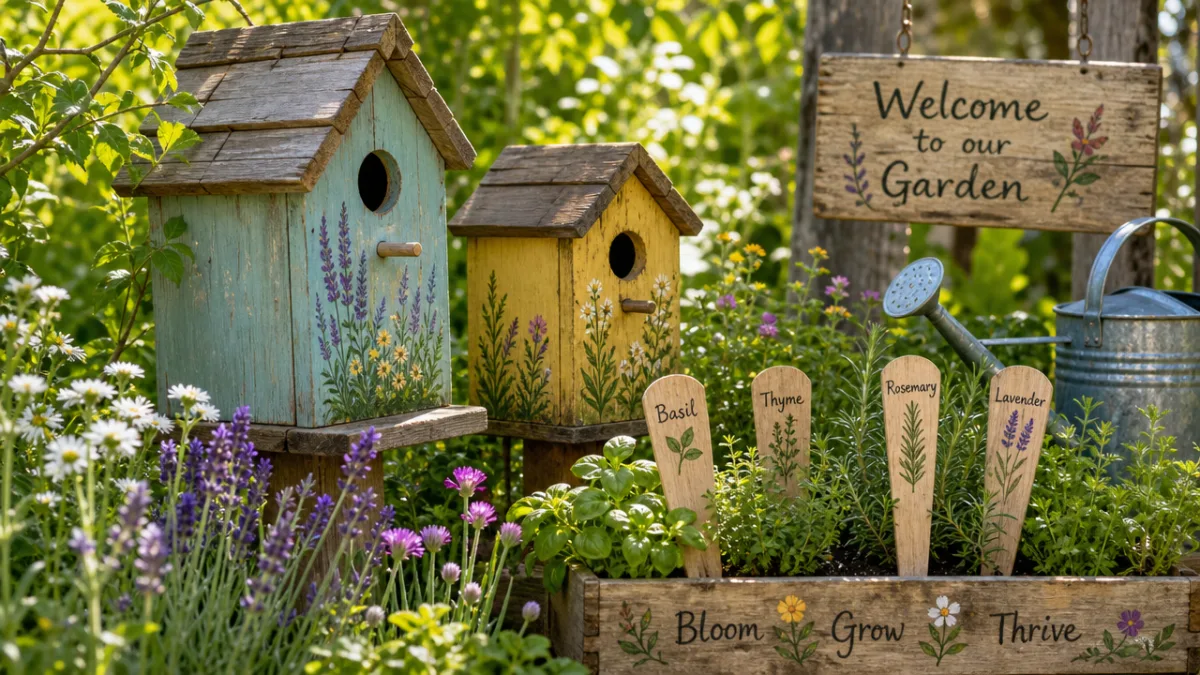
Outdoor spaces are a natural fit for scrap wood projects, especially if you’re working with naturally rot-resistant species like cedar, redwood, or pressure-treated pine. Plant markers are probably the easiest place to start: cut small stakes or paddle shapes from thin scraps, sand the faces smooth, and either paint on the plant names or use a wood burner for something more permanent. A matching set gives your vegetable garden or herb bed a tidy, put-together look — and saves you from that maddening moment in spring when you can’t remember what you planted where.
Small planter boxes, seedling trays, and window box liners are all great candidates for scrap lumber, especially when you have a bunch of similar-thickness boards in different lengths. The slightly rustic look that comes from using mismatched pieces actually works really well in garden settings — the imperfections feel charming rather than sloppy. A coat of outdoor sealant or a linseed oil finish will protect the wood from moisture while keeping that natural, unfinished look that goes with almost any planting scheme.
Birdhouses, bee hotels, and small wildlife habitats might be the most rewarding outdoor projects on this list, because they combine the satisfaction of making something with genuine conservation value. A basic birdhouse doesn’t ask for much — a few pieces of wood, a drill bit for the entry hole, some waterproof glue or exterior screws. More elaborate versions with multiple compartments, decorative trim, or a hinged roof for easy cleaning are very doable for intermediate woodworkers and make wonderful gifts. Bee hotels are even simpler: a wooden box filled with drilled blocks and bundled hollow stems gives solitary bees exactly what they need to nest, and building one is a project you can feel genuinely good about.
Gifts, Toys, and Creative Projects for Families
Some of the best things you’ll ever make from scrap wood will be gifts. Personalized wooden gift tags barely use any material at all — just thin offcuts drilled with a small hole and sanded smooth for writing or stamping — but they feel genuinely special when you hand them over. Wooden keychains, bookmarks, and small fridge magnets are the same way: they don’t take much time or wood, but as handmade tokens they carry a kind of weight that something store-bought just doesn’t. These are also perfect for using up those tiny scraps that feel too small for anything else.
Solid wood toys have a warmth and durability that plastic simply can’t match. Stacking toys, wooden blocks, pull-along animals, puzzle boards — all of these can be built from scrap wood with basic tools and a belt sander. Safety is the priority when you’re making anything for young children: edges need to be thoroughly rounded, finishes have to be non-toxic and child-safe, and any small parts need to be very firmly attached. Within those limits, though, handmade wooden toys have a genuinely heirloom quality. They hold up, they age beautifully, and they can be passed down to the next generation without much fuss.
Beyond gifts and toys, setting up a simple woodworking station for kids — with age-appropriate tools, scrap pieces, and some non-toxic paint — is one of those activities that pays off in ways you might not expect. Even young children can hammer nails into soft wood blocks, glue pieces together, or paint shapes they cut out. It builds fine motor skills, patience, and a real sense of accomplishment that’s hard to get from a screen. Scrap wood stops being just leftover material and becomes a way to spend time together and actually make something.
Essential Tips for Working With Scrap Wood Successfully
Working with scrap wood takes a slightly different approach than working with fresh lumber from the store. The most important habit to develop early is taking a good look at every piece before you start cutting. Check for hidden nails or staples that could wreck your blades, look for splits or cracks that might cause the piece to fail, and pay attention to whether the wood feels unusually heavy or damp. Wet or green wood will shrink and warp as it dries out, and that can ruin a finished project. It’s worth stashing scrap pieces somewhere dry for a few weeks before you use them in anything precise.
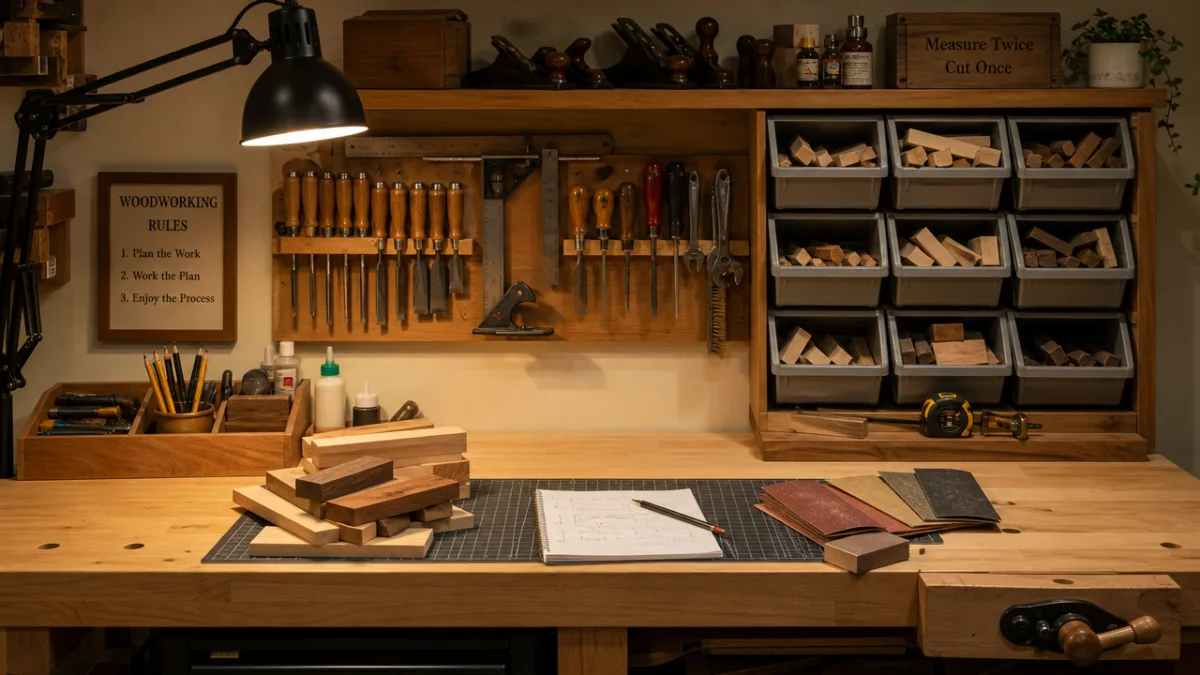
Keeping your scrap pile organized will save you a surprising amount of time. Sorting pieces by thickness, width, and species — and storing them flat so they don’t warp — makes a real difference. Some woodworkers keep a notebook or a phone album of their scrap stock so they can plan projects before they even walk into the shop. Labeling pieces with rough dimensions in chalk means you’re not re-measuring every time you go back to the pile. A well-organized scrap collection starts to feel like a free lumber yard, which is a pretty great thing to have access to.
The finishing stage is where a lot of small scrap wood projects go from looking homemade to looking genuinely beautiful, and it deserves real attention. Sanding through progressive grits — starting around 80 or 100 and working up to 220 — takes off mill marks and scratches and lets the actual wood come through. Picking the right finish matters too: food-safe mineral oil or beeswax for cutting boards and kitchen items, exterior sealant for anything going outside, hard wax oil for furniture pieces, water-based polyurethane for decorative work. Thin coats, light sanding between them, and a little patience will make even the most basic project look like something worth keeping.
- Sort and store scrap pieces flat to prevent warping and make selection easier when planning new projects.
- Always inspect for hidden metal fasteners before running scrap through a saw or planer to protect your blades and your safety.
- Label pieces with dimensions in chalk so you can quickly identify usable stock without measuring repeatedly.
- Match your finish to the project’s use — food-safe oils for kitchen items, exterior sealants for garden pieces, and hard wax for decorative work.
- Embrace imperfections like knots, nail holes, and color variations — these features give handmade pieces their unique character and charm.
- Start with the simplest projects to build confidence before attempting more complex joinery or shaping techniques.
At the end of the day, working with scrap wood is really about respect — for the material, for the craft, and for everything that went into producing that lumber in the first place. When you pick up a discarded offcut and start thinking about what it could become, you’re part of a tradition that goes back about as far as human making does. People have always found use in what others left behind. The 26 projects in this collection are just a starting point. Once you get into the habit of seeing potential in small pieces of wood, you’ll find that your ideas and your scrap pile tend to grow together — each one quietly inspiring the other.








What do you think?
It is nice to know your opinion. Leave a comment.