










Lycoris: The Enchanting Spider Lily
Introduction to Lycoris
If you’ve ever come across a field of spider lilies in full bloom, you probably stopped in your tracks. Lycoris has that effect on people. Native to much of Asia — China, Japan, Korea — this genus of bulbous perennials has been turning heads and inspiring legends for centuries. Those dramatically arching stamens, those petals that curl back like a spider’s legs — there really isn’t anything else quite like it in the plant world. And the fact that it seems to appear out of nowhere each autumn, with no leaves to announce it, has only added to its mystique.
Lycoris belongs to the family Amaryllidaceae and covers around 20 recognized species, each with its own personality and color palette. The most familiar ones are Lycoris radiata (the red spider lily), Lycoris squamigera (sometimes called the magic lily or resurrection lily), and Lycoris aurea (the golden spider lily). What makes them all so surprising is how they grow — leafy and green through winter and spring, completely dormant and invisible through summer, then suddenly shooting up a bare stalk in late summer or autumn that bursts into bloom before a single leaf appears. It’s a little theatrical, honestly. Which is probably why people have been calling them things like “naked lily” and “surprise lily” for as long as anyone can remember.
Despite all the folklore that tends to follow them around, spider lilies are genuinely wonderful garden plants. They’re low-maintenance, they naturalize well in a wide range of climates, and they reliably deliver a jolt of vivid color right at the end of the season when everything else is winding down. That combination of easy-going resilience and sheer visual drama is why they’ve found their way into everything from formal estate gardens to wild, naturalistic landscapes.
History and Cultural Significance
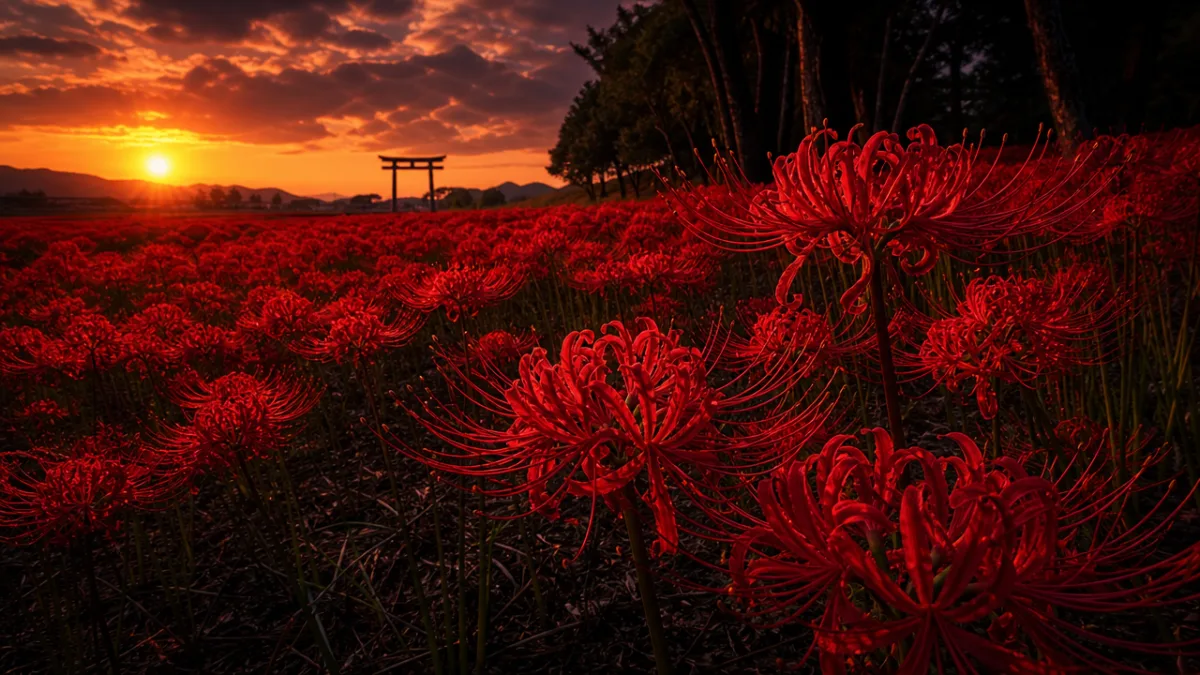
Few flowers carry as much symbolic weight as Lycoris, especially in East Asia. In Japan, the red spider lily goes by the name Higanbana, and it’s closely tied to the Buddhist festival of Ohigan, observed around the autumnal equinox. Families visit the graves of their ancestors during this time, and those vivid red blooms standing among the headstones have come to feel like a threshold — a visual border between the world of the living and whatever lies beyond it. The fact that the Japanese traditionally planted spider lilies in cemeteries and along rice paddy edges (partly because their toxicity keeps away moles and other pests) has deepened that association with death and the afterlife over the generations.
In China, the red spider lily shows up in poetry and literature as Mǎn Tuó Luó, and it carries themes of loss, longing, and the particular ache of memory. Ancient texts describe it blooming along the road to the underworld, lighting the way for souls. That’s a powerful image, and it’s one that has translated remarkably well across time and medium — you’ll find it showing up in classical poetry and then again in contemporary manga, anime, and film. A field of crimson spider lilies is practically shorthand for bittersweet emotion in East Asian storytelling at this point.
Korea has its own relationship with the flower too. There it’s known as the Silla Lily or Sanjesunseon, and while some of the funerary associations carry over, it’s also simply appreciated as a beautiful autumn wildflower. When plant hunters and explorers brought Lycoris west during the 18th and 19th centuries, Victorian botanists were immediately fascinated — not just by the look of the thing, but by its strange growth habits. It quickly became a coveted specimen in the greenhouses and garden beds of European estates. Today, thanks in large part to the global reach of Japanese and Korean pop culture, its symbolic resonance keeps expanding to new audiences.
Botanical Characteristics and Species Diversity
Lycoris plants grow from tunicate bulbs — oval to roundish, usually somewhere between 2 and 5 centimeters across. What makes them botanically interesting, beyond the obvious visual drama, is something called hysteranthous leaf development: the leaves come after the flowers, not before. Most plants do it the other way around. With Lycoris, lush strap-like foliage emerges after bloom, works hard through winter and spring storing energy in the bulb, then dies back completely by early summer. By midsummer, there’s no sign of the plant at all above ground. Then the flowers appear. It’s an odd sequence, and it goes a long way toward explaining the plant’s reputation for being a little uncanny.
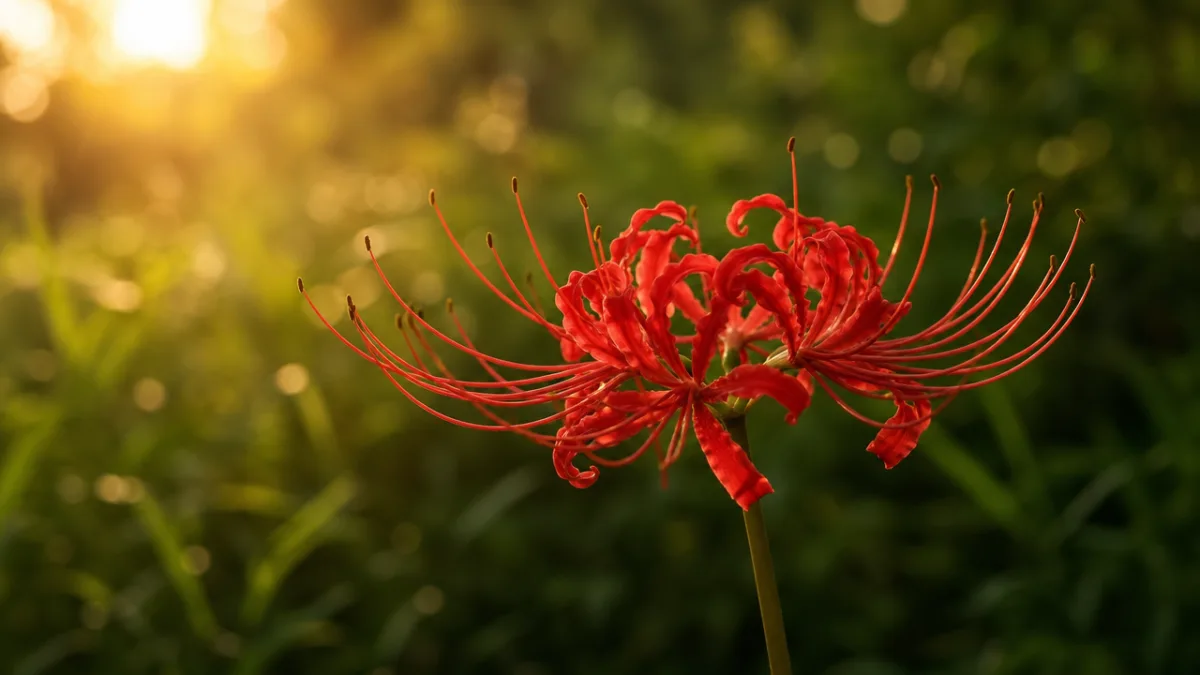
The flowering stalks — called scapes — push up from bare soil in late summer or early autumn, reaching anywhere from 30 to 70 centimeters tall depending on the species. At the top of each scape sits a cluster of 4 to 8 flowers, and this is where the species really start to diverge. Lycoris radiata has the most dramatically reflexed petals and the longest, spindliest stamens in the whole genus — it’s the one that most earns the “spider” in spider lily. Lycoris squamigera, on the other hand, produces softer, more conventional-looking pink blooms that you might easily mistake for an ordinary lily at a glance.
The color range across the genus is genuinely impressive — red, pink, white, yellow, orange, and bicolored combinations. Some notable species and their characteristics include the following varieties that gardeners and botanists most frequently encounter:
- Lycoris radiata — Brilliant red flowers with dramatically reflexed petals and long, curving stamens; the most widely cultivated species, hardy in USDA zones 6–10.
- Lycoris squamigera — Soft pink to lilac flowers with a mild fragrance; sometimes called the magic lily or resurrection lily; notably hardy and well adapted to temperate climates in zones 5–9.
- Lycoris aurea — Golden yellow flowers with moderately reflexed petals; native to southern China and Japan; thrives in warmer climates, zones 8–10.
- Lycoris albiflora — Pure white flowers with a delicate, ethereal appearance; less commonly cultivated but highly prized by collectors and specialty growers.
- Lycoris sprengeri — Distinctive bicolored flowers with pink petals tipped in blue or purple; one of the rarest and most sought-after species in horticulture.
Hybridization happens readily within the genus, and breeders have developed cultivars with broader color ranges and better cold tolerance. One quirk worth knowing: many Lycoris species are sterile triploids, which means they can’t reproduce by seed. Almost all commercial plants are propagated by dividing bulb offsets, which is also part of why established colonies spread slowly. It’s something to plan around, but also something that rewards patience.
Growing Conditions and Cultivation
Growing Lycoris well really comes down to understanding its unusual rhythm and then getting out of its way. The most important thing to know upfront: these plants hate being disturbed, and newly planted bulbs will often skip flowering in their first season entirely while they settle in. Gardeners who know this tend to find it charming rather than frustrating. Those who don’t know it tend to dig the bulbs up thinking something went wrong. The displays get better with each passing year, so the patience genuinely pays off.
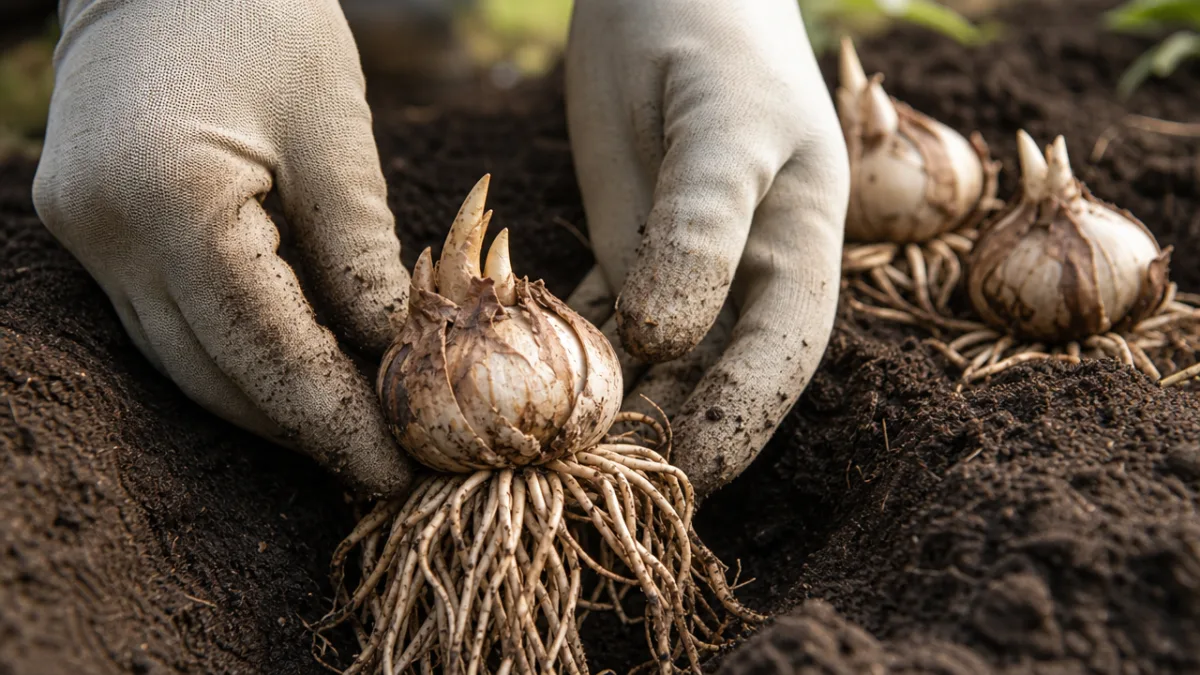
Plant the bulbs in late summer, just before or right as the flowering season begins, about 10 to 15 centimeters deep with the neck at or just below the soil surface. Drainage is non-negotiable — waterlogged soil will rot the bulbs without much warning. In terms of light, they’re happiest with full sun to partial shade; morning sun and afternoon shade works especially well in hotter climates, while cooler regions can give them full sun all day. Aim for a soil pH between 5.5 and 6.5, and mixing in some organic matter when you plant will help with both drainage and fertility.
Match your watering and feeding schedule to the plant’s natural cycle. Through late winter and spring, when the foliage is actively growing, water regularly and apply a balanced slow-release fertilizer at the start of the season. As the leaves start to yellow and fade in early summer, ease off the water and let the bulbs go into their dry summer dormancy. A light layer of mulch over the bed during this period helps regulate soil temperature, conserves a bit of moisture, and — practically speaking — marks the spot so you don’t accidentally put a trowel through a bulb you’ve forgotten about.
When it comes time to divide established clumps (every 3 to 5 years is about right — no more frequently than that), do it right after flowering in early autumn or during summer dormancy. Pick the largest, healthiest offsets for replanting and discard anything soft, diseased, or suspiciously small. And always wear gloves. Every part of the Lycoris plant contains lycorine and other alkaloids that are genuinely toxic to people, pets, and livestock, so skin contact during handling is something you want to minimize.
Ecological Role and Wildlife Interactions
In its native East Asian range, Lycoris shows up at an ecologically useful moment. By the time autumn rolls around, most flowering plants have long since finished, so those tubular, recurved blooms are a rare nectar source for insects that are still active. Swallowtail butterflies are among the most frequent visitors, and the timing of the flowers — coinciding with the southward migration routes of several butterfly species — points to a relationship that has likely been developing for a very long time.
On the other side of the coin, the plant’s toxicity makes it effectively invisible to most herbivores. Deer, rabbits, voles, moles — they all give Lycoris a wide berth, which makes it genuinely useful in gardens where those animals tend to be a problem. Farmers in Japan and China have known this for generations and deliberately planted spider lilies along rice paddy borders and around burial mounds to take advantage of exactly that quality. The alkaloids concentrated in the bulb create a chemical deterrent that most animals seem to recognize instinctively, making Lycoris one of the few ornamental bulbs you can plant without worrying about it becoming an expensive deer snack.
There’s also something interesting happening underground. Like many Amaryllidaceae family members, Lycoris appears to form associations with mycorrhizal fungi in the soil, which likely helps with nutrient uptake during the growing season. Research into these relationships is still ongoing, but early findings suggest that undisturbed colonies benefit significantly from healthy fungal networks in the soil — which might be part of why the plants do so much better when you leave them alone for years at a time. It’s a nice reminder that the old horticultural advice to plant Lycoris and then simply walk away isn’t just folk wisdom; there’s real ecology behind it.
Medicinal Properties and Toxicity
The same alkaloids that make Lycoris dangerous to eat have also made it genuinely interesting to scientists. Lycorine, the plant’s primary alkaloid, has shown antiviral, antitumor, anti-inflammatory, and antimalarial activity in laboratory studies. These are promising findings, though it’s worth being clear: lycorine is also toxic at relatively low doses, and none of this translates to anything you should try at home. This is firmly the territory of controlled clinical research.
The most medically significant compound to come out of Lycoris chemistry is galantamine. It was first isolated from snowdrops (Galanthus), but it also occurs in Lycoris chinensis and related species. Galantamine is now an approved treatment for mild to moderate Alzheimer’s disease in many countries, where it works by inhibiting the enzyme that breaks down acetylcholine in the brain, helping to preserve cognitive function. That’s a meaningful real-world outcome, and it’s elevated the scientific profile of the entire Amaryllidaceae family considerably, prompting researchers to look more carefully at its other alkaloid compounds.
For anyone growing Lycoris in their garden, the practical takeaway is straightforward: the plant is toxic, and it’s worth treating it accordingly. Ingesting any part of it can cause nausea, vomiting, diarrhea, low blood pressure, convulsions, and in serious cases, respiratory failure. The sap can also irritate skin in sensitive people, especially when you’re handling freshly cut stems or freshly divided bulbs. The following precautions should always be observed when working with Lycoris:
- Wear gloves when handling bulbs, stems, or any other plant material.
- Wash hands thoroughly with soap and water after any contact with the plant.
- Keep children and pets away from planted areas, particularly during the bulb division process.
- Never consume any part of the plant or allow it to be used in food preparation.
- Store bulbs out of reach of children and clearly label them to prevent accidental ingestion.
- If poisoning is suspected, contact a poison control center or emergency medical service immediately.
That said, Lycoris has a long history of use in traditional Chinese and Japanese medicine, where trained practitioners have worked with carefully prepared, highly diluted preparations to treat conditions like edema and paralysis for centuries. That’s not something to try to replicate at home — those traditions represent generations of accumulated knowledge about dosing and preparation that isn’t easily translated into a backyard experiment. But it does give modern researchers a useful starting point for exploring what else this plant might have to offer, and Lycoris remains a subject of active scientific interest well beyond its already considerable appeal in the garden.








What do you think?
It is nice to know your opinion. Leave a comment.