










Beautiful Handmade Crochet Slippers: The Ultimate Guide to Cozy Footwear You Can Make at Home
The Timeless Appeal of Handmade Crochet Slippers
There’s something really special about sliding your feet into a pair of slippers that someone actually made by hand, one stitch at a time. Handmade crochet slippers have made a serious comeback over the past decade, and honestly, it’s easy to see why. When so much of what we own rolls off an assembly line somewhere, these little cozy creations feel genuinely different. Whether you’re making them for yourself or someone you love, they carry a warmth that has nothing to do with the yarn.
Crochet itself has been around for centuries, with roots in Europe and parts of South America. The basic idea — creating fabric by pulling interlocking loops of yarn through each other with a single hooked needle — sounds almost too simple, yet it’s endlessly versatile. Slippers are one of the most popular beginner crochet projects for good reason: they’re small enough to finish in an afternoon but useful enough that you’ll reach for them every single day. That sweet spot of “easy to make, actually practical” is a big part of why they’ve stayed popular with crafters at every skill level.
There’s also a personal expression side to all of this that’s hard to overlook. You get to pick colors that feel like you, choose a yarn texture you actually want against your skin, and throw on a pompom or a button or a little bow if that’s your thing. The result is something nobody else in the world has quite like yours — and that’s exactly why so many people would rather make or receive a handmade pair than pick up something off a shelf.
Choosing the Right Yarn and Materials
A great pair of crochet slippers starts way before you pick up your hook — it starts with picking the right yarn. For slippers that you’re actually going to wear on hard floors day after day, you want something durable, with a little grip and a texture that feels good against bare skin. Wool blends are a perennial favorite because they’re naturally warm, hold up well over time, and wick away moisture. Merino wool in particular is wonderfully soft, which makes it a great pick if your skin tends to be on the sensitive side.
Cotton yarn is another solid option, especially if you live somewhere warm or just tend to run hot. It breathes well, washes easily, and keeps its shape nicely. Acrylic is the most wallet-friendly choice and comes in just about every color imaginable, which makes it perfect if you love playing around with bold combinations. A lot of experienced slipper makers land on a wool-acrylic blend as their go-to — you get the warmth and stretch of wool with the easy care and lower price tag of acrylic.
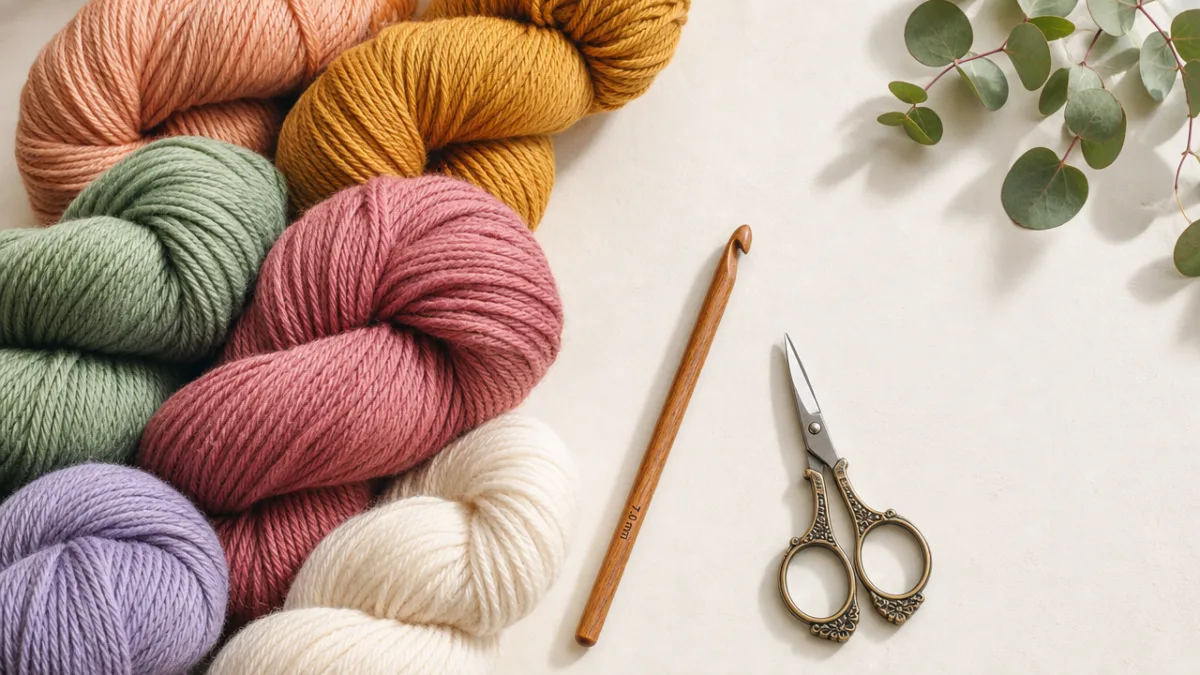
The good news is that beyond yarn, you really don’t need much else, which is part of what makes crochet so accessible. You’ll need a hook in the right size for your yarn — most slipper patterns call for somewhere between 5mm and 6.5mm — plus a yarn needle for weaving in ends, scissors, and optionally a stitch marker. If you want slippers that can actually handle daily wear, consider adding grip to the soles with puffy fabric paint dots, or sew on suede slipper soles that you can find at most craft stores. It’s a small extra step that makes a big difference.
- Merino Wool: Soft, warm, and ideal for sensitive skin; a premium choice for luxurious slippers.
- Cotton Yarn: Breathable and easy to wash, perfect for year-round or warm-weather wear.
- Acrylic Yarn: Affordable and colorful, great for beginners and experimental makers.
- Wool-Acrylic Blend: A versatile middle ground offering warmth, durability, and ease of care.
- Bulky Weight Yarn: Works up quickly and creates thick, cushiony slippers with excellent insulation.
Popular Crochet Slipper Styles and Patterns
One of the genuinely fun things about crochet slippers is how many different directions you can take them. From simple moccasin-inspired flats to cozy boot-style slippers that come up over the ankle, there’s really something for every taste and skill level. If you’re just starting out, the classic basic slipper — two flat oval pieces joined at the sides and heel — is your best friend. It’s fast, comfortable, and you can dress it up or down with color choices and simple stitch textures without needing to tackle anything too technical.
Once you’ve got a few projects under your belt, granny square slippers are a really fun next step. You build them from individual granny square motifs that get joined together to form the upper part of the shoe, and the result has this charming, slightly bohemian look that a lot of people go absolutely wild for. Ribbed slippers are another great intermediate option — the elasticity of ribbing stitches gives you a snug, sock-like fit that stays put on your foot and works across a range of sizes without needing to be perfectly precise.
Boot-style crochet slippers — sometimes called slipper boots or cozy boots — are consistently among the most-pinned and most-shared designs you’ll find. They come up over the ankle and sometimes even to mid-calf, adding extra warmth and a look that’s surprisingly close to those plush Ugg-style boots. A bit of faux fur trim, some wooden buttons, or cables worked into the cuff can take them from cute to genuinely impressive. And if you love a more structured, earthy look, moccasin-style slippers with a faux leather sole give you that handmade-shoe feel in a way that’s hard to beat.
- Basic flat-sole beginner slippers for first-time makers.
- Granny square slippers with a vintage, patchwork aesthetic.
- Ribbed slippers offering a sock-like, stretchy fit.
- Boot-style slipper boots with extended ankle coverage.
- Moccasin-inspired slippers with structured soles and earthy styling.
- Mary Jane slippers with a button strap across the instep.
Step-by-Step Guide to Crocheting Your First Pair of Slippers
Starting your first pair of crochet slippers might feel a little daunting, but breaking it down into steps makes the whole thing much more manageable. First, pick a beginner-friendly pattern and get all your materials together before you sit down to work. Measure your foot and compare it to the sizing guide in your pattern. It’s also really worth taking a few minutes to crochet a gauge swatch — just a small sample of stitches — to confirm that your finished slipper will actually come out the right size. It might feel like an annoying extra step, but it saves a lot of headache down the road.
Most basic slipper patterns kick off with a foundation chain the length of your foot, then build outward in rounds to create the oval sole. You’ll increase stitches at each end of the oval to get that rounded toe and heel shape, and once the sole is the right size, you work upward to form the sides and top of the slipper, shaping the toe opening and heel cup as you go. Make a habit of counting your stitches regularly here — it’s surprisingly easy to accidentally add or drop one when you’re working in the round.
Once both slippers are done, don’t rush the finishing. Take the time to weave in all your yarn ends properly with your yarn needle — it’s the step beginners most often skip, but it makes a real difference in how long your slippers last and how polished they look. If you’re using natural fiber yarn, blocking your slippers (gently dampening them and letting them dry flat in shape) is worth the wait. And if you want non-slip soles, a few dots of puffy fabric paint on the bottom, left to cure fully, will do the trick beautifully.
Essential Beginner Tips
- Always check your gauge before starting to ensure correct sizing.
- Use stitch markers to keep track of round beginnings and pattern repeats.
- Count your stitches frequently, especially when increasing or decreasing.
- Weave in ends as you go rather than leaving them all until the end.
- Choose smooth, light-colored yarn for your first project so stitches are easier to see.
- Work on a firm, flat surface to help maintain consistent tension throughout.
Caring for and Maintaining Your Crochet Slippers
Like anything handmade that you love, crochet slippers will last a lot longer if you give them a little care. How you wash and store them matters more than you might think — it affects their shape, their softness, and how well the colors hold up over time. The right approach really depends on your yarn’s fiber content, so check the label before you throw them in the wash. Most acrylic yarns are totally fine in the machine, but wool and wool blends are a different story — they need a gentle hand wash in cool water with a wool-safe detergent to avoid felting or shrinking.
When you hand wash your slippers, submerge them in cool or lukewarm water with a little gentle soap and swish them around carefully. The key thing to avoid is wringing or twisting the fabric, which can pull the stitches out of shape. Rinse them well until all the soap is gone, then press them gently between two clean towels to squeeze out the excess water. Lay them flat to air dry completely — never hang them wet, since the water weight will stretch them out in ways that are really hard to fix.
The soles take the most wear with regular use, so keep an eye on them. If you used fabric paint for grip, check it occasionally and touch up any spots that have worn away. If you notice a stitch starting to loosen or unravel, fix it right away with a yarn needle and a bit of matching yarn before it turns into a bigger problem. Store your slippers flat somewhere cool and dry when you’re not wearing them, and they’ll hold their shape nicely between uses. Take good care of them and a well-made pair can honestly last for years.
Gifting Handmade Crochet Slippers: A Personal Touch That Lasts
Not many gifts say “I was thinking about you” quite as clearly as something made by hand. When you give someone a pair of handmade crochet slippers, you’re not just handing over a cozy item for their home — you’re giving them the time you spent picking out colors they’d love, measuring carefully to get the size right, and working each stitch with them specifically in mind. People feel that, and they remember it. It’s why handmade slippers have become such a go-to handcrafted gift for birthdays, holidays, housewarmings, and baby showers across generations.
Personalizing a pair for someone is honestly one of the most enjoyable parts of the whole process. Think about who they are — their style, their favorite colors, whether they’d prefer something understated or something that makes a statement. A minimalist might love a clean, neutral pair in oatmeal or charcoal, while someone with a more vibrant personality could absolutely light up over a self-striping yarn in bold, unexpected colors. Small personal touches like an embroidered initial on the cuff, a button in their favorite color, or a little crocheted flower take a thoughtful gift and push it into truly unforgettable territory.
How you present the gift matters too. Tuck your finished slippers into a simple kraft paper box with tissue paper, or nestle them in a little woven basket alongside a card with the fiber content and care instructions written out. That practical detail shows you thought about the whole picture, not just the making of them. A short handwritten note explaining a little about the time and care that went into the pair adds a layer of warmth that really can’t be replicated by anything you’d find in a store.
Popular Gifting Occasions for Crochet Slippers
- Christmas and Hanukkah: Cozy slippers are the perfect cold-weather holiday gift for family members of all ages.
- Baby Showers: Tiny crochet baby booties double as both slippers and an adorable keepsake.
- Housewarmings: Welcome someone to their new home with the gift of warmth and comfort underfoot.
- Mother’s Day and Father’s Day: A deeply personal handmade gift that honors a parent’s love of home comfort.
- Get-Well Gifts: Soft, warm slippers are a genuinely comforting gift for someone recovering from illness or surgery.
Turning Your Passion Into a Creative Business
If you’ve reached the point where you’re cranking out pair after pair of crochet slippers and everyone around you keeps saying “you should really sell these,” you’re not alone — and the idea of turning that into a small business is more achievable than it might seem. Platforms like Etsy have genuinely opened the door for independent makers to find customers all over the world who are actively looking for handmade goods. The market for handcrafted crochet items, slippers included, is healthy and growing, driven by people who care about sustainability, uniqueness, and the human story behind what they buy.
Pricing is where a lot of new sellers trip up, and it’s worth getting right from the start. The most common mistake is undercharging — not accounting for the full cost of materials, your time, marketplace fees, packaging, and the real value of skilled handwork. A straightforward approach: add up your materials, multiply your hours by a fair hourly rate, add in your overhead and fees, and then sense-check that number against what the market looks like in your niche. Don’t talk yourself into charging less than your work is worth. Customers who genuinely appreciate handmade quality understand fair pricing — and the ones who don’t aren’t really your customers anyway.
Building a consistent look and feel for your shop goes a long way toward standing out. Good photography is probably the highest-leverage thing you can invest time in — clear, well-lit images that show off the texture, color, and craftsmanship of your slippers do a lot of the selling for you. Write product descriptions that tell a bit of the story behind each pair while also giving buyers everything they need to know: sizing, materials, care instructions, how long it’ll take to arrive. Respond to questions promptly, be genuinely warm with your customers, and encourage reviews from people who are happy with their purchase. Those things compound over time into a loyal following and a reputation that keeps your shop growing.








What do you think?
It is nice to know your opinion. Leave a comment.