










Luxury Farmhouse Garden Ideas: A Dreamy Backyard Garden Tour
There is something undeniably magical about a luxury farmhouse garden — the kind of outdoor space that feels simultaneously rooted in heritage and elevated by modern sensibility. These gardens strike a careful balance between rustic charm and refined elegance, blending natural materials, lush planting, and thoughtful design into something that feels both lived-in and aspirational. Whether you are working with a sprawling country estate or a generous suburban backyard, the principles of luxury farmhouse garden design can transform your outdoor space into a destination rather than an afterthought.
Understanding the Luxury Farmhouse Garden Aesthetic
The luxury farmhouse garden aesthetic draws from a rich tradition of English country gardens, American homestead landscapes, and contemporary outdoor living design. At its core, it is about creating a garden that feels abundant and generous — full of texture, layered planting, and materials that speak to craftsmanship and authenticity. This is not the pristine minimalism of a modern landscape architect’s portfolio; it is something warmer, more personal, and deeply connected to the rhythms of nature and the seasons.
What separates a truly luxurious farmhouse garden from a merely pretty one is attention to detail and the willingness to invest in quality. This means choosing natural stone over concrete pavers, reclaimed timber over pressure-treated lumber, and hand-forged ironwork over mass-produced metal fixtures. It means selecting plants not just for their bloom color but for their form, fragrance, and seasonal interest. Every element should feel as though it has earned its place in the garden, contributing to a composition that rewards close inspection and repeated visits throughout the year.
The palette of a luxury farmhouse garden tends toward the soft and romantic — dusty pinks, creamy whites, sage greens, and the deep purples of lavender and alliums. These colors feel at once natural and curated, as though the garden arranged itself with just a little help from a discerning eye. Foliage plays as important a role as flowers here, with the silvery tones of artemisia, the structural presence of clipped boxwood, and the graceful movement of ornamental grasses all contributing to the overall tapestry.
Designing Your Garden Layout: Structure Meets Softness
A luxury farmhouse garden succeeds because it understands the importance of structure as a foundation for romantic planting. Without underlying architecture — defined pathways, hedged borders, pergolas, and focal points — even the most beautiful plantings can feel chaotic and overwhelming. The best farmhouse gardens begin with a clear spatial hierarchy: a primary entertaining area, secondary garden rooms, and naturalistic outer zones that transition gently toward the property’s boundaries.
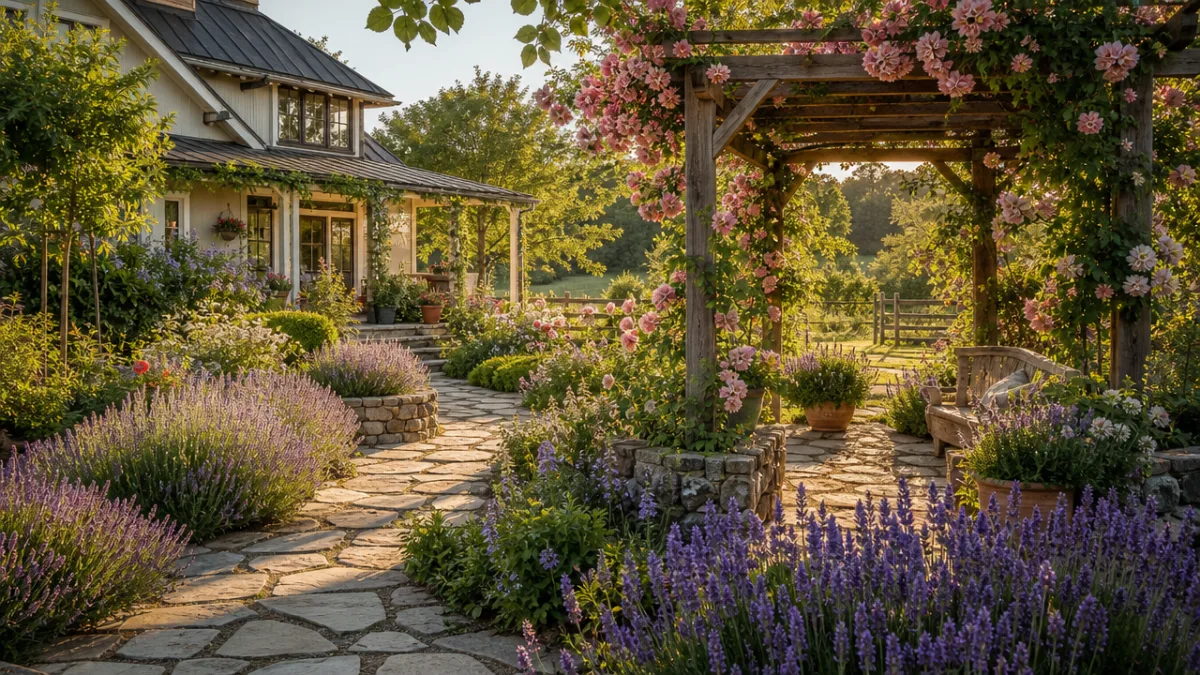
Pathways are among the most important structural elements you will plan in your farmhouse garden. Wide gravel paths bordered by lavender, catmint, or low-growing roses invite leisurely walking and create the sense that the garden is meant to be experienced slowly. Flagstone paths laid in a casual, slightly irregular pattern suggest age and authenticity, while brick pathways in a herringbone pattern nod to traditional craftsmanship. Whatever material you choose, generous width is essential — paths should be wide enough for two people to walk comfortably side by side, reinforcing the social, welcoming character of the farmhouse aesthetic.
Garden rooms are a defining feature of the most successful luxury farmhouse gardens. Rather than a single open expanse of lawn, consider dividing your space into distinct areas, each with its own character and purpose. A walled cutting garden where you grow dahlias, sweet peas, and sunflowers for the house sits alongside a shaded dining terrace draped in wisteria. A kitchen garden enclosed by a low picket fence provides both produce and beauty. A wildflower meadow at the far end of the property creates a sense of arrival and discovery. This layered approach to spatial design gives a garden depth, narrative, and endless interest.
Plant Selection: Creating a Romantic, Layered Planting Palette
Plant selection is where the luxury farmhouse garden truly comes alive, and the key principle to embrace is abundance. These gardens are not sparse or precious — they are generous, almost overflowing, with plants allowed to grow into one another and self-seed freely within the boundaries set by the garden’s structure. The goal is a planting that looks effortless while reflecting considerable knowledge and intention behind the scenes. Begin by choosing a backbone of reliable, long-lived perennials and shrubs before layering in annuals and biennials for seasonal variety and spontaneity.
Roses are arguably the defining plant of the luxury farmhouse garden, and investing in quality varieties makes an enormous difference. David Austin English roses offer the old-fashioned blowsy blooms of heritage varieties combined with the disease resistance and repeat-flowering habit of modern roses. Varieties such as ‘Gertrude Jekyll,’ ‘Olivia Rose Austin,’ and ‘Munstead Wood’ bring extraordinary fragrance and color to borders and can be grown as climbers over arches and pergolas or as shrubs within mixed plantings. Pair them with alliums for structural contrast, geraniums for low ground cover, and salvias for vertical interest and late-season color.
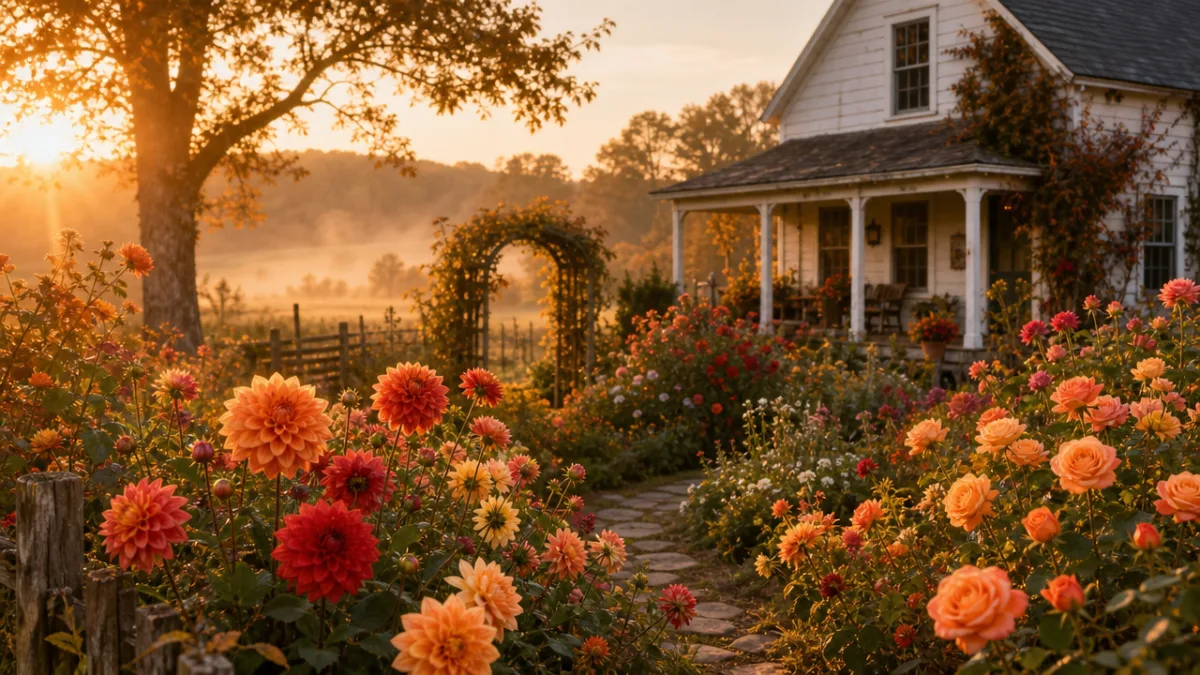
Beyond roses, the luxury farmhouse garden plant palette is broad and seasonally considered. For spring, rely on tulips — particularly the elegant, late-flowering single varieties — along with forget-me-nots, honesty, and the frothy white blooms of cow parsley. Summer brings peonies, delphiniums, foxgloves, sweet peas trained over rustic wooden obelisks, and the romantic clouds of gypsophila. Autumn transitions gracefully with dahlias in deep jewel tones, Japanese anemones, and the turning foliage of ornamental grasses. Winter structure is provided by clipped evergreens, the sculptural forms of bare-branched trees, and seed heads left deliberately for birds and beauty alike.
Recommended Plants for a Luxury Farmhouse Garden
- David Austin English Roses — ‘Gertrude Jekyll,’ ‘Olivia Rose Austin,’ ‘Munstead Wood’
- Allium hollandicum ‘Purple Sensation’ for structural vertical interest
- Nepeta (catmint) as a soft, fragrant border edging plant
- Lavandula angustifolia for pathways, fragrance, and pollinator appeal
- Paeonia lactiflora varieties for opulent late-spring blooms
- Delphinium elatum for dramatic height and classic cottage character
- Dahlia ‘Cafe au Lait’ and ‘Labyrinth’ for late-season abundance
- Salvia nemorosa ‘Caradonna’ for long-lasting summer color
- Buxus sempervirens for clipped structure and year-round presence
- Stipa tenuissima for movement, texture, and naturalistic beauty
Outdoor Living Spaces: The Farmhouse Garden as an Extension of the Home
One of the most transformative ideas in luxury farmhouse garden design is the treatment of outdoor space as a genuine extension of the interior living environment. This means investing in quality outdoor furniture, proper lighting, and architectural features that make the garden as comfortable and beautiful in the evening as it is during the day. A farmhouse garden should feel like a place where you genuinely want to spend time — hosting dinners, reading in the afternoon shade, or simply sitting with a cup of coffee in the early morning while the garden comes alive around you.
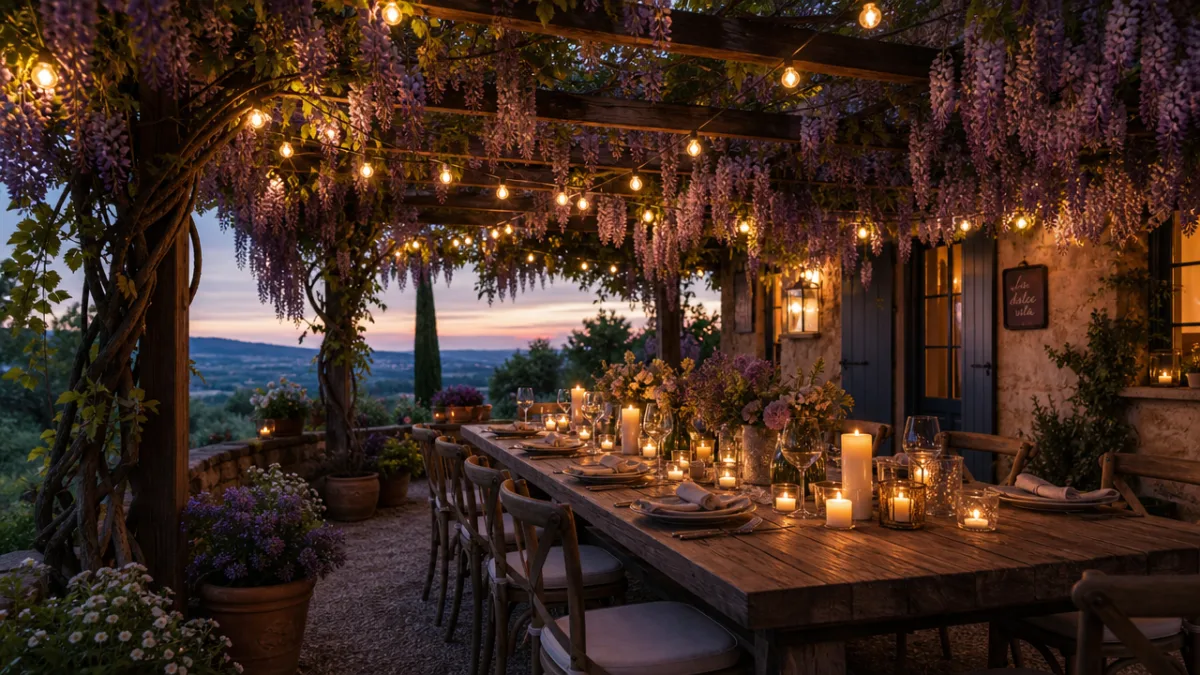
The centerpiece of many luxury farmhouse gardens is a generous covered entertaining area, whether a pergola draped in wisteria and climbing roses, a rustic timber-frame structure with a corrugated metal or cedar shingle roof, or a beautifully restored outbuilding repurposed as an outdoor room. This space should accommodate a substantial dining table, comfortable seating, and ideally some form of outdoor cooking — a wood-fired pizza oven, a built-in grill station finished in natural stone, or a simple fire pit that becomes the gathering point on cooler evenings. String lights woven through climbing plants above the dining area create an atmosphere that is both festive and deeply romantic.
Water features add an irreplaceable sensory dimension to the luxury farmhouse garden. A stone trough fountain placed at the intersection of two garden pathways creates a focal point that draws visitors through the space. A formal reflecting pool edged in clipped lavender introduces stillness and elegance. For a more naturalistic approach, a wildlife pond with marginal planting of iris, rushes, and water lilies creates biodiversity while adding the gentle movement and sound of water that transforms a garden atmosphere. Even a simple reclaimed stone basin filled with water and planted with a single water lily can introduce this quality without requiring significant space or investment.
Materials and Structures: Choosing Authenticity Over Imitation
In a luxury farmhouse garden, the materials you choose communicate your commitment to quality and authenticity as clearly as the plants you select. There is an enormous difference between the genuine warmth of reclaimed oak timber and the hollow appearance of composite decking attempting to imitate it. The same distinction applies across every material category in the garden, from paving to fencing, raised beds to garden ornaments. When budgets require compromise, it is almost always better to do less with authentic materials than more with imitations — a single beautiful stone trough will always outshine a dozen plastic planters dressed to look like something they are not.
Natural stone is perhaps the single most important material investment you can make in a luxury farmhouse garden. Yorkstone, limestone, and bluestone flagging for terraces and paths brings an instant sense of permanence and age that no manufactured product can replicate. Stone walls — whether dry-stacked or mortared — create boundaries and raised beds that feel as though they grew from the landscape rather than being imposed upon it. Even gravel, one of the most economical path materials available, immediately improves in quality and character when you choose a locally quarried product in a natural color rather than the generic beige aggregate found at every hardware store.
Timber structures in the luxury farmhouse garden should be built to last, using quality materials and traditional joinery where possible. Cedar, oak, and Douglas fir all weather beautifully over time, developing a silver-grey patina that contributes enormously to the aged, established character these gardens aspire to. Avoid pressure-treated pine for visible structures if you can — the greenish tint and uniform texture never achieve the character of naturally durable hardwoods. Consider commissioning custom metalwork for gate hardware, pergola brackets, and raised bed edging from a local blacksmith or metalworker; hand-forged iron develops a beautiful surface over time and connects your garden to a tradition of craftsmanship that mass production simply cannot replicate.
Key Structural Elements for a Luxury Farmhouse Garden
- Stone or brick pathways — wide, generously proportioned, with a slightly informal, irregular character that suggests age and authenticity
- Timber pergolas and arches — built from durable hardwoods with traditional joinery, designed to support climbing plants that will eventually dominate the structure
- Raised kitchen garden beds — constructed from reclaimed timber, stone, or brick, elevated to a comfortable working height of 60–75cm
- Fencing and gates — picket fencing in painted white or natural timber, with custom ironwork hardware and climbing plants softening every surface
- Water features — stone troughs, formal reflecting pools, or naturalistic wildlife ponds positioned as destination focal points within the garden layout
Seasonal Maintenance and the Living Character of the Farmhouse Garden
A luxury farmhouse garden is not a static installation but a living, evolving entity that demands ongoing attention and rewards it abundantly. Understanding the seasonal rhythm of your garden — what needs cutting back and when, which plants benefit from division and replanting, where gaps can be filled with bulbs or annuals — is fundamental to maintaining the lush, abundant character that defines this style. The most beautiful farmhouse gardens are tended by people who genuinely love the process of gardening, who find satisfaction in the physical work of planting, pruning, and maintaining a space that gives so much in return.
Spring in the luxury farmhouse garden is a season of preparation and anticipation. As bulbs emerge and early perennials put on new growth, it is time to cut back the previous year’s stems left for winter interest, divide overcrowded clumps of perennials, and begin feeding borders with a balanced organic fertilizer to support the season’s growth ahead. This is also the moment to assess what worked last year and what needs changing — moving plants that are struggling in their current position, editing out those that have outgrown their welcome, and making space for new introductions that will add excitement to the coming seasons.
Autumn is the season of harvest, reflection, and thoughtful preparation for winter. The dahlia and rose blooms that carried the garden through summer begin to fade, and the focus shifts to seed-saving, bulb planting, and the structural work that sets the garden up for the year ahead. This is the time to plant tulip bulbs in generous drifts beneath roses and in pots for spring cutting, to mulch borders deeply with well-rotted compost or leaf mold, and to carry out any significant construction or structural planting before the ground hardens. A garden that is well prepared in autumn will always perform better in the seasons that follow, making this investment of time and energy one of the most important you can make.
Lighting and Evening Atmosphere: The Garden After Dark
One of the most frequently overlooked aspects of luxury farmhouse garden design is nighttime lighting, and yet it is the element that most powerfully transforms a beautiful daytime garden into something truly extraordinary after dark. Thoughtful garden lighting extends the usability of your outdoor space through long summer evenings and into the cooler months, creates atmosphere and drama that daylight cannot achieve, and draws attention to the most beautiful features of your garden in ways that feel magical rather than theatrical. The goal in a farmhouse garden context is always warmth and subtlety — the light of fireflies and candlelight, never the harsh glare of floodlights and security lighting.
String lights — sometimes called festoon or bistro lights — are perhaps the most universally appealing lighting tool available to farmhouse garden designers. Strung between pergola posts, woven through the branches of fruit trees, or draped along fence lines and over dining areas, they create a sense of festivity and warmth that is impossible to achieve with any other lighting type. Choose warm white bulbs with a low color temperature of around 2200–2700K for the most flattering, atmospheric effect. Avoid cool white or blue-toned lights, which read as clinical and out of place in the organic warmth of a farmhouse garden setting.
Beyond string lights, consider installing low-level path lighting to guide movement through the garden safely after dark without flooding the space with unwanted brightness. Lantern-style stake lights in a weathered metal finish complement the farmhouse aesthetic beautifully. Uplighting positioned at the base of a spectacular tree, a climbing rose trained over an arch, or a stone wall can create focal points of genuine drama. Candles and lanterns on dining tables and window ledges add a final layer of warmth that no electric light source can truly replicate, connecting the garden’s evening atmosphere to an older, more elemental tradition of outdoor living by firelight that resonates deeply with the farmhouse aesthetic’s roots in heritage and simplicity.








What do you think?
It is nice to know your opinion. Leave a comment.