










Ligularia dentata ‘Pandora’: The Jewel of the Shade Garden
Introduction to Ligularia dentata ‘Pandora’
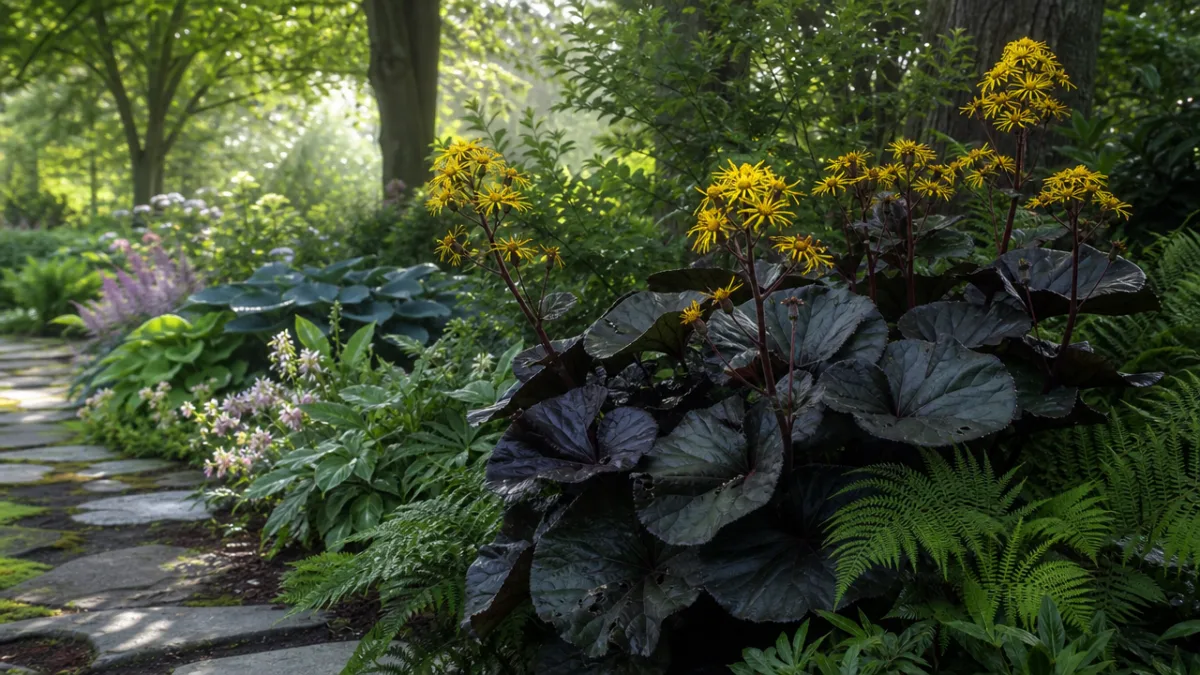
If you’re looking for a plant that truly stops people in their tracks, Ligularia dentata ‘Pandora’ might be exactly what your shade garden has been missing. Commonly called the Leopard Plant, this perennial has a way of making other plants look like they’re not trying hard enough. Its leaves combine deep burgundy-purple undersides with rich, glossy green on top — and when a bit of sunlight catches them from below, the whole plant seems to glow. It’s the kind of effect that makes visitors ask “what on earth is that?” before they’ve even made it through the gate.
The name ‘Pandora’ suits it well — there’s definitely something about discovering this plant for the first time that feels like opening a box of unexpected treasures. Unlike a lot of shade-tolerant perennials that play it quiet with soft colours and subtle textures, ‘Pandora’ makes its presence known. Those bold, heart-shaped leaves grow impressively large at maturity, and the plant has a structural confidence that garden designers spend years hunting for in their shade-loving toolkit.
You can buy ‘Pandora’ as bare roots through specialist suppliers like Farmer Gracy UK, and it’s genuinely good value for the patient gardener. Bare root plants are lifted during dormancy and sent out in just the right condition to get going quickly once planted. There’s less packaging waste too, which is a nice bonus. Get the conditions right, and this plant will reward you for decades — spreading into an ever more impressive clump of foliage and seasonal flowers year after year.
Understanding the Botanical Background
Ligularia belongs to the Asteraceae family, making it a distant cousin of daisies, sunflowers, and ragworts. The genus runs to around 150 species, most of them native to mountainous and forested parts of Asia — China, Japan, the Himalayas. Those home environments tell you a lot: consistently moist, organically rich soil, and shade ranging from dappled to fairly deep. Know where a plant comes from, and you’re already most of the way toward knowing how to grow it well.
Ligularia dentata, the species behind ‘Pandora’, is known for its large, kidney-shaped leaves with toothed edges — that “dentata” in the name is just Latin for “toothed,” which is exactly what those serrated leaf margins look like. In the wild it tends to grow along stream banks, in damp woodland clearings, and around boggy ground, slowly building into hefty clumps. In mid to late summer it throws up tall stems carrying clusters of bright orange-yellow daisy flowers, and ‘Pandora’ keeps that same habit while adding a whole extra layer of drama through its extraordinary foliage colour.
Getting from the wild species to a named cultivar like ‘Pandora’ takes years of careful selection by breeders and nurseries, isolating plants that show the most intense colouring, the best shape, and the most reliable garden performance. ‘Pandora’ is widely considered one of the finest modern selections — it has that exceptional foliage colour, but it also grows a little more compactly than some of the older Ligularia cultivars. That makes it much more practical if you’re not working with a vast garden and can’t dedicate half a border to a single plant.
How to Plant Bare Root Ligularia Successfully
Once you’ve got the hang of planting bare roots, it opens up a really satisfying way to fill a garden economically. When your Ligularia dentata ‘Pandora’ bare roots arrive from Farmer Gracy UK, give them a good look over first. Healthy roots should feel firm and show clear buds or emerging shoot tips. If they seem a little dry from the journey, pop them in a bucket of tepid water for an hour or two before planting — it makes a real difference to how quickly they get going.
Timing matters here. Ligularia bare roots are sent out and planted during dormancy, usually somewhere between autumn and early spring. Getting them in the ground before the plant wakes up and starts putting energy into leaves gives the roots time to anchor properly. In most parts of the UK, that means aiming for October through March — pick a mild spell when the soil isn’t frozen and is reasonably workable.
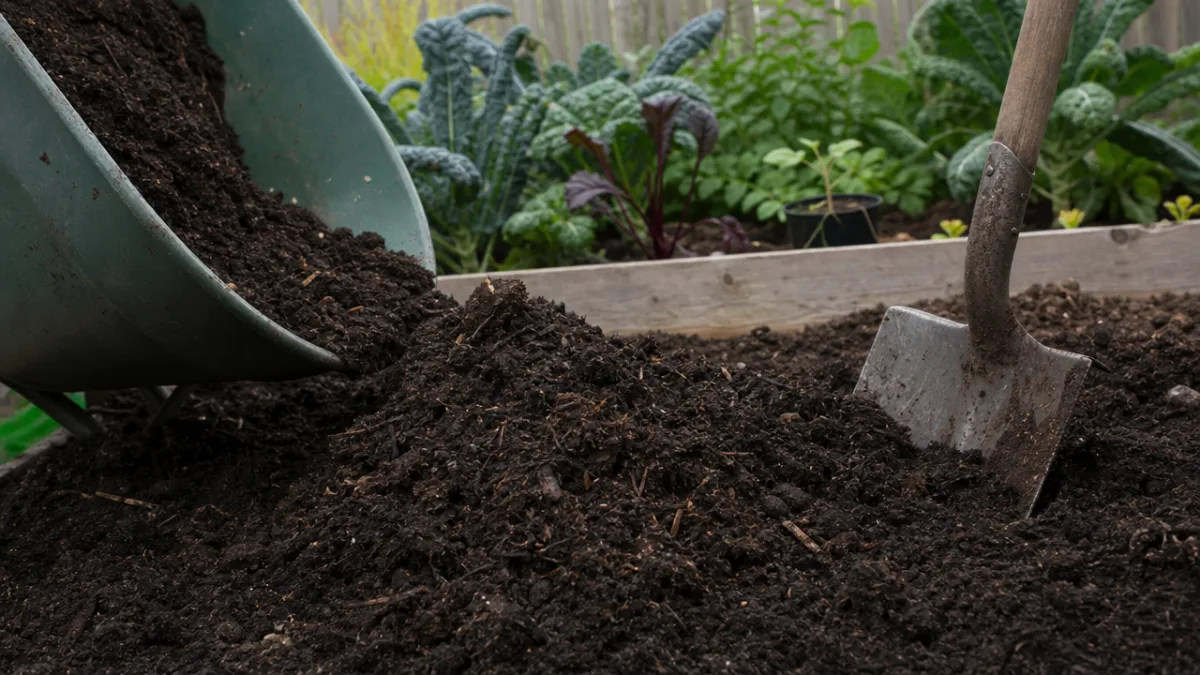
Soil preparation is probably the thing that makes or breaks Ligularia. These plants are thirsty and hungry, and a half-hearted planting hole will give you half-hearted results. Dig generously — at least twice the width of the root system — and work in a good amount of well-rotted garden compost or leaf mould. This improves both moisture retention and drainage, giving you that sweet spot of consistently moist but never waterlogged soil that Ligularia loves. A handful of slow-release fertiliser at the bottom of the hole is worth doing too; it gives the young plant something to work with as it gets started.
- Soak bare roots for one to two hours in tepid water before planting to rehydrate root tissue.
- Plant at the same depth the plant grew previously — look for the soil line mark on the crown.
- Work plenty of well-rotted compost or leaf mould into the planting hole and surrounding soil.
- Water thoroughly after planting and keep consistently moist throughout the first growing season.
- Apply a mulch of compost or bark around (but not over) the crown to retain moisture and suppress weeds.
- Avoid planting in full sun or exposed, windy positions where leaves will scorch and wilt.
Optimal Growing Conditions and Site Selection
Getting the position right for ‘Pandora’ really is the key to everything. This plant wants shade, or at least dappled light for most of the day. In the UK’s generally mild, often cloudy climate, some gardeners do manage Ligularia in spots that catch morning sun, as long as the soil stays reliably moist through summer. But afternoon sun during a dry spell? The leaves will wilt dramatically, and while it probably won’t kill the plant, it’s a dispiriting sight and a clear signal that something isn’t right.
Moisture is the other thing ‘Pandora’ simply won’t compromise on. This is not a plant that quietly tolerates drought — when it’s too dry, it makes its feelings known with considerable theatrical flair. The ideal spot has naturally moisture-retentive soil: the edge of a pond, a north-facing border, under a tree canopy where leaf mould has been building up for years, or alongside a stream or bog garden. In conditions like these, ‘Pandora’ settles in quickly and starts building those impressive, weed-suppressing clumps that become real focal points in the garden.
On soil pH, Ligularia is fairly easygoing — it’s happiest in neutral to slightly acidic conditions but can manage in mildly alkaline soil as long as it’s been well enriched with organic matter to hold moisture. Interestingly, heavy clay soils — often the gardener’s enemy — can actually suit Ligularia quite well once you’ve worked in some organic matter, because their naturally water-retentive properties do half the moisture management work for you. Sandy or free-draining soils are a much harder sell and need serious, ongoing amendment to keep a Ligularia happy.
Year-Round Care and Maintenance
The good news is that once ‘Pandora’ is established, it’s not a high-maintenance plant at all. The main things to stay on top of are moisture, seasonal tidying, and feeding. In spring, when those first dark-tinged young leaves start pushing through the soil — genuinely one of the most exciting moments in a shade garden — give each clump a generous top-dressing of well-rotted compost or a balanced slow-release fertiliser. It sets them up well for the season ahead.
During summer, keep an eye on watering during dry spells. It really can’t be said enough: a Ligularia that dries out repeatedly will grow smaller leaves, lose its vigour, and gradually give up on being the spectacular thing you planted it to be. A thick layer of organic mulch applied each spring goes a long way toward reducing moisture loss from the soil surface and keeping weeds from muscling in. And as the plant matures and its big leaves spread outward, they do a lot of the shading work themselves, naturally helping to keep the soil beneath cool and moist.
Come late summer and into autumn, ‘Pandora’ sends up tall branching stems with clusters of bright orange-yellow daisy flowers — vivid against all that dark foliage and very popular with bees and hoverflies. Whether you deadhead is entirely up to you; leaving the seed heads standing adds some winter interest and provides food for birds, while cutting them back encourages the plant to direct energy into its root system instead. Once the leaves start looking ragged as autumn progresses, you can tidy them away, or leave them lying over the crown as a bit of natural insulation through the coldest months.
Companion Planting and Garden Design Applications
Where ‘Pandora’ really comes into its own is when it’s paired with plants that share its love of moisture and shade — and there are some brilliant combinations to be had. The plant’s bold, dark foliage is incredibly versatile as a design tool. Planted on its own against a pale wall or fence, it reads with real drama. In a layered border, it anchors the middle ground beautifully, with taller plants rising behind it and lower ground covers threading around its base.
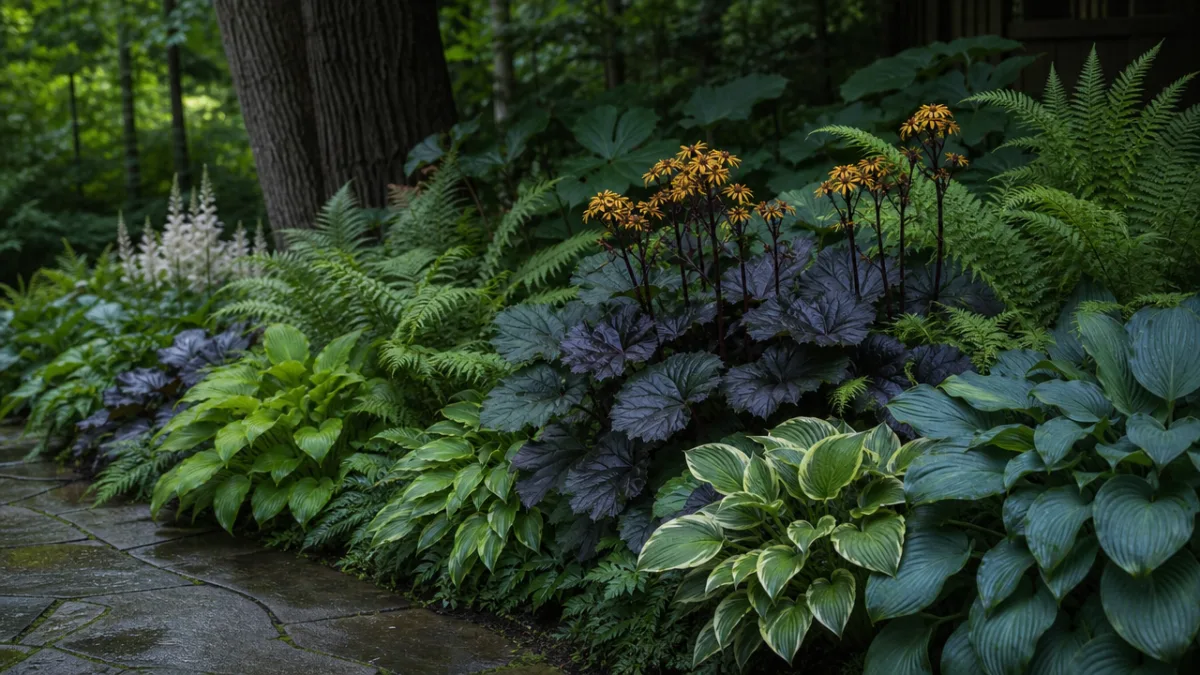
Hostas are probably the most natural companion — their ribbed or variegated leaves provide wonderful textural contrast to the smoother, broader Ligularia foliage, and both have identical growing requirements, so you’re not compromising on either. Astilbes are another great choice, their feathery plumes in pink, white, red, or cream floating above finely cut foliage in midsummer, bringing a light, airy quality that plays beautifully against ‘Pandora’s more robust presence. And ferns — whether the architectural shuttlecock shape of Matteuccia struthiopteris or the delicate fronds of Athyrium cultivars — create that layered woodland feel that looks both naturalistic and carefully designed.
For anyone lucky enough to be working with a pond, bog garden, or stream-side planting, ‘Pandora’ is a dream. Plant it in drifts alongside Rodgersia, with its bronzed architectural leaves and creamy flower plumes, Iris sibirica for graceful upright form and violet-blue flowers, or even Gunnera manicata if you have the space for something truly monumental. This kind of planting — bold architectural foliage combined with graceful flowering perennials in a reliably moist setting — sits at the heart of some of the finest garden design tradition in the UK, and it’s a big part of why Ligularia has stayed a firm favourite among experienced gardeners and planting designers for so long.
- Hostas — Contrasting leaf texture and colour; both thrive in moist shade.
- Astilbes — Feathery flowers in complementary colours; shared moisture requirements.
- Ferns — Airy, delicate foliage provides elegant contrast to bold Ligularia leaves.
- Rodgersia — Similarly bold architecture; creates dramatic large-scale plantings.
- Iris sibirica — Upright, elegant form and beautiful flowers alongside dark foliage.
- Primula candelabra types — Colourful, tiered flowers that naturalise in moist conditions.
Propagation, Division, and Long-Term Management
One of the really practical advantages of ‘Pandora’ is that you can multiply it yourself through division — and in doing so, you also do the parent plant a favour. Clumps that have been growing for three or more years can start to become a bit tired in the centre while the outer edges continue to romp away. Lifting and dividing sorts this out neatly, giving you a rejuvenated clump plus several new plants to spread around the garden or pass on to friends. Early spring is the best time to do this, just as new growth is beginning to show but the plant is still in a relatively dormant state.
To divide, use a sharp spade to lift the whole root mass, keeping as much of the fibrous root system intact as you can. You can split the clump with a spade or sharp knife, or for larger, denser clumps, the classic two-forks-back-to-back method works well. Each division needs a decent handful of healthy buds or growing points and a good chunk of root. Get them back in the ground promptly, into well-prepared soil, water them in well, and keep them moist while they settle in. Given a reasonable growing season, well-divided pieces will establish into strong, good-looking plants surprisingly quickly.
Over the years, a well-managed planting of ‘Pandora’ develops a life of its own — spreading into a substantial, ground-covering colony that increasingly looks after itself as its dense canopy of leaves shades out would-be weeds. The long-term trajectory is a genuinely low-maintenance one: the more established it gets, the more effectively it manages both itself and the ground around it. For anyone who puts in the effort at the bare root stage — good soil preparation, reliable watering in the early years — the returns compound beautifully. Season by season, it becomes more spectacular, and arguably one of the best long-term investments you can make from the range of hardy perennials suited to the British garden.








What do you think?
It is nice to know your opinion. Leave a comment.