










Larkspur / Consolida: A Complete Guide to Growing and Enjoying These Enchanting Blooms
Introduction to Larkspur: History, Origins, and Botanical Identity
Larkspur, known botanically as Consolida (formerly classified under Delphinium), is one of the most celebrated annual flowering plants in the world of cottage gardens and wildflower meadows. Native to the Mediterranean region and parts of Asia, these tall, elegant spires of bloom have captivated gardeners, artists, and herbalists for centuries. The name “larkspur” itself is a charming nod to the flower’s distinctive spur-shaped nectary, which was said to resemble the elongated hind claw of a lark bird, giving the plant an air of whimsy and natural poetry that endures to this day.
The genus Consolida was separated from Delphinium by botanists who recognized key structural differences in the flower’s architecture, particularly in the way the petals and sepals fuse together. Unlike true delphiniums, which are perennial in most climates, larkspurs are fast-growing annuals that complete their entire life cycle in a single season. This makes them uniquely rewarding for gardeners who want dramatic vertical interest in the garden without the long-term commitment of establishing perennial plantings. Their ability to self-seed prolifically also means that, once introduced to a garden, they often return year after year with minimal human intervention.
Throughout history, larkspur has held significant cultural meaning across many civilizations. In ancient Greece and Rome, the plant was associated with both beauty and toxicity — a duality that appears in legends linking it to the hero Ajax, whose blood was said to have given rise to the flower after his death at Troy. In the Victorian language of flowers, larkspur symbolized an open heart, levity, lightness of spirit, and ardent attachment, making it a popular choice for inclusion in romantic bouquets and garden borders alike. Today, larkspur is recognized as the birth flower for the month of July, adding to its sentimental and celebratory significance.
Varieties and Color Palette: Exploring the Stunning Range of Consolida
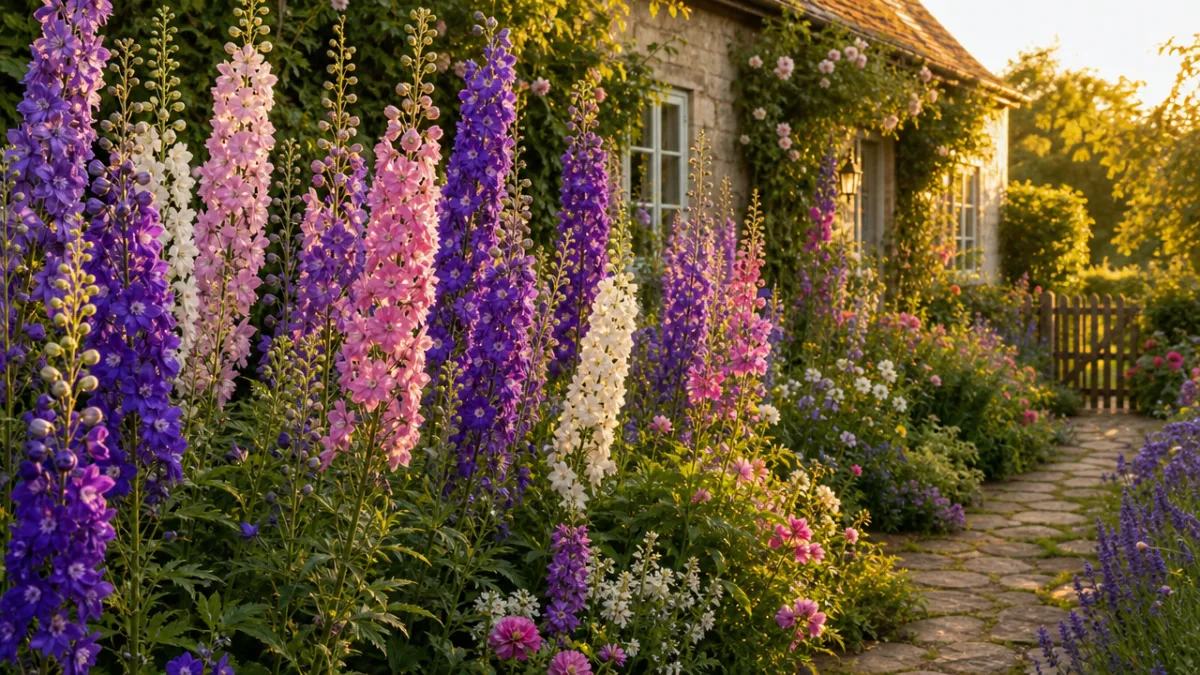
One of the most irresistible qualities of larkspur is the breathtaking variety of colors available to modern gardeners. From the deepest midnight blue and violet to soft lavender, hot pink, rose, salmon, white, and every pastel shade imaginable, Consolida offers an almost unmatched spectrum of color for a single genus. The blooms are produced densely along tall, upright stems that can reach anywhere from one to four feet in height depending on the variety, creating vertical drama that few other annual flowers can rival in the early summer garden.
Among the most popular cultivated series is the Giant Imperial series, which produces large, tightly packed flower spikes in a wide range of colors and is a favorite among cut flower farmers and home gardeners alike. The Rocket series offers particularly tall, sturdy stems ideal for the back of borders or for cutting. More compact varieties such as the Dwarf Hyacinth series suit container planting or the front of mixed annual beds, where their smaller scale creates a more delicate, whimsical effect without overwhelming neighboring plants. Each series has been carefully developed to offer improved stem length, color saturation, disease resistance, and vase life.
Double-flowered forms of larkspur, which produce ruffled, densely petaled blooms reminiscent of tiny roses or hyacinths, have become especially sought after in the cut flower industry and among florists who prize their romantic, textural quality in arrangements. Single-flowered forms, by contrast, have a more open, airy quality that suits naturalistic plantings and wildflower-style garden designs. Whether you choose a single color to create a bold, monochromatic sweep of bloom or a cottage garden mix that blends harmoniously across the spectrum, larkspur delivers visual impact that is difficult to achieve with any other easily grown annual.
How to Grow Larkspur: Planting, Soil, and Site Requirements
Growing larkspur successfully begins with understanding one of its most important quirks: it strongly prefers cool weather and performs best when sown directly into the garden in early spring or even in late autumn for overwintering in mild climates. Unlike many annuals that are started indoors and transplanted, larkspur dislikes root disturbance intensely and almost always performs best when seeds are sown directly where they are to grow. This direct-sowing requirement is something that surprises many first-time larkspur growers, but once understood, it simplifies the growing process considerably and allows gardeners to treat larkspur much like a wildflower.
Soil preparation is a key step toward growing impressive larkspur plants. The ideal soil is well-drained, moderately fertile, and slightly alkaline to neutral in pH, somewhere between 6.5 and 7.5 being optimal for robust growth and flowering. Heavy clay soils should be amended with compost and coarse grit to improve drainage, as larkspur roots are highly susceptible to rot in waterlogged conditions. Conversely, very sandy soils benefit from the addition of organic matter to improve moisture retention during dry spells. A sunny to partially shaded location is ideal, though larkspur will tolerate light afternoon shade, which can actually prolong blooming in hotter climates by preventing heat stress on the developing flowers.
Sowing is straightforward: scatter seeds thinly across prepared soil and cover lightly with a fine layer of compost or sifted soil, as the seeds require darkness to germinate effectively. Germination typically occurs within ten to twenty days at soil temperatures between 50 and 65 degrees Fahrenheit. Once seedlings emerge, thin them to stand roughly nine to twelve inches apart to allow adequate air circulation, which helps prevent the fungal diseases that can trouble larkspur in humid conditions. Staking tall varieties is recommended in exposed or windy locations, using bamboo canes and soft garden twine to support the heavy flower spikes and prevent them from toppling in summer storms.
Care, Maintenance, and Seasonal Management
Once established, larkspur is a relatively low-maintenance plant that rewards attentive care with an abundance of bloom from late spring through early summer. Consistent moisture is essential during the seedling phase and as flower spikes begin to develop, as drought stress at these critical stages can lead to premature flowering on short, weak stems. Mulching around the base of plants with a two-inch layer of organic material helps conserve soil moisture, suppress competing weeds, and keep root temperatures cool — all of which encourage longer, more productive flowering seasons that can last four to six weeks under ideal conditions.
Feeding larkspur is generally a matter of restraint rather than enthusiasm. An overly rich soil, particularly one high in nitrogen, encourages lush leafy growth at the expense of flowers and can make plants top-heavy and prone to falling over. A single application of a balanced, slow-release granular fertilizer at planting time is usually sufficient. If growth seems sluggish mid-season, a light liquid feed with a low-nitrogen, high-potassium formula can help support continued blooming without stimulating excessive vegetative growth. Deadheading spent blooms regularly, particularly on well-tended garden plants, can extend the flowering period slightly, though allowing some seed heads to mature is important if you wish to encourage natural self-seeding for the following year.
As the season warms and larkspur begins to decline after its main flush of flowering, gardeners have several options for managing the spent plants. If seeds have been allowed to mature and ripen on the plant, gently shaking the seed heads over the bed or collecting seeds in paper envelopes for storage ensures continuity in future seasons. The plants can then be cut down and composted. In climates where autumn temperatures cool sufficiently by September or October, sowing a fresh batch of seeds at this time will produce overwintered seedlings that bloom earlier and more vigorously the following spring than spring-sown plants, a technique widely practiced by experienced cut flower growers.

Larkspur as a Cut Flower: Growing for Arrangements and the Floral Industry
Few flowers have earned as devoted a following among florists and flower farmers as larkspur, and for very good reasons. The tall, densely flowered spikes provide structural height and vertical movement in arrangements that is difficult to achieve with other cut flowers. Their wide color range allows them to complement virtually any palette, from romantic all-white and blush designs to bold, jewel-toned compositions bursting with personality and visual energy. Many professional florists consider larkspur an indispensable component of their summer cutting garden, and flower farmers who grow larkspur often find it among their most reliably profitable crops during its short but spectacular season.
For cutting, larkspur stems should be harvested when approximately one-quarter to one-third of the florets on a spike have opened, with the remainder still in bud. This stage ensures maximum vase life, which typically ranges from seven to ten days when stems are properly conditioned. Cutting should be done in the early morning when stems are fully turgid with water, immediately plunging them into a bucket of cool, clean water containing a commercial floral preservative. Removing all leaves that would sit below the waterline in the vase is important to prevent bacterial growth, which is the primary cause of premature wilting and shortening of vase life in most cut flowers.
Larkspur also dries exceptionally well, retaining both its color and its elegant form beautifully, making it a perennial favorite among wreath makers, dried flower arrangers, and crafters. To dry larkspur, cut stems at peak bloom and hang them upside down in small bunches in a warm, dark, well-ventilated space for two to three weeks. The resulting dried spikes can be used in wreaths, swags, pressed flower art, and decorative arrangements where they will hold their beauty for months or even years. The deep blue and violet varieties are particularly prized for drying, as these colors tend to retain their intensity better than pinks and whites when dried.
Safety Considerations: Understanding Larkspur Toxicity
While larkspur is undeniably beautiful and enormously useful in the garden and in floral design, it is critically important for every grower and flower handler to understand that all parts of the plant are toxic to humans and animals. The plant contains a range of alkaloid compounds, primarily delphinine and related substances, which can cause serious health problems if ingested. In livestock, particularly cattle, larkspur is responsible for significant economic losses across rangelands in the American West, where wild species of larkspur grow abundantly and can be consumed by grazing animals. Symptoms of poisoning in animals include muscle weakness, difficulty breathing, and in severe cases, death.
For humans, the primary risk comes from accidental ingestion, particularly for young children who might be attracted by the colorful flowers. Touching the plant, while generally considered low-risk for most people, can cause skin irritation in sensitive individuals, and care should be taken to wash hands thoroughly after handling plants or seeds. Gardeners who work extensively with larkspur, particularly in large-scale growing operations, would be wise to wear gloves as a precautionary measure. The seeds are considered particularly toxic and should be stored safely out of reach of children and pets at all times.
Despite these important safety considerations, larkspur remains a beloved and widely grown garden plant that presents minimal risk to sensible, informed adults who handle it with ordinary care. The key is awareness: knowing that the plant is toxic, ensuring that children in the garden understand not to pick or eat any plant without permission, and keeping seeds and plant material stored responsibly. Many of our most cherished garden plants, from foxglove to lily of the valley to monkshood, carry similar toxicity warnings without diminishing their popularity or their value to gardeners, and larkspur is no different in this respect.

Larkspur in Garden Design: Creating Beautiful Plant Combinations
Larkspur’s tall, vertical habit and spectacular color range make it one of the most versatile players in the mixed annual or cottage garden border. Its spires provide the structural “thriller” element that gives a planting design height and visual anchor, allowing lower-growing plants to weave around their bases for a layered, naturalistic effect. The cool-toned blues and purples of larkspur pair magnificently with the warm yellows and oranges of California poppies, creating a classic wildflower-inspired combination that is both effortless to achieve and endlessly photogenic. Planting larkspur alongside peonies, alliums, and roses creates a sophisticated, romantic garden tableau that captures the essence of the classic English cottage garden at its most glorious.
In cutting gardens, larkspur is typically grown in dedicated rows or blocks to maximize stem production and simplify harvesting, but in ornamental beds it is most effectively used in bold drifts of a single color or in harmonious mixed plantings where the colors blend naturally. Combining the deep violet and blue forms with white sweet alyssum, silver dusty miller, and soft pink annual phlox creates a cool, elegant planting scheme that reads beautifully from a distance and rewards close examination with its intricate floral detail. For a more dramatic effect, pairing the strongest reds and hot pinks with deep purple basil and bronze fennel creates a richly colored, textural combination that has a lush, almost tropical exuberance entirely at odds with larkspur’s reputation as a cool-season flower.
Self-seeding behavior is one of larkspur’s most endearing qualities in a naturalistic or low-maintenance garden context. Once established, a patch of larkspur will generally perpetuate itself year after year by dropping seeds that germinate in autumn or early spring, filling in gaps in the border and gradually colonizing surrounding areas with a relaxed, spontaneous quality that is almost impossible to achieve by deliberate planting. This self-seeding tendency makes larkspur an excellent choice for meadow-style plantings, naturalized areas at the edge of wooded garden spaces, and informal cottage borders where a certain wildness and unpredictability is welcomed as part of the design philosophy rather than managed away by too-tidy gardening practices.








What do you think?
It is nice to know your opinion. Leave a comment.