










Larix decidua ‘Krejčí’: A Complete Guide to the Weeping European Larch
Introduction to Larix decidua ‘Krejčí’
Larix decidua ‘Krejčí’ is a distinctive and highly ornamental cultivar of the European Larch, celebrated among gardeners, horticulturists, and conifer enthusiasts for its dramatically weeping form and graceful, cascading branches. Named after its Czech discoverer, this cultivar represents one of the more refined selections within the Larix genus, offering a combination of architectural elegance and seasonal interest that few other conifers can match. Its pendulous habit makes it an exceptional specimen plant in both formal and naturalistic garden settings.
Unlike the towering, upright habit of the species Larix decidua, the ‘Krejčí’ cultivar develops a strongly weeping or prostrate growth pattern, meaning that without staking and training, the plant will spread along the ground rather than reaching skyward. This characteristic gives gardeners tremendous creative freedom in how they choose to display the plant — whether trained up a stake to create a weeping standard, allowed to cascade over a wall or raised bed, or left to meander naturally as an unusual ground cover element in the landscape.
The cultivar belongs to a group of slow-growing, dwarf to semi-dwarf conifers that have become increasingly popular in contemporary garden design, particularly in rock gardens, Alpine-themed plantings, and miniature landscapes. As interest in four-season garden interest has grown, plants like Larix decidua ‘Krejčí’ have found their way into the collections of discerning gardeners who appreciate the changing beauty that deciduous conifers uniquely provide throughout the year.
Botanical Characteristics and Growth Habit
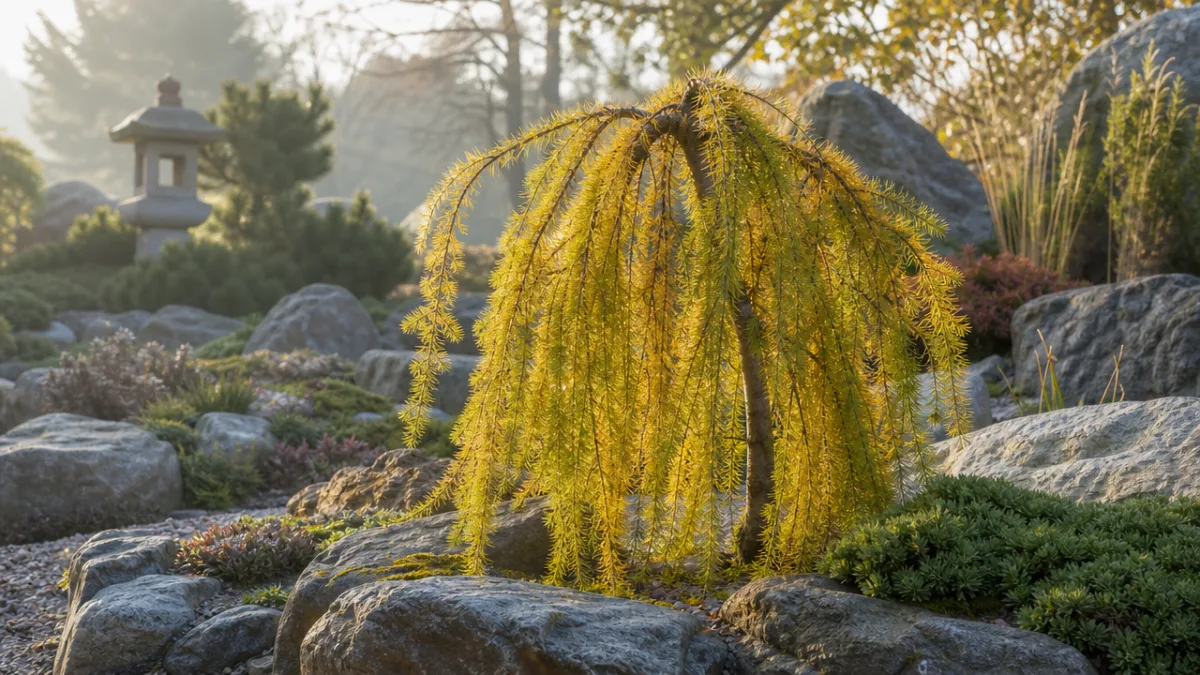
Larix decidua ‘Krejčí’ is classified as a dwarf weeping conifer, and its most defining physical feature is its strongly pendulous branching structure. The main leader and lateral branches hang downward with considerable elegance, creating a layered, curtain-like silhouette. When trained vertically on a stake, the plant develops a graceful umbrella or fountain shape, with branches trailing toward the ground from whatever height the gardener chooses to establish. Left unstaked, it creeps and mounds, hugging terrain with a surprisingly sculptural quality.
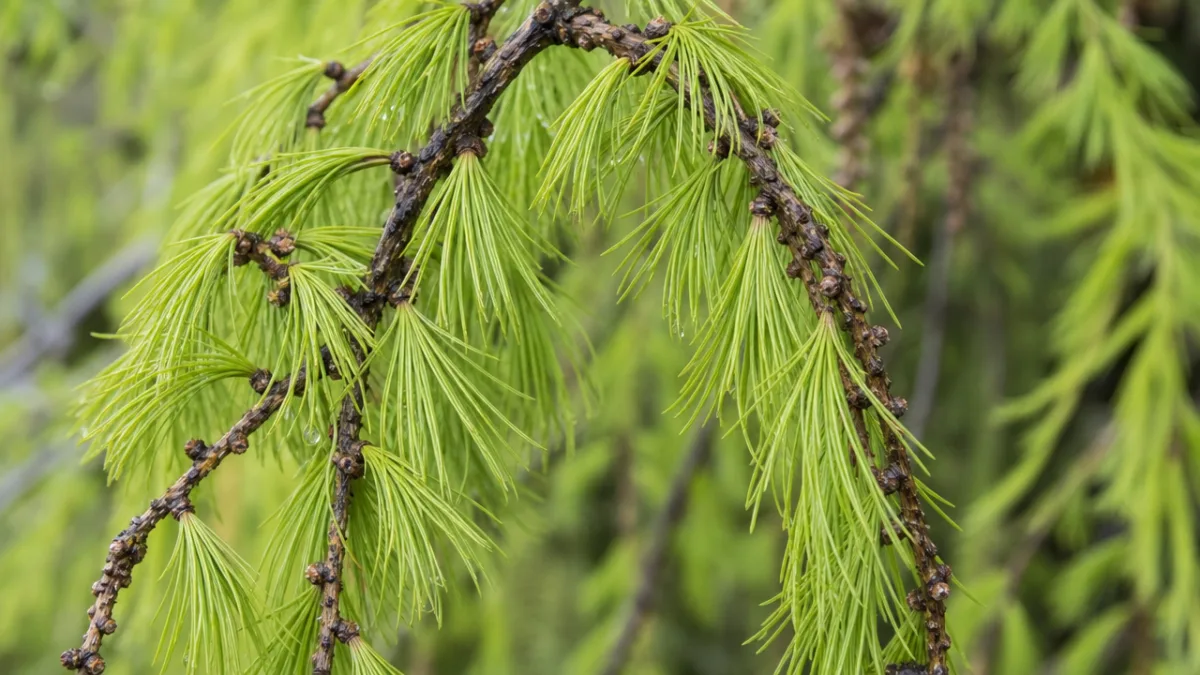
The foliage of ‘Krejčí’ follows the characteristic pattern of all larches: soft, needle-like leaves emerge in tight rosette clusters along the stems each spring. These needles are a fresh, bright green when they first appear, providing a burst of vivid color in early spring that many evergreen conifers cannot offer. As the season progresses, the needles deepen to a richer mid-green, and in autumn the foliage transitions to warm shades of gold and butter yellow before dropping entirely — reminding us that this is one of the few deciduous members of the conifer family.
Growth rate is notably slow, which is one of the practical advantages of this cultivar for smaller garden spaces. In optimal conditions, ‘Krejčí’ typically adds only a few centimeters of growth per year, making it highly manageable over the long term. After ten years, a staked specimen might reach approximately one to one and a half meters in height, depending on stake height and growing conditions. This slow, predictable growth means the plant rarely overwhelms its neighbors or requires significant corrective pruning, making it a low-maintenance yet high-impact choice.
Cultivation Requirements and Growing Conditions
Successfully cultivating Larix decidua ‘Krejčí’ begins with understanding the environmental preferences of the European Larch as a species, then fine-tuning care to suit the particular needs of this dwarf cultivar. Like its wild relatives found across the Alps and Carpathian Mountains, ‘Krejčí’ thrives in cool to temperate climates with cold winters and relatively mild summers. It is generally considered hardy to USDA hardiness zones 3 through 6, making it well-suited to a broad range of climates across northern and central regions.
Soil requirements for this cultivar are relatively straightforward but important to get right. Larix decidua ‘Krejčí’ prefers well-drained, slightly acidic to neutral soils with a pH range of approximately 5.5 to 7.0. It performs best in loamy or sandy loam soils that do not retain excessive moisture around the roots, as waterlogged conditions can lead to root rot and general decline. While the plant appreciates consistent moisture, particularly during its establishment period in the first two to three years, it develops reasonable drought tolerance once settled into its growing environment.
Sun exposure is another critical factor in the successful cultivation of this cultivar. Full sun is strongly preferred, as shaded conditions tend to produce sparse, weak growth and diminish the plant’s characteristic form and vigor. A location receiving at least six hours of direct sunlight per day is ideal. In regions with particularly hot summers, some afternoon shade can be beneficial to prevent heat stress, but in cooler climates, maximum sun exposure consistently produces the best results. Good air circulation around the plant also helps minimize the risk of fungal issues.
When it comes to fertilization, Larix decidua ‘Krejčí’ is not a heavy feeder, and excessive nitrogen can actually promote overly lush, weak growth that is uncharacteristic of the cultivar. A light application of a slow-release, balanced fertilizer in early spring is generally sufficient. Mulching around the base of the plant helps conserve moisture, regulate soil temperature, and gradually improve soil structure, but mulch should always be kept a few centimeters away from the trunk to prevent moisture buildup and potential disease issues at the crown.
Propagation Methods and Techniques
Propagating Larix decidua ‘Krejčí’ is a topic of considerable interest among conifer enthusiasts and nursery professionals alike, as the cultivar does not come true from seed — seed-grown plants will revert to the species or produce variable offspring rather than reliably reproducing the weeping, dwarf characteristics of the parent. As a result, vegetative propagation is the standard approach for maintaining the genetic integrity and ornamental qualities of this named cultivar.
Grafting is the most widely used and commercially reliable method for propagating Larix decidua ‘Krejčí’. The cultivar scion wood is typically grafted onto seedling rootstocks of the straight species, Larix decidua. This technique provides the resulting plant with a vigorous root system while preserving the desirable ornamental traits of the cultivar above the graft union. Side-veneer grafting and whip-and-tongue grafting are among the methods employed by skilled nursery growers, with work typically carried out in late winter or early spring when both scion and rootstock are in a compatible state of dormancy or early growth.
Cutting propagation has been attempted with varying degrees of success. Semi-hardwood cuttings taken in late summer or early autumn, treated with rooting hormone and placed in a humid propagation environment, can root under the right conditions, but the process tends to be slower and less reliable than grafting. For the home gardener interested in attempting propagation, the grafting route requires more skill and equipment but ultimately yields more consistent results. Many specialist conifer nurseries supply grafted plants of known quality, which is often the most practical option for enthusiasts seeking a well-established specimen.
Landscape Design and Garden Applications
Few plants offer the year-round ornamental interest and design versatility of Larix decidua ‘Krejčí’, and this has contributed significantly to its growing popularity among garden designers and serious amateur gardeners. Its striking weeping form makes it a natural focal point in any planting scheme, capable of drawing the eye and anchoring a composition in a way that more commonplace shrubs and perennials cannot achieve. When used as a specimen plant in a lawn or prominent bed, a well-trained standard form creates a sculptural presence that rewards observation through every season.
In rock gardens and alpine-themed plantings, ‘Krejčí’ finds perhaps its most natural and harmonious home. The rugged, ancient-looking texture of its bark, combined with the delicate needle clusters and cascading branch structure, evokes the high mountain environments where wild larches flourish. Paired with dwarf conifers of contrasting forms — upright junipers, mounding spruces, or spreading pines — it contributes to a diverse and visually dynamic planting that celebrates the incredible range within the conifer world. Stone outcroppings, gravel mulch, and alpine perennials all complement its aesthetic beautifully.
Container cultivation is another exciting application for this slow-growing cultivar. Its restrained growth habit and tolerance for careful management make it an excellent candidate for growing in large decorative pots or troughs, where it can serve as a long-term feature on a terrace, courtyard, or balcony garden. Container-grown specimens require more attentive watering and feeding than their in-ground counterparts, but the ability to position and reposition the plant as a design element offers creative flexibility that in-ground planting cannot provide. A container-grown ‘Krejčí’ trained as a weeping standard can become a remarkable centerpiece for outdoor entertaining spaces.
Suitable companion plants for Larix decidua ‘Krejčí’ span a wide range of genera and growth habits, giving designers considerable freedom in constructing cohesive planting schemes. Some excellent companions include:
- Pinus mugo cultivars — Low-growing, mounding mountain pines that provide textural contrast and year-round evergreen structure alongside the deciduous larch.
- Picea abies ‘Nidiformis’ — The bird’s nest spruce offers a dense, compact mounding habit that contrasts beautifully with the airy, weeping form of ‘Krejčí’.
- Thymus species — Creeping thymes fill spaces between rocks and around the base of specimens, providing low groundcover, aromatic foliage, and seasonal flower color.
- Festuca glauca — Blue fescue grass adds color contrast and fine texture, echoing the needle-like quality of the larch foliage in a complementary way.
- Sempervivum and Sedum species — Succulents and stonecrops thrive in the same well-drained conditions preferred by ‘Krejčí’, adding bold rosette forms and fleshy textural interest.
Seasonal Interest and Year-Round Appeal
One of the most compelling arguments for including Larix decidua ‘Krejčí’ in the garden is its remarkable ability to provide distinct and genuinely beautiful interest across all four seasons. This quality sets deciduous conifers apart from both their evergreen relatives and the majority of deciduous ornamental trees and shrubs, which typically have only one or two seasons of peak appeal. With ‘Krejčí’, the garden is never without something worth observing, and the plant’s changing appearance through the year tells a compelling seasonal story.
Spring is perhaps the most dramatic and eagerly anticipated season for this cultivar. As temperatures warm and day length increases, the tightly packed needle clusters burst open along the branches in a vivid display of fresh, lime-green growth. This emergence is almost luminous in quality, particularly when backlit by morning or evening sunshine. New female cones, small and rosy-red or purple in color, may also appear on mature specimens at this time, adding a further layer of botanical interest and beauty to the overall spring display that catches the eye of observant gardeners.
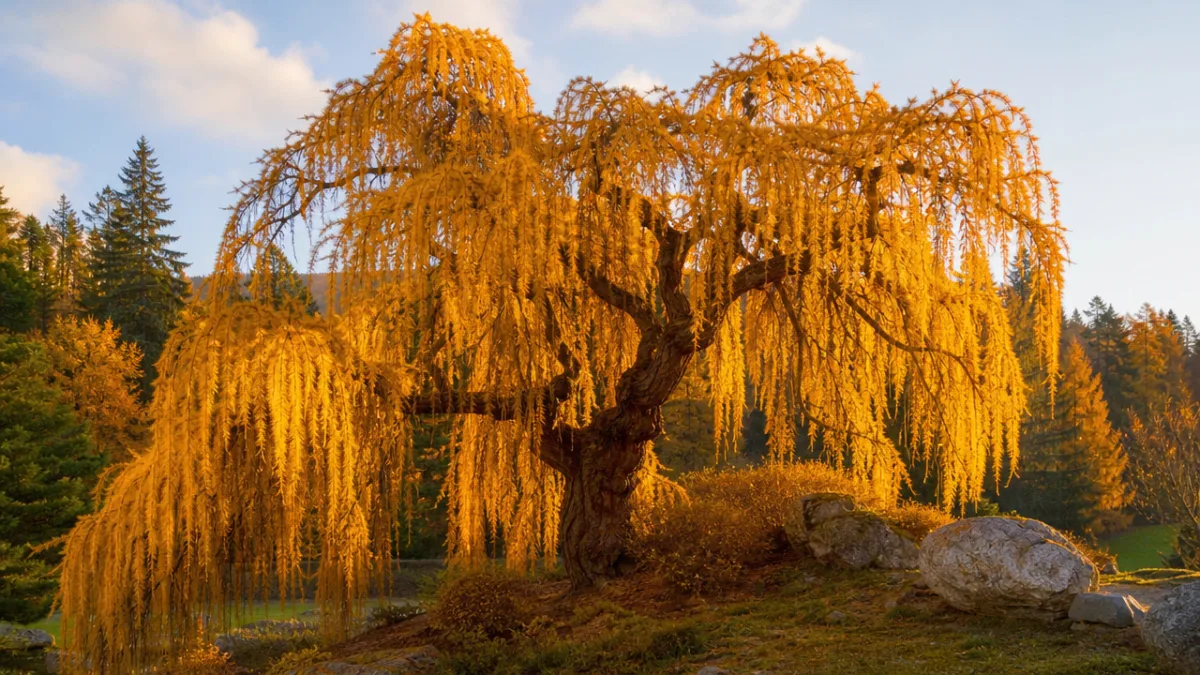
Summer brings a transition to a deeper, more settled green as the needles mature and the plant settles into its growing season. The weeping form is most fully expressed during this period, with the fully clothed branches creating the cascading silhouette that makes trained specimens so striking. Autumn brings the extraordinary transformation that deciduous conifers are celebrated for: the needles shift through shades of pale gold and warm amber before the final drop, leaving the plant in its bare winter state. The exposed branch architecture in winter is itself a point of beauty, revealing the skeletal form and fine twig detail that foliage conceals during the growing season.
Common Pests, Diseases, and Troubleshooting
While Larix decidua ‘Krejčí’ is generally considered a robust and relatively trouble-free plant when grown in appropriate conditions, it is not entirely without potential pest and disease concerns. Awareness of the most common issues and their management allows gardeners to intervene early when problems arise, preventing minor issues from becoming serious threats to the plant’s health and ornamental value. As with most woody plants, cultural practices that promote good air circulation, appropriate moisture levels, and overall plant vigor are the best foundation for a healthy, long-lived specimen.
Larch woolly aphid (Adelges laricis) is perhaps the most commonly encountered pest on larch species and cultivars. This small insect feeds on new growth and can cause distortion of developing shoots and needle clusters. While infestations are rarely fatal to an established plant, heavy infestations can cause cosmetic damage and stress the plant during critical growing periods. Inspection of new growth in spring, when the pest is most active, allows for early detection. Control measures range from strong jets of water to dislodge colonies through to targeted applications of appropriate insecticides for severe cases.
Larch canker, caused by the fungal pathogen Lachnellula willkommii, is the most significant disease concern for plants in this genus. The disease causes sunken, discolored cankers on branches and stems, which can girdle and kill affected wood above the infection point. Cool, wet conditions favor the spread of the disease, making good air circulation and avoidance of overhead irrigation particularly important preventive measures. Infected branches should be pruned out promptly with sterilized tools, cutting well back into healthy wood. In severe cases, consultation with a professional arborist or plant health specialist may be warranted to assess the extent of infection and develop a management strategy.
Beyond specific pests and diseases, several common cultural problems can affect the health and appearance of Larix decidua ‘Krejčí’. These include:
- Waterlogging and root rot — Caused by poorly drained soils or overwatering, leading to yellowing foliage, wilting, and eventual plant death. Prevention through proper site selection and soil preparation is essential.
- Drought stress — Particularly damaging to young or recently planted specimens. Consistent irrigation during dry periods in the first few years of establishment is critical to long-term success.
- Graft incompatibility — Occasionally observed in grafted plants, manifesting as a swollen or constricted union, poor vigor, or sudden collapse of the scion. Purchasing plants from reputable nurseries reduces this risk considerably.
- Late frost damage — Emerging spring foliage is vulnerable to late frosts, which can scorch new growth. Positioning the plant in a frost-sheltered location or providing temporary frost protection during critical periods helps prevent this seasonal issue.
With attentive observation and timely intervention, most of these issues can be effectively managed, ensuring that Larix decidua ‘Krejčí’ continues to provide its unique ornamental contribution to the garden for many decades. The longevity of well-sited specimens, combined with the plant’s relatively modest space requirements and low maintenance needs once established, makes it an excellent long-term investment for the thoughtful gardener committed to building a collection of exceptional plants with genuine horticultural merit and lasting garden value.








What do you think?
It is nice to know your opinion. Leave a comment.