










Introduction to Miniature Crochet Roses
Miniature crochet roses have become one of the most beloved and versatile projects in the fiber arts community, capturing the hearts of crafters at every skill level. These tiny floral creations manage to pack an extraordinary amount of charm into just a few centimeters of worked yarn, making them perfect embellishments for everything from greeting cards to garments. Whether you are a seasoned crocheter looking for a quick and satisfying project or a beginner eager to learn a new technique, miniature roses offer a wonderfully rewarding experience that yields impressive results with relatively minimal time investment.
The beauty of miniature crochet roses lies not only in their aesthetic appeal but also in their remarkable adaptability. A single small rose can transform an ordinary hair clip into a whimsical accessory, elevate a simple tote bag into something that looks handcrafted with great intentionality, or add a romantic touch to a handmade greeting card that will be treasured for years. Because these roses are so small, they also make excellent stash-busting projects, allowing you to finally use up those leftover bits of yarn sitting in your craft basket without committing to a large and time-consuming project.
Free patterns for miniature crochet roses are widely available online, and the variety available is genuinely impressive. From tightly coiled buds that suggest a rose just beginning to bloom, to more open flower shapes with visible petals fanning outward, the design possibilities are nearly endless. Pinterest and dedicated crochet websites host hundreds of pattern options, many contributed by generous designers who share their work freely with the crafting community. This article will walk you through everything you need to know to start creating your own miniature crochet rose collection, from choosing the right materials to understanding the fundamental techniques that make these tiny flowers possible.
Why Miniature Roses Are Perfect for Beginners
One of the most compelling reasons to start with miniature crochet roses is that they provide an excellent introduction to working with small gauge yarn and hooks without the overwhelming commitment of a full-sized floral project. Because you are working such a small piece, any mistakes are quickly undone and corrected, and the learning curve feels far more manageable than tackling a full amigurumi figure or a complex shawl. Many beginner crocheters find that completing even one small rose gives them a powerful sense of accomplishment that motivates continued practice and skill development.
Miniature roses also teach several foundational crochet concepts simultaneously. When you work through a rose pattern, you typically encounter chain stitches, slip stitches, single crochets, and sometimes double crochets all within the same compact project. Learning how these stitches interact with one another in a small, clearly defined context helps beginners build muscle memory and stitch recognition skills far more efficiently than practicing each stitch type in isolation on a swatch. The three-dimensional nature of the rose also introduces the concept of working in the round, which is a fundamental skill for many popular crochet projects.
Perhaps most importantly, the small scale of miniature roses means that a beginner can complete an entire project in a single sitting, sometimes in as little as fifteen or twenty minutes once the basic technique is learned. This rapid completion cycle is deeply encouraging for new crafters who may feel intimidated by larger projects that take weeks or months to finish. Each completed rose serves as concrete proof of progress and growing skill, creating a positive feedback loop that keeps beginners engaged and motivated to continue learning the craft of crochet.
Essential Materials and Tools for Tiny Roses
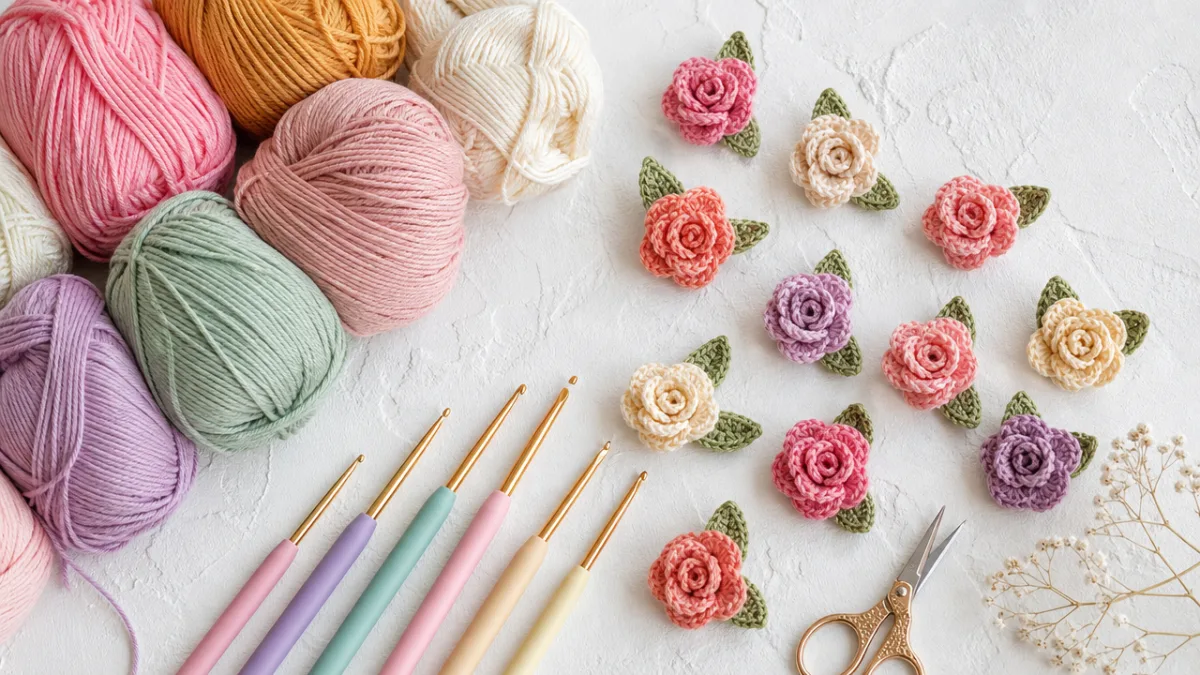
Choosing the right materials is absolutely critical when working on miniature crochet roses, because the small scale of these projects amplifies the impact of every material decision you make. The most important consideration is yarn weight, and for true miniature roses, most designers recommend using fingering weight or thread weight yarn, which typically falls into the size 1 or size 10 crochet thread category. These thinner fibers allow the intricate petal details to remain crisp and visible, preventing the finished rose from looking bulky or amorphous. However, if you prefer a slightly larger miniature rose, a light worsted or DK weight yarn can also produce beautiful results with just a bit more substance.
Your hook selection should be carefully matched to your chosen yarn weight. Working with a hook that is too large for your yarn will produce a loose, floppy fabric that does not hold the rose shape well, while a hook that is too small can make the work uncomfortably tight and difficult to manage. As a general guideline, most crochet thread patterns call for a steel crochet hook in sizes ranging from 1.5mm to 2.5mm, while fingering weight yarns typically pair well with hooks in the 2mm to 3mm range. It is always worth making a small test swatch before committing to your rose project, especially if you are working with an unfamiliar yarn and hook combination.
Beyond yarn and hooks, a few additional tools will make your miniature rose journey considerably smoother and more enjoyable. A tapestry needle with a blunt tip is essential for weaving in the yarn ends that every small project accumulates, and having several on hand prevents the frustration of searching for one when you are ready to finish off your work. Small scissors with sharp tips offer the precision needed to cut thread close to the work without accidentally snipping the project itself. For those planning to attach their roses to other items, fabric glue, small pins, or a hot glue gun may also prove useful, depending on the application you have in mind.
- Fingering weight yarn or size 10 crochet thread in your preferred colors, including classic reds and pinks as well as creative options like ivory, lavender, and deep burgundy
- Steel crochet hooks in sizes 1.5mm through 2.5mm for thread, or standard hooks in 2mm to 3mm range for fingering weight yarn
- Blunt-tipped tapestry needles for weaving in ends cleanly and securely
- Small, sharp scissors for precise trimming without damaging the delicate finished work
- Stitch markers to keep your place in pattern rounds, particularly helpful for beginners still building stitch-counting confidence
- Optional: floral wire, green floral tape, or felt backing depending on your intended use for the finished roses
Understanding Yarn Color Choices for Realistic Roses
Color selection plays a dramatic role in determining how realistic and visually appealing your finished miniature roses will appear. For the most lifelike results, many experienced crocheters recommend working with yarn that has a slight variation in tone rather than a completely solid, flat color. Hand-dyed or semi-solid yarns, even in very small amounts, can create the subtle shading that gives real rose petals their characteristic depth and luminosity. If you can only find solid colors, consider using two closely related shades of the same color family and alternating between them as you work through the petal rounds.
Classic rose colors like deep crimson, soft blush pink, and warm ivory are perennially popular choices that tend to photograph beautifully and coordinate easily with a wide range of projects and color schemes. However, do not feel constrained by traditional rose palette expectations. Miniature crochet roses in unexpected colors like deep teal, dusty mauve, or even variegated rainbow yarns can be absolutely stunning and give your finished accessories a unique, artistic quality that stands out from more conventional floral embellishments. The miniature scale actually makes adventurous color choices feel more approachable, since you are committing only a small amount of yarn to each experiment.
Green yarn for leaves and stems is worth considering from the beginning of your planning process, even if the patterns you choose do not include leaf components. Many crochet rose patterns are designed to work as standalone flower heads, but adding your own crocheted leaves or a simple chain stitch stem can dramatically elevate the finished piece and make it look more complete and professionally crafted. A few shades of green ranging from bright spring green to deep forest tones will give you the flexibility to create foliage that complements whatever rose color you choose, and learning a basic leaf pattern to accompany your roses is a natural and rewarding next step.
Overview of the Nine Free Pattern Styles
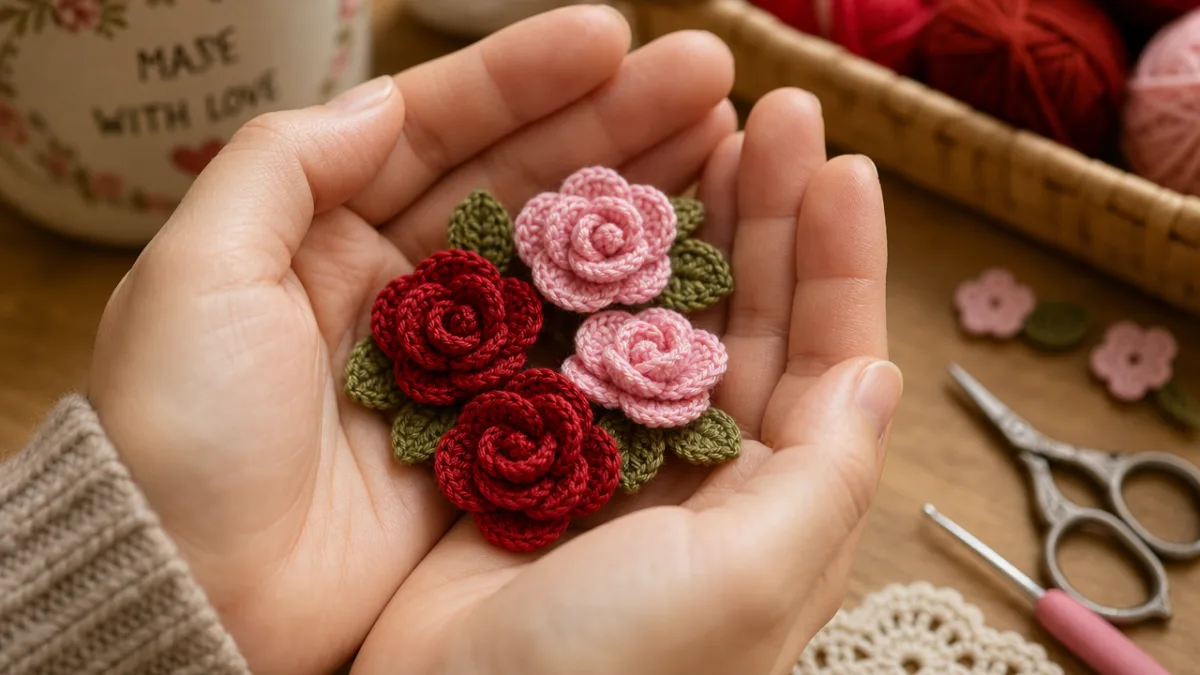
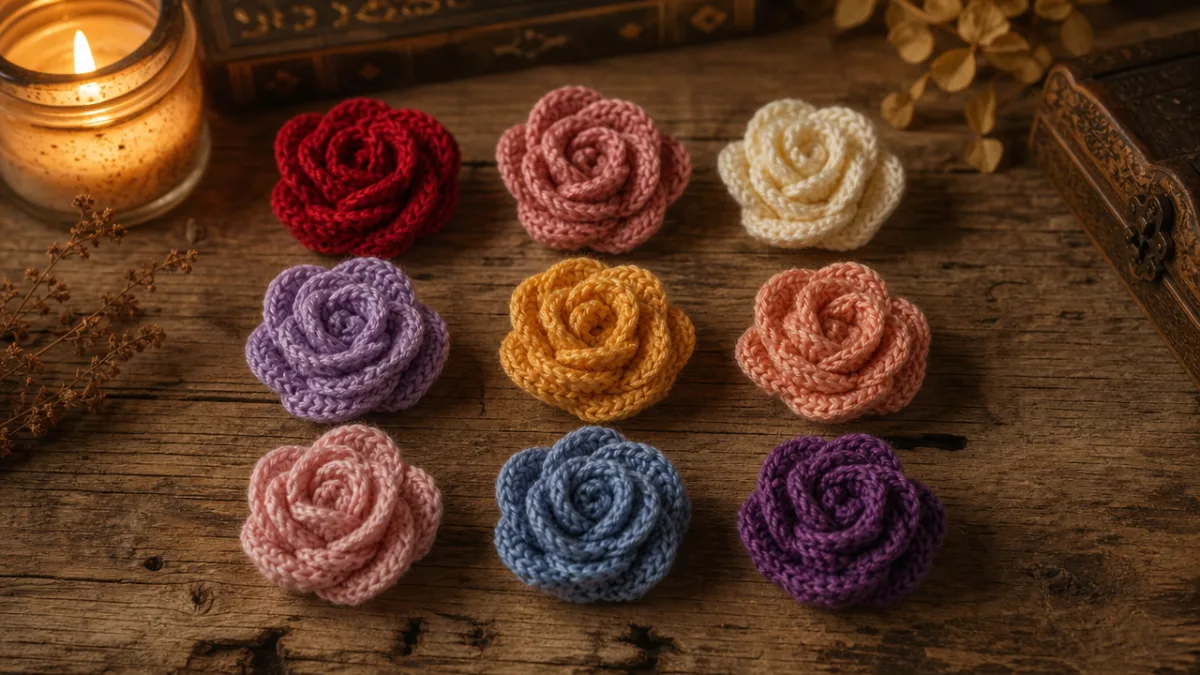
The nine miniature crochet rose free patterns referenced in this collection represent a beautifully curated range of styles, difficulty levels, and design approaches that together provide something genuinely useful for crafters at every stage of their crochet journey. Understanding the distinctions between these different pattern types before you begin helps you choose the right starting point for your current skill level and the specific application you have in mind for your finished roses. Some patterns produce tight, closed buds that evoke the elegance of a rose just beginning to open, while others create fuller, more open flower forms with clearly defined, spreading petals.
The simplest patterns in this collection typically work a foundation chain that is then rolled and stitched into a spiral bud shape, requiring nothing more than basic chain and single crochet stitches. These rolling bud patterns are ideal for absolute beginners and for situations where you need to produce a large quantity of roses quickly, such as when embellishing a wreath or filling a decorative bowl with a colorful floral arrangement. The rolling technique is deeply satisfying to execute because the rose shape appears almost magically as you coil the worked strip, providing an immediate and gratifying sense of transformation from flat fabric to three-dimensional flower.
More advanced patterns in the collection build on these basics by introducing techniques like working in multiple rounds, creating individual petals through specific stitch combinations, and incorporating decorative elements like a pistil or calyx. These more complex roses take longer to complete but reward the extra time investment with results that are noticeably more intricate and impressive. Several patterns in this group use a combination of front post and back post stitches to create petal dimensionality, while others achieve a similar effect through strategic use of increases and the placement of longer stitches at specific intervals in the work.
- The Rolling Strip Bud — worked as a long chain foundation with graduated stitch heights, then rolled and stitched at the base to form a tight, elegant bud
- The Five-Petal Open Rose — worked in the round with five distinct petal sections, each formed from a series of chains and double crochets
- The Layered Bloom — features two or three rounds of petals worked at different heights to create a realistic sense of depth and dimension
- The Spiral Rose — uses an unjoined spiral technique to build continuous rounds of petals without visible seam lines between rows
- The Thread Lace Rose — worked in fine crochet thread with delicate chain loops forming each petal for an airy, romantic effect
- The Quick Granny Rose — adapts the traditional granny square format into a circular rose motif that works beautifully as a standalone embellishment
- The Ruffled Full Rose — incorporates significant increases in the petal rounds to produce dramatic, ruffled edges reminiscent of garden rose varieties
- The Closed Bud with Sepals — includes a green sepal component worked separately and attached at the base for a remarkably realistic presentation
- The Flat Appliqué Rose — designed to lie perfectly flat against fabric surfaces, making it ideal for sewing or gluing onto clothing and accessories
Matching Pattern Style to Your Intended Project
Choosing the right rose pattern for your specific project can make an enormous difference in the finished result, and taking a few minutes to think through this decision before you begin is always time well spent. Flat appliqué roses work best when you plan to attach them to fabric surfaces like bags, clothing, or quilt blocks, because their flat profile allows them to lie smoothly without creating uncomfortable bumps or catching on surrounding materials. Three-dimensional roses, by contrast, are more visually striking when displayed on their own or attached to surfaces where their sculptural quality can be appreciated, such as on a brooch pin, a hair comb, or the top of a gift box.
Scale is another important consideration that goes hand in hand with pattern selection. If you are making roses to embellish a miniature dollhouse scene or to decorate a fairy garden, you will want the smallest, most delicate patterns worked in the finest thread available. Roses destined for a chunky knit headband or a rustic burlap wreath, on the other hand, might benefit from being worked in a slightly heavier yarn that reads well from a distance and holds its shape without being dwarfed by the surrounding textures. The nine patterns in this collection span a range of finished sizes, so reviewing the approximate dimensions given in each pattern before you begin is always a good practice.
Consider also the permanence and durability requirements of your project when selecting a pattern. Roses that will be frequently handled, washed, or worn in active settings should be made with a pattern that produces a dense, tightly worked fabric that will hold its shape through regular use. Decorative roses intended purely for display or for use in crafts that will not be subjected to wear and washing can be made with more open, lacy patterns without concern for durability. Stiffening spray or a light application of fabric stiffener can also help more delicate roses hold their shape over time, particularly for display pieces where maintaining the precise petal arrangement matters.
Step-by-Step Techniques for Crochet Rose Success
Mastering a few key techniques will dramatically improve the quality and consistency of your miniature crochet roses, regardless of which specific patterns you choose to follow. The most fundamental skill is achieving consistent tension throughout your work, which is especially important at the miniature scale where even small variations in stitch tension can cause significant distortions in the finished rose shape. Practice maintaining a steady, even grip on both your hook and your working yarn, and take breaks if your hand begins to cramp or fatigue, as tired hands tend to produce uneven tension that shows in the finished work.
Reading and interpreting crochet abbreviations confidently is another essential skill for working from free patterns, which are published by designers from all over the world and may follow either US or UK crochet terminology conventions. Always check the abbreviation key at the beginning of any pattern you use to confirm which terminology system it employs, since the same abbreviation can mean very different stitches depending on the convention being used. For example, a US double crochet is equivalent to a UK treble crochet, and confusing the two will produce a significantly different result. Most free patterns published on English-language websites and Pinterest follow US terminology, but it is always worth confirming before you begin.
Finishing techniques deserve particular attention when working at the miniature scale, because the small size of the roses means that improperly secured yarn ends can quickly unravel the entire piece if not handled correctly. When fastening off your work, always leave a tail of at least six to eight centimeters to work with, then thread this tail onto your tapestry needle and weave it through several stitches in different directions before trimming it close to the work. For thread weight projects where the needle work is especially fiddly, a tiny drop of clear-drying fabric glue applied to the woven end provides additional security without adding visible bulk to the finished rose.
Troubleshooting Common Miniature Rose Problems
Even experienced crocheters encounter challenges when working with miniature rose patterns, and knowing how to identify and address common problems will save you considerable frustration as you build your skills. One of the most frequently encountered issues is a rose that refuses to hold its dimensional shape and instead collapses into a flat, shapeless disc after being removed from the hook. This problem is almost always caused by working with too loose a tension or too large a hook relative to the yarn weight, allowing the stitches to relax and lose their structure once the work is off the hook. Re-blocking the rose with a light application of water and reshaping it while damp can sometimes rescue a collapsed piece, but the most reliable fix is to swatch with a smaller hook from the outset.
Petals that curl inward or outward more dramatically than intended are another common challenge, particularly with patterns that use significant increases or decreases to shape the petal edges. Inward curling petals often indicate that the tension is too tight, compressing the fabric so that it naturally curves away from the viewer. Outward curling or ruffling beyond what the pattern intends usually signals that too many increases have been made, creating excess fabric that has nowhere to go but outward. Carefully counting your stitches at the end of each round and comparing them against the pattern’s stated stitch counts is the most reliable way to catch these errors before they compound over multiple rounds.
Finally, some crafters struggle with the process of assembling the rose’s components, particularly when working with patterns that require the petal strip to be rolled and stitched at the base. The key to a neat rolling technique is to maintain consistent tension as you coil the strip, keeping each successive layer slightly higher than the last to create the characteristic spiral rise of a real rose bloom. Stitching through all layers at the base with the same yarn used to work the rose, rather than a separate thread, creates a more cohesive result and eliminates the risk of contrast thread showing at the bottom of the finished flower.
Creative Ways to Use Your Miniature Crochet Roses
Once you have created a collection of miniature crochet roses, the exciting challenge of deciding how to use and display them begins. These tiny floral creations are remarkably versatile embellishments that can enhance an almost unlimited range of projects and everyday items. Wearable accessories represent one of the most popular application categories, with hair accessories being particularly beloved. A simple bobby pin or barrette becomes something truly special when topped with a cluster of two or three miniature roses in complementary colors, and creating these personalized hair accessories makes a wonderfully thoughtful and relatively quick handmade gift for friends and family members of all ages.
Home décor applications for miniature crochet roses are equally varied and satisfying. A simple glass cloche or shadow box can become a striking decorative piece when filled with an artfully arranged collection of crocheted roses in a coordinated color palette. Framed botanical arrangements, where roses are attached to a fabric or paper background along with crocheted leaves and stems, create wall art that is genuinely unique and showcases your fiber arts skills in a way that guests will consistently admire and ask about. During seasonal holidays, miniature roses make wonderful additions to wreaths, garlands, and handcrafted ornaments, adding softness and texture to holiday decorating that manufactured ornaments simply cannot replicate.
Gift wrapping and paper crafts offer yet another exciting avenue for showcasing your miniature roses. Attaching a crocheted rose or a small bouquet of roses to a wrapped gift package in place of a traditional bow creates packaging that is genuinely part of the gift itself, giving the recipient a lasting keepsake beyond the contents of the box. Handmade greeting cards embellished with small roses have a warmth and personal quality that printed cards simply cannot match, and many paper crafters have begun incorporating fiber arts elements like these miniature roses into their mixed-media card and scrapbook projects with beautiful results.
Caring for and Preserving Your Crocheted Roses
Properly caring for your miniature crochet roses ensures that they retain their beauty and structural integrity over the long term, whether they are being worn regularly as accessories or displayed as decorative objects. For roses made from natural fiber yarns like cotton or wool, gentle hand washing in cool water with a mild soap is recommended when cleaning is necessary. Avoid wringing or aggressively squeezing the roses during washing, as this can distort the petal shapes permanently. Instead, gently press out excess water between two clean towels, then reshape the rose carefully and allow it to air dry completely before wearing or displaying it.
Roses intended for permanent display rather than regular use can benefit significantly from treatment with a commercial fabric stiffener or a homemade solution of equal parts white glue and water. Apply the stiffening solution while the rose is damp, carefully manipulating the petals into their ideal positions before allowing the piece to dry completely on a non-stick surface. Once the stiffener has dried, the rose will hold its shape indefinitely under normal display conditions, making this treatment particularly worthwhile for roses incorporated into framed art, centerpiece arrangements, or other stationary decorative applications where maintaining precise petal positioning matters.
For roses worn as accessories and subjected to regular handling, periodic reshaping may be necessary to maintain the dimensional quality of the petals over time. A light misting of water followed by gentle manual reshaping and air drying can refresh a rose that has become slightly flattened or misshapen through regular wear. Storing your rose accessories in a small box or padded pouch rather than loose in a drawer or bag also helps protect the petals from being crushed or distorted between uses. With appropriate care, well-made miniature crochet roses can remain beautiful keepsakes for many years, eventually becoming treasured heirlooms that tell the story of your creative craft practice.








What do you think?
It is nice to know your opinion. Leave a comment.