










Hylotelephium ‘Plum Dazzled’: A Complete Guide to This Stunning Sedum
Introduction to Hylotelephium ‘Plum Dazzled’
Hylotelephium ‘Plum Dazzled’ is one of the most visually captivating cultivars in the world of succulents, celebrated for its dramatic foliage coloration and its ability to bring bold, year-round interest to gardens and containers alike. This compact, clump-forming perennial belongs to the Crassulaceae family and was formerly classified under the genus Sedum, a reclassification that has been widely adopted in the horticultural world. Whether you are a seasoned succulent enthusiast or a curious beginner, ‘Plum Dazzled’ is a plant that genuinely earns the excitement it generates among gardeners worldwide.
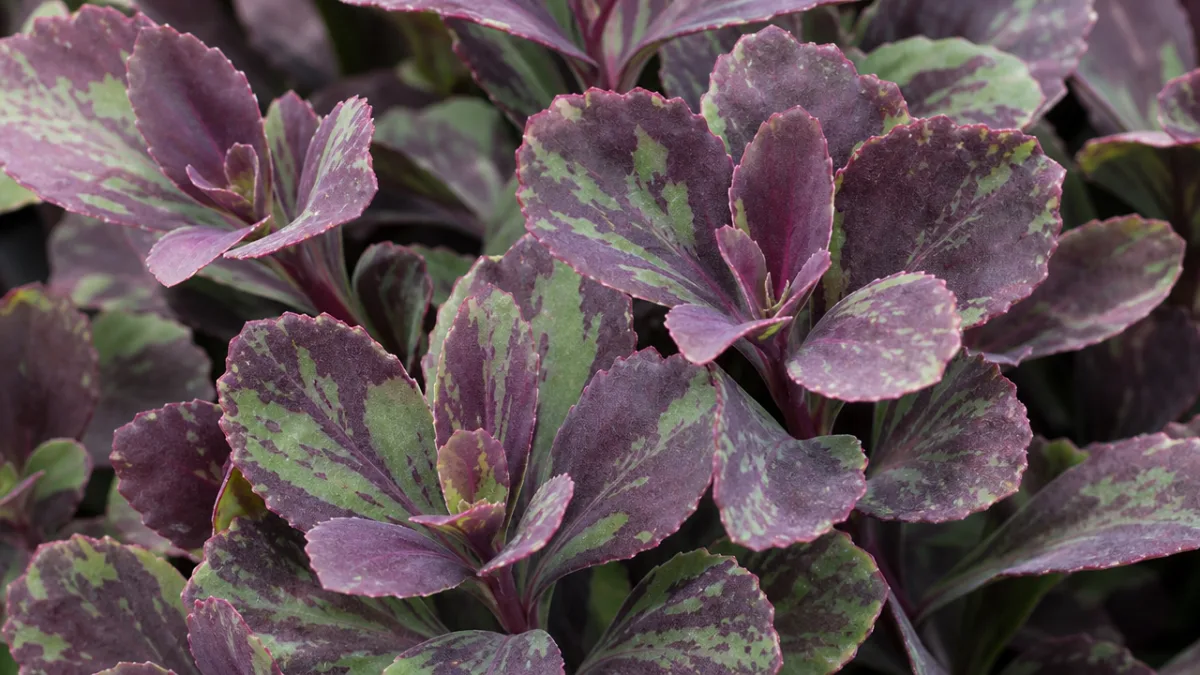
What sets ‘Plum Dazzled’ apart from other stonecrops and hardy succulents is the extraordinary depth and complexity of its leaf color. The foliage presents a rich, variegated tapestry of deep burgundy, plum purple, and smoky green, often edged or mottled with hints of cream or pale rose, depending on the season and growing conditions. This is not a plant that fades into the background; it commands attention from early spring right through to the frosts of late autumn, making it an exceptional choice for gardeners who want continuous color impact with minimal fuss.
Beyond its aesthetic appeal, ‘Plum Dazzled’ carries the hardy, drought-tolerant, and low-maintenance characteristics for which Hylotelephium species are renowned. It thrives in conditions that would challenge many other ornamental plants, tolerating poor soils, summer heat, and periods of dryness with remarkable composure. For gardeners seeking a plant that delivers maximum visual reward for minimum intervention, this cultivar represents something close to an ideal solution, blending ornamental excellence with practical resilience.
Origins, Classification, and Botanical Background
The genus Hylotelephium encompasses a group of succulent perennials that were long included within the sprawling genus Sedum. The taxonomic separation, proposed by botanist Ohba in the 1970s and gradually adopted through subsequent decades, reflects meaningful differences in root structure, growth habit, and reproductive characteristics. While many gardeners and nurseries still use the name Sedum colloquially, Hylotelephium is now the accepted scientific designation, and ‘Plum Dazzled’ sits comfortably within this genus as a modern ornamental cultivar likely derived from hybridization work involving species such as Hylotelephium telephium and related forms.
The development of cultivars like ‘Plum Dazzled’ represents the ongoing effort by plant breeders to push the boundaries of foliage color and plant habit within this genus. Starting from the rich burgundy tones found in cultivars such as ‘Matrona’ and ‘Purple Emperor’, breeders have selected and crossed plants over generations to achieve increasingly dramatic coloration combined with improved variegation patterns. The result is a plant whose leaves can display multiple colors simultaneously, creating a layered visual effect that changes subtly across the growing season as temperatures fluctuate and light levels shift.
From a botanical standpoint, ‘Plum Dazzled’ is a rhizomatous herbaceous perennial, meaning it dies back to ground level in winter before re-emerging in spring from a network of fleshy underground stems. This die-back habit is an important consideration for gardeners, as it means the plant essentially disappears for the coldest months, only to return reliably each spring. The fleshy, succulent nature of both the leaves and stems allows the plant to store water efficiently, which directly contributes to its impressive drought tolerance during the warmer growing months.
Appearance, Foliage, and Seasonal Changes
The most immediately striking feature of Hylotelephium ‘Plum Dazzled’ is undoubtedly its foliage, which presents a remarkable color palette throughout the growing season. The broad, fleshy leaves emerge in spring carrying tones of deep plum and smoky purple, often edged with irregular cream or pale blush markings that give each leaf an almost hand-painted quality. As the season progresses into the warmth of summer, these colors can deepen and intensify, with full sun exposure encouraging the richest purples and the most contrasting variegation patterns across the leaf surface.
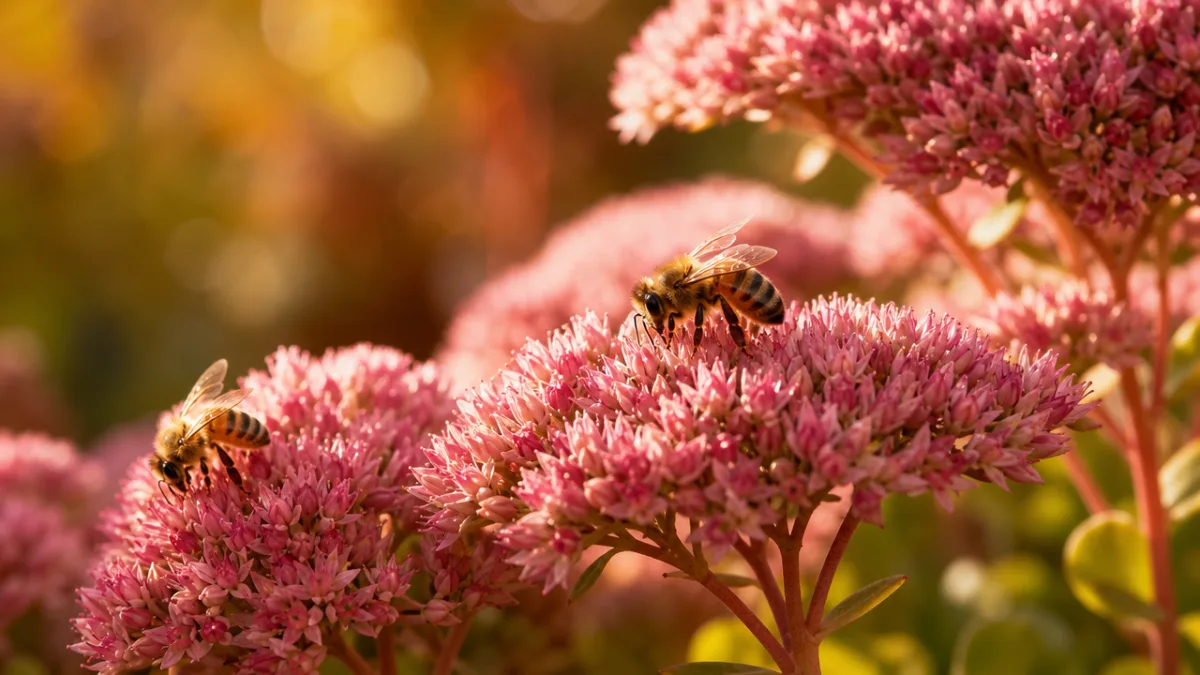
In late summer and early autumn, ‘Plum Dazzled’ enters one of its most spectacular phases as it sends up clusters of small, star-shaped flowers held in broad, flat-topped clusters known botanically as corymbs. The flowers are typically a soft rose-pink to dusty mauve in color, and they complement the dark foliage in a way that feels simultaneously bold and harmonious. This flowering period typically extends from late August through October in temperate climates, providing essential late-season nectar for bees, butterflies, and other pollinators before the cold sets in. The combination of rich foliage and delicate flowers during this period is widely considered the plant’s peak of ornamental impact.
As autumn deepens and temperatures begin to drop, the plant undergoes another visual transformation. The foliage may intensify further into deeper burgundy shades, and the spent flower heads take on attractive buff and russet tones that persist into winter, providing subtle structural interest in the garden even after the main growing season has ended. Many gardeners choose to leave the dried seed heads in place through the winter months, as they catch frost and snow beautifully and provide seeds for birds. Come spring, the entire cycle begins again as fresh, vividly colored shoots emerge from the soil.
Growing Conditions and Care Requirements
Hylotelephium ‘Plum Dazzled’ is a plant that rewards gardeners who understand and respect its preferences, though it is far from demanding by any reasonable standard. The single most important requirement for growing this cultivar successfully is adequate sunlight. Full sun, defined as at least six hours of direct sunlight per day, is strongly preferred, and this is not merely a suggestion for optimal growth but a genuine necessity for achieving the rich foliage coloration that makes the plant so desirable. Plants grown in shade or semi-shade will tend to produce paler, less saturated leaf colors and are more likely to develop leggy, flopping growth habits that undermine the compact mounding form.
Soil requirements for ‘Plum Dazzled’ are centered on drainage above almost all other considerations. Like all Hylotelephium species, this cultivar is highly susceptible to root rot in consistently wet or waterlogged conditions, and heavy clay soils that hold moisture can be genuinely fatal. The ideal growing medium is a well-draining, moderately fertile soil that may even lean toward the sandy or gritty end of the spectrum. Raised beds, rock gardens, gravel gardens, and sloped sites are all excellent environments for this plant, as they naturally encourage rapid drainage. If planting in heavier soils, incorporating generous amounts of horticultural grit or coarse sand at planting time will dramatically improve outcomes.
Once established, ‘Plum Dazzled’ requires very little in the way of supplemental watering, making it an outstanding choice for water-wise gardens and low-maintenance landscaping schemes. During its first growing season, regular watering helps the root system establish effectively, but from the second year onward, rainfall in most temperate climates is sufficient to sustain healthy growth. Overwatering is a more common mistake than underwatering with this plant. Fertilization requirements are equally modest; an annual application of a balanced slow-release fertilizer in early spring is more than adequate, and excessive feeding can actually encourage lush, weak growth at the expense of the compact habit and vivid coloration.
Key care practices to keep in mind include:
- Pruning: Cut back dead stems to ground level in early spring before new growth emerges, or leave seed heads through winter for wildlife and structural interest.
- Division: Divide clumps every three to four years in spring to maintain vigor and prevent the center of the plant from becoming woody and unproductive.
- Staking: Generally unnecessary if the plant receives full sun; shade-grown specimens may flop and benefit from discreet support.
- Pest and disease monitoring: Keep an eye out for vine weevil larvae in containers and watch for aphid infestations on new spring growth, though the plant is generally robust.
Landscape Uses and Garden Design Applications
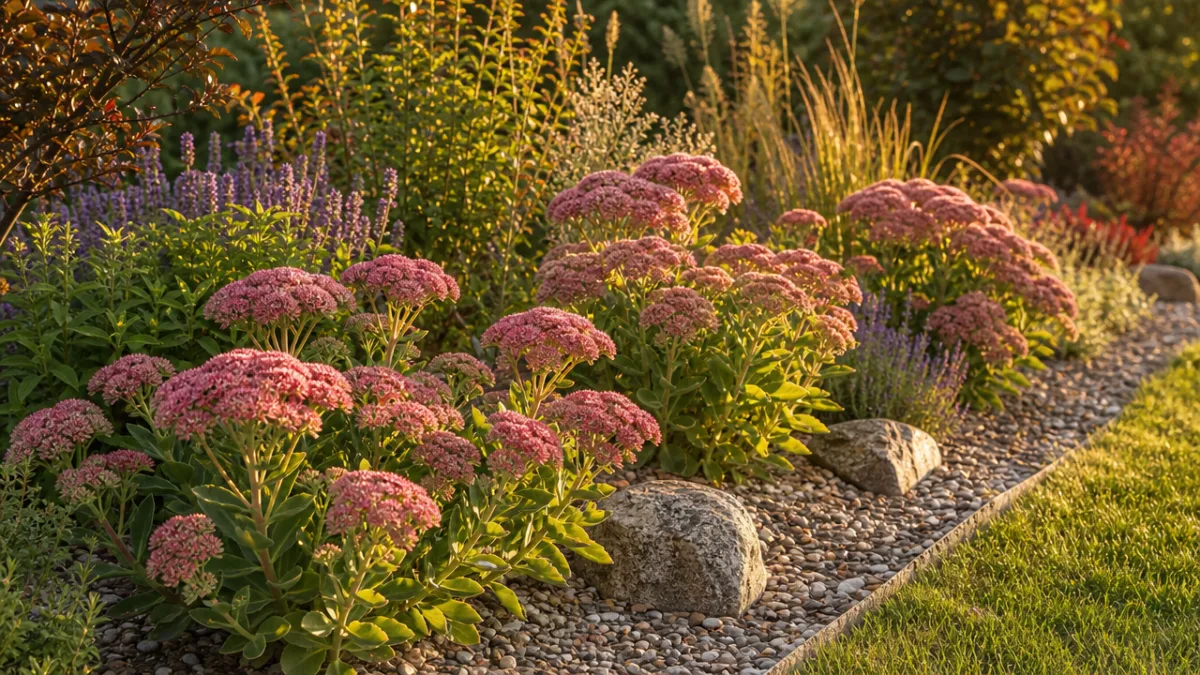
The design versatility of Hylotelephium ‘Plum Dazzled’ is one of its most compelling attributes for gardeners and landscape designers alike. Its compact, mounding habit, typically reaching between 30 and 45 centimeters in height and spread at maturity, makes it an ideal candidate for the front or middle of mixed perennial borders, where its bold foliage can serve as a rich, dark anchor that makes surrounding plants appear to pop with contrast. Paired with silver-leaved plants such as Stachys byzantina or Artemisia, or alongside golden-leafed grasses, the plum and burgundy tones of ‘Plum Dazzled’ create combinations of exceptional visual sophistication.
Rock gardens and gravel gardens represent another habitat where ‘Plum Dazzled’ genuinely excels, both aesthetically and practically. The naturally free-draining conditions of these garden styles suit the plant’s cultural requirements perfectly, and the contrast between the rich, fleshy foliage and the spare, mineral texture of rocks and gravel creates a planting aesthetic that feels simultaneously naturalistic and designed. The plant’s ability to tolerate the reflected heat and intense light conditions common in south-facing gravel gardens further cements its suitability for this type of planting. Contemporary garden designers working in the New Perennials tradition frequently incorporate plants of this type as key textural and color elements.
Container gardening offers yet another dimension of opportunity for ‘Plum Dazzled’, allowing gardeners without ground planting space to enjoy the plant on patios, balconies, and roof terraces. When grown in containers, the key priority is ensuring exceptional drainage, which can be achieved by using a gritty, free-draining compost mix and ensuring pots have generous drainage holes. Terracotta containers are often recommended for succulents as they are naturally porous and help regulate moisture levels. In containers, the compact habit of ‘Plum Dazzled’ is shown to particular advantage, and the plant can be combined with other drought-tolerant species for a cohesive, low-maintenance container planting scheme.
Wildlife Value and Ecological Significance
One of the less frequently celebrated aspects of Hylotelephium ‘Plum Dazzled’ is its considerable value to wildlife, particularly during the late summer and autumn flowering period when many other nectar sources in the garden have already finished. The broad, flat flower heads are structured in a way that makes them exceptionally accessible to a wide range of pollinators, including bumblebees, honeybees, solitary bees, hoverflies, and numerous butterfly species. In temperate gardens, the flowering period of ‘Plum Dazzled’ can represent a critical late-season resource for pollinators building their reserves before the onset of winter, giving the plant a genuine ecological function beyond its ornamental role.
Research and observation in both garden and semi-natural settings have documented the strong association between late-flowering Hylotelephium species and declining pollinator populations, with these plants frequently cited among the most valuable late-season resources available in managed garden environments. The Royal Horticultural Society in the United Kingdom has recognized Hylotelephium cultivars with the Award of Garden Merit and consistently recommends them in the context of wildlife-friendly gardening. By incorporating ‘Plum Dazzled’ into garden designs, gardeners are making a choice that supports biodiversity without any sacrifice in ornamental quality, which represents an increasingly important consideration in contemporary garden planning.
Beyond pollinators, the dried seed heads of ‘Plum Dazzled’ that persist through winter provide food for seed-eating birds, and the dense root systems contribute to soil stability and structure over time. The plant’s capacity to thrive in dry, well-drained conditions without supplemental irrigation also means it has a lower environmental footprint than many ornamental alternatives that require regular watering to maintain their appearance. In an era of increasing awareness about garden sustainability and water conservation, these characteristics give ‘Plum Dazzled’ a relevance that extends well beyond its considerable decorative merits.
Propagation Methods and Multiplication
Propagating Hylotelephium ‘Plum Dazzled’ is a rewarding and relatively straightforward process, with several viable methods available to gardeners depending on the time of year and the resources at hand. Division is the simplest and most reliable approach, and it has the additional benefit of simultaneously rejuvenating established clumps that may have developed a woody or unproductive center. Division is best carried out in early spring, just as new growth begins to emerge from the ground, at which point the root mass can be carefully lifted with a garden fork and separated into sections, each containing both roots and emerging shoots. These divisions can be replanted immediately at the same depth as the parent plant and will typically establish quickly.
Stem cuttings represent another effective propagation method, particularly useful for gardeners who wish to produce multiple new plants without disturbing an established specimen. Cuttings are best taken in late spring or early summer when the stems are actively growing but not yet in flower. Each cutting should be approximately 8 to 10 centimeters long, with the lower leaves removed to expose a clean section of stem. The cut end can be allowed to callous briefly before being inserted into a gritty, free-draining propagation medium. Under warm conditions with adequate light but no direct sun, cuttings typically root within three to four weeks and can be potted on once they show signs of active new growth.
Leaf propagation, which works well for many succulent species, is less commonly used with Hylotelephium due to the relatively modest success rates compared with stem cuttings and division. Seed propagation is possible but comes with the significant caveat that seedlings raised from a named cultivar such as ‘Plum Dazzled’ will not breed true, meaning the offspring may display different foliage colors and characteristics from the parent plant. For gardeners specifically seeking to replicate the distinctive variegated appearance of ‘Plum Dazzled’, vegetative propagation through division or stem cuttings remains the only reliable approach. Newly propagated plants should be introduced to outdoor conditions gradually if they have been rooted indoors, hardening them off over a period of one to two weeks before final planting.
Hardiness, Winter Care, and Climate Considerations
One of the most practically valuable attributes of Hylotelephium ‘Plum Dazzled’ is its impressive cold hardiness, which makes it a viable garden perennial across a wide range of temperate climates. The plant is generally rated as hardy to USDA Hardiness Zone 4, meaning it can tolerate winter minimum temperatures down to approximately minus 34 degrees Celsius, a level of cold hardiness that exceeds the requirements of most temperate garden environments in Europe, North America, and similar climates. This hardiness is rooted in the plant’s ability to die back fully above ground in autumn, protecting its dormant root system beneath an insulating layer of soil through even the harshest winters.
In practice, ‘Plum Dazzled’ requires very little specific winter care in most temperate gardens. The most important consideration is ensuring that the soil does not become persistently waterlogged during the dormant winter months, as even a fully dormant plant can succumb to root rot if its root zone sits in standing water for extended periods. In gardens with heavy or poorly draining soils, improving drainage before planting or selecting an appropriately drained site is far preferable to attempting remedial action after planting. A light mulch of grit or gravel around the base of established plants can help regulate moisture at the soil surface and prevent cold, wet conditions from directly contacting the crown of the plant.
In climates at the warmer end of the plant’s range, such as the milder parts of Zone 9, ‘Plum Dazzled’ may behave more as a semi-evergreen than a fully deciduous perennial, retaining some foliage through the mildest winters. In these conditions, the primary challenge shifts from cold hardiness to summer heat and humidity management, and ensuring excellent drainage and air circulation becomes even more critical to prevent fungal issues. Gardeners in particularly hot and humid climates may find that siting the plant where it receives afternoon shade provides a measure of relief from heat stress during the most intense summer months, though this must be balanced against the light requirements needed to maintain the richest foliage coloration.








What do you think?
It is nice to know your opinion. Leave a comment.