










Hymenoxys (Four Nerve Daisy): A Complete Guide to the Sun-Loving Prairie Wildflower
Introduction to Hymenoxys and the Four Nerve Daisy
Hymenoxys, commonly known as the Four Nerve Daisy, is a captivating genus of flowering plants belonging to the Asteraceae family. Native to the arid and semi-arid regions of North America, particularly the southwestern United States and northern Mexico, these cheerful yellow wildflowers have adapted remarkably well to challenging environments where few other plants can thrive. Their resilience, combined with their bright, daisy-like blooms, has made them increasingly popular among native plant enthusiasts, xeriscaping gardeners, and wildflower lovers across the continent.
The common name “Four Nerve Daisy” refers to a distinctive botanical characteristic: the ray petals of the flower each display four parallel veins running along their length, a feature that sets this genus apart from many of its relatives in the daisy family. This trait is most visible when the petals are held up to sunlight, giving the flowers an almost translucent, delicate appearance despite the plant’s tough-as-nails constitution. The genus name Hymenoxys derives from Greek roots meaning “membrane” and “sharp,” a reference to the papery scales found on the plant’s achene fruits.
There are approximately 25 to 30 recognized species within the Hymenoxys genus, with the most widely cultivated being Hymenoxys acaulis (stemless four nerve daisy) and Hymenoxys scaposa (basin daisy). Each species occupies a slightly different ecological niche, from rocky mountain slopes to desert grasslands and limestone outcrops. Understanding the diversity within this genus is the first step toward appreciating why these plants deserve far greater recognition in horticulture and conservation circles than they currently receive.
Natural Habitat and Ecological Significance
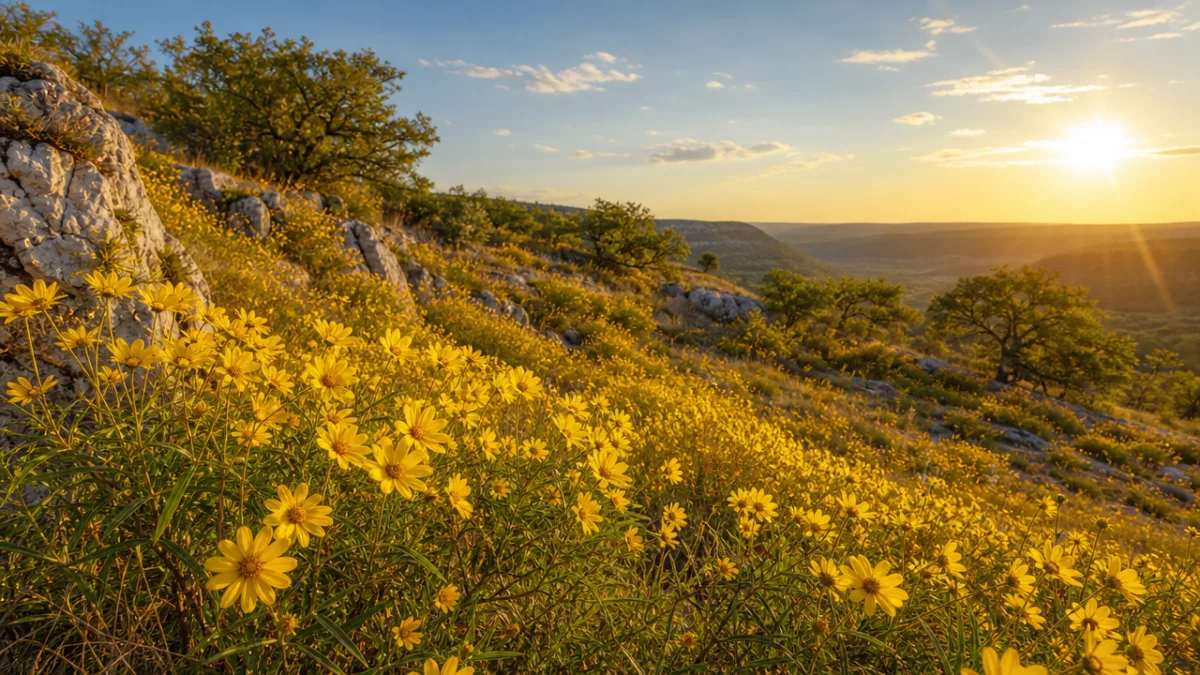
The Four Nerve Daisy is a quintessential plant of the American Southwest, thriving across a broad range that encompasses Texas, New Mexico, Arizona, Colorado, Utah, and portions of the Great Plains. Within these regions, it favors well-drained, often rocky or gravelly soils that would challenge most garden plants. It is commonly found growing on limestone bluffs, caliche flats, dry creek banks, and open grasslands where the soil drains rapidly and the sun blazes without mercy for much of the year. This preference for poor, lean soils is actually a survival strategy — richer, moister soils tend to favor aggressive competitors that would quickly overwhelm the relatively compact Four Nerve Daisy.
Ecologically, Hymenoxys species play a meaningful role in supporting native pollinators. The bright yellow flowers, which bloom from spring well into fall in many locations, serve as an important nectar and pollen source for native bees, butterflies, and other beneficial insects. Species such as the bordered patch butterfly and numerous sweat bees are particularly associated with Four Nerve Daisy populations. In regions where native wildflower coverage has diminished due to development or invasive species pressure, patches of Hymenoxys can provide critical foraging habitat during periods when other food sources are scarce.
Beyond their role as pollinator plants, Four Nerve Daisies contribute to soil stability on slopes and disturbed areas. Their fibrous root systems help hold loose, erodible soils in place, making them valuable pioneer species in ecological restoration projects. In their native range, they frequently appear among the first colonizers of disturbed ground, paving the way for more complex plant communities to establish over time. This ecological resilience and pioneering character makes them not just beautiful, but genuinely useful components of healthy, functioning landscapes.
Botanical Characteristics and Identification
Identifying Hymenoxys in the field is a rewarding exercise once you know what to look for. Plants in this genus are typically low-growing perennials or, in some cases, annuals or biennials, forming tidy clumps or rosettes of narrow, linear to spatula-shaped leaves. The foliage is often covered in fine silvery hairs that give it a grayish-green cast, an adaptation that reflects intense sunlight and reduces water loss through transpiration. Leaf margins are generally smooth, and the leaves frequently bear small glands that release a faintly resinous, aromatic scent when bruised — another distinctive identification clue.
The flower heads are borne on slender, erect scapes that rise above the foliage, typically reaching between 6 and 18 inches in height depending on the species and growing conditions. Each flower head consists of a central disc of tiny tubular florets surrounded by 8 to 14 ray florets, each of which displays the characteristic four veins that give the plant its common name. The rays are bright golden yellow and typically feature three shallow lobes at their tips. The overall appearance is cheerful and sunny, calling to mind a miniature sunflower or black-eyed Susan, though the Four Nerve Daisy’s central disc tends toward a darker yellow or brownish-yellow rather than true black.
After flowering, the plant produces small, dry achene fruits topped with a crown of papery scales or awns that aid in wind dispersal. Examining these seed structures under a hand lens reveals remarkable detail and confirms genus identification when the flowers are no longer present. The root system is typically a stout taproot with fibrous lateral roots, well suited to anchoring the plant in rocky soils and accessing deep moisture during dry periods. Gardeners who have tried transplanting established specimens can attest to the impressive depth these roots can achieve even in relatively young plants.
Growing Hymenoxys in the Garden
For gardeners in the appropriate climate zones, growing Four Nerve Daisy is a genuinely rewarding experience that yields maximum floral impact for minimal effort. These plants are ideally suited to USDA hardiness zones 4 through 9, depending on the species, with most proving surprisingly cold-hardy given their desert origins. The key to success is replicating their native soil conditions as closely as possible. They demand excellent drainage above all else — standing water, even briefly, can prove fatal to established plants. If your garden soil is heavy clay or tends to stay moist, amending with coarse sand, pea gravel, or crushed granite before planting is essential.
Full sun is non-negotiable for Hymenoxys. Plants grown in partial shade may survive but will produce noticeably fewer flowers and develop a weaker, more sprawling habit than their sun-grown counterparts. A location receiving at least six to eight hours of direct sunlight daily will produce the most compact, floriferous plants. Once established, Four Nerve Daisies are remarkably drought-tolerant and typically require little to no supplemental irrigation in appropriate climates. During the establishment period of the first growing season, moderate watering every week or two will help plants develop their root systems, after which they can largely fend for themselves.
Fertilization is generally unnecessary and can actually be counterproductive with these wildflowers. Excess nitrogen promotes lush, floppy foliage at the expense of flowers and can reduce the plant’s overall hardiness. The following practices will help ensure success in the garden:
- Plant in well-drained, lean soil with a neutral to slightly alkaline pH between 7.0 and 8.0
- Avoid organic mulches that retain moisture around the crown; use gravel mulch instead
- Deadhead spent flowers to prolong the blooming season and prevent excessive self-seeding
- Divide clumps every three to four years to maintain vigor and rejuvenate older plants
- Avoid overwatering, especially during winter dormancy when root rot is a significant risk
Propagation and Seed Starting
Propagating Hymenoxys is straightforward through seeds, division, or occasionally stem cuttings, with seed propagation being the most common and reliable method for most gardeners. Seeds ripen approximately four to six weeks after flowering and can be collected by hand or allowed to self-sow naturally in the garden. Collected seeds should be stored in a cool, dry location in paper envelopes until planting time. Unlike many prairie wildflowers, most Hymenoxys species do not require a cold stratification period to germinate reliably, though a brief two to four week cold moist stratification can improve germination rates and uniformity, particularly for seeds of alpine species.
Direct sowing into prepared garden beds in early spring or late fall mimics the plant’s natural regeneration cycle and typically produces the strongest seedlings. For those who prefer to start plants indoors, sowing seeds six to eight weeks before the last frost date in individual cells or small pots filled with a well-drained seed-starting mix is recommended. Germination typically occurs within ten to twenty-one days at temperatures between 65 and 75 degrees Fahrenheit. Seedlings should be kept on the dry side and provided with strong light to prevent the weak, etiolated growth that often plagues young plants started indoors under insufficient illumination.
Division is best accomplished in early spring just as new growth begins to emerge. Established clumps can be carefully lifted with a garden fork and separated into individual rooted sections, each of which should be replanted immediately at the same depth it was growing previously. Divisions establish quickly when planted in well-prepared soil and kept moderately moist for the first few weeks. Stem cuttings taken in late spring from vigorous new growth can also be rooted in a mix of perlite and coarse sand, though this method is less commonly used and requires more attention to prevent both drying out and fungal disease during the rooting period.
Landscape Uses and Design Applications
The Four Nerve Daisy’s compact habit, cheerful flowers, and exceptional drought tolerance make it a versatile addition to a wide range of landscape styles and garden types. It is perhaps most at home in xeriscape, rock garden, and native plant garden designs, where its preference for lean, fast-draining soils is easily accommodated and its natural character can be displayed to full advantage. In these settings, it pairs beautifully with other low-water natives such as desert marigold (Baileya multiradiata), prairie verbena (Glandularia bipinnatifida), blackfoot daisy (Melampodium leucanthum), and various native grasses, creating layered tapestries of color and texture that require minimal maintenance once established.
Beyond purely naturalistic designs, Hymenoxys can play a valuable role in more formal or structured garden settings as a long-blooming border edging plant, a container specimen, or a mass planting for seasonal color. Its relatively small size makes it suitable for planting along pathways, at the front of mixed borders, or in the gaps between stepping stones where foot traffic is light. The plant’s extended bloom season, which in mild climates can stretch from early spring through late autumn with brief pauses during the most intense summer heat, provides months of reliable color at a scale that suits intimate garden spaces particularly well.
Meadow and prairie restoration projects represent another important application for Hymenoxys. When included in native seed mixes designed for dry, rocky, or disturbed sites, Four Nerve Daisies contribute early-season color, provide ecological value for pollinators, and help suppress weeds during the establishment phase of the restoration. Their relatively fast establishment from seed compared to some other prairie forbs makes them useful “nurse plants” that provide early cover and interest while slower-establishing species gradually develop. Highway departments and land managers in the Southwest have increasingly incorporated Hymenoxys species into roadside revegetation projects with considerable success.
Pests, Diseases, and Common Problems
One of the most appealing qualities of Four Nerve Daisy from a practical gardening standpoint is its general freedom from serious pest and disease problems. When grown in appropriate conditions — particularly with excellent soil drainage and full sun — these plants are remarkably trouble-free and rarely require intervention. The most significant threat to Hymenoxys in cultivation is root and crown rot caused by fungal pathogens such as Pythium and Phytophthora species, which proliferate in poorly drained or overwet soils. This is not so much a disease problem as a cultural one; plants grown in suitable conditions almost never succumb to these pathogens, while plants struggling in heavy, moist soils are highly susceptible.
Aphids occasionally colonize the tender new growth of Four Nerve Daisy plants, particularly in spring when populations of these soft-bodied insects are building rapidly. In most cases, natural predators such as lady beetles and lacewings provide adequate control without any intervention. When aphid populations become problematic, a firm spray of water to dislodge insects from the foliage or a light application of insecticidal soap are effective and minimally disruptive remedies. Leaf miners, which create distinctive pale, winding tunnels within leaf tissue, are occasionally observed but rarely cause significant harm and generally do not warrant treatment in established plants.
Spider mites can become a nuisance during hot, dry spells, particularly in garden settings where air circulation is poor or plants are water-stressed. Regular inspection of the undersides of leaves for the telltale fine webbing and stippled discoloration associated with mite feeding allows for early intervention before populations reach damaging levels. As with aphids, a strong spray of water is often sufficient to manage light infestations. Rabbits and deer browse on Four Nerve Daisy foliage in some areas, though the aromatic, resinous quality of the leaves makes these plants less preferred than many alternatives. In areas with heavy wildlife pressure, physical barriers or repellent applications may be necessary during the most vulnerable stages of growth.
Conservation Status and Ethnobotanical History
While many Hymenoxys species remain common and widespread across their native range, a handful of more narrowly distributed species face conservation concerns driven by habitat loss, invasive species pressure, and climate-related changes in precipitation patterns. Hymenoxys herbacea (lakeside daisy), for instance, is listed as a threatened species in the United States and is restricted to a very small number of alvar habitat sites in the Great Lakes region, where its specialized limestone pavement habitat has been dramatically reduced by quarrying, development, and the encroachment of woody vegetation. Conservation efforts for this species involve habitat protection, invasive species management, and carefully managed cultivation programs at botanical gardens and nature preserves.
Indigenous peoples of the American Southwest and Great Plains had various practical and ceremonial uses for plants in the Hymenoxys genus, though detailed ethnobotanical records vary considerably by tribal nation and region. Some groups used preparations from the plants for medicinal purposes, including treatments for skin conditions, respiratory ailments, and as poultices for wounds. The aromatic quality of the foliage made certain species useful as insect repellents when dried and burned. It is important to note that some species in the genus contain sesquiterpene lactones and other compounds that are toxic to livestock, particularly sheep, when consumed in large quantities — a characteristic that has historically made certain Hymenoxys species significant concerns for ranchers in the Southwest.
Modern interest in Hymenoxys has grown substantially within the native plant horticulture movement, which has seen increasing demand from gardeners seeking low-maintenance, ecologically valuable alternatives to traditional ornamental plants. Nurseries specializing in native plants have expanded their offerings of Hymenoxys species and selections significantly over the past two decades, and several named cultivars with improved compactness or extended bloom seasons have been developed through careful selection. This commercial interest, combined with growing awareness of the plants’ ecological value, bodes well for their continued presence in both cultivated gardens and protected natural landscapes for generations to come.








What do you think?
It is nice to know your opinion. Leave a comment.