










29 Vintage Garden Decor Ideas to Bring Timeless Elegance to Your Yard
The Enduring Appeal of Vintage Garden Style
There is something undeniably magical about stepping into a garden that feels as though it has been lovingly tended for generations. Vintage garden decor taps into a deep human desire for beauty that has withstood the test of time, evoking memories of grandmother’s rose garden, overgrown English estates, and sun-drenched French countryside courtyards. This aesthetic is not merely nostalgic — it is a design philosophy that prioritizes craftsmanship, patina, and the kind of layered charm that only comes from objects with a genuine history or a convincing one.
What makes vintage garden style so universally beloved is its inherent flexibility. Whether your outdoor space is a sprawling half-acre backyard or a narrow urban balcony, the principles of vintage decor translate beautifully across all scales. The key lies in choosing pieces that feel worn in rather than worn out, and in arranging them with the kind of effortless artlessness that actually takes considerable thoughtfulness to achieve. A cracked terracotta pot spilling over with trailing ivy or a wrought-iron bench patinated with age can become the soul of an entire garden composition.
Beyond aesthetics, embracing vintage garden style is also an increasingly sustainable choice. Repurposing old tools, salvaging architectural fragments, and shopping at estate sales and antique markets means giving new life to objects that might otherwise end up in a landfill. This approach aligns beautifully with the growing movement toward conscious gardening and sustainable outdoor living. The vintage garden, then, is not just beautiful — it is responsible, resourceful, and deeply connected to both the past and the future of how we inhabit outdoor spaces.
Foundational Vintage Decor Elements Every Garden Needs
Before diving into specific ideas, it helps to understand the foundational vocabulary of vintage garden decor. Certain elements appear again and again in beautifully curated vintage gardens, and for good reason — they are versatile, durable, and possess a timeless quality that never feels dated. Wrought iron is perhaps the most iconic material in this category, showing up in everything from ornate garden gates and fencing to delicate plant stands and bistro furniture. Its dark, weighty presence provides a wonderful counterpoint to the softness of flowering plants and trailing vines.
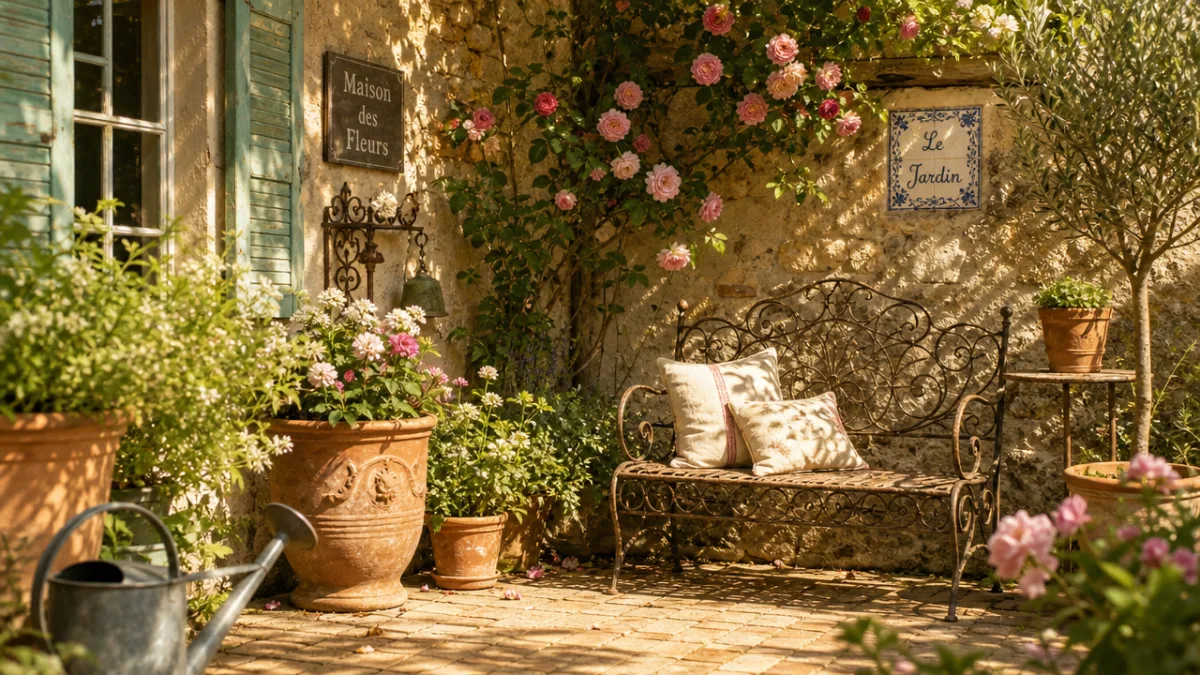
Aged terracotta is another cornerstone of the vintage garden. Unlike plastic or fiberglass alternatives, terracotta breathes alongside its contents, developing a beautiful bloom of mineral deposits and moss over time that no artificial aging technique can truly replicate. Collecting terracotta pots in varying sizes — from tiny thumb pots for succulents to massive statement urns — allows you to create layered vignettes with genuine visual weight and warmth. Stacking them, grouping them in odd numbers, and allowing them to age naturally will only enhance their appeal with each passing season.
Stone elements — whether original limestone, granite, or high-quality reconstituted stone — bring a sense of permanence and gravitas to any garden setting. Garden statuary, birdbaths, sundials, and low retaining walls all benefit from the quiet authority of natural stone. Even fragments of old stone, such as a broken column capital repurposed as a plant pedestal or a rough-hewn stepping stone salvaged from a demolished path, carry an irreplaceable authenticity. The goal is always to create the impression that your garden has been accumulated and evolved over time rather than installed all at once.
Upcycled and Repurposed Vintage Finds for Creative Planting
One of the most joyful aspects of designing a vintage garden is the treasure hunt that precedes it. Flea markets, estate sales, architectural salvage yards, and even roadside finds become sources of genuine creative inspiration when you approach them with a gardener’s eye. The question to ask when evaluating any potential piece is not simply “Is this pretty?” but rather “Could something grow in, on, or around this in a way that would be beautiful?” This mindset transforms ordinary objects into extraordinary garden features.
Some of the most charming vintage planters come from the most unexpected sources. Old galvanized watering cans, tin bathtubs, wooden crates, leather suitcases sealed with a waterproof liner, cast-iron cauldrons, and even hollowed-out tree stumps can all become whimsical homes for plants. The contrast between the weathered container and the vibrant living growth it houses creates a visual tension that is immediately appealing. For a particularly romantic effect, consider planting trailing species like lobelia, bacopa, or sweet potato vine in elevated vintage containers so they cascade dramatically downward.
Vintage garden tools are another rich area to explore. An old wooden wheelbarrow that is no longer serviceable in the field can be transformed into a stunning rolling planter filled with a riot of cottage garden annuals. Worn-handled garden forks and rakes mounted on a wooden fence or shed wall become rustic art installations. Even old ladders — whether wooden stepladders or longer extension ladders — can be leaned against walls and used as vertical plant displays, with potted plants balanced on the rungs and climbing varieties winding their way upward through the structure.
Consider these popular repurposed vintage planting ideas for your own garden:
- Galvanized metal buckets and milk cans planted with wildflowers or herbs and clustered near a garden entrance for a farmhouse welcome
- Old wooden wine crates lined with burlap and filled with trailing nasturtiums or strawberries for a European kitchen garden look
- Cast-iron cookware — Dutch ovens, skillets, and colanders — hung on hooks or set on shelves as quirky herb planters
- Vintage birdcages filled with air plants, moss, or trailing ferns and hung from tree branches or pergola beams
- Antique stone sinks and butler’s sinks used as Alpine or succulent troughs, allowing excess water to drain naturally through the original plughole
Furniture and Seating to Create Romantic Outdoor Rooms
The most successful vintage gardens are designed to be lived in, not merely admired from a distance. Creating inviting seating areas using vintage or vintage-inspired furniture transforms a garden into a series of outdoor rooms — spaces where you naturally want to linger over morning coffee, afternoon tea, or evening conversation. The choice of furniture sets an immediate tonal note for the entire space, so it is worth investing time and thought into finding pieces that genuinely speak to the aesthetic you want to achieve.
Wrought-iron bistro sets are a perennially popular choice, evoking the café culture of nineteenth-century Paris and lending any space an immediate sense of Continental romance. Look for originals at antique markets or invest in well-made reproductions with a deliberately aged finish. Pair them with cushions in faded toile, weathered stripes, or vintage floral prints to add softness and comfort without compromising the aesthetic. For larger seating areas, a cast-iron garden bench positioned beneath a flowering arch or against a mellowed brick wall becomes an almost painterly focal point.
Wooden garden furniture in teak, oak, or painted hardwood offers a warmer, more cottage-like alternative to iron. Adirondack chairs painted in muted vintage shades — sage green, dusty rose, faded cream, or a chalky cornflower blue — create an inviting Americana-inflected corner. An old wooden swing hung from a sturdy tree branch with thick rope or painted chain embodies a particular kind of nostalgic romance that is hard to resist. For covered areas such as pergolas and verandas, vintage rattan or wicker furniture with sun-faded cushions provides a beautifully lived-in, layered look that feels genuinely timeless.
Creating a cohesive vintage seating area involves more than just the furniture itself. Consider these additional styling elements:
- A vintage tablecloth in faded linen or cotton, weighted at the corners with antique cutlery or smooth stones to prevent it lifting in the breeze
- Mismatched antique china displayed on an outdoor shelf or used for alfresco entertaining, embracing the eclectic rather than the matchy-matchy
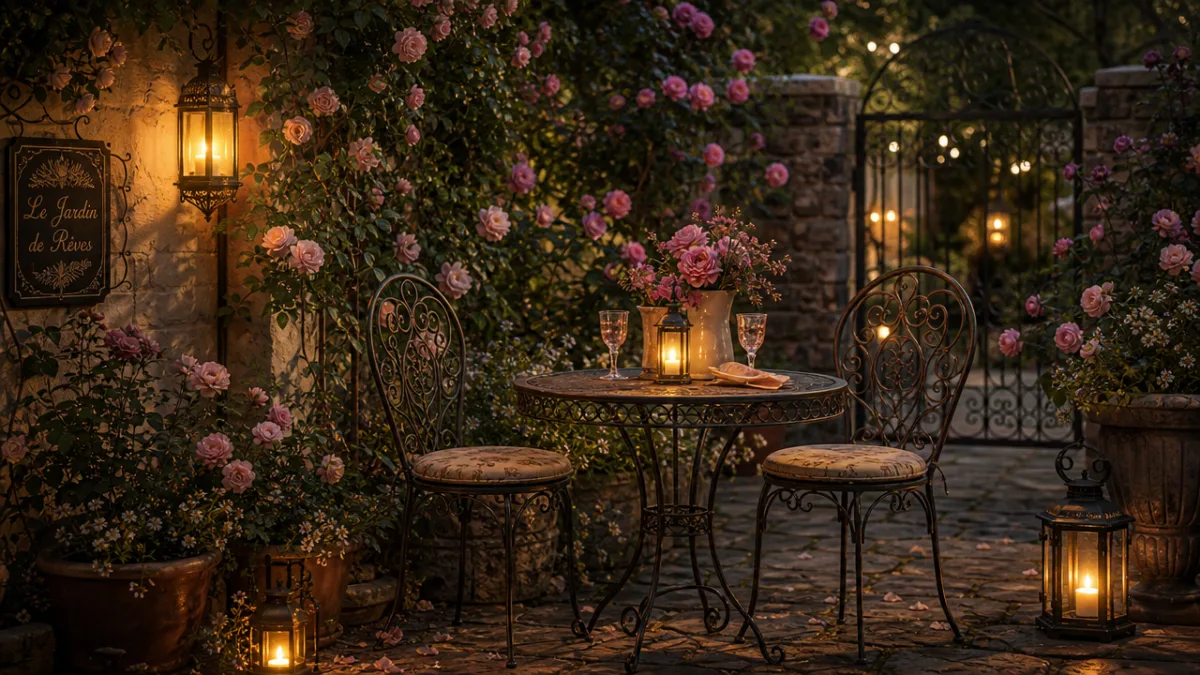
- Old lanterns and candleholders in aged brass, pewter, or painted iron for ambient evening lighting that flatters both the setting and its occupants
- A weathered wooden crate or vintage tin tray used as a portable bar or tea station, moving easily to wherever the shade falls
Structural Vintage Features That Define the Garden’s Character
While decorative accessories are important, the truly transformative vintage garden ideas are often structural in nature. These are the large-scale elements that give the garden its fundamental bones and character — the features around which everything else is arranged and which lend the space its sense of permanence and intentionality. Getting these right creates a framework within which even the simplest planting or decorative choice immediately looks considered and coherent.
Vintage gates and fencing deserve particular attention as they create the crucial first impression of any garden. A beautiful antique wrought-iron gate set into a simple brick or stone wall immediately signals that something special lies beyond. Ornate Victorian-style cast-iron fencing in traditional acanthus or fleur-de-lis patterns adds elegance and definition to borders and garden rooms. Even picket fencing, painted in period-appropriate colors and draped with old-fashioned roses or sweet peas, evokes a powerful sense of cottage garden nostalgia that roots the entire space in a particular aesthetic tradition.
Garden structures such as arbors, pergolas, gazebos, and obelisks are equally essential to the vintage aesthetic. A wooden pergola draped with wisteria, climbing hydrangea, or jasmine creates a naturally fragrant outdoor room that feels ancient and romantic regardless of when it was actually built. Rustic willow or hazel obelisks used as plant supports are both functional and decorative, adding vertical interest to borders while providing the perfect framework for climbing roses, sweet peas, or clematis. Old metal bed headboards repurposed as garden gates or trellis panels are a particularly inspired vintage solution that has become deservedly popular.
Water features bring another dimension of vintage character to the garden. A stone birdbath with a gently weathered finish attracts wildlife while providing a beautiful focal point in any border. An antique stone or cast-iron fountain, even a small wall-mounted one, adds the meditative sound of moving water alongside genuine visual impact. For those with more space, a small formal reflecting pool edged with stone and surrounded by clipped hedging creates an atmosphere of timeless, almost classical garden design. The sound, movement, and reflectivity of water consistently elevate any garden space to something more memorable and emotionally resonant.
Planting Schemes That Complement Vintage Decor
The most exquisite vintage garden decor will fall flat if the planting surrounding it strikes the wrong note. Conversely, a carefully chosen palette of plants can enhance even relatively simple decorative choices, creating a layered richness that looks as though it has been developing for decades. The key is to select plant varieties that feel at home in a vintage context — species and cultivars that evoke cottage gardens, Victorian herbaceous borders, walled kitchen gardens, and the romantically overgrown gardens of old country houses.
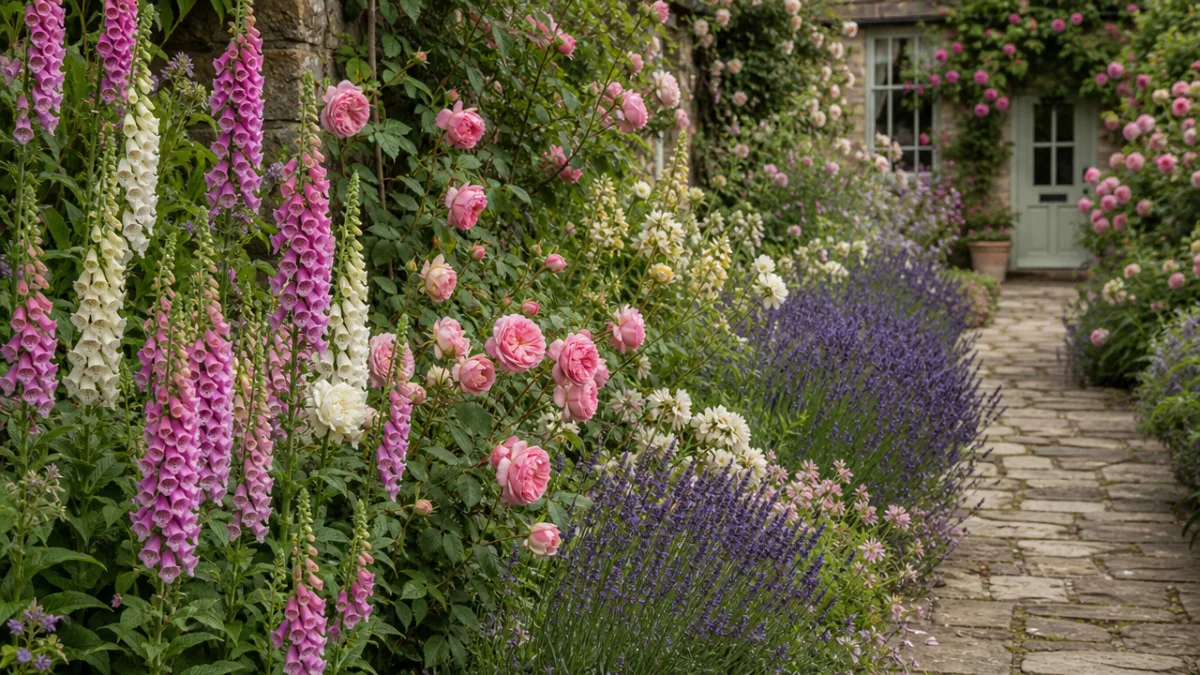
Old-fashioned roses are perhaps the single most important plant in the vintage garden designer’s toolkit. Unlike many modern hybrid teas, old garden roses — the Gallicas, Damasks, Albas, Bourbons, and the increasingly popular English roses developed by David Austin — possess a cupped, multi-petalled form and a fragrance of extraordinary complexity that immediately transports you to another era. They look breathtaking scrambling over wrought-iron arches, tumbling across old stone walls, or climbing through the branches of an apple tree in a technique known as tree-hosting. Their blooms in shades of blush, crimson, lilac-pink, and warm apricot pair perfectly with the aged tones of terracotta, stone, and weathered timber.
Beyond roses, the vintage garden palette traditionally draws on a rich vocabulary of cottage garden perennials and annuals. Delphiniums, foxgloves, lupins, hollyhocks, peonies, sweet William, larkspur, and stocks all bring that characteristic softness and abundance that defines the style. Herbs are equally important — lavender, rosemary, thyme, and sage not only look beautiful spilling over the edges of aged stone paths and walls but also attract beneficial insects and fill the garden with fragrance. Allowing plants to self-seed freely, and even to grow into unexpected places such as through gravel paths or between paving stones, gives the vintage garden its defining quality of beautiful, benign wildness.
Consider organizing your vintage planting scheme around these complementary principles:
- Embrace a soft, muted color palette of dusty pinks, lavender blues, creamy whites, and pale yellows rather than harsh, saturated modern colors that feel out of place in a vintage context
- Layer plants at different heights, from low-growing thyme and creeping phlox at the path edge through mid-height perennials to tall foxgloves and delphiniums at the back of borders
- Allow some degree of productive overlap, letting herbs and edibles mix freely with ornamentals in the tradition of the old French potager kitchen garden
- Include fragrant species wherever possible, since scent is one of the most powerful triggers of nostalgia and emotional memory — the defining quality of the vintage garden experience
- Plant in generous drifts rather than single specimens to create the impression of established, naturalized abundance
Lighting and Finishing Touches for Year-Round Vintage Charm
The best vintage gardens reward their owners and visitors not just during the daytime but as light fades and evening draws in. Thoughtful lighting transforms a garden’s character completely, and vintage-appropriate lighting choices can make even a modest space feel genuinely atmospheric and magical. The goal is always warmth and intimacy rather than the harsh, flat illumination of floodlights — think flickering candlelight, the warm glow of Edison bulbs, and the soft pool of light cast by aged lanterns rather than anything resembling stadium lighting.
String lights in warm white have become a garden staple, but choosing the right variety makes an enormous difference. Exposed Edison bulbs on heavy-duty twisted cloth cable have a thoroughly vintage industrial character that suits certain garden styles beautifully. Draped generously between pergola posts, wound through the branches of a mature tree, or hung in swags above a seating area, they create an instantly festive, romantic atmosphere that extends the useful hours of any outdoor space well into the evening. Solar-powered versions are now available in convincing warm tones, removing the need for extension cables while maintaining environmental credentials.
Lanterns — whether hanging, tabletop, or stake-mounted — are another essential vintage lighting element. Old galvanized metal lanterns with glass panels, antique brass hurricane lamps, or painted iron candle lanterns in aged verdigris or rusty red all contribute to the vintage atmosphere while serving the genuinely practical purpose of providing candlelight that does not immediately blow out in a light breeze. Placing them along a garden path, clustering several on an outdoor table, or hanging a collection of different sizes and shapes from a pergola beam creates a beautifully layered, organic composition that improves further as the candles within them burn down and the wax develops its own aged, used appearance.
Finally, the finishing touches that bring a vintage garden together are often the smallest and most personal. A collection of handwritten plant labels in aged copper or painted on smooth pebbles. A vintage sundial positioned to actually catch the sun and tell time. An old watering can left casually beside a border as though recently put down mid-task. A worn pair of gardening gloves draped over a pot. A beloved weathervane spinning on the ridge of a potting shed roof. These human-scale details create the impression of a garden that is genuinely inhabited and loved — and that is, ultimately, the true essence of vintage garden style at its most authentic and irresistible.








What do you think?
It is nice to know your opinion. Leave a comment.