










Edgeworthia chrysantha: The Golden Paperbush in Your Garden
Introduction to Edgeworthia chrysantha
Edgeworthia chrysantha, commonly known as the paperbush or Oriental paperbush, is a deciduous flowering shrub that captivates gardeners and plant enthusiasts with its extraordinary late-winter blooms and elegant, architectural form. Native to the woodlands and rocky slopes of China and the Himalayas, this remarkable plant has earned a devoted following among horticulturalists worldwide for its ability to deliver spectacular color and fragrance precisely when the garden needs it most — in the depths of late winter and early spring, when little else dares to bloom.
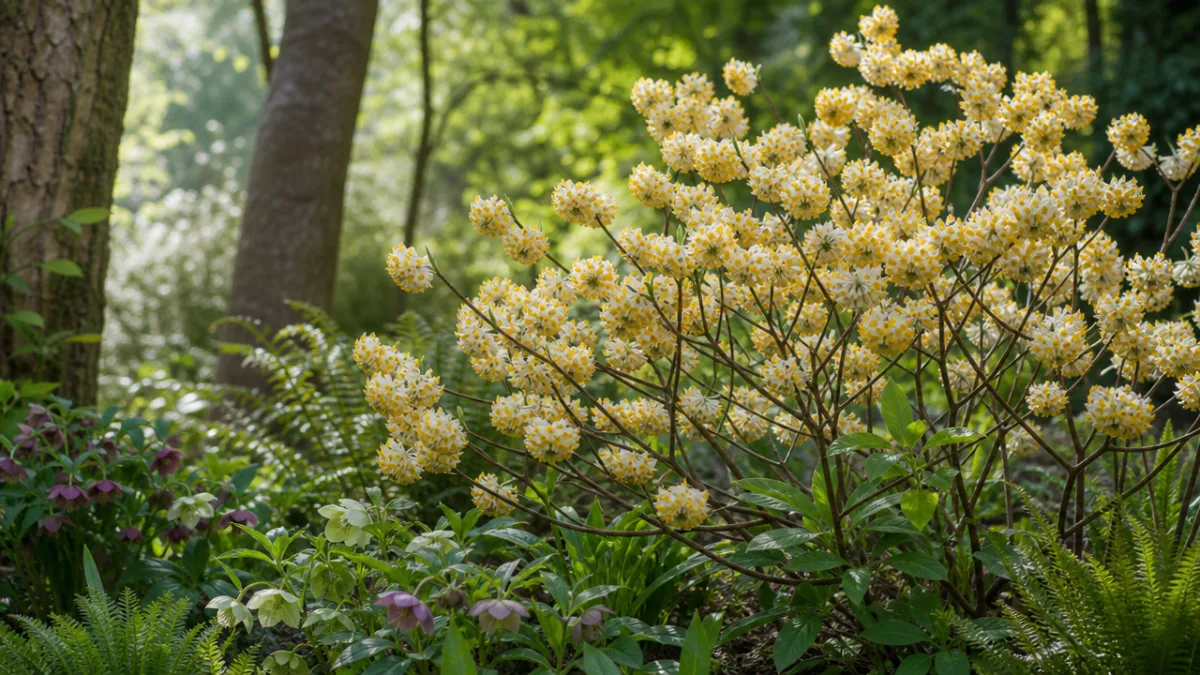
The name “chrysantha” derives from the Greek words for gold and flower, a fitting tribute to the characteristic golden-yellow blossoms that dangle in pendant clusters from the tips of its silky, silver-gray branches. Each flower cluster is composed of dozens of tiny, tubular florets that open progressively from the outside inward, creating a display that evolves and changes over several weeks. The effect is at once delicate and dramatic, a combination that few other garden shrubs can match at any time of year, let alone in the cold months of late winter when most landscapes are still locked in dormancy.
Belonging to the family Thymelaeaceae — the same family that includes the beloved daphne — Edgeworthia chrysantha shares with its relatives a powerful, sweet fragrance that can carry remarkable distances on still winter air. This intoxicating scent, often described as a blend of honey and jasmine with subtly spicy undertones, is one of the plant’s most celebrated qualities and draws visitors from across the garden on warm winter afternoons. For anyone who has not yet grown this shrub, the combination of rare winter color and extraordinary fragrance represents one of the most compelling arguments for adding it to any temperate garden.
History, Origins, and Cultural Significance
The story of Edgeworthia chrysantha stretches back centuries in both China and Japan, where the plant has been cultivated and deeply appreciated for reasons that go far beyond mere ornamental value. In Japan, where it is known as mitsumata, the plant has been an essential part of traditional papermaking since at least the Edo period in the seventeenth century. The fibrous inner bark of the stems produces exceptionally strong, smooth, and long-lasting paper, and it remains one of the primary materials used today in the production of Japanese yen banknotes — a remarkable distinction that elevates this garden shrub to the level of a culturally and economically significant plant.
The genus Edgeworthia was named in honor of Michael Pakenham Edgeworth, a nineteenth-century Irish botanist and civil servant with the East India Company who conducted extensive botanical surveys across South Asia. The plant was formally described to Western science in the mid-nineteenth century, though it had long been known to local populations across its native range. Its introduction to European and American gardens came gradually, with serious horticultural interest developing through the twentieth century as plant collectors and garden designers began to recognize its exceptional qualities and relative ease of cultivation in temperate climates.
In Chinese traditional culture, Edgeworthia chrysantha carries associations with good fortune, renewal, and the persistence of beauty through hardship — symbolic meanings that align naturally with its habit of blooming in the harshest season of the year. The plant has appeared in classical Chinese painting and poetry as a symbol of resilience and quiet elegance, qualities that continue to resonate with modern gardeners who appreciate plants that offer beauty without demanding constant attention. Its enduring cultural significance across multiple Asian traditions speaks to a depth of human connection with this plant that enriches its appeal for contemporary gardeners seeking meaning as well as beauty in their outdoor spaces.

Botanical Characteristics and Structure
Edgeworthia chrysantha typically grows into a rounded, multi-stemmed shrub reaching between one and two meters in height, though specimens in ideal conditions and warmer climates can occasionally exceed this range over many years. The branching structure is distinctly Y-shaped and architectural, with stems that fork repeatedly in a pattern that creates a beautifully symmetrical, sculptural silhouette, particularly striking in winter when the plant is leafless and the silver-silked flower buds are already forming along the bare branches. This structural quality makes the plant as valuable in the winter garden for its form as for its flowers.
The leaves of Edgeworthia chrysantha are lance-shaped to elliptical, dark green on their upper surface and softly silvery-gray beneath due to a covering of fine hairs. They emerge after flowering is complete and provide a lush, attractive canopy through summer and autumn before dropping cleanly in late autumn. The foliage is not the primary reason most gardeners grow the plant, but it is perfectly handsome and contributes a textured, healthy appearance to the garden during the growing season. Some gardeners are surprised to discover how attractive the leafed-out plant is in summer, having originally acquired it purely for its winter performance.
The flower buds themselves deserve special mention as a feature of prolonged ornamental interest. They begin forming in autumn as small, rounded clusters of silver-white, silky buds arranged in pendant globes at the branch tips. Through the winter months, these buds gradually elongate and develop, creating an evolving display that provides interest even before the flowers open. When the blooms finally unfurl — typically between January and March depending on climate and local conditions — the individual flowers reveal bright yellow, occasionally white in some cultivars, or reddish-orange in the variety known as ‘Red Dragon’, extending the plant’s ornamental palette beyond the classic golden yellow of the species type.
Growing Conditions and Cultivation Requirements
Understanding the preferred growing conditions of Edgeworthia chrysantha is essential for achieving the spectacular results this plant is capable of delivering. In terms of climate, the shrub performs best in USDA hardiness zones 7 through 10, tolerating temperatures down to approximately minus fifteen degrees Celsius in a sheltered position, though hard freezes during the flowering period can damage the open blossoms. Gardeners in colder zones have successfully grown the plant in sheltered microclimates or with winter protection, demonstrating that with thoughtful siting, its range can be extended somewhat beyond these formal boundaries.
Light requirements for Edgeworthia chrysantha are relatively flexible, making it adaptable to a range of garden situations that many other ornamental shrubs would find challenging. The plant performs admirably in partial shade, which makes it an excellent candidate for woodland garden settings beneath deciduous trees, where it receives dappled light in summer and fuller light during winter when the overhead canopy is bare and the plant is in bloom. It also grows well in full sun in cooler climates, though in hotter regions some afternoon shade helps prevent leaf scorch and keeps the plant looking its best through the summer months.
Soil requirements are an area where Edgeworthia chrysantha shows more specific preferences that gardeners should address carefully at planting time. The plant thrives in moist, well-drained soils with good organic content, preferring slightly acidic to neutral pH. Heavy clay soils that hold water around the roots can cause serious problems, particularly in winter, making good drainage the single most important soil condition to provide. Raised beds, the addition of generous quantities of composted organic matter, and planting on gentle slopes all help ensure the sharp drainage this plant needs to establish and thrive long-term.
- Preferred soil pH: 5.5 to 7.0, slightly acidic to neutral
- Moisture requirements: consistently moist but never waterlogged, especially in winter
- Light: full sun to partial shade; afternoon shade recommended in hot climates
- Wind: sheltered positions preferred to protect flowers and buds from damage
- Hardiness: USDA zones 7 to 10, with protection possible in zone 6 microclimates
Feeding and ongoing soil care for established plants is straightforward. An annual application of slow-release, balanced fertilizer in early spring, supplemented with a generous mulch of composted organic matter applied around the root zone, provides all the nutrition most plants need to perform well year after year. Avoid high-nitrogen feeds that promote leafy growth at the expense of flowering, and be cautious with fresh manures that can disturb the soil chemistry. Once established, Edgeworthia chrysantha is a surprisingly self-sufficient plant that rewards its grower with consistent, reliable performance in return for basic, attentive care.
Pruning, Propagation, and Maintenance
One of the great pleasures of growing Edgeworthia chrysantha is that it requires very little pruning to maintain its naturally attractive form. The shrub’s inherent Y-shaped branching architecture creates a pleasing, balanced structure without any intervention, and heavy-handed pruning can actually disrupt this characteristic pattern and reduce flowering. The general advice from experienced growers is to prune as little as possible, limiting cutting to the removal of dead, damaged, or crossing branches, and any light shaping that may be needed immediately after flowering is complete in spring, before the new season’s growth begins in earnest.
When pruning is necessary, timing is critical. Because Edgeworthia chrysantha sets its flower buds on wood produced during the previous growing season, any pruning carried out in autumn or winter will inevitably remove developing flower buds and reduce the following season’s display. The optimal pruning window is the period immediately after flowering finishes in early to mid-spring, giving the plant the entire growing season to produce new wood that will carry the next winter’s flowers. Even within this window, restraint is advisable — the less wood removed, the more flowering potential is preserved.
Propagation of Edgeworthia chrysantha can be achieved by several methods, though none of them is entirely without challenge. Semi-hardwood cuttings taken in late summer from the current season’s growth are the most commonly used propagation method in home gardens, treated with rooting hormone and kept in warm, humid conditions until roots develop — a process that can take several weeks to months. Layering is another reliable option, taking advantage of the plant’s low-growing branches by pegging them to the ground and waiting for rooted sections to develop before severing them from the parent plant, typically after one full growing season.
- Take semi-hardwood cuttings in late summer, approximately 10 to 15 centimeters in length
- Remove lower leaves and dip the cut end in rooting hormone powder or gel
- Insert into a free-draining cutting compost mix in a small pot or tray
- Cover with a clear plastic dome or bag to maintain high humidity around the cutting
- Keep in a warm position out of direct sun and check regularly for root development
- Once rooted, gradually acclimatize to open conditions before potting on or planting out
Landscape Uses and Garden Design Applications
The distinctive qualities of Edgeworthia chrysantha — its winter flowering season, powerful fragrance, architectural structure, and relatively compact size — make it a uniquely versatile plant in landscape design with a particular ability to solve problems that challenge even experienced garden designers. The most obvious application is as a specimen plant positioned near pathways, entrances, seating areas, or windows where its fragrance can be fully appreciated and its dramatic winter display enjoyed at close range. A single well-grown specimen positioned near a frequently used door or garden gate will perfume the entire area on still winter afternoons and reward close observation of its extraordinary flowers.
In larger landscapes, Edgeworthia chrysantha works beautifully as part of a layered winter garden planting alongside other plants that provide color and interest in the cold months. Combinations with hellebores, winter-flowering heathers, mahonias, and early bulbs such as snowdrops and winter aconites create rich, multi-textured winter plantings that challenge the assumption that gardens are only interesting in summer. The shrub’s arching, spreading habit also makes it effective as part of a naturalistic shrub border, where it can be underplanted with shade-tolerant perennials and bulbs that perform in the seasons before and after its own moment of peak display.
Woodland garden settings bring out some of the best qualities of Edgeworthia chrysantha, providing the partial shade, moist soil, and wind protection that the plant prefers while creating a naturalistic context that suits its elegant, understated character. Planted beneath the canopy of deciduous trees alongside rhododendrons, azaleas, camellias, and other woodland-loving shrubs, it contributes its exceptional winter display at a time when the surrounding plants are resting, filling a seasonal gap that might otherwise leave the woodland garden looking bare and uninviting in its most challenging months.
Container cultivation is another option that deserves consideration, particularly for gardeners in colder climates who want to grow the plant but lack a suitable sheltered outdoor position. Large containers filled with a well-draining, loam-based compost can support healthy specimens that can be moved under cover during the coldest periods and brought out to a prominent position when flowering begins. While container-grown plants will never achieve the size and vigor of those in open ground, they can provide years of pleasure and allow gardeners outside the plant’s natural hardiness range to experience its remarkable winter performance firsthand.

Pests, Diseases, and Common Challenges
Edgeworthia chrysantha is generally considered a robust and relatively trouble-free shrub when grown in appropriate conditions, with a resistance to most common pests and diseases that makes it an appealing choice for gardeners who prefer not to engage in regular preventative spraying regimes. However, like any garden plant, it can encounter problems under certain conditions, and understanding the most common issues helps growers respond quickly and effectively when difficulties do arise. The most important preventative measure remains good site selection and soil preparation, since the majority of problems that affect this plant are related to unsuitable growing conditions rather than specific pathogens or pest infestations.
Root rot caused by waterlogging is the most serious and most common problem encountered with Edgeworthia chrysantha, and it is almost entirely preventable with careful attention to drainage at planting time. Plants growing in poorly drained soils, particularly in winter when rainfall is high and temperatures are low, can develop root rot caused by various soil-borne fungi including Phytophthora species. The symptoms include wilting despite adequate soil moisture, yellowing leaves, and progressive dieback from branch tips. Once established, root rot is very difficult to treat effectively, reinforcing the critical importance of sharp drainage as a non-negotiable cultivation requirement from the outset.
Frost damage to open flowers is an inevitable occasional occurrence in climates where late winter frosts are common, and while it can be disappointing when a developing flower display is caught by a hard freeze, it rarely causes lasting harm to the plant itself. The buds and branches are considerably hardier than the open flowers, and even after frost damage, undamaged buds will continue to open and provide display in subsequent weeks. Gardeners who find frost damage to open flowers a recurring frustration can mitigate it by choosing a north-facing position that delays flowering slightly, by using horticultural fleece as temporary frost protection during particularly severe cold snaps, or by selecting later-flowering forms that bloom after the worst frost risk has passed.
- Root rot: prevent with excellent drainage; no effective chemical cure once established
- Frost damage to flowers: use fleece protection during severe freezes; plant in sheltered positions
- Aphids: occasional, usually minor; control with insecticidal soap if severe
- Scale insects: treat with horticultural oil applied in late winter before growth begins
- Leaf scorch: caused by drought stress or excessive sun in hot climates; mulch and water regularly
Notable Cultivars and Related Species
The popularity of Edgeworthia chrysantha has encouraged plant breeders and collectors to develop and introduce a range of cultivars that extend the plant’s ornamental possibilities beyond the classic golden-yellow species type. Among the most celebrated of these selections is ‘Red Dragon’, a cultivar that produces flowers with distinctly reddish-orange coloring on the exterior of the florets, creating a striking contrast with the pale golden interior and extending the plant’s color palette in an exciting direction. ‘Red Dragon’ has become one of the most sought-after ornamental shrubs in the international horticultural trade, commanding premium prices that reflect both its rarity and its exceptional garden value.
‘Grandiflora’ is another notable cultivar selection, chosen for its larger-than-typical flower clusters that create an even more impressive display than the standard species. White-flowered forms, sometimes listed under the variety name var. alba or sold under various trade names, offer a cooler, more ethereal alternative to the warm golden tones of the species and can be particularly effective in moon gardens or planting schemes that emphasize white and silver tones. These different color forms also extend the design possibilities for combining Edgeworthia chrysantha with other plants, opening up complementary and contrasting color combinations that the standard yellow-flowered species alone cannot achieve.
The related species Edgeworthia gardneri, native to the eastern Himalayas and parts of Southeast Asia, offers another variation for adventurous plant collectors. This species produces similar fragrant, tubular flowers but is considered somewhat more tender than Edgeworthia chrysantha, limiting its outdoor cultivation to the mildest temperate gardens. Where the two species can be grown together, they create an interesting study in botanical variation within a genus, while sharing the fundamental qualities — winter flowering, powerful fragrance, and elegant architectural habit — that make all Edgeworthia species such compelling additions to the temperate garden. For most gardeners, however, Edgeworthia chrysantha remains the definitive species, combining the best available combination of hardiness, ornamental quality, and garden performance.








What do you think?
It is nice to know your opinion. Leave a comment.