










Easy Low Maintenance Full Sun Perennials for a Stunning Yard
Why Full Sun Perennials Are the Smartest Choice for Your Garden
If you’ve ever dreamed of a yard that bursts with color and life from season to season without demanding your attention every weekend, full sun perennials are your answer. Unlike annuals that must be replanted each year, perennials return reliably, often spreading and filling in gaps over time. They represent a long-term investment that pays dividends in beauty for years, sometimes decades, with minimal effort on your part once they’ve established their roots in your soil.
The appeal of low maintenance gardening has grown enormously in recent years, and for good reason. Modern life is busy, and few gardeners have the luxury of dedicating hours each week to watering, pruning, and babying finicky plants. Full sun perennials, particularly those bred or selected for toughness and adaptability, solve this problem elegantly. They tend to be drought-tolerant once established, resistant to common pests and diseases, and forgiving of imperfect soil conditions that would send more delicate plants into decline.
What makes a perennial truly “low maintenance” goes beyond just surviving neglect. The best choices for a hassle-free garden are those that require minimal deadheading, don’t flop or require staking, hold their shape through wind and rain, and spread at a polite rather than invasive pace. When you select varieties with these traits and match them to your specific growing zone, you create a landscape that practically takes care of itself while delivering the visual impact of a professionally designed garden throughout the entire growing season.
Top Perennial Flowers That Thrive in Full Sun
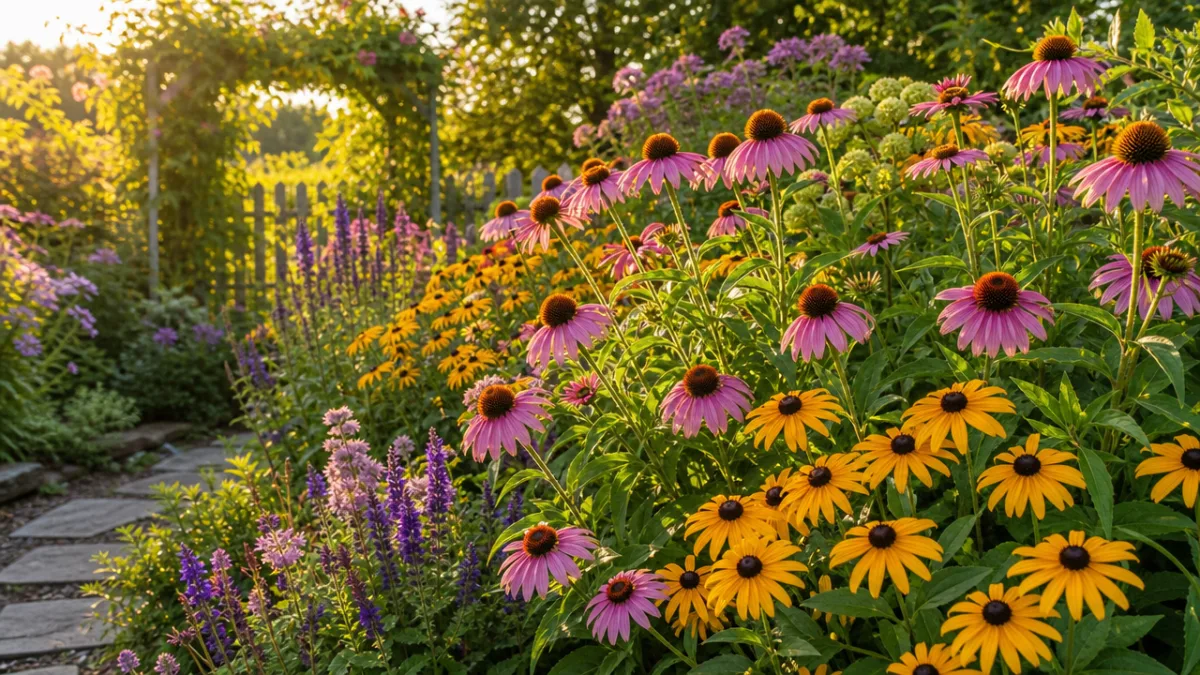
Coneflowers, known botanically as Echinacea, are perhaps the quintessential easy-care perennial for sunny spaces. Available in a dazzling spectrum of colors from classic purple to rich coral, vivid orange, and creamy white, they bloom reliably through summer and into fall. Their seed heads, if left standing through winter, provide food for goldfinches and other birds, adding yet another layer of ecological value to their already impressive resume. They tolerate heat, humidity, clay soil, and drought with equal composure.
Black-eyed Susans, or Rudbeckia, are another powerhouse of the sun-drenched garden. Their cheerful golden-yellow petals surrounding a dark central cone bring warmth and energy to any landscape design. These tough natives naturalize beautifully, spreading gradually to form impressive clumps that require division only every few years. They bloom prolifically from midsummer well into fall, providing color at a time when many other perennials are winding down, and they pair exceptionally well with ornamental grasses and late-blooming salvias for a dynamic autumnal display.
For something with a bit more architectural presence, consider adding Lavender, Russian Sage, or Agastache to your sunny borders. All three share the quality of producing masses of small flowers arranged in spikes or wands that create a hazy, romantic texture in the garden. They’re beloved by pollinators, fragrant, and remarkably drought tolerant once established. Russian Sage in particular is nearly indestructible once rooted, producing its silvery-blue haze of blossoms from midsummer onward with essentially zero intervention required from the gardener.
- Echinacea (Coneflower): Blooms June through September, attracts butterflies and songbirds, drought tolerant after first season
- Rudbeckia (Black-eyed Susan): Blooms July through October, naturalizes readily, excellent cut flower
- Lavender: Blooms June through August, fragrant, deer resistant, thrives in poor dry soil
- Russian Sage (Perovskia): Blooms July through September, silvery foliage, extremely drought tolerant
- Agastache (Hyssop): Blooms June through frost, loved by hummingbirds, heat and humidity tolerant
- Salvia (Ornamental Sage): Long blooming, multiple rebloom flushes, available in blue, purple, red, and pink
Planning Your Full Sun Garden for Maximum Impact
Successful perennial gardens don’t happen by accident. Even when working with tough, easy-care plants, thoughtful planning makes the difference between a garden that looks professionally designed and one that feels like a random collection of survivors. The most important principle to apply is layering by height, placing taller plants like Joe Pye Weed or tall Rudbeckia at the back of borders, mid-height plants such as Echinacea and Salvia in the middle, and low growers like Dianthus, Sedum, or Creeping Phlox at the front edges where they soften the transition to lawn or pathway.
Color planning is equally important for creating a garden that feels cohesive rather than chaotic. Many designers recommend choosing a primary color palette of two or three colors and sticking to it, with perhaps one accent color to add punctuation. A classic and reliably beautiful combination for full sun perennial gardens is the pairing of purples and blues with yellows and oranges, colors that sit opposite each other on the color wheel and therefore create natural vibrancy and contrast. Think purple Salvia behind golden Rudbeckia, or blue Veronica beside orange Hemerocallis daylilies.
Bloom time succession should be mapped out before you plant so that something is always in flower from early spring through late fall. This requires a bit of research upfront, but the payoff is a garden that remains interesting and colorful for six months or more rather than peaking once and then fading into a sea of green foliage. Begin with early bloomers like Peonies and Salvia nemorosa, transition into the midsummer power of Echinacea and Rudbeckia, and carry the season forward with fall stalwarts like Sedum ‘Autumn Joy’, Aster, and the persistent blooms of Russian Sage. Plan on paper before you purchase.
Soil Preparation and Planting Tips for Long-Term Success
Even the toughest full sun perennials perform at their absolute best when given a solid start with proper soil preparation. The good news is that most drought-tolerant, sun-loving perennials actually prefer soil that is not overly rich or heavily amended with compost. In fact, lavender, Russian sage, and many native species will grow lankier, floppier, and shorter-lived in soil that is too fertile. What matters most for nearly all perennials is excellent drainage, because consistently wet roots during dormancy are the number one killer of otherwise indestructible plants.
If your soil is heavy clay that drains poorly, the most effective long-term solution is to build raised beds or raised borders by mounding improved soil above the existing grade. Alternatively, you can work coarse grit or pea gravel into the planting area to improve drainage, though this is labor-intensive and somewhat less effective on extreme clay. For sandy soils that drain too quickly, the addition of organic matter such as aged compost will improve moisture retention enough to help plants establish without making them dependent on irrigation once they’ve rooted in deeply.
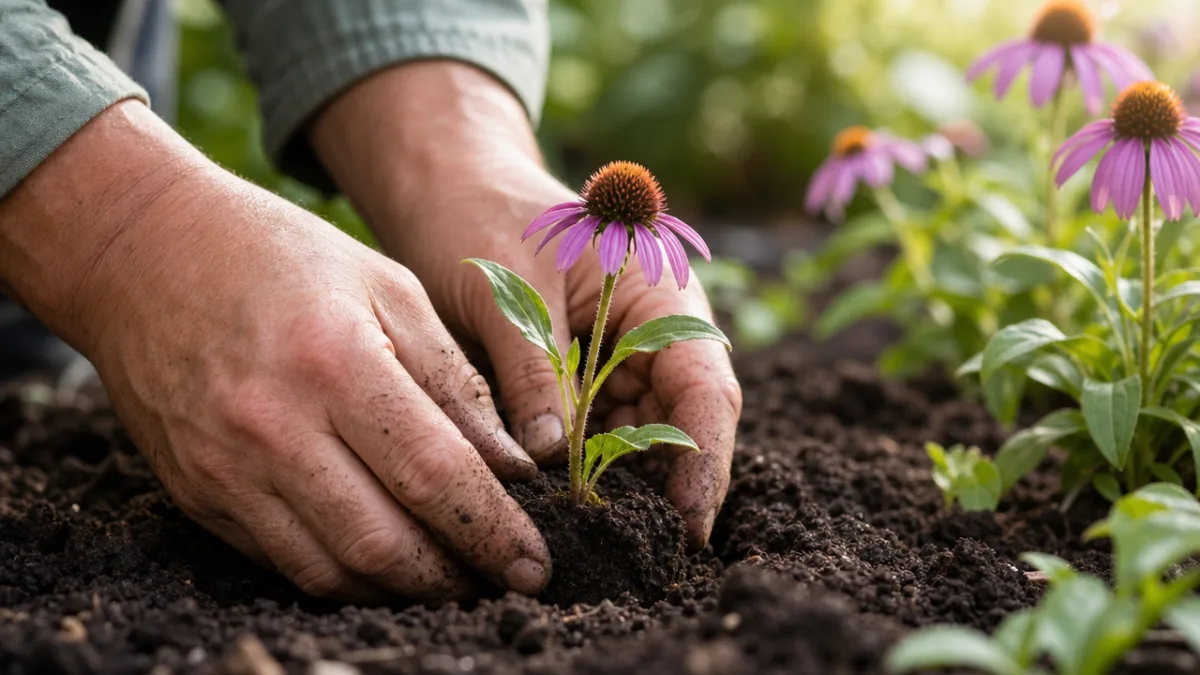
Timing your planting correctly makes an enormous difference in how quickly perennials establish and how well they survive their first season. Spring planting gives roots the entire growing season to establish before the stress of summer heat, while fall planting, typically six weeks before your first expected frost, allows roots to grow in the cooler, moister soil of autumn without the top growth demanding energy simultaneously. Both windows work well; summer planting is the most challenging because plants must establish under the greatest heat stress, requiring considerably more irrigation support during those first critical weeks.
- Test your soil pH before planting; most full sun perennials prefer a range of 6.0 to 7.0
- Loosen soil to a depth of at least 12 inches before planting to encourage deep root development
- Add a 2 to 3 inch layer of mulch after planting to conserve moisture and suppress weeds
- Water deeply at planting time and weekly during the first growing season to encourage root establishment
- Avoid fertilizing heavily; a single application of balanced slow-release fertilizer in early spring is usually sufficient
- Plant in groups of three or more of the same variety for the most visually impactful, naturalistic results
Seasonal Care and Maintenance Throughout the Year
One of the greatest joys of working with low maintenance full sun perennials is how little intervention they actually need once established. The care calendar is refreshingly simple compared to what many new gardeners fear. In early spring, cut back the previous year’s dead stems to a few inches above ground level as new growth begins to emerge from the base. This is also the ideal time to divide any perennials that have grown too large or whose centers have died out, a natural process that typically affects plants after three to five years in the ground.
Through the summer blooming season, deadheading, the practice of removing spent flowers, can extend bloom time on some perennials by preventing the plant from setting seed and signaling it to produce more flowers instead. However, this is genuinely optional with most of the toughest perennials recommended here. Echinacea, Rudbeckia, and Agastache all bloom abundantly without any deadheading, and leaving the seed heads provides valuable wildlife habitat and food. If the garden starts to look too ragged mid-season, a light shearing of plants like Salvia and catmint will tidy things up and often triggers a fresh flush of bloom within a few weeks.
Fall and winter care is beautifully minimal with a thoughtful selection of perennials. The current best practice in sustainable gardening is to leave perennial stems standing through winter rather than cutting them back in autumn. Standing stems and seed heads provide shelter and food for overwintering insects and birds, and the dried structures add genuine visual interest to the winter garden, particularly when frosted or snow-dusted. This practice also protects the crown of the plant against temperature fluctuations. Come early spring, you can cut everything back fresh before the new season’s growth begins, completing the simple annual cycle.
Designing with Full Sun Perennials for Year-Round Appeal
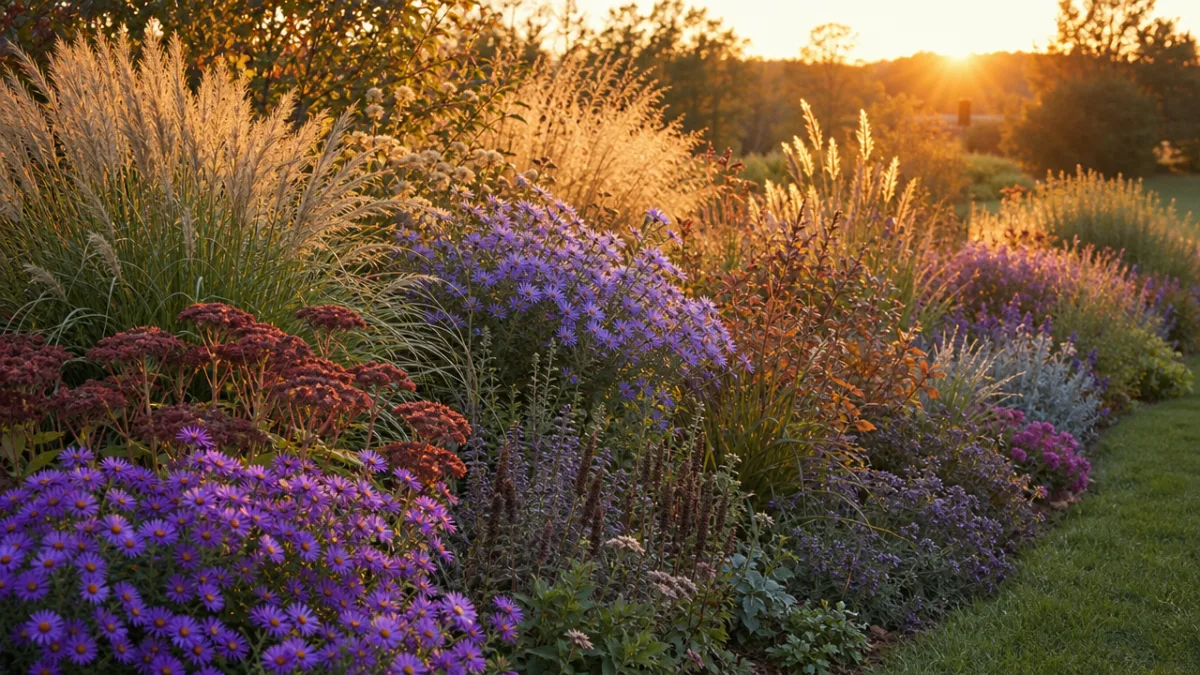
A truly great perennial garden transcends the peak bloom months and retains interest and structure across all four seasons. Achieving this requires thinking beyond flowers and considering the full toolkit of plant attributes including foliage texture and color, stem structure, seed head form, and the way plants move in the breeze. Ornamental grasses are invaluable partners for full sun perennials in this regard, providing movement, sound, and year-round structure even when perennial flowers are dormant. Varieties like Panicum ‘Shenandoah’, Pennisetum, and Karl Foerster Feather Reed Grass complement flowering perennials beautifully while thriving in the same full sun, low moisture conditions.
Pairing plants with contrasting leaf textures creates visual interest even when nothing is in bloom. The fine, ferny foliage of plants like Achillea, commonly known as Yarrow, contrasts beautifully with the bold rounded leaves of Rudbeckia or the sword-like foliage of Crocosmia. Sedum ‘Autumn Joy’ offers thick, succulent blue-green foliage all summer before its flattened flower heads emerge in late summer and transition through pink, rose, and russet into winter. Every plant in a well-designed garden should earn its place through multiple seasons of contribution, not just the weeks when it happens to be in full flower.
Don’t overlook the power of hardscape elements when designing a low maintenance full sun garden. A simple stone path meandering through plantings allows access for the occasional maintenance task without compacting the surrounding soil. Edging along borders keeps lawn grasses from creeping into the planting area, which is one of the most time-consuming maintenance tasks in any garden if left unaddressed. A generous 3-inch layer of attractive mulch such as shredded hardwood bark or decomposed granite suppresses weeds, conserves moisture, and ties the planting composition together visually, dramatically reducing the time required to keep the garden looking polished and intentional throughout the growing season.
Best Perennial Combinations and Design Inspiration
Some plant combinations are so reliably beautiful and complementary in their growing requirements that they’ve become classics of the low maintenance sunny garden. The prairie-inspired combination of Purple Coneflower, Black-eyed Susan, and native grasses captures the romance of the American meadow in a garden-worthy, manageable form. These three plants share nearly identical needs: full sun, average to poor well-drained soil, and minimal supplemental water once established. Together they create a tapestry of color and texture that evolves gracefully from midsummer through winter without any intervention from the gardener.
For a more formal or structured aesthetic, the combination of Russian Sage with repeat-blooming shrub roses and edging Catmint creates a sophisticated, cottage-inspired palette of blues, purples, and pinks that feels luxurious while remaining genuinely easy to maintain. Catmint, or Nepeta, is one of the most underappreciated perennials in cultivation, producing masses of small lavender-blue flowers from late spring through fall with no real care required beyond an optional midsummer shearing. It suppresses weeds through its spreading habit, tolerates drought beautifully, and is completely ignored by deer, making it ideal for gardens in areas where deer browsing is a significant challenge.
For gardeners who love the idea of attracting pollinators while keeping maintenance absolutely minimal, a combination of Anise Hyssop, Liatris, and native Coreopsis creates a habitat-rich garden that blooms in sequence from early summer through fall. Liatris, also known as Blazing Star, is particularly striking with its vertical spikes of bright purple that bloom from top to bottom rather than bottom to top like most spike flowers. Coreopsis in modern selections like the ‘Uptick’ series blooms almost continuously from late spring through hard frost, requiring nothing beyond basic establishment care to perform at its remarkable best season after season in the full sun garden.
- Prairie Meadow Combination: Purple Coneflower, Black-eyed Susan, and Karl Foerster Grass for a naturalistic wildflower look
- Cottage Garden Classic: Russian Sage, Nepeta, and repeat-blooming roses for soft romantic blues and pinks
- Pollinator Paradise: Agastache, Liatris, and Coreopsis for maximum butterfly and bee activity throughout summer
- Hot Color Border: Crocosmia, Hemerocallis, and Rudbeckia for bold orange, red, and gold impact
- Silver and Purple Scheme: Lavender, Salvia, and Artemisia for a drought-proof Mediterranean-inspired planting
- Late Season Focus: Sedum ‘Autumn Joy’, Aster, and Panicum grass for a spectacular fall and winter garden
The most important lesson experienced gardeners share about creating a stunning low maintenance full sun perennial garden is to start with confidence, knowing that tough plants forgive mistakes and that the garden will improve dramatically with each passing year. As perennials establish deeper roots, fill in gracefully, and begin to interact and intermingle in beautiful ways you didn’t entirely plan, the garden takes on a life and character of its own. Give your plants a thoughtful beginning with good drainage and the right amount of sun, and they will reward you with seasons upon seasons of extraordinary beauty that requires remarkably little of your time, energy, or money to sustain.








What do you think?
It is nice to know your opinion. Leave a comment.