










Deadnettles: How to Grow and Care for Lamium Plants
<h2 id="section-1-introduction-to-lamium-the-underappreciated-garden-gem”>Introduction to Lamium: The Underappreciated Garden Gem
Lamium, commonly known as deadnettle, is one of the most versatile and rewarding plants a gardener can add to their landscape. Despite its somewhat unflattering common name, which distinguishes it from the stinging nettle it superficially resembles, this genus of flowering plants offers extraordinary beauty, remarkable resilience, and genuine usefulness in challenging garden situations. Whether you are struggling with a shady corner that refuses to support other plants or searching for an elegant ground cover that suppresses weeds without constant intervention, Lamium delivers on all fronts with minimal effort from the gardener.
Native primarily to Europe and Asia, Lamium species have naturalized across much of the temperate world, a testament to their adaptability and vigor. The genus belongs to the mint family, Lamiaceae, which explains the characteristic square stems and opposite leaf arrangement these plants display. There are numerous species within the genus, but the most commonly cultivated ornamental varieties belong to Lamium maculatum and Lamium galeobdolon, both of which have given rise to an impressive array of cultivars distinguished by their variegated foliage, flower color, and growth habit.
What makes Lamium particularly special in the modern garden is its ability to thrive where other plants struggle or refuse to grow entirely. Dense tree roots, dry shade beneath overhanging eaves, and compacted soil under established shrubs are all environments where deadnettles can carve out a handsome existence. Gardeners who discover the potential of Lamium often find themselves planting it more broadly, using it as a living mulch, a weed suppressor, and a provider of season-long visual interest through both its striking leaves and its delicate, tubular flowers.
Popular Varieties and Species Worth Growing
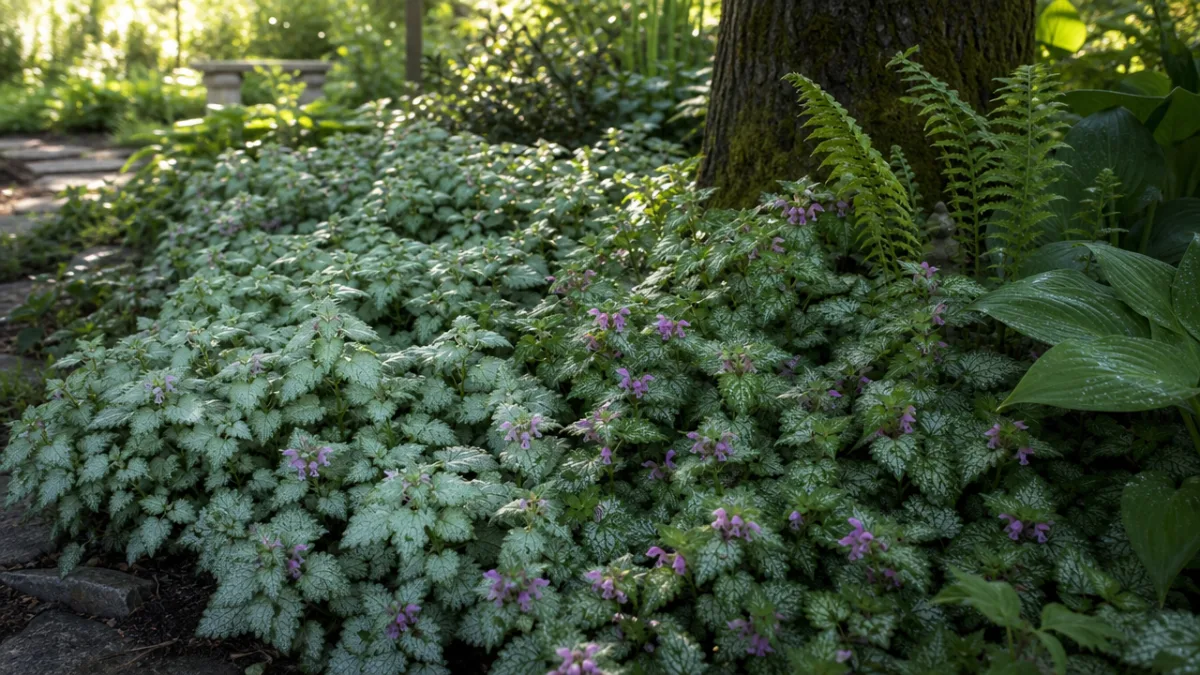
The world of Lamium cultivars is rich and varied enough to satisfy both the casual gardener and the dedicated plant collector. Lamium maculatum is the species most gardeners will encounter first, and within this species the selection of named cultivars is staggering. ‘White Nancy’ is perhaps the most beloved, featuring intensely silver leaves edged in deep green and producing abundant white flowers in late spring. Its compact habit and brilliant foliage make it one of the finest ground covers available for shaded gardens anywhere in the temperate world.
‘Beacon Silver’ offers a similar silver-leaf effect but with soft pink-lavender flowers that provide a gentle, romantic quality to woodland plantings and shaded borders. ‘Pink Pewter’ is another pink-flowered cultivar with nearly entirely silver foliage, making a dazzling display when planted in masses beneath deciduous trees. For those preferring bolder foliage, ‘Aureum’ produces golden-yellow leaves with a central silver stripe, creating a luminous effect that can brighten even the darkest corner of the garden, though this variety performs best with some protection from intense afternoon sun.
Lamium galeobdolon, the yellow archangel, is a somewhat more vigorous species that demands respect and careful placement. Its cultivar ‘Hermann’s Pride’ produces elegant silver-streaked leaves and yellow flowers, and it grows in a more controlled clump than the spreading species, making it suitable for garden beds rather than confined to wild areas. For naturalizing in woodland settings, the straight species or its variety ‘Florentinum’ can create spectacular carpets of silver and green beneath trees, though gardeners should be aware that it can spread assertively and should be placed where its enthusiasm can be appreciated rather than becoming a problem.
Understanding Lamium’s Growing Requirements
Understanding what Lamium truly needs to thrive is the foundation of successful cultivation, and fortunately its requirements are neither complex nor demanding. Light is perhaps the most important consideration. While deadnettles are celebrated primarily as shade plants, the reality is somewhat more nuanced. They perform beautifully in partial to full shade, and in fact require some protection from intense direct sunlight, particularly in warmer climates. In northern gardens or areas with mild summers, some morning sun is perfectly acceptable and can even enhance leaf coloration, but the scorching afternoon sun of a hot climate will cause wilting, bleaching, and general deterioration of the foliage.
Soil requirements for Lamium are refreshingly broad. These plants tolerate a wide range of soil types, from clay to sandy loam, and perform adequately in both slightly acidic and slightly alkaline conditions. The one non-negotiable requirement is reasonable drainage. While Lamium tolerates periodic drought better than many shade plants, it will not thrive in consistently waterlogged conditions, which can promote root rot and other fungal problems. If your garden has heavy clay soil, working in some organic matter such as compost before planting will improve drainage and give the plants a much better start.
Moisture requirements are moderate, and established Lamium plants have a genuine tolerance for dry conditions that makes them valuable in gardens where irrigation is limited or difficult. However, during the establishment period of the first growing season, consistent moisture is important to help the plants develop a strong root system. Once established, they can manage with rainfall alone in most temperate climates, though they will appreciate supplemental watering during extended dry spells. The combination of shade tolerance, drought resilience, and adaptable soil preferences makes Lamium truly one of the most practical plants available to the modern gardener.
Planting Lamium: Step-by-Step Guide
Planting Lamium successfully begins with timing and site preparation. Spring planting after the last frost date is ideal, as this gives the plants an entire growing season to establish before facing their first winter. Autumn planting is also possible in most climates, provided the plants have at least six to eight weeks before the ground freezes to establish some root growth. Summer planting is feasible but requires more attentive watering and ideally should be timed to avoid the hottest weeks of the season to minimize transplant stress on the young plants.
Site preparation should involve removing existing weeds thoroughly, as Lamium will eventually outcompete most annual weeds once established, but perennial weeds with deep root systems can persist beneath the ground cover and become difficult to remove without disturbing the Lamium itself. Amend the soil with compost if needed, and consider the spacing carefully. For ground cover purposes, spacing plants twelve to eighteen inches apart will result in complete coverage within one to two growing seasons. Closer spacing of eight to twelve inches will produce faster coverage but requires more plants and therefore greater initial investment.
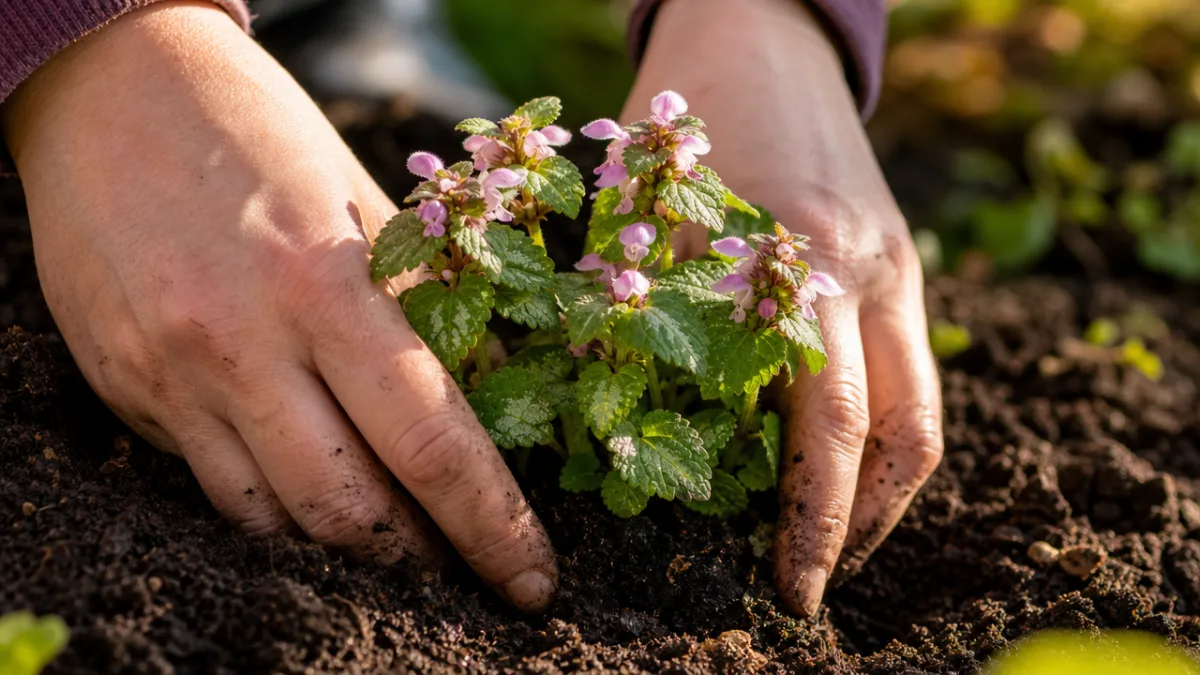
The actual planting process follows the standard procedure for most herbaceous perennials. Dig a hole slightly wider than the root ball and no deeper than the plant was growing in its container. Place the plant so the crown sits at soil level, neither buried too deeply nor sitting proud of the surrounding soil. Firm the soil gently around the roots to eliminate air pockets, water thoroughly immediately after planting, and apply a layer of organic mulch around but not directly touching the stems. This mulch will retain moisture, moderate soil temperature, and suppress competing weeds while the Lamium establishes and begins to spread.
- Choose a site with partial to full shade and well-drained soil
- Remove perennial weeds thoroughly before planting
- Space plants 12 to 18 inches apart for ground cover use
- Plant at the same depth as the nursery container
- Water thoroughly after planting and apply organic mulch
- Water consistently during the first growing season
Ongoing Care and Maintenance Throughout the Seasons
One of the most appealing aspects of Lamium as a garden plant is its genuinely low maintenance requirements once it has established itself. Routine care throughout the growing season is minimal compared to many ornamental plants, and the rewards in terms of weed suppression and continuous visual interest are substantial. Spring is the best time to conduct any necessary division of overcrowded clumps and to assess the overall health of established plantings after winter. Any dead or damaged growth from the previous season should be removed, and a light top-dressing of compost will replenish soil nutrients and encourage vigorous new growth.
Deadheading, or the removal of spent flowers, is not strictly necessary for Lamium but can improve the overall appearance of the planting and, in some cultivars, can encourage a second flush of bloom later in the season. The more impactful maintenance task for many established plantings is cutting back the foliage in midsummer if it becomes tired, leggy, or untidy in appearance. A firm shearing to within a few inches of the ground, followed by adequate watering, will encourage a fresh flush of attractive new foliage that remains presentable through autumn. This rejuvenation cut is particularly valuable for plantings in warmer climates where the summer heat can take a toll on appearance.
Fertilization requirements for Lamium are modest, reflecting the plant’s origins in forest environments where nutrient availability is naturally limited. An annual application of balanced slow-release fertilizer in spring or a top-dressing of compost is generally sufficient to maintain healthy, attractive growth. Avoid over-fertilizing, particularly with high-nitrogen products, as this can encourage excessive lush vegetative growth at the expense of flowering and can also make the plants more susceptible to aphid infestations. In rich garden soils, Lamium will often perform perfectly well with no fertilization whatsoever beyond the initial soil preparation.
Winter care for Lamium varies depending on climate. In zones 3 through 5, where winters are severe, the plants may die back completely but will reliably re-emerge from the roots in spring. In milder climates, zones 6 through 9, Lamium is often semi-evergreen to fully evergreen, retaining its attractive foliage throughout the winter months and providing valuable ground coverage during the otherwise bleak season. No winter mulching is necessary for established plants in most climates, and in fact heavy mulching over the crown can sometimes cause more harm than good by trapping excessive moisture around the base of the plant.
Propagation Methods: Multiplying Your Lamium Collection
Propagating Lamium is a genuinely satisfying and economical way to expand your planting or share this wonderful plant with fellow gardeners, and the good news is that several methods are available and all are relatively straightforward. Division is the simplest and most reliable approach, and it serves the dual purpose of propagating new plants while rejuvenating older clumps that may have become congested or have developed a bare center. Division is best performed in spring or early autumn when temperatures are moderate and the plants can recover from the disturbance without facing either summer heat stress or winter freeze.
To divide Lamium, use a sharp spade or garden fork to lift a clump from the ground, then tease or cut it apart into sections, each containing both roots and healthy shoots. Large clumps can yield numerous divisions in a single session, making this an extremely economical propagation method. Replant the divisions immediately at the appropriate depth and spacing, water them thoroughly, and keep the soil consistently moist for the first few weeks until new root growth anchors the divisions in their new positions. Healthy divisions will establish quickly and begin to spread to fill their allotted space within a single growing season.
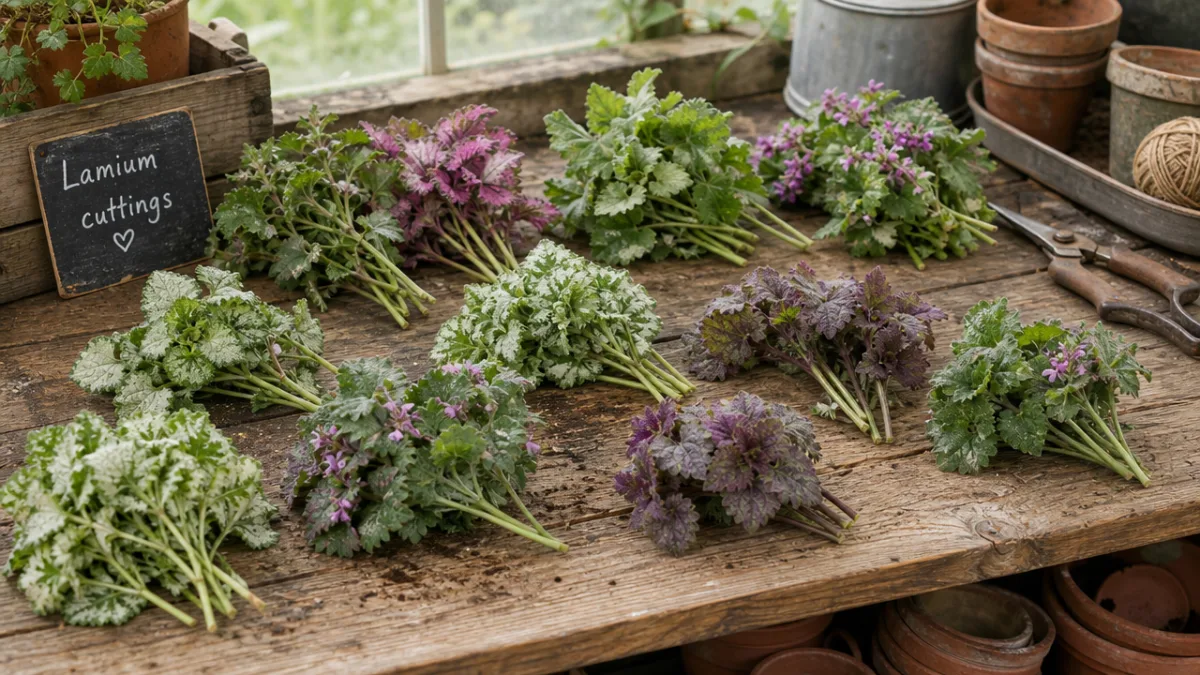
Stem cuttings offer another reliable propagation route, particularly useful for preserving specific cultivars and for producing larger quantities of plants than division alone might yield. Take cuttings of four to six inches from non-flowering shoot tips in late spring or early summer, remove the lower leaves, and insert the cuttings into a moistened propagation medium such as perlite, vermiculite, or a peat-free seed and cutting compost. Cover loosely with a plastic bag or place in a propagator to maintain humidity, and keep in a bright but indirectly lit location. Roots typically form within three to four weeks, after which the cuttings can be potted individually and grown on before planting out in the garden.
- Division in spring or early autumn is the simplest propagation method
- Lift clumps carefully with a fork, divide into sections with roots and shoots
- Replant divisions immediately and water thoroughly
- Take stem cuttings from non-flowering shoots in late spring
- Root cuttings in a moist propagation medium with humidity cover
- Pot individually once rooted and grow on before planting out
Pest, Disease, and Common Problem Management
Lamium is refreshingly resistant to most of the pests and diseases that trouble other garden plants, which is one of many reasons experienced gardeners hold it in such high regard. Its connection to the mint family seems to confer a degree of natural resistance that many ornamental plants lack. That said, awareness of the few issues that can affect these plants will allow you to respond quickly and prevent minor problems from developing into more serious setbacks. Vigilant observation of your plantings, particularly during the spring growing season when pests are most active, is the first and most effective line of defense.
Aphids are the most common pest problem encountered on Lamium, typically appearing on soft new growth in spring and early summer. These small, soft-bodied insects cluster on stems and beneath leaves, feeding on plant sap and potentially weakening growth. In most cases, a healthy established planting will tolerate modest aphid populations without significant harm, and natural predators such as ladybirds and their larvae will generally keep populations in check without any intervention. If infestations are heavy or the plants appear stressed, a strong jet of water from a garden hose will dislodge most aphids, or insecticidal soap can be applied as a low-impact control measure.
Powdery mildew, the white powdery fungal coating that affects many plants in the mint family, can occasionally appear on Lamium foliage, particularly during periods of heat and drought combined with poor air circulation. Prevention is more effective than cure, and ensuring adequate spacing between plants to allow air movement is the best preventative strategy. Keeping plants well-watered during dry spells also reduces susceptibility. If mildew does appear, the most practical response in most garden situations is to shear the affected growth back hard, water thoroughly, and allow the plant to regenerate with fresh, healthy foliage rather than attempting chemical treatment of extensive plantings.
Slugs and snails can damage Lamium foliage, particularly on young plants or freshly cut-back growth, leaving ragged holes and a generally tattered appearance. Organic controls such as wildlife-friendly slug pellets based on ferric phosphate, beer traps, or copper barriers can all be employed where slug pressure is significant. Encouraging natural predators such as hedgehogs, ground beetles, and birds into the garden will provide ongoing biological control that benefits all plants in the garden, not just the Lamium. In most established plantings with good coverage, slug damage is cosmetic rather than threatening to the overall health and vigor of the planting.
Landscape Uses and Garden Design Applications
The design potential of Lamium extends well beyond its primary role as a simple ground cover, and creative gardeners will find numerous ways to integrate these plants into sophisticated planting schemes. As a ground layer beneath trees and large shrubs, Lamium creates a seamless carpet that unifies the planting and reduces the visual complexity of a bed while simultaneously suppressing weeds and protecting soil from erosion and moisture loss. The silver-leaved cultivars in particular have a remarkable ability to reflect and amplify available light in shaded spaces, making dark corners appear brighter and more welcoming.
In mixed borders, Lamium works beautifully as a front-of-border edging plant or as a filler between larger perennials, flowing between them in a naturalistic way that suggests effortless sophistication. It pairs particularly well with hostas, whose bold, textured leaves contrast attractively with Lamium’s more delicate foliage, and with ferns, whose feathery fronds create a complementary texture. Spring bulbs such as snowdrops, bluebells, and daffodils can be planted directly through established Lamium, which will provide a beautiful backdrop to the bulb flowers before growing up to conceal the ripening bulb foliage after flowering concludes.
Container gardening offers yet another avenue for Lamium, where its trailing habit makes it an excellent candidate for spilling over the edges of mixed planters, window boxes, and hanging baskets. In containers, the silvery-leaved cultivars add a cool, luminous quality that complements both warm-toned and cool-toned companion plants, and the plants can be lifted and overwintered in a protected location in colder climates if particularly valued specimens need protection. The combination of Lamium with shade-tolerant annuals such as impatiens, begonias, or fuchsias creates containers of sustained beauty from spring through autumn with relatively little maintenance demand.
Beyond purely aesthetic applications, Lamium has genuine ecological value in the garden. Its tubular flowers are well-suited to bumblebees and other long-tongued pollinators that can access nectar that shorter-tongued insects cannot reach, making it a genuinely useful component of a pollinator-friendly garden. The dense ground cover it provides creates microhabitats for beneficial ground-dwelling insects, and its evergreen or semi-evergreen habit means it provides ground-level structure and shelter throughout the winter months. Choosing Lamium as a garden plant is therefore not merely a practical or aesthetic decision but also a contribution to the broader ecological health of the garden environment.








What do you think?
It is nice to know your opinion. Leave a comment.