










Butterfly Friendly Garden: How to Create a Haven for Pollinators
Why Butterflies Matter in Your Garden
Butterflies might be the most welcome visitors a garden gets — and honestly, they earn their keep. Beyond being beautiful, they’re real working pollinators, carrying pollen from flower to flower as they feed. Take them out of the picture and a surprising number of plants would struggle to reproduce, with ripple effects spreading through the whole ecosystem. So when you make your garden welcoming to butterflies, you’re not just doing something pretty — you’re doing something that genuinely matters.
The bad news is that butterfly populations across North America and Europe have taken a real hit over the past few decades. Habitat loss, pesticides, climate change, and invasive plants have all played a role, and species that used to be everywhere are now a much rarer sight. The good news is that gardeners can actually make a difference — even a small outdoor space, managed thoughtfully, can become a genuine refuge where butterflies find food, shelter, and somewhere to breed.
What’s nice about the whole arrangement is that it goes both ways. Butterflies get the nectar and habitat they need, and your garden gets more vibrant, more alive, and genuinely healthier. Flowers get pollinated more reliably, and the presence of butterflies tends to bring in other beneficial insects and birds too. Once you start seeing your garden as part of a broader living system rather than just a space to keep tidy, the whole approach to looking after it shifts in a really satisfying direction.
Choosing the Right Plants: Nectar Sources for Adult Butterflies
If there’s one thing that underpins a butterfly-friendly garden, it’s having plenty of nectar-producing flowers. Adult butterflies run almost entirely on nectar, which they sip through a long, straw-like proboscis — so the more you can offer, the better. The real trick is having something in flower from early spring right through to late autumn, so there’s always food available during the active season. Planting in decent-sized clusters rather than one or two isolated specimens also helps, since butterflies find larger patches of colour much easier to spot.
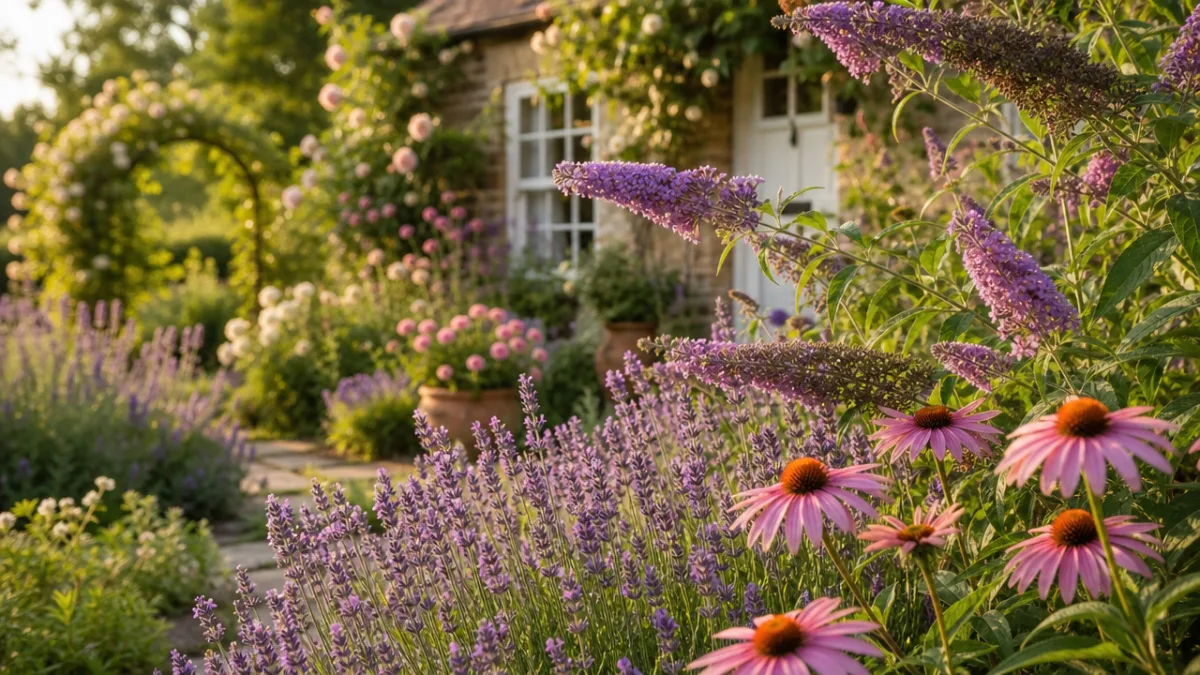
Some plants are almost guaranteed crowd-pleasers. Buddleja — the butterfly bush, as it’s commonly known, and the name really does tell you everything — is a classic, as are lavender, echinacea, verbena bonariensis, and native milkweeds. Flat-topped or daisy-like flowers tend to be particularly popular because they give butterflies a stable landing platform with easy access to the nectar underneath. Native wildflowers are especially worth including because local butterfly species have spent thousands of years evolving alongside them, so they’re nutritionally well-matched in ways that exotic ornamentals often just aren’t.
Colour is worth thinking about too. Butterflies seem to have a strong preference for purples, pinks, yellows, and oranges, and white flowers can be surprisingly effective for species that fly at dusk. A planting palette built around these tones looks gorgeous to human eyes while also working really hard as a butterfly magnet. One thing to watch out for: those heavily bred double-flowered varieties that look so impressive in garden centres often have almost no accessible nectar, so they’re basically useless to pollinators despite their showy appearance.
Herbs are a bit of a secret weapon that a lot of people overlook. Marjoram, oregano, thyme, hyssop, and chives all flower prolifically and butterflies absolutely love them. The bonus, of course, is that you can also cook with them — so your butterfly garden and your herb garden can be exactly the same thing. Dotted along a sunny border or popped into terracotta pots on a patio, they make butterfly-friendly gardening accessible even if you’re working with a tiny space or a balcony.
Host Plants: Supporting the Full Butterfly Life Cycle
Getting butterflies to visit for a meal is one thing — but if you want your garden to really support them, you need to think about the whole life cycle. That means host plants: the specific foliage that female butterflies lay their eggs on, and that caterpillars eat as they grow. Different species have very particular requirements here, so it’s worth finding out which butterflies are native to your area before deciding what to plant.
Milkweed is probably the most famous example in North American gardens — it’s the only plant that monarch caterpillars can actually eat, so without it, they simply don’t survive. In British and European gardens, the equivalent is the stinging nettle, which is the host plant for some of our most-loved species: red admirals, small tortoiseshells, commas, and peacocks all depend on it. Nettles get a bad reputation, but allowing a sunny patch of them in a corner of your garden can make a remarkable difference to how much butterfly breeding activity you see.
Other plants worth including are fennel and other carrot-family plants for swallowtails, native grasses for various skippers and browns, and native trees like oaks, willows, and cherries that support a whole range of species at different life stages. The bigger point here is that a garden obsessed with visual perfection — every plant chosen for looks, every leaf kept spotless — will never be a real butterfly sanctuary. Seeing a bit of caterpillar damage on your leaves isn’t a gardening failure. It’s actually a sign that things are working exactly the way they should.
Garden Design and Habitat Features That Butterflies Love
It’s not just about what you plant — the way your garden is laid out makes a big difference too. Sunshine is non-negotiable for butterflies. They’re cold-blooded, meaning they rely on warmth from their surroundings to get moving, and they need sheltered sunny spots to bask in the morning before they can fly properly. A garden with good open patches of sunlight, protected from the wind by hedges, walls, or shrubs, will attract far more butterflies than one that’s shaded or exposed to the elements.
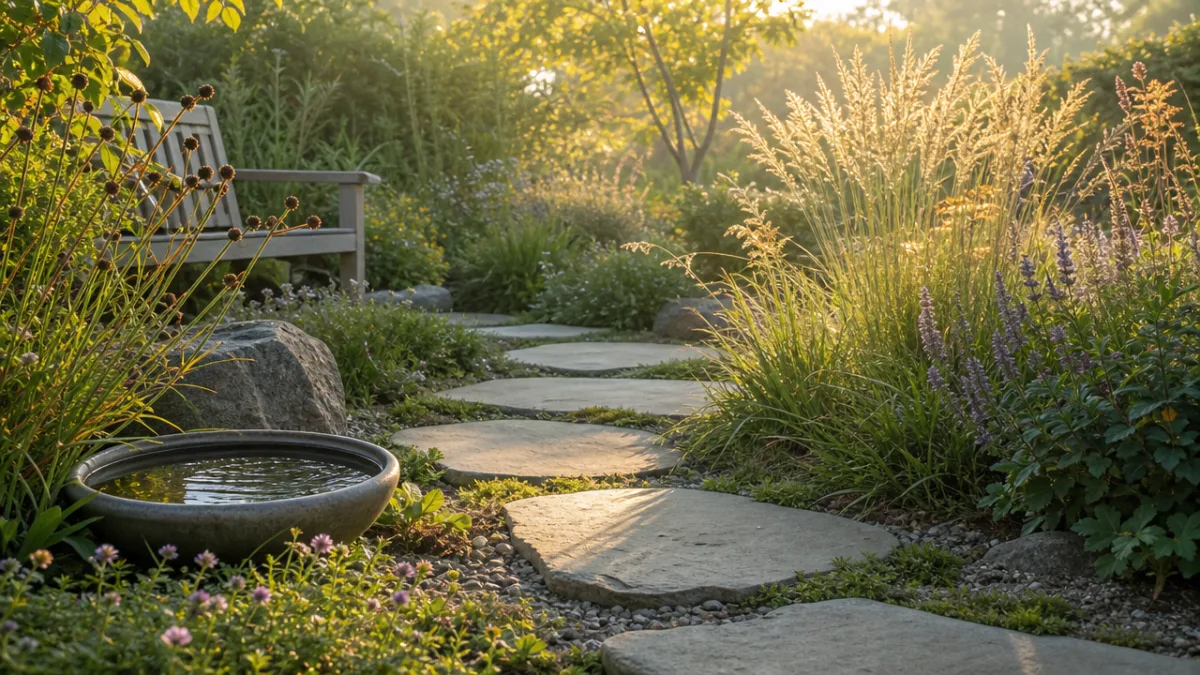
Flat stones or wooden boards placed in sunny spots give butterflies the perfect basking platform — you’ll often see them settle there in the morning with their wings spread wide, soaking up the warmth, which is one of the most lovely things to watch. It’s also worth creating a mud puddling area: a shallow patch of damp bare soil, or simply a dish of wet sand, where butterflies can drink and take in dissolved minerals. Male butterflies especially gather at these spots in a behaviour called puddling, and once you know what to look for it’s surprisingly easy to encourage.
Water features are great for butterflies, but design matters. A pond with gently sloping edges, pebbly shallow margins, and surrounding planting works well; a steep-sided ornamental pond is pretty much inaccessible to them. Log piles, thick hedgerows, and patches of grass left uncut through summer all provide the shelter and overwintering habitat that butterflies and their pupae need. These slightly “messy” features are, in ecological terms, some of the most valuable things you can have in a garden.
Windbreaks are worth paying more attention to than most gardeners do. Butterflies really struggle in strong wind, and a very exposed garden will see fewer visitors no matter how good the planting is. A hedge of native species along a windward boundary — hawthorn, blackthorn, and holly all work well — solves the problem while adding habitat, blossom for early pollinators, and berries for birds. The goal is a garden that’s open enough for sunlight but sheltered enough to feel calm, creating a series of warm little microclimates that butterflies will want to settle in.
Avoiding Pesticides and Embracing Natural Pest Management
If there’s one change that makes the biggest difference for butterflies — and really for all pollinators — it’s cutting out pesticides. Insecticides, even those sold as targeted or “bee-friendly,” can be lethal to butterfly eggs, caterpillars, and adults at very low concentrations. Systemic pesticides that go into the soil can be absorbed by plants and end up in their nectar, quietly poisoning the insects that visit your carefully chosen flowers. If you’re serious about creating a butterfly-friendly garden, a pesticide-free approach isn’t really optional — it’s the foundation everything else rests on.
That said, going pesticide-free doesn’t mean handing your garden over to every aphid and slug that wanders in. Encouraging natural predators — ladybirds, lacewings, ground beetles, parasitic wasps — builds a garden that manages itself to a remarkable degree. These beneficial insects flourish in exactly the same conditions that butterflies do: diverse plantings, log piles, dense borders, and soil that isn’t constantly disturbed. Designing for butterflies and designing for a healthy pest-predator balance turn out to be pretty much the same project.
Companion planting is another tool worth using. Strong-scented herbs like rosemary, sage, and mint can put certain pests off; marigolds are a time-honoured way to suppress aphids and repel whitefly; nasturtiums can act as trap crops, luring aphids away from plants you actually care about. These are old techniques, but they have solid ecological reasoning behind them, and they fit beautifully into the kind of relaxed, productive mixed planting that makes a butterfly garden feel like a real garden rather than a conservation project with flowers in it.
Seasonal Planning: Keeping Your Butterfly Garden Active Year-Round
A butterfly garden worth its salt doesn’t just hit its stride in July and then quietly wind down — it offers something useful for as much of the year as possible. In early spring, butterflies that have overwintered as adults, like brimstones and commas, start appearing on the first warm days, hungry for the season’s first nectar. Having aubretia, primrose, pulmonaria, or flowering currant ready for them makes a real difference. A garden that doesn’t get going until June is missing a window when food is genuinely scarce and butterflies really need the support.
Summer is the main event, of course, when species diversity is at its peak and your garden should be in full flow. The key is keeping something in flower continuously rather than having everything peak at once and then gap out. Deadheading spent blooms regularly encourages plants to keep producing flowers rather than setting seed, extending the season noticeably. Thinking of your summer planting as a staggered relay race rather than a single big performance is both more practical and, honestly, more interesting from a design point of view.
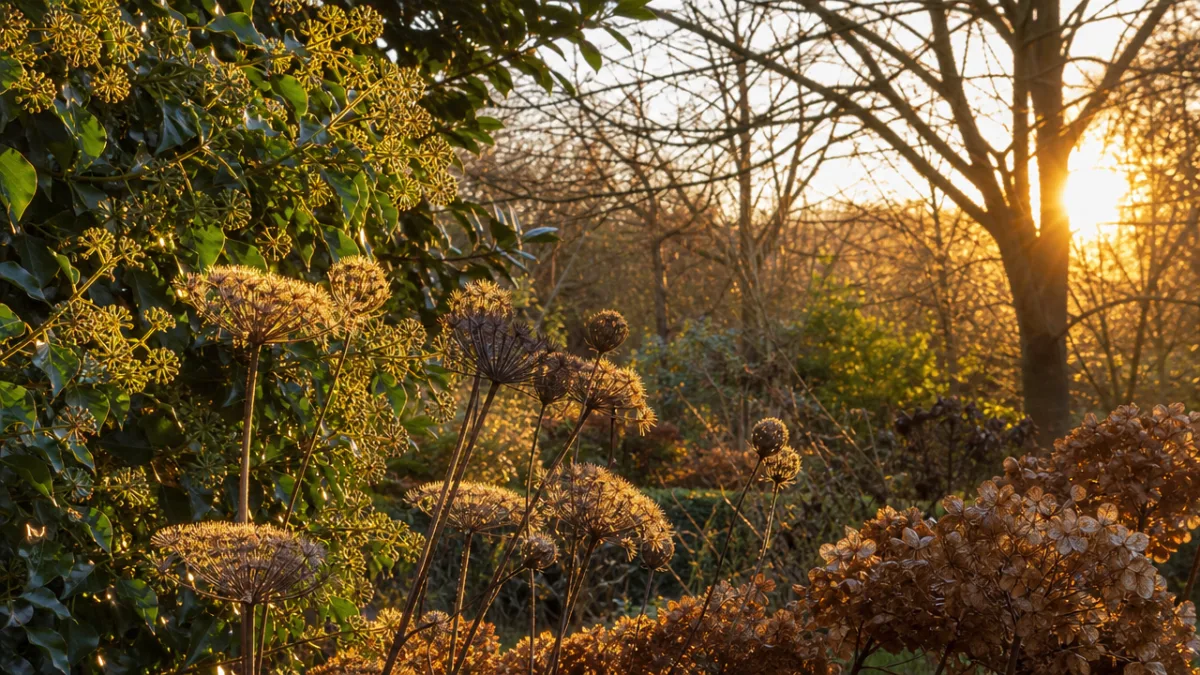
Autumn tends to get overlooked in butterfly gardening, but it really shouldn’t be. Red admirals and painted ladies can be on the wing well into October in a mild year, and they need late nectar either for migration or for building up reserves to see them through winter. Ivy is arguably the single most important plant for autumn butterflies — it flowers in October when almost everything else has stopped, and the butterflies come to it in numbers. Sedum, aster, and verbena bonariensis are also excellent late-season performers. Simply holding off on the autumn cut-back gives your garden weeks of extra value for next to no effort.
Winter isn’t a dead season in the butterfly garden — it’s just a quieter one, with a lot going on out of sight. Many adult butterflies tuck themselves into wall crevices, ivy clusters, log piles, or garden sheds to see out the cold months. Others overwinter as pupae attached to plant stems, which is a very good reason to leave herbaceous growth standing rather than cutting it all back in autumn. Keeping those structures intact through winter, and not rushing to tidy everything up at the first sign of spring, is one of the simplest and most genuinely effective things you can do for your local butterfly population.
Getting the Community Involved: Expanding the Butterfly Corridor
Your own butterfly-friendly garden is genuinely valuable — but its impact grows enormously when the gardens around it are doing similar things. Butterflies need to move through the landscape to find mates, spread into new areas, and keep their populations genetically healthy. A scattering of isolated garden oases is better than nothing, but a connected network of habitat — a living corridor through a neighbourhood — is something much more powerful. Talking to neighbours, sharing seeds and cuttings, and spreading enthusiasm through local gardening groups is, in its own way, just as ecologically meaningful as anything you do in your own plot.
Community-level initiatives can achieve things that no individual garden ever could. Wildlife gardening groups, local nature reserves, and urban greening projects all create opportunities to influence butterfly habitat at real scale. Many local councils and conservation organisations run programmes specifically aimed at helping residents make their gardens more pollinator-friendly, sometimes including free seeds, plant vouchers, or advice sessions. Getting involved connects what you’re doing at home to a bigger picture and multiplies the effect considerably.
Recording the butterflies you see is another genuinely useful contribution. Citizen science platforms let gardeners submit sightings that researchers use to track population trends, spot emerging threats, and measure whether conservation efforts are working. Keeping a simple note of which species visit your garden, when they show up, and roughly how many takes almost no time but generates data that has real scientific value. It also changes how you experience your garden — instead of just enjoying it passively, you become an active participant in something that extends far beyond your own patch of ground.








What do you think?
It is nice to know your opinion. Leave a comment.