










Gingham Mint Craft Fabric: The Complete Guide to a Timeless Textile Trend
What Is Gingham Mint Craft Fabric?
Gingham mint craft fabric is a classic woven textile distinguished by its iconic checked pattern rendered in fresh, cool mint tones paired with white. The term “gingham” refers specifically to a plain-woven cotton fabric featuring a crisscross pattern of colored and white threads, creating balanced, symmetrical checks. When produced in mint — a pale, refreshing shade of green with subtle blue undertones — the result is a fabric that feels simultaneously vintage and modern, making it one of the most versatile choices available to crafters and sewists today.
The mint colorway brings a distinctly airy, springlike quality to the traditional gingham construction. Unlike bolder gingham prints in red, navy, or black, mint gingham occupies a softer corner of the color spectrum. It works beautifully in natural light, appearing almost luminescent against neutral backgrounds and pairing effortlessly with complementary tones like blush pink, warm white, soft lavender, and buttery yellow. Crafters who reach for mint gingham are often drawn to its gentle, nostalgic charm without sacrificing contemporary relevance.
In terms of construction, most mint craft gingham is produced from 100% cotton or a cotton-polyester blend. Pure cotton versions breathe well, accept dye evenly, and press cleanly under an iron — all qualities that experienced sewists prize. Blended versions tend to resist wrinkles more effectively and retain their shape through repeated washing, making them ideal for items that will see heavy use. Understanding the fiber composition of your specific fabric before beginning any project is essential for choosing the right needles, thread, and finishing techniques.
The History and Cultural Legacy of Gingham
Gingham has a far richer history than its cheerful appearance might suggest. The word itself is believed to derive from the Malay word “genggang,” meaning striped or separate, and the fabric was traded extensively throughout Southeast Asia before European merchants introduced it to Western markets in the seventeenth century. Early European gingham was a striped cloth rather than a checked one, and it was only through evolving manufacturing conventions that the characteristic check pattern became the defining hallmark of the fabric we recognize today.
By the nineteenth century, gingham had become firmly embedded in American domestic culture. It was the fabric of farmhouse kitchens, country school dresses, and picnic tablecloths. Its affordability and durability made it accessible to working-class families across the country, and its cheerful pattern made it a natural choice for children’s clothing and household linens. The fabric carried with it connotations of wholesome, rural simplicity — associations that have proven remarkably durable across generations of changing fashion and design sensibility.
The twentieth century saw gingham elevated from humble origins to high-fashion status on multiple occasions. Brigitte Bardot famously wore a pink gingham wedding dress in 1959, instantly transforming the fabric into an emblem of chic femininity. Designers from Betsey Johnson to Marc Jacobs have revisited gingham repeatedly in their collections, each time finding fresh ways to reinterpret its timeless geometry. Mint gingham, in particular, gained renewed popularity during the cottage-core and vintage revival movements of the 2010s and early 2020s, when consumers sought fabrics that evoked handmade, heirloom craftsmanship.
Choosing the Right Mint Gingham for Your Project
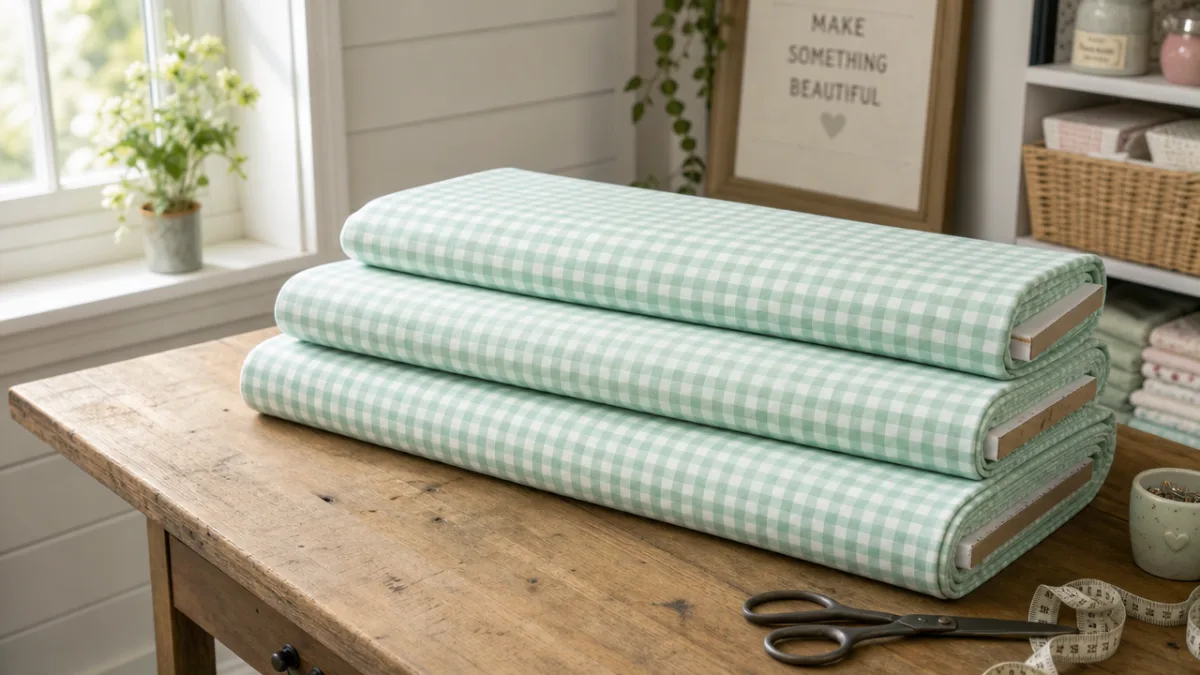
Selecting the appropriate mint gingham fabric requires consideration of several interconnected factors: the scale of the check, the weight of the fabric, the fiber content, and the finish applied during manufacturing. Check size alone can dramatically alter the visual impact of a finished project. Small-scale gingham with checks measuring roughly one-eighth of an inch reads as an almost solid texture from a distance, lending itself beautifully to fine garments, doll clothes, and delicate quilting. Medium-scale checks, typically between one-quarter and one-half inch, are the most versatile and work across a wide range of applications. Large-scale gingham, with checks measuring an inch or more, makes a bold statement and suits home décor projects, tote bags, and statement garments particularly well.
Fabric weight is equally important to project success. Lightweight mint gingham, sometimes called lawn or voile weight, drapes softly and is well suited to blouses, sundresses, and curtains where flow and movement are desired. Midweight gingham — the most commonly sold craft weight — holds its shape under seaming and quilting, making it the go-to choice for the vast majority of sewing projects. Heavier canvas-weight gingham provides structure and durability, ideal for upholstery accents, market bags, and outdoor cushion covers that must withstand regular wear and exposure.
When shopping for mint gingham, always assess the colorfastness of the fabric before committing to a large quantity. Mint shades can vary considerably between manufacturers, ranging from almost aqua-tinged blue-greens to softer, warmer sage-adjacent tones. Request swatches when shopping online, and test a small piece in water to check whether the dye bleeds before washing the full yardage. A quick preshrinking step — running the fabric through a warm wash and dry cycle before cutting — is non-negotiable for cotton gingham, which can shrink as much as five to ten percent during its first laundering.
Pay attention also to thread count and weave tightness, which affect both how the fabric handles during cutting and how well it accepts embroidery or appliqué. A tight, even weave provides a stable surface for embellishment and reduces fraying at cut edges, while a looser weave may require more careful handling and serging. Look for fabric that has a balanced, consistent pattern where the checks align perfectly across the width — misaligned checks are a sign of lower-quality production and will create matching headaches during construction.
Creative Projects You Can Make with Mint Gingham
The breadth of projects achievable with mint gingham craft fabric is genuinely remarkable, spanning garments, quilts, home accessories, gifts, and seasonal decorations. Its friendly, approachable aesthetic makes it appealing to crafters at every skill level, from absolute beginners working on their first pillowcase to experienced quilters executing intricate patchwork designs. The fabric’s pattern-matching requirements do introduce an enjoyable design challenge, but the graphic clarity of the gingham grid actually makes alignment easier than working with more complex printed fabrics.
For those new to sewing, mint gingham is an outstanding beginner fabric because it provides a built-in grid that aids in cutting straight lines and identifying grain direction. Simple beginner-friendly projects include:
- Drawstring bags and gift pouches for birthdays or baby showers
- Fabric bookmarks with ribbon accents and simple hand-stitching
- Kitchen dish towels hemmed with contrast bias tape
- Lavender sachets stuffed with dried herbs and tied with twine
- Fabric-wrapped headbands and hair accessories
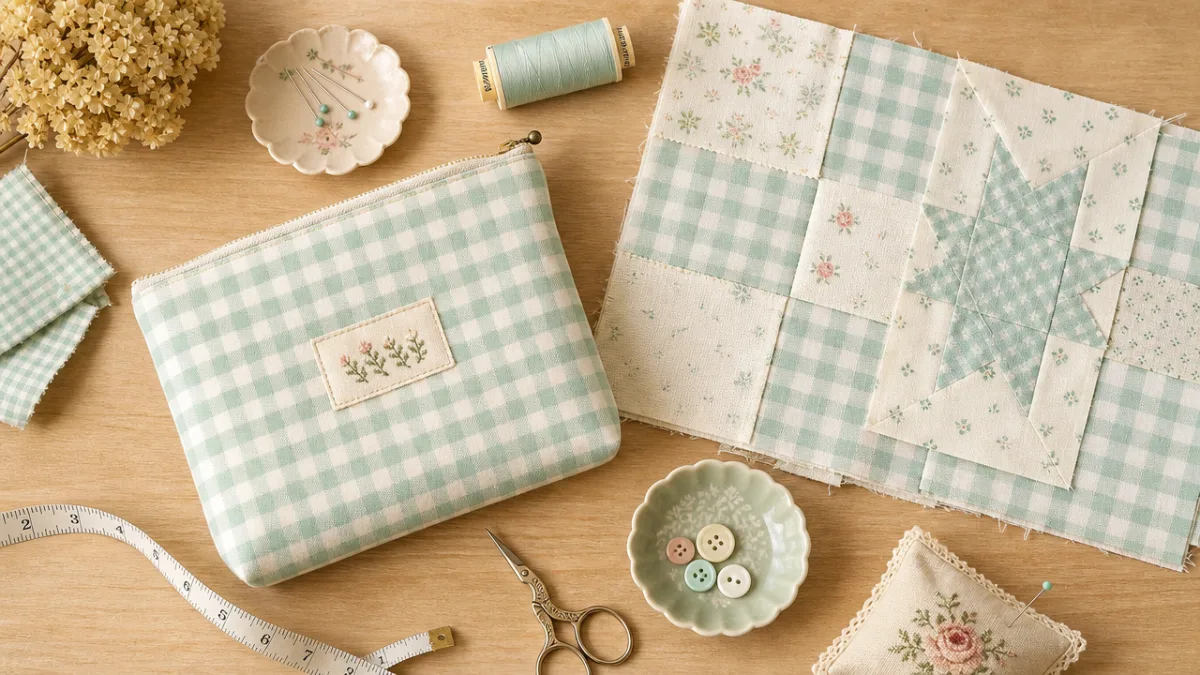
- Simple zippered pouches using a beginner zipper technique
Intermediate and advanced crafters will find mint gingham equally inspiring. Garment sewists love it for children’s smocked dresses, summer blouses with Peter Pan collars, and A-line skirts with structured waistbands. Quilters frequently incorporate mint gingham into sampler quilts and vintage-style patchwork, where its clean geometry plays against busier floral and toile prints to create visual breathing room. Home decorators use it for café curtains, chair cushion covers, table runners, and fabric-covered storage boxes that bring cohesive charm to kitchen and bedroom spaces.
Seasonal and holiday crafting opens up yet another creative avenue. Mint gingham makes exquisite Easter basket liners, spring wreath bows, and Mother’s Day gift wrapping. It lends itself beautifully to baby shower decorations and gender-neutral nursery accents. During the winter holiday season, mint gingham paired with red accents creates a candy-cane inspired aesthetic that feels festive without being heavy-handed. The fabric’s year-round versatility is one of its most compelling selling points for crafters who prefer to invest in materials that serve them across multiple seasons and projects.
Sewing and Cutting Techniques for Gingham Success
Working successfully with gingham mint fabric begins at the cutting table, where precision and patience pay enormous dividends in the finished result. Because the visible check pattern creates an immediate visual reference for alignment, any deviation from straight lines or grain becomes immediately apparent in the completed project. Investing time in careful preparation — squaring your fabric, identifying the true grain, and pressing out any fold lines from storage — before a single cut is made will protect all the effort that follows.
Pattern matching is the central technical challenge of working with checked fabrics. When cutting multiple pieces that will be seamed together, it is essential to ensure that the checks align at the seam lines rather than merely at the cut edges. This requires adding extra fabric when calculating yardage — a general rule of thumb is to add one full repeat of the check size for every major pattern piece. Using a see-through quilting ruler and a self-healing cutting mat with a printed grid allows for precise alignment that would be impossible to achieve with scissors alone. A rotary cutter produces cleaner edges than shears on woven fabrics and is strongly recommended for anyone working with gingham regularly.
At the sewing machine, a few adjustments make working with mint gingham noticeably smoother. A sharp universal needle or a microtex needle in size 70/10 or 80/12 pierces the tightly woven cotton cleanly without pushing threads aside and creating visible distortion. A presser foot with a clear base — a quilting foot or an appliqué foot — allows you to see the check lines clearly as you guide the fabric, making it far easier to sew precise, consistent seam allowances. Reduce presser foot pressure slightly if your machine allows it, as this prevents the fabric from being dragged unevenly, which can distort the check geometry across a long seam.
Finishing raw edges on mint gingham deserves equal attention. Because cotton gingham frays readily, all raw edges should be finished promptly after cutting, either with a serger using a three or four-thread overlock stitch, or with a zigzag stitch set to a medium width and length on a standard sewing machine. French seams are a particularly elegant finishing option for lightweight gingham garments, encasing all raw edges completely and producing a neat, professional interior that holds up well through laundering. Bound seams using coordinating fabric strips add a decorative interior element that elevates handmade garments to heirloom quality.
Caring for and Storing Your Mint Gingham Fabric
Proper care of mint gingham fabric — both before and after it becomes a finished project — ensures that its fresh color and crisp texture are preserved for years of enjoyment. Cotton gingham is a resilient fabric, but mint and other pastel shades are more susceptible to fading than deep, saturated colors. Protecting the fabric from prolonged UV exposure, both during storage and in finished applications like curtains and cushion covers, is the single most effective measure for maintaining vibrant color over time.
Washing guidelines for mint gingham projects are straightforward but important to follow consistently. Most finished cotton gingham projects should be washed in cool or warm water on a gentle cycle, using a mild detergent free from optical brighteners, which can subtly alter the mint tone over repeated washings. Turning garments inside out before washing reduces abrasion on the visible surface and helps colors remain true longer. Avoid overcrowding the washing machine, as gingham — like all woven cottons — benefits from gentle agitation with ample water circulation to rinse thoroughly.
Drying and pressing are where many crafters inadvertently compromise their mint gingham projects. High heat in the dryer can cause cotton to shrink beyond its initial preshrinking and can also cause the fabric to develop a slight stiffness that detracts from its natural drape. Line drying or tumble drying on low heat is preferable for most gingham items. When pressing, use a medium-hot iron with steam on the reverse side of the fabric to restore crispness and remove wrinkles without the risk of scorching or shining the surface. A pressing cloth adds an extra layer of protection for items with embellishments or appliqué.
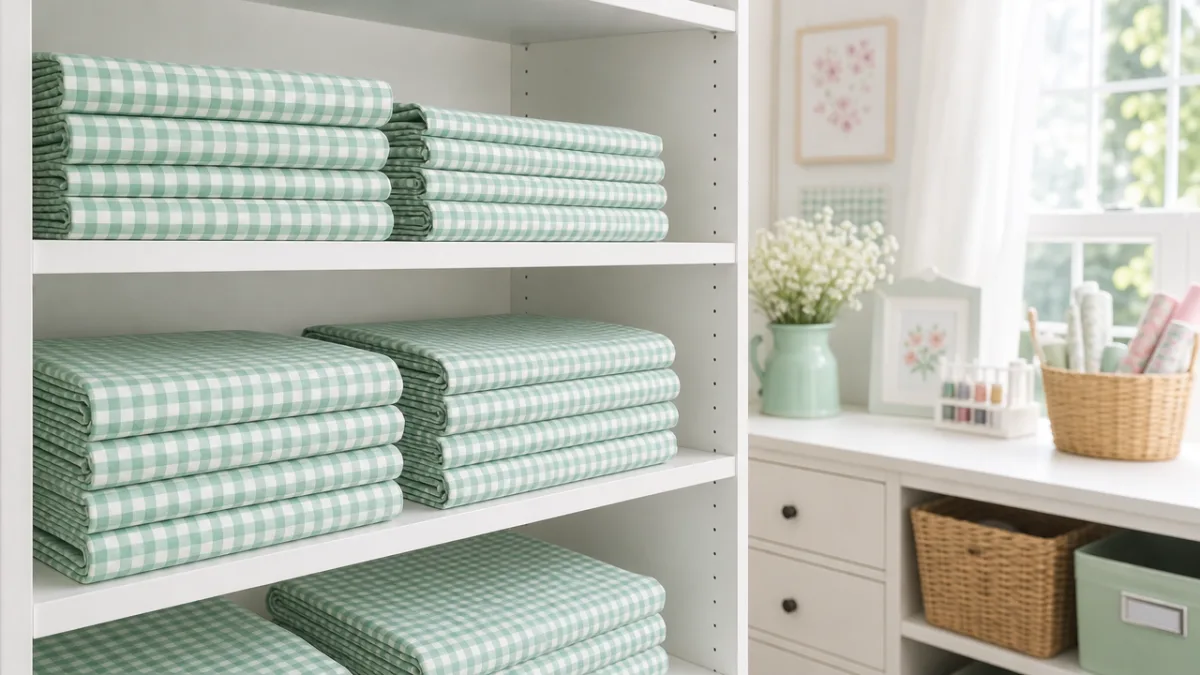
For storing unused mint gingham yardage, a few simple practices extend the fabric’s life considerably. Fold yardage loosely or roll it around a cardboard tube to prevent permanent crease lines from forming. Store in a cool, dry location away from direct sunlight, ideally in a fabric-safe bin or breathable cotton bag rather than a plastic container, which can trap humidity and encourage mildew. Labeling your fabric storage with fiber content, check size, and yardage saves time and frustration when returning to a project after weeks or months away, and prevents the common mistake of washing a fabric care instruction you can no longer recall.
Pairing Mint Gingham with Colors, Textures, and Trims
One of mint gingham’s most endearing qualities is its generosity as a design partner. The fabric plays well with an exceptionally wide range of companion colors, textures, and embellishments, making it an anchor piece around which entire project palettes can be built. Understanding a few core principles of color theory and fabric combination helps crafters unlock the full creative potential of this versatile textile and avoid combinations that feel discordant or visually cluttered.
From a color perspective, mint gingham sits naturally within a cool, fresh palette. Its most harmonious companions include:
- White and cream — reinforce the fabric’s clean, crisp character and allow mint to remain the focal point
- Soft pink and blush — create a gentle, feminine contrast that reads as both vintage and contemporary
- Warm coral and peach — introduce energy and warmth that balances mint’s cool undertones beautifully
- Pale yellow and buttercup — evoke springtime freshness and complement mint’s connection to garden and nature themes
- Navy and chambray blue — offer a grounded, nautical note that anchors lighter mint tones effectively
- Natural linen and jute — bring earthy texture that prevents an all-mint palette from feeling too sweet or saccharine
In terms of fabric pairings, mint gingham combines particularly well with solid-colored fabrics in coordinating shades, allowing the gingham to serve as the pattern and the solids to provide visual rest. Floral fabrics featuring mint in their color story integrate seamlessly, and pairing mint gingham with a romantic floral print is a classic quilting combination that appears across countless heirloom patterns. Stripes in complementary colors add graphic interest without competing with the check geometry, particularly when the stripe scale differs from the gingham check scale.
Trims and embellishments open up yet another dimension of creative possibility. White cotton eyelet lace along a hem or collar edge reinforces the vintage sensibility of mint gingham and requires almost no styling thought — the two simply belong together. Rickrack in coordinating colors adds playful movement to children’s items and kitchen accessories. Ribbon in satin or grosgrain finish, tied into bows or threaded through beading, introduces a dressy element that elevates simple gingham projects into gift-worthy creations. Pearl buttons, wooden buttons, and fabric-covered buttons all partner well with mint gingham garments, each conveying a slightly different aesthetic from formal to rustic.








What do you think?
It is nice to know your opinion. Leave a comment.