










20 Plants That Love Full Sun and Heat: Perfect For Your Summer Garden
Why Full Sun Plants Are the Heart of a Summer Garden
If you want a summer garden that actually thrives instead of just surviving, it all starts with one simple idea: put the right plants in the right place. Full sun plants need at least six hours of direct sunlight every day, and honestly, many of them do even better with eight or ten hours of uninterrupted sunshine. When you match those plants to your sunniest beds, everything gets easier — more color, lusher growth, and a whole lot less frustration watching things struggle where they don’t belong.
Summer gardens are tough environments. Brutal afternoon heat, dry spells that stretch longer than you’d like, and that relentless midsummer sun can knock out shade-lovers and moisture-dependent plants in a hurry. But plants that are built for full sun and heat? They’ve got tricks up their sleeves — waxy leaf coatings that reflect light, deep roots that hunt for water underground, thick stems that hold moisture in reserve. Choosing these kinds of plants means less watering, less babying, and more time actually enjoying your garden.
And the good news is that sun-loving plants tend to be show-offs in the best possible way. Zinnias explode in hot oranges and pinks, lavender drifts through the air with that unmistakable scent, and ornamental grasses catch the breeze with an almost hypnotic elegance. Whether you’re going for a casual cottage garden, a pollinator paradise, or just a front yard that makes people slow down as they drive by, there’s an incredible range of full sun plants to work with. The twenty featured here are some of the best you can grow.
Flowering Annuals That Thrive in Heat and Sunshine
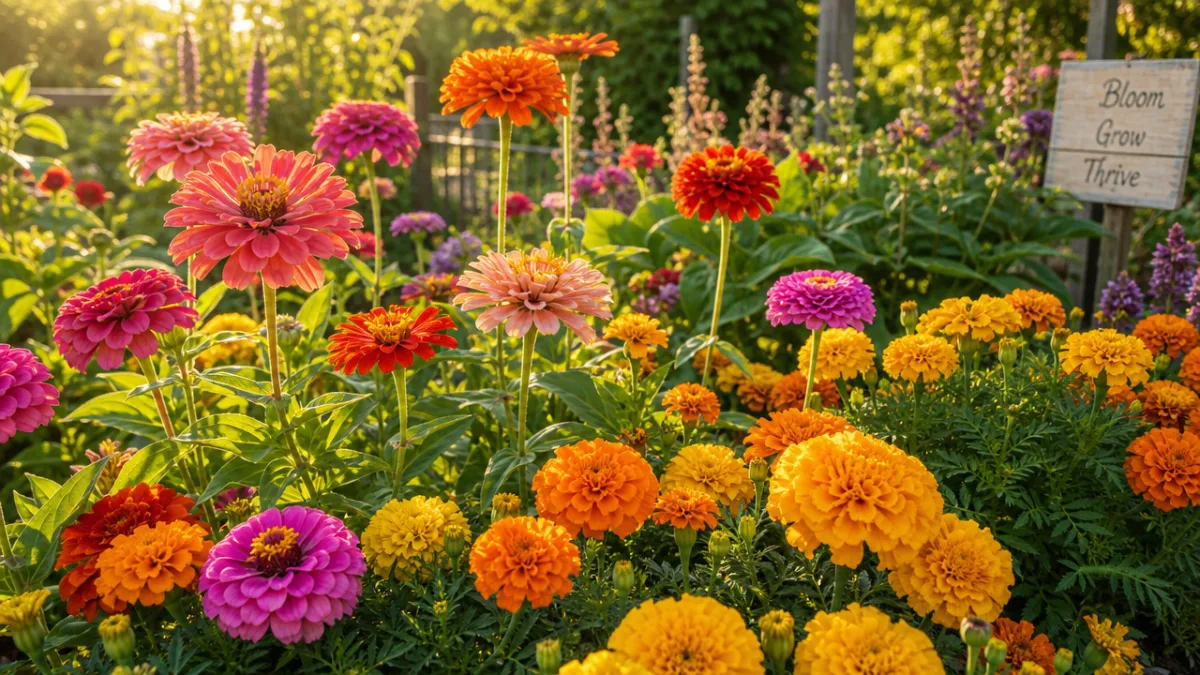
Annuals are the real workhorses of the summer garden — they pump out color from late spring all the way to the first frost, and they don’t ask for much in return. Zinnias are at the top of the list for good reason. They genuinely love heat; give them a cool, cloudy stretch and they’ll actually sulk a little. They come in just about every color you can think of (no true blue, but everything else is fair game), they’re butterfly magnets, and you can grow them straight from seed scattered directly in the garden. Keep deadheading them and they’ll just keep blooming.
Marigolds earn their spot in every sun-baked summer bed not just for their cheerful yellow, orange, and burgundy blooms, but because they actually pull double duty. That sharp, slightly pungent smell that comes off their leaves? A lot of common garden pests — aphids, whiteflies, even certain soil nematodes — aren’t fans of it at all. French marigolds stay tidy and compact, so they’re perfect for edging a bed, while African marigolds go tall and bold and really hold their own further back in a larger border.
If you’ve got a dry, rocky, genuinely difficult spot where nothing seems to want to grow, portulaca — or moss rose, as it’s commonly called — is your answer. This low-growing little annual has succulent stems and leaves that hold onto moisture beautifully, and it produces flowers that look like tiny roses in red, pink, yellow, orange, and white. They open up wide in full sun and close on overcast days, which gives the plant a charming, almost rhythmic quality. For slopes, rock gardens, or any tough corner of the yard, portulaca is hard to beat.
Other excellent heat-loving annuals worth considering for your summer garden include:
- Vinca (Catharanthus roseus): Glossy foliage and pinwheel-shaped blooms in pink, red, white, and lavender; extremely heat and humidity tolerant.
- Celosia: Dramatic plumed or crested flower heads in fiery shades; thrives in full sun and actually improves with heat.
- Gomphrena: Round, clover-like blooms in magenta, pink, orange, and white; drought tolerant once established and beloved by pollinators.
- Melampodium: A lesser-known gem with cheerful yellow daisy-like flowers that self-clean and require almost no maintenance through the hottest summer months.
Perennial Sun Lovers That Return Year After Year
Annuals give you a great season, but perennials give you something better: they come back. Plant them once and they’ll reward you for years, often growing bigger and more impressive each time. Coneflower, or Echinacea, is one of the most beloved perennials for full sun gardens, and it’s easy to see why. Those distinctive blooms with the raised, spiky centers come in everything from classic purple-pink to deep red, golden yellow, and soft white, and they show up right in midsummer when a lot of other plants are starting to fade.
Black-eyed Susan (Rudbeckia) is another perennial that absolutely loves to bake in the sun. Those golden petals around a dark brown center are practically synonymous with an American summer garden, and for good reason — this plant handles drought, heat, humidity, and even rough soil without complaint. It spreads steadily over time, forming generous clumps of color, and when the flowers are done, the seed heads stick around all winter and feed finches and other small birds. It’s genuinely one of those plants that keeps giving.
Salvia, especially the heat-tolerant cultivars of Salvia nemorosa and its relatives, produces tall spikes of blue, purple, pink, or white flowers that hummingbirds and bees find completely irresistible. What makes salvia especially useful is that if you cut it back after the first big flush of blooms, it usually rebounds with a second round — sometimes even a third. The foliage is aromatic and deer resistant, which is a huge bonus if browsing deer are a regular headache in your garden. Varieties like ‘May Night,’ ‘Caradonna,’ and ‘East Friesland’ are consistently recommended by experienced gardeners for good reason.
The following perennials also perform exceptionally well in full sun and summer heat:
- Lavender (Lavandula): Fragrant silver-green foliage and purple flower spikes; thrives in lean, well-drained soil and intense sun.
- Yarrow (Achillea): Flat-topped flower clusters in yellow, red, pink, or white; extremely drought tolerant and attractive to beneficial insects.
- Coreopsis: Cheerful yellow or bicolored blooms that flower for months; low maintenance and naturally heat hardy.
- Russian Sage (Perovskia): Airy silver stems topped with lavender-blue flowers; one of the most heat and drought tolerant perennials available.
- Daylilies (Hemerocallis): Available in thousands of cultivars; vigorous, adaptable, and stunning in full summer sun.
Ornamental Grasses and Structural Plants for Sunny Borders
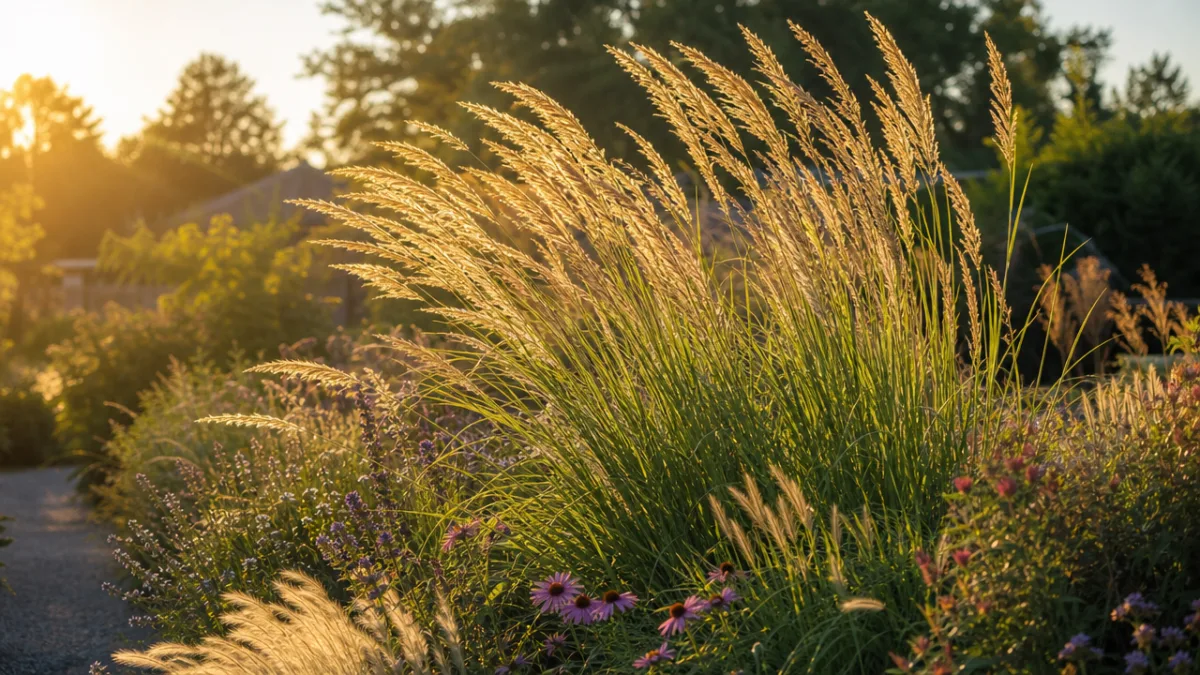
A full sun summer garden without ornamental grasses is missing something important. Grasses bring movement and texture in a way that flowering plants simply can’t replicate on their own — they sway, they shimmer, they catch the light in ways that make a border feel alive even on a still day. Blue oat grass, Helictotrichon sempervirens, is a great place to start. It forms striking steel-blue mounds that look fantastic next to warm-toned flowers, and when the morning or evening sun hits it from behind, the effect is genuinely beautiful.
Muhly grass is another standout, especially for anyone gardening in a warmer climate. For most of the season it’s a tidy, fine-textured mound of green that quietly does its thing, but then late summer rolls around and it suddenly erupts into these spectacular clouds of pink or reddish-purple flower plumes that almost seem to glow when the sun shines through them. It’s one of those late-season moments in the garden that genuinely catches you off guard, and the dried plumes hang around through a good portion of winter too.
Beyond grasses, a few bolder structural plants are worth considering as focal points in a sunny design. Agave and yucca bring a sculptural, almost architectural quality to the landscape and are practically indestructible once they’re settled into well-drained soil. If you’re in a colder climate and can’t leave them in the ground year-round, both make dramatic container plants that overwinter fine indoors. And ornamental alliums — those perfectly spherical purple flower heads on slender stems — offer a more fleeting but genuinely striking structural moment in early summer, rising unexpectedly above their lower-growing neighbors in the border.
Heat-Tolerant Shrubs That Anchor the Summer Garden
All those gorgeous annuals, perennials, and grasses need something to lean on — structurally speaking. Shrubs are what give a summer garden its bones, and choosing heat-tolerant ones for your sunniest spots means those bones stay healthy and attractive even when summer is at its most relentless. Crape myrtle, Lagerstroemia, is probably the most iconic heat-loving shrub or small tree you can grow in a warm climate. Those crepe-paper-textured blooms in white, pink, red, lavender, and purple arrive in midsummer and just keep going for weeks — making it one of the longest-blooming woody plants a gardener can get their hands on.
Butterfly bush, Buddleia davidii, is exactly what the name promises. Plant it in a hot, sunny spot and you’ll have butterflies, hummingbirds, and bees visiting constantly once it starts blooming. It comes in purple, pink, white, red, and bicolored varieties, and it rewards minimal care with an almost embarrassing amount of flowers. One thing worth knowing: in some regions butterfly bush spreads aggressively from self-sown seed and is considered invasive. If that’s a concern where you live, look for the sterile cultivars that are widely available now — you get all the beauty and the wildlife benefits without the worry.
Knock Out roses are worth talking about because they genuinely changed the game for gardeners who wanted roses without the drama. Traditional roses demand careful pruning, regular spraying, and precise fertilizing just to stay decent-looking. Knock Out roses largely skip all of that. They’re nearly disease resistant, they bloom in repeated flushes from late spring until hard frost with almost no deadheading required, and they handle heat and drought far better than you’d expect from a rose. In red, pink, coral, yellow, and white, they’re as ornamentally flexible as they are tough.
Practical Tips for Planting and Caring for Your Full Sun Garden
Picking the right plants is step one, but how you plant and care for them is what separates a garden that just gets by from one that genuinely thrives. Start with the soil — it’s the most important investment you can make before a single plant goes in the ground. Loosen it to at least twelve inches deep and work in plenty of compost. Compost does different things in different soils: in sandy ground it helps hold moisture, and in heavy clay it opens things up so roots don’t sit in soggy conditions after a summer downpour. Either way, it’s the right move.
How you water matters just as much as how often. During the establishment period — when new plants are still developing the root systems they’ll eventually use to find moisture on their own — deep, infrequent watering beats shallow, frequent sprinkles every time. Deep watering pushes roots downward into cooler, more consistently moist layers of soil, where they’re much better protected during dry stretches. Drip irrigation or soaker hoses are ideal because they deliver water right to the root zone without wetting the foliage, which cuts down on fungal issues that overhead watering can encourage.
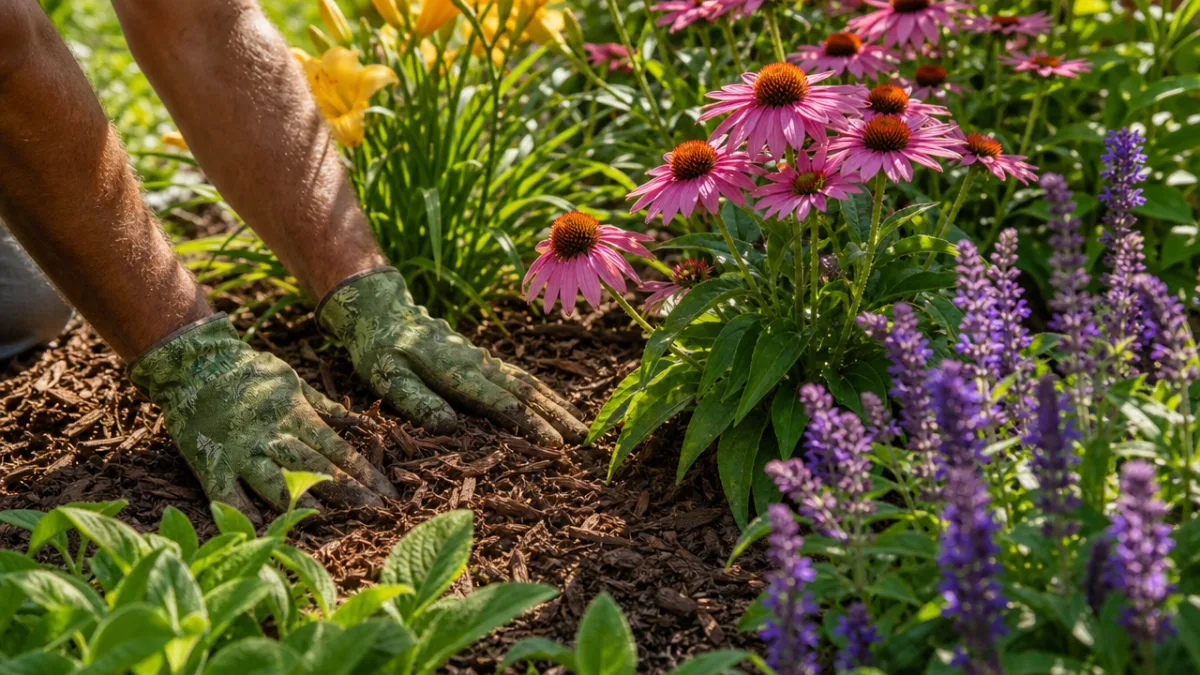
Mulching might be the single highest-return maintenance habit you can build in a full sun garden. A two to three inch layer of shredded bark, wood chips, or straw does a remarkable number of things at once: it keeps soil temperatures from swinging wildly in the heat, slows down moisture evaporation so you’re not watering as often, blocks light from reaching weed seeds so fewer of them sprout, and slowly breaks down over time to feed the soil. Just keep mulch pulled a few inches back from plant stems and crowns — letting it pile up against them traps moisture and invites rot.
As the growing season progresses, these additional care practices will keep your full sun garden performing at its best:
- Deadheading: Removing spent flowers from annuals and many perennials redirects the plant’s energy from seed production to continued flower production, extending the bloom season significantly.
- Fertilizing: A balanced slow-release fertilizer applied at planting and again in midsummer supports healthy growth without encouraging the lush, soft growth that is most susceptible to heat stress.
- Dividing perennials: Overcrowded perennial clumps lose vigor and flower less prolifically; dividing them every three to five years in spring or fall rejuvenates them and gives you additional plants to expand or share.
- Monitoring for pests: Even tough, sun-loving plants can be affected by aphids, spider mites, and other pests that proliferate in hot, dry conditions; early detection and treatment prevents minor problems from escalating.
At the end of the day, a great full sun summer garden is about working with your conditions rather than fighting them. When you choose plants that are genuinely built for the heat and light your garden delivers, you stop spending all your energy keeping things alive and start watching something truly self-sustaining take shape — a garden that gets better looking and more resilient year after year. The twenty plants and plant groups covered here span annuals, perennials, grasses, and shrubs, so there’s something for every layer of your garden. Put them in the right spot, give them a decent start, and then step back and enjoy the show — along with every butterfly, bee, and hummingbird that shows up to enjoy it with you.








What do you think?
It is nice to know your opinion. Leave a comment.