










Sea Buckthorn: Nature’s Golden Berry and Its Remarkable Benefits
Introduction to Sea Buckthorn (Hippophae)
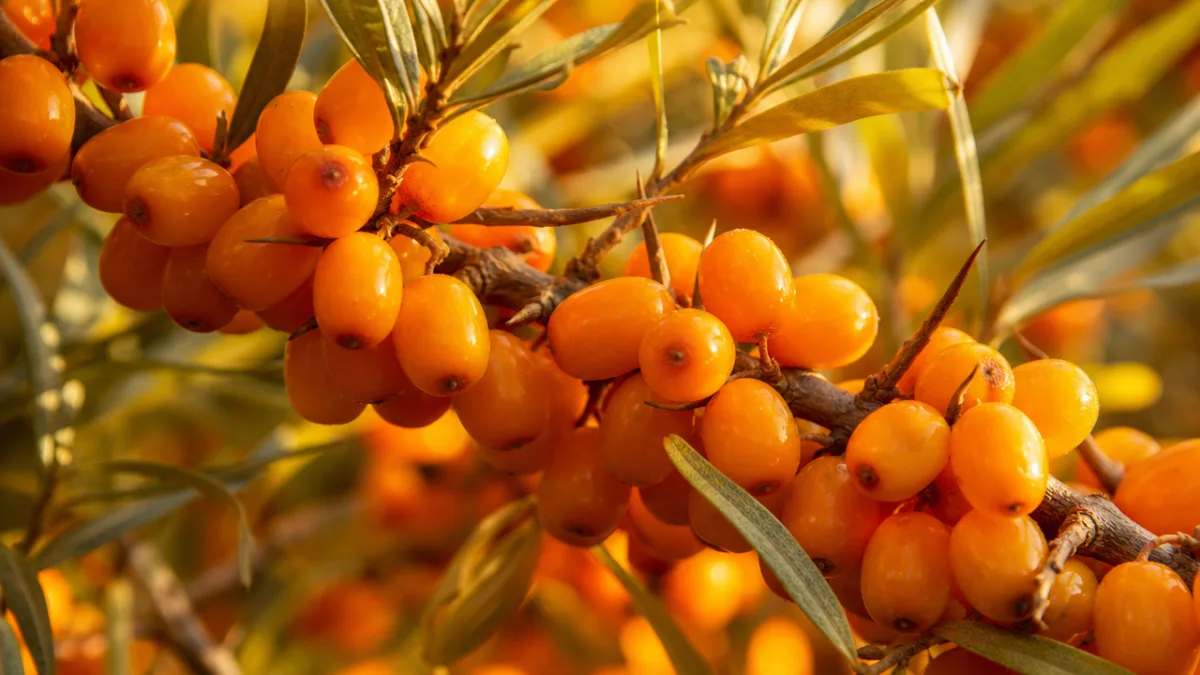
If you’ve never heard of sea buckthorn, you’re in for a treat. Known scientifically as Hippophae rhamnoides, this scrappy little shrub has been quietly earning its reputation as one of nature’s most nutritionally packed plants for thousands of years. It’s native to the cold, rugged regions of Europe and Asia, and once you see it in person, it’s hard to forget — the branches are absolutely loaded with clusters of bright orange and yellow berries, especially striking when everything else has gone bare in winter.
The name “sea buckthorn” is actually a bit of a misnomer — the plant doesn’t grow in the sea at all. It tends to show up in coastal areas, river valleys, mountain terrain, and sandy soils where most other plants would struggle to survive. It’s a surprisingly adaptable species, thriving everywhere from the Himalayan plateau to the windswept shores of northwestern Europe. That toughness is a big part of what makes it so ecologically valuable across such a huge stretch of the Northern Hemisphere.
Historically, people have been relying on this plant for a very long time. Ancient Tibetan and Chinese medical texts mention it extensively, crediting it with healing wounds, aiding digestion, supporting heart health, and boosting overall vitality. Mongolian warriors were said to feed sea buckthorn berries to their horses to improve stamina and give their coats a healthy shine — which is actually where one of the plant’s oldest nicknames, “shining horse,” comes from. It turns out those ancient healers and horsemen were onto something, because modern science has since confirmed just how nutritionally remarkable this berry really is.
Botanical Characteristics and Growth Habits
Sea buckthorn is a deciduous shrub (or occasionally a small tree) in the family Elaeagnaceae. It usually tops out somewhere between two and four meters tall, though in particularly favorable conditions it can push up to six. The branches are armed with sharp, stiff thorns — which, as anyone who has tried to harvest the berries by hand will tell you, makes the whole process an adventure. The narrow, silvery-green leaves give the plant a soft, feathery look that provides a beautiful contrast to those vivid orange berries, making it genuinely ornamental as well as useful.
One interesting quirk: sea buckthorn is dioecious, meaning male and female flowers grow on completely separate plants. Only the female plants produce berries, but you can’t skip the males — they’re essential for pollination. The small, understated flowers come out in early spring, before the leaves, and they’re pollinated by wind rather than insects. One male plant can typically handle pollination for several nearby females, so experienced growers put some thought into their planting ratios to get the best possible yields.
What really sets sea buckthorn apart as a plant, though, is its root system. It has nitrogen-fixing nodules on its roots, which means it can actually pull nitrogen from the air and feed it into the soil — a trick that lets it colonize poor, depleted ground where almost nothing else will grow, and gradually improve the soil quality over time. Those deep, spreading roots also make it exceptional for erosion control, and it’s been widely planted on riverbanks, hillsides, and coastal dunes for exactly that reason. In many countries, large-scale plantings have been used to help rehabilitate degraded land and hold back desertification.
Extraordinary Nutritional and Chemical Composition
Here’s where things get really interesting. Sea buckthorn berries are a genuine nutritional powerhouse. Their vitamin C content alone is staggering — depending on the variety and growing conditions, you’re looking at anywhere from 400 to over 2,000 milligrams per 100 grams of fresh fruit. That blows citrus out of the water, and even surpasses rose hips, which are generally considered one of the best plant sources of vitamin C. It’s no wonder nutritionists and researchers have been paying close attention.
But vitamin C is just the beginning. Sea buckthorn berries are packed with a wide range of bioactive compounds, including:
- Fat-soluble vitamins A, D, E, and K all together in one place, which is genuinely unusual for a single plant food
- A remarkable fatty acid profile covering omega-3, omega-6, omega-7, and omega-9 — making it one of the very few plant sources of omega-7
- A rich array of carotenoids including beta-carotene, zeaxanthin, and lycopene, which are also responsible for that gorgeous orange color
- Flavonoids and polyphenolic antioxidants like quercetin, kaempferol, and isorhamnetin
- Essential minerals including iron, calcium, potassium, magnesium, and phosphorus
- Plant sterols, organic acids, and a variety of amino acids
The seed oil deserves a special mention here. It’s particularly valued for its palmitoleic acid — the main omega-7 fatty acid — which plays an important role in skin health, mucous membrane integrity, and metabolic function. The pulp oil is a different story: it’s extraordinarily rich in carotenoids, which is what gives high-quality sea buckthorn oil that deep, almost reddish-orange color. When you combine the two, you get something with a remarkably broad spectrum of biological activity, which is exactly why the pharmaceutical, cosmetic, and food industries have all taken a keen interest in it.
Health Benefits and Traditional Medicinal Uses
Sea buckthorn’s health applications cover an impressively wide range of conditions, which makes sense given how many different bioactive compounds it contains. In Tibetan medicine, it’s been in use for at least twelve centuries — it appears prominently in the “rGyud bZhi,” one of the foundational texts of Tibetan medical practice, where it was prescribed for everything from pulmonary and heart conditions to digestive problems and skin ailments. More recently, Russian cosmonauts used sea buckthorn oil as part of their post-flight recovery routines, taking advantage of its ability to support skin healing and help counteract the effects of radiation exposure.
Modern research has gone a long way toward confirming what traditional practitioners observed. Studies have pointed to benefits in several key areas:
- Cardiovascular Health: The combination of omega fatty acids, tocopherols, and flavonoids appears to support healthy cholesterol levels, reduce arterial inflammation, and improve overall cardiovascular function. Regular consumption may help lower the risk of atherosclerosis.
- Skin Health and Wound Healing: Applied topically, sea buckthorn oil has been shown to speed up wound healing, calm inflammation, and help with conditions like eczema, psoriasis, and dry skin. Its fatty acid profile is particularly well-suited to supporting the regeneration of skin cell membranes.
- Gastrointestinal Support: The plant’s mucilaginous compounds and anti-inflammatory properties have shown promise for healing gastric ulcers and easing symptoms of inflammatory bowel conditions.
- Immune System Enhancement: The extraordinary vitamin C content, combined with the broader antioxidant profile, provides solid immune support — potentially shortening the duration and reducing the severity of upper respiratory infections.
- Liver Protection: Several studies suggest that sea buckthorn extracts may help shield the liver from toxin-induced damage and oxidative stress, supporting better overall liver function.
The anti-inflammatory angle is worth dwelling on, because chronic inflammation sits at the root of so many of the health problems we face today. Research has shown that sea buckthorn’s flavonoids and carotenoids can actually interfere with inflammatory pathways at the cellular level, which could offer some protective benefit against everything from arthritis and asthma to metabolic syndrome. Large-scale clinical trials are still needed to nail down these effects in human populations, but the existing research is compelling — and it’s growing quickly as interest in this plant continues to spread around the world.
Culinary Applications and Food Products
Fair warning: if you pop a fresh sea buckthorn berry into your mouth, you’re in for a shock. They’re intensely sour and a little astringent straight off the branch. But that sharp, complex flavor — often described as somewhere between citrus, pineapple, and mango — is exactly what makes them so exciting to cook with. Across Scandinavia, Russia, and Central Asia, cooks have been transforming these berries into juices, jams, syrups, teas, and fermented drinks for generations. More recently, food innovators around the world have started exploring what this berry can do in modern cuisine.
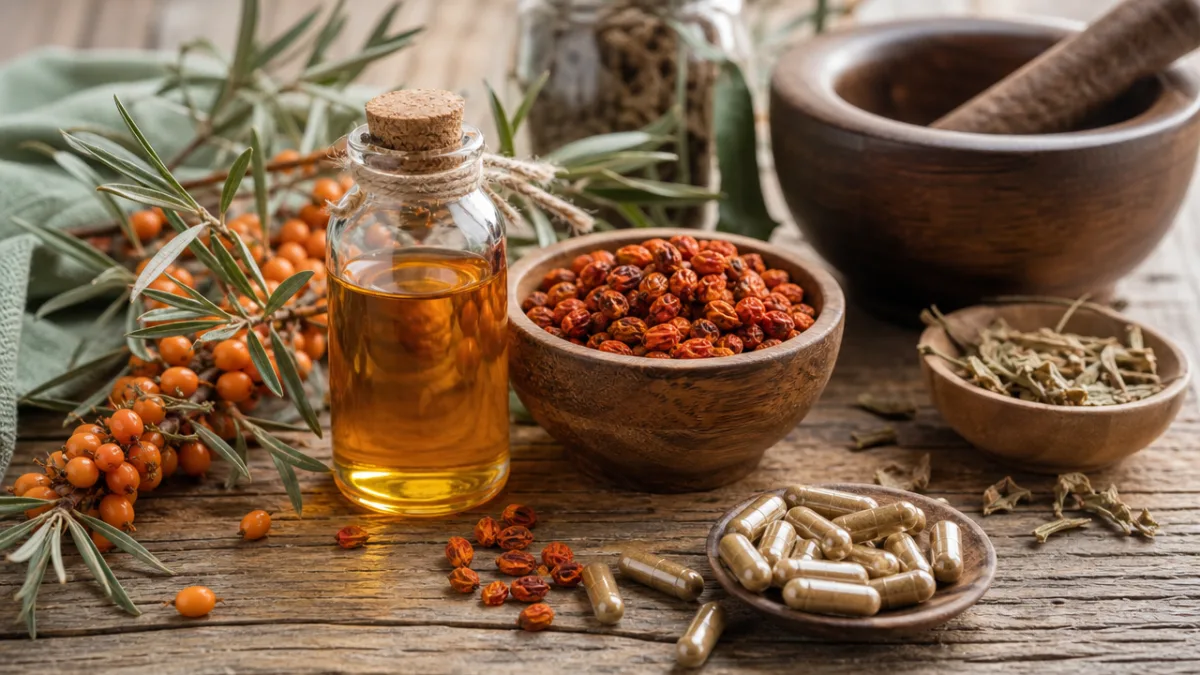
The range of sea buckthorn products on the market today reflects just how much mainstream interest has grown. You’ll find things like:
- Cold-pressed berry juice, often blended with apple or pear to soften that intense tartness
- Jam and marmalade, which hold onto a good portion of the nutritional value while giving you something spreadable for everyday use
- Herbal teas made with dried berries and leaves, popular in Germany, Russia, and increasingly across Western markets
- Infused spirits and liqueurs, especially beloved in Scandinavia and the Baltic countries
- Freeze-dried berry powder, used both as a nutritional supplement and as a natural food coloring
- Sea buckthorn vinegar, prized for its layered flavor as much as for any health benefits
- Culinary oils that add both flavor and nutritional value to dressings, sauces, and smoothies
High-end chefs have taken a particular shine to sea buckthorn, drawn in by that combination of vivid color, sharp acidity, and unusual aromatic character. It pairs beautifully with fatty fish like salmon and trout, where the tartness cuts through the richness in just the right way. It’s also excellent alongside creamy dairy, game meats, and autumn fruits. As the global appetite for superfoods keeps growing, sea buckthorn’s role in fine dining and everyday cooking alike seems likely to expand well beyond the regions where it originally made its name.
Cosmetic and Skincare Industry Applications
The skincare world has wholeheartedly embraced sea buckthorn, and it’s not hard to see why. The oil is packed with skin-active compounds in concentrations that are genuinely hard to match with other botanical ingredients, which is why you’ll find it in everything from high-end facial serums to therapeutic ointments. That deep orange-red color does create some challenges for product formulators — it can tint formulations quite dramatically — but that intensity is also a direct sign of the exceptional carotenoid content that makes the oil so effective for skin repair and anti-aging.
What makes sea buckthorn oil so valuable in skincare specifically comes down to a few key properties: it hydrates deeply through fatty acid supplementation, it provides potent antioxidant protection against UV and environmental damage, and it supports collagen synthesis thanks to its vitamin C and other bioactive compounds. Clinical studies have shown measurable improvements in skin elasticity, reductions in fine lines, and faster healing of damaged skin barriers after topical use. That makes it a particularly strong choice for products targeting mature, dry, or sun-damaged skin.
Its applications don’t stop at facial care, either. Sea buckthorn has worked its way into hair care products, body oils, lip treatments, and specialized formulas for conditions like rosacea, eczema, and post-procedure recovery. Some researchers have even explored its effectiveness in helping skin recover from radiation-induced damage, picking up a thread that Soviet-era scientists first started pulling on decades ago. With consumer demand for natural, evidence-backed ingredients continuing to climb, sea buckthorn sits in a pretty ideal position — it’s both genuinely effective and naturally derived, which is exactly the combination today’s skincare market is hungry for.

Cultivation, Harvesting, and Global Production
Commercial sea buckthorn production has grown dramatically over the past few decades, driven by rising global demand for the berries, oils, and extracts. China is by far the biggest player, with millions of hectares planted primarily in the northwest as part of large-scale land rehabilitation and commercial production programs. Russia, Mongolia, Germany, Finland, Canada, and India are also significant producers, each adapting cultivation methods to their own climates and markets. And production is still expanding as health, food, and cosmetic industries continue to discover what this plant has to offer.
Harvesting is genuinely tricky, which has pushed growers to get creative. Those protective thorns make hand-picking extremely slow and painful, and the delicate berries bruise easily under mechanical harvesters. Some producers take a different approach entirely: harvesting whole branches and then processing them at a central facility using vibration tables or freeze methods to shake the berries loose. Others have developed specialized mechanical harvesters designed specifically for sea buckthorn plantations. In cold-climate regions, some growers simply cut branches and freeze them, then shake the brittle frozen berries free without damaging the fruit.
The economics have gotten considerably more attractive as markets have matured and processing technology has improved. Premium sea buckthorn oil can command very strong prices in specialty markets, which makes even small-scale operations potentially viable for farmers in suitable areas. The plant’s low-input nature also helps the math — its nitrogen fixation reduces fertilizer needs, its natural hardiness keeps pest and disease pressure manageable, and its drought tolerance cuts down on irrigation. All of that makes it an appealing option for sustainable farming, especially on marginal land that wouldn’t support conventional crops well. As supply chains develop and more consumers discover sea buckthorn, the economic outlook keeps looking brighter.
Ecological Importance and Environmental Applications
Sea buckthorn’s value goes well beyond what you can eat or put on your skin — it plays a genuinely meaningful ecological role in many of the landscapes it calls home. That nitrogen-fixing root system, combined with deep and wide-spreading roots, makes it one of the most effective pioneer plants available for rehabilitating damaged, eroded land. China, Russia, and India have all planted it across millions of hectares specifically to fight desertification, stabilize riverbanks, and bring life back to soils beaten down by overgrazing, mining, or agricultural mismanagement. Its ability to thrive where most plants simply give up makes it an invaluable tool in ecological restoration work.
Wildlife benefits too. The berries stay on the branches well into winter, providing a critical food source for birds like thrushes, waxwings, and starlings when other options have dried up. The dense, thorny thickets offer excellent cover and nesting habitat for small mammals and ground-nesting birds. And those early spring flowers — appearing before most other plants have even leafed out — give bees and other pollinators an important nectar source right when they need it most.
In the context of climate change, sea buckthorn’s characteristics start looking even more valuable. Its tolerance of temperature extremes, drought, and poor soils makes it a strong candidate for agroforestry systems that need to stay productive as growing conditions become less predictable. Researchers and agricultural planners in many regions are actively looking at how sea buckthorn might fit into diversified farming systems that provide both ecological services and economic returns. It’s a plant that seems genuinely built for the challenges ahead — resilient, productive, and increasingly relevant as we work toward more sustainable ways of using land.








What do you think?
It is nice to know your opinion. Leave a comment.