










15+ Shade Loving Perennials That Are Easy to Grow
Why Shade Gardens Deserve More Credit
Many gardeners look at a shady corner of their yard and see a problem, but experienced horticulturalists know that shade is actually an invitation to create something truly special. Shaded garden beds offer a cool, calm aesthetic that sun-drenched borders simply cannot replicate. With the right plant selection, a dim area beneath a canopy of trees or along a north-facing fence can become one of the most beautiful and low-maintenance spaces in your entire landscape.
The misconception that shade gardens are dull or limited in variety could not be further from the truth. There are hundreds of perennials that not only tolerate shade but genuinely thrive in it, producing lush foliage, delicate blooms, and interesting textures that persist year after year without the constant replanting that annuals demand. Once established, shade-loving perennials tend to be remarkably resilient, requiring far less watering than sun lovers because the reduced light exposure also means reduced evaporation from the soil.
Understanding the difference between deep shade, partial shade, and dappled light is the first step to building a successful shade garden. Most perennials marketed as shade tolerant actually perform best in partial shade, meaning they receive two to four hours of indirect or morning sun each day. Deep shade, such as the area directly beneath a dense evergreen, is more challenging, but even there, a handful of tough, adaptable species will establish themselves and spread gracefully over time, filling in bare spots and suppressing weeds naturally.
Reading Your Shade Conditions
Before purchasing any plants, spend a day observing how light moves across your garden space. Note which areas receive direct morning sun versus harsh afternoon rays, and identify spots that stay completely shaded throughout the day. Morning sun is generally gentler and more beneficial than afternoon sun, which can scorch tender shade-adapted leaves. Many plants that struggle in full afternoon exposure will flourish happily with a few hours of soft eastern light each morning, giving you a broader palette to work with than you might initially expect.
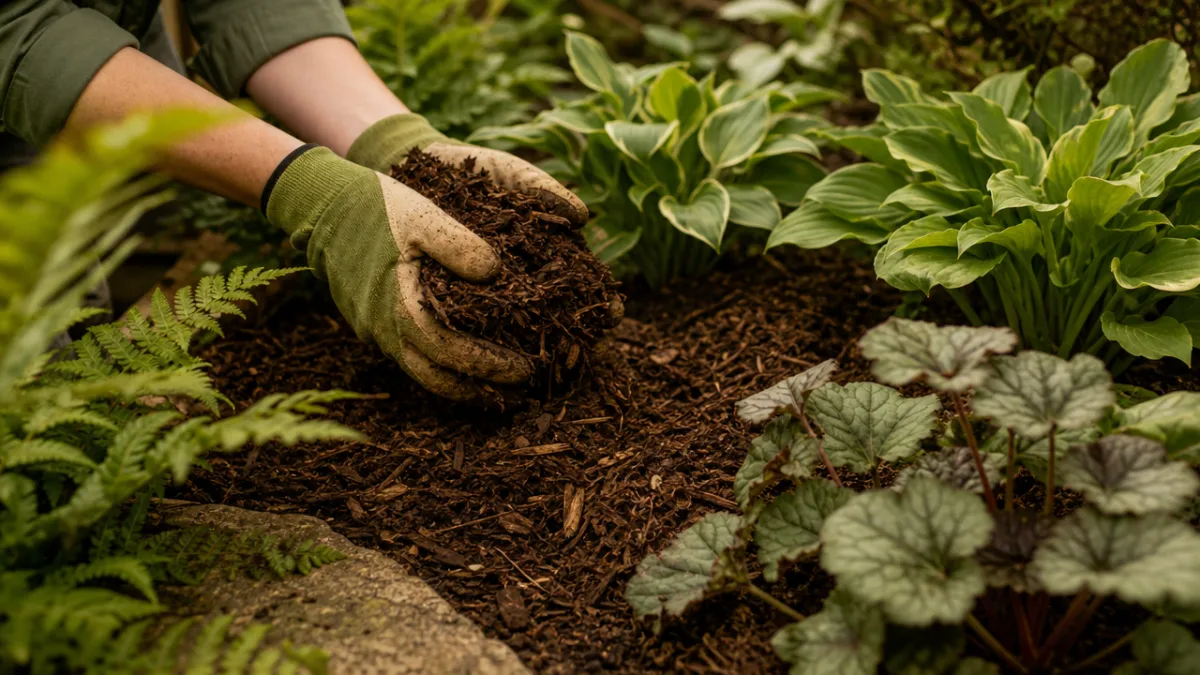
Soil conditions in shaded areas, particularly under trees, can present additional challenges. Tree roots compete aggressively for moisture and nutrients, and the soil beneath large specimens often becomes compacted and dry. Amending the soil with generous quantities of compost or well-rotted leaf mould before planting will dramatically improve your success rate. A layer of organic mulch applied annually not only conserves moisture and moderates soil temperature but also slowly decomposes to feed your plants and improve soil structure over multiple growing seasons.
Top Perennials for Dappled and Partial Shade
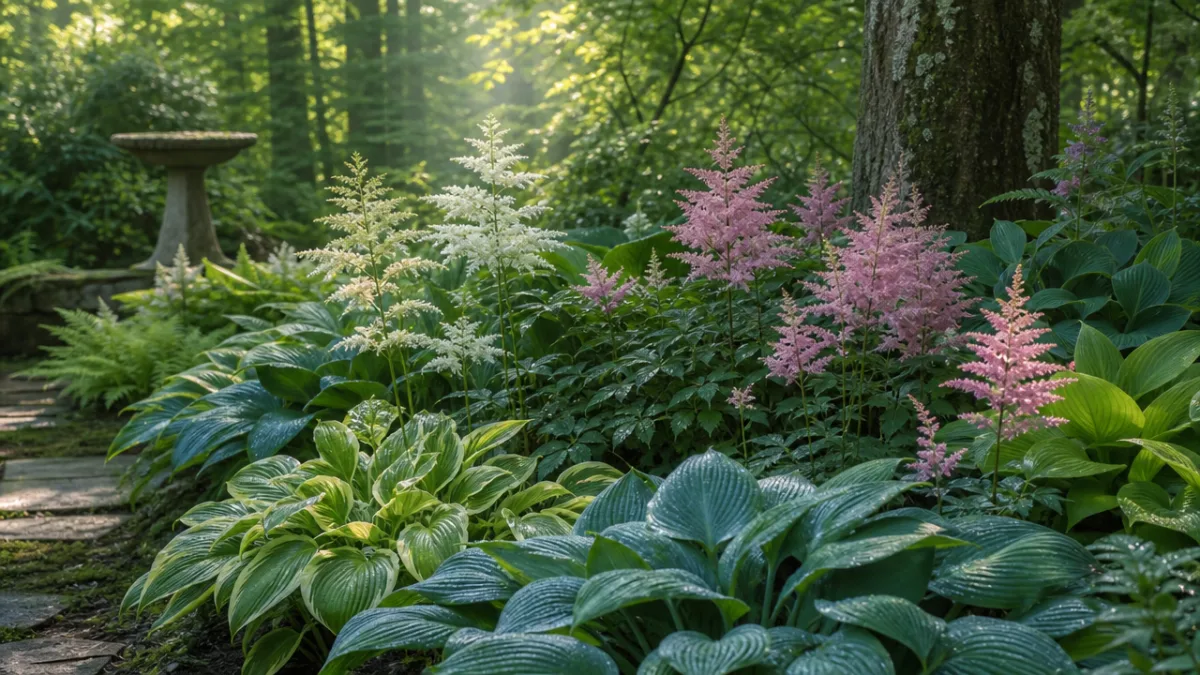
Hostas are arguably the undisputed kings of the shade garden, and for very good reason. Available in an astonishing range of sizes, from tiny miniatures that fit in a teacup to giants with leaves spanning over two feet across, hostas offer extraordinary variety within a single genus. Their foliage comes in shades of blue-green, chartreuse, gold, and every combination thereof, with many cultivars featuring striking white or yellow margins that bring a sense of light into even the darkest corner of the garden.
Astilbes bring vertical interest and a soft, feathery texture that contrasts beautifully with the broad leaves of hostas and other shade companions. Their plume-like flowers rise above ferny, deeply divided foliage in shades ranging from pure white and soft pink to deep red and vivid purple, typically blooming from late spring through midsummer depending on the cultivar. After flowering, the dried seed heads remain decorative well into autumn, adding months of visual interest and providing valuable seeds for overwintering birds that visit your garden.
Bleeding heart, known botanically as Lamprocapnos spectabilis, is a classic cottage garden perennial that produces arching stems lined with pendant, heart-shaped flowers in deep rose-pink or pure white. It blooms prolifically in spring and then gracefully goes dormant by midsummer, leaving a gap that can be filled by neighbouring plants expanding into the vacated space. The native fringed bleeding heart, Dicentra eximia, is a more compact alternative that blooms repeatedly throughout the growing season and does not go fully dormant, making it a more practical choice for smaller gardens.
Ferns: The Backbone of Any Shade Garden
No shade garden feels complete without at least one or two species of fern providing the kind of effortless, timeless elegance that few other plants can match. Ferns have been perfecting their craft for over 350 million years, and they show it in the refined architecture of their fronds and the graceful way they unfurl each spring. Hardy ferns such as the ostrich fern, Japanese painted fern, and autumn fern are all straightforward to grow and establish quickly in moist, humus-rich soil beneath deciduous trees or along shaded pathways.
The Japanese painted fern deserves special mention for its stunning silvery-grey and burgundy variegation, which makes it one of the most visually striking foliage plants available for shaded settings. Unlike many variegated plants, its colour actually intensifies in shade rather than fading, rewarding gardeners who place it in the dimmest corners of the bed. It grows to about twelve to eighteen inches in height and spreads slowly to form attractive clumps that can be divided every few years to increase your stock and share with fellow gardening enthusiasts.
Ostrich ferns, by contrast, are bold and architectural, capable of reaching five or six feet in height in ideal conditions and creating a dramatic tropical effect in a temperate garden. They spread enthusiastically by underground stolons and can colonise a large area within a few seasons, making them excellent ground cover beneath tall trees where other plants struggle. For smaller spaces, the autumn fern offers rich, coppery-red new growth that matures to a glossy dark green, providing multi-season interest in a tidy, manageable clump that rarely exceeds two feet in height.
Ground Cover Perennials That Suppress Weeds and Look Beautiful
One of the most practical reasons to grow shade-loving perennials is their remarkable ability to function as living mulch, covering bare soil so thoroughly that weeds find it almost impossible to gain a foothold. Once established, a dense planting of ground-covering perennials dramatically reduces garden maintenance, freeing you from the endless cycle of weeding that bare soil demands. The plants that follow are among the most effective and attractive choices for this purpose, combining genuine weed-suppressing density with year-round ornamental value.
Epimedium, also known as barrenwort or bishop’s hat, is perhaps the ultimate tough-love shade perennial for difficult spots. It handles dry shade beneath trees with remarkable equanimity, spreads steadily to form a dense, weed-smothering carpet, and produces charming little four-petalled flowers in spring in shades of yellow, white, pink, or purple depending on the species. The heart-shaped leaves are often attractively mottled or edged in red when young, and many varieties are semi-evergreen, providing ground cover interest through the winter months when other perennials have retreated entirely underground.
Ajuga reptans, commonly called bugleweed, is another workhorse of the shade garden that spreads quickly and flowers reliably every spring. Its short spikes of typically vivid blue-violet flowers appear in late April and May, creating a carpet of colour that is particularly striking when planted en masse beneath spring-flowering shrubs. The cultivar ‘Black Scallop’ offers dramatic near-black leaves that contrast beautifully with its blue flowers, while ‘Burgundy Glow’ presents a tricolour foliage effect of pink, white, and green that remains attractive throughout the entire growing season and beyond.
Lungwort and Solomon’s Seal
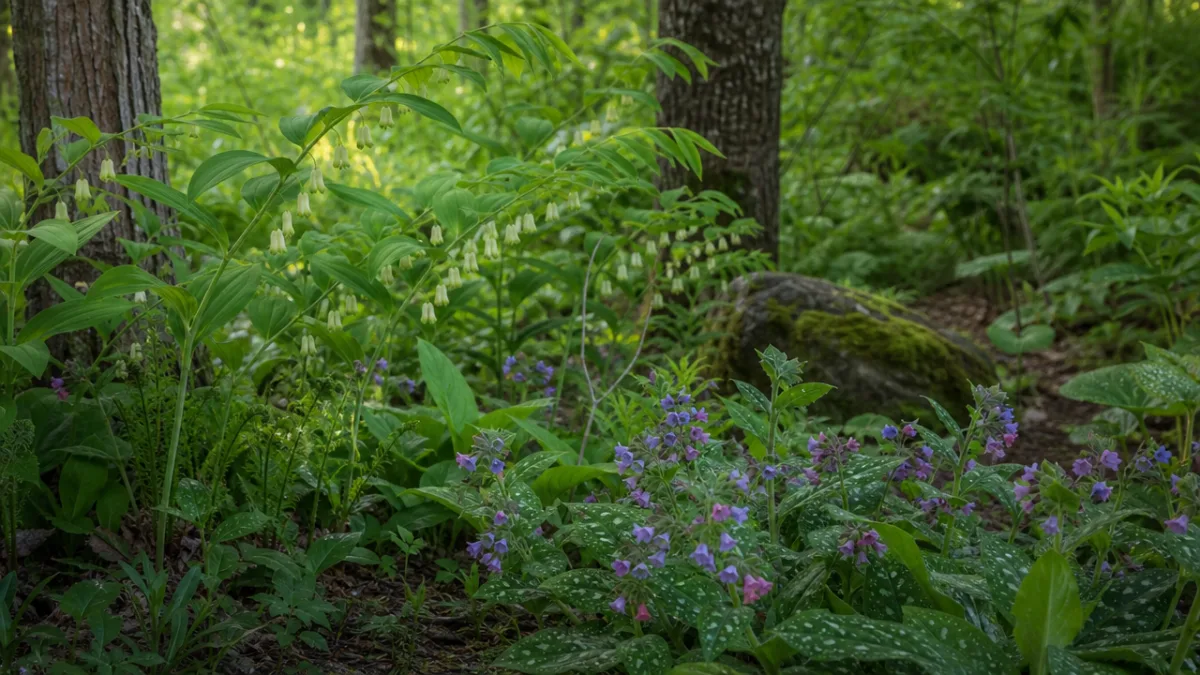
Pulmonaria, commonly called lungwort, is a spring-blooming perennial that offers two distinct seasons of interest. In early spring, before most shade garden plants have emerged from dormancy, lungwort produces clusters of small funnel-shaped flowers that typically open pink and mature to blue or violet, giving a single plant a multicoloured floral display that lasts for several weeks. After flowering, the plant directs its energy into producing its famous spotted leaves, which are heavily dappled in silver and provide a light-reflecting foliage effect that genuinely brightens dark corners throughout summer and into autumn.
Polygonatum, or Solomon’s seal, brings an elegant architectural quality to the shade garden that few other plants can rival. Its arching stems, which can reach two to four feet in length depending on the species, are lined with pairs of clean, ovate leaves and decorated with small pendant white bells in late spring. The variegated form, Polygonatum odoratum ‘Variegatum’, is especially prized for its white-edged leaves that shimmer in low light. Solomon’s seal spreads slowly by rhizome and is almost entirely problem-free, making it an ideal low-maintenance choice for naturalistic woodland-style plantings.
Adding Colour and Drama to Shaded Spaces
While foliage rightly takes centre stage in most shade gardens, perennials that flower reliably in low light conditions add a welcome layer of seasonal drama and seasonal rhythm to plantings that might otherwise feel static. The key is selecting plants whose bloom times are staggered throughout the growing season so that there is always something catching the eye, from the earliest hellebore flowers of late winter through to the late-season asters and toad lilies that carry the garden well into autumn before the first frost finally calls time on the growing year.
Hellebores, sometimes called Lenten roses, are among the most beloved of all shade perennials precisely because they bloom at a time when almost nothing else in the garden is doing so. Their nodding, cup-shaped flowers emerge from late winter onwards in an extraordinary range of colours including creamy white, soft yellow, blush pink, deep plum, slate grey, and near-black, often with attractive spotting or picotee edging that rewards close inspection. The evergreen foliage is handsome in its own right and remains presentable throughout the year, earning hellebores a reputation as genuinely four-season plants of exceptional value to the shade gardener.
Toad lilies, or Tricyrtis species, fill a particularly valuable niche in the shade garden by producing their exotic, orchid-like spotted flowers in late summer and autumn, just when many other shade perennials are winding down for the year. The blooms are intricate and fascinating up close, marked with purple or maroon spots on a white or pale lavender ground, and they appear along upright or arching stems that can reach two to three feet in height. Despite their somewhat exotic appearance, toad lilies are thoroughly hardy and easy to grow, asking only for consistently moist, humus-rich soil and protection from the hottest afternoon sun.
Coral Bells and the Colour Revolution
Heuchera, or coral bells, has undergone a remarkable transformation in recent decades through intensive breeding programmes that have produced an almost bewildering array of foliage colours. Modern cultivars come in shades of caramel, chocolate brown, burnt orange, silver, burgundy, lime green, and even near-black, offering shade gardeners an unprecedented palette of colour to work with throughout the entire growing season. Unlike flowering plants whose colour is seasonal, heuchera’s foliage provides its colour continuously from spring through autumn, and many varieties retain attractive leaves through mild winters.
The delicate, airy flower stalks that rise above heuchera’s mound of colourful leaves in late spring and early summer are an added bonus rather than the main attraction, carrying tiny bell-shaped flowers that attract hummingbirds and provide a fine-textured contrast to the bolder foliage below. Heuchera performs well in partial shade and is remarkably adaptable, tolerating drier conditions better than many shade perennials once established. Pairing different cultivars together to create contrasting foliage combinations is one of the most rewarding creative exercises available to the shade gardener working with a limited plant palette.
Practical Tips for Establishing Your Shade Garden
Success with shade-loving perennials begins long before you put a single plant in the ground. Thorough soil preparation is the single most important investment you can make in your shade garden, and cutting corners at this stage will cost you significantly in plant establishment time and eventual garden quality. Dig the planting area to a depth of at least twelve inches, incorporating generous amounts of compost, leaf mould, or well-rotted bark to improve both drainage and moisture retention. Shaded soil that stays persistently wet will rot the crowns of most perennials, so ensuring adequate drainage is as important as ensuring adequate moisture-holding capacity.
When selecting plants, pay careful attention to the mature size indicated on plant labels and space accordingly from the outset. It can be tempting to plant shade perennials too closely to achieve an immediate filled-in effect, but overcrowding leads to poor air circulation, increased disease pressure, and the eventual need to divide and replant much sooner than would otherwise be necessary. A newly planted shade bed will look sparse for its first season, but by the second and third years, well-chosen perennials will have expanded to fill their allocated space and the garden will begin to look established and intentional.
Feeding shade perennials is generally straightforward and undemanding compared to the nutritional needs of flowering sun-lovers. An annual topdressing of compost or well-rotted leaf mould applied in early spring provides a slow, gentle nutrient release that suits most shade perennials perfectly without the risk of forcing excessive lush growth that might attract pests or prove vulnerable to slug damage. In particularly impoverished soil, a light application of a balanced granular fertiliser in early spring can give plants an additional boost during their most active period of growth, but avoid high-nitrogen formulations that promote leafy growth at the expense of root development and overall plant resilience.
Quick Reference: Best Shade Perennials by Condition
Choosing the right plant for the right spot is the fundamental principle of successful gardening, and shade gardens are no exception. Different plants within the shade-tolerant category have meaningfully different tolerances for the specific combination of light level, soil moisture, and competition from tree roots that characterises your particular growing conditions. The following groupings offer a practical starting point for matching plants to conditions, though bear in mind that individual garden microclimates vary considerably and some experimentation is always part of the process.
- For dry shade beneath trees: Epimedium, Geranium macrorrhizum, Iris foetidissima, Cyclamen hederifolium, Euphorbia amygdaloides var. robbiae
- For moist partial shade: Astilbe, Ligularia, Primula, Rodgersia, Trollius, Iris sibirica
- For deep shade with reasonable moisture: Hosta, ferns, Polygonatum, Convallaria, Lysimachia nummularia
- For spring colour in shade: Hellebore, Pulmonaria, Dicentra, Brunnera, Mertensia virginica
- For autumn interest in shade: Tricyrtis, Actaea, Kirengeshoma palmata, Japanese anemone
Dividing your shade perennials every three to five years is an important maintenance task that keeps plants vigorous, improves flowering, and allows you to increase your stock without spending additional money. Most shade perennials are best divided in early spring as they are just beginning to emerge, or alternatively in early autumn when the worst of summer heat has passed but enough of the growing season remains for divisions to establish before winter. Lift clumps carefully with a fork, tease or cut them into sections each containing several healthy shoots and a good portion of root, replant at the original depth, water well, and mulch generously to help the newly disturbed root systems recover as quickly as possible.
With thoughtful plant selection, good soil preparation, and a little patience during the establishment phase, a shade garden filled with easy-care perennials will reward you for many years with minimal ongoing effort. The beauty of perennial planting is that each year the garden matures and improves, with plants settling into harmonious communities that look increasingly natural and intentional as time passes. Far from being a problem to be solved, a shaded garden is one of the most exciting creative canvases available to any gardener willing to embrace its unique possibilities and the remarkable range of plants that have evolved to make it their home.








What do you think?
It is nice to know your opinion. Leave a comment.