










25 Cold Hardy Tropical Plants to Create a Tropical Garden in Cold Climate
Introduction: Bringing the Tropics to Colder Climates
The idea of a lush, tropical garden has long captivated gardeners who live in cooler regions of the world. The vibrant colors, dramatic foliage, and exotic textures of tropical plants seem to belong only to warm, humid climates — but that assumption is increasingly being challenged by a growing community of adventurous gardeners. With careful plant selection and a few smart gardening strategies, it is entirely possible to create a stunning tropical-inspired landscape even in zones where frost is a regular winter visitor.
Cold hardy tropical plants are those that have evolved or been selectively bred to tolerate temperatures well below what most tropical species can endure. Some of these plants can survive temperatures dipping into the teens or even single digits Fahrenheit, while still producing the lush, oversized foliage and vivid blooms we associate with tropical paradise gardens. The key is understanding which plants offer that magical combination of tropical aesthetics and genuine cold tolerance, and then learning how to help them thrive in your specific environment.
This guide explores 25 of the best cold hardy tropical plants available to gardeners today, organized by type and use so you can design a cohesive, layered garden that feels genuinely tropical even during your region’s cooler months. Whether you garden in USDA Zone 6, Zone 7, or even Zone 5 with some creative protection strategies, you will find plants here that can transform your outdoor space into a lush, exotic retreat that surprises and delights everyone who visits it.
Hardy Palms and Palm-Like Plants for Structural Drama
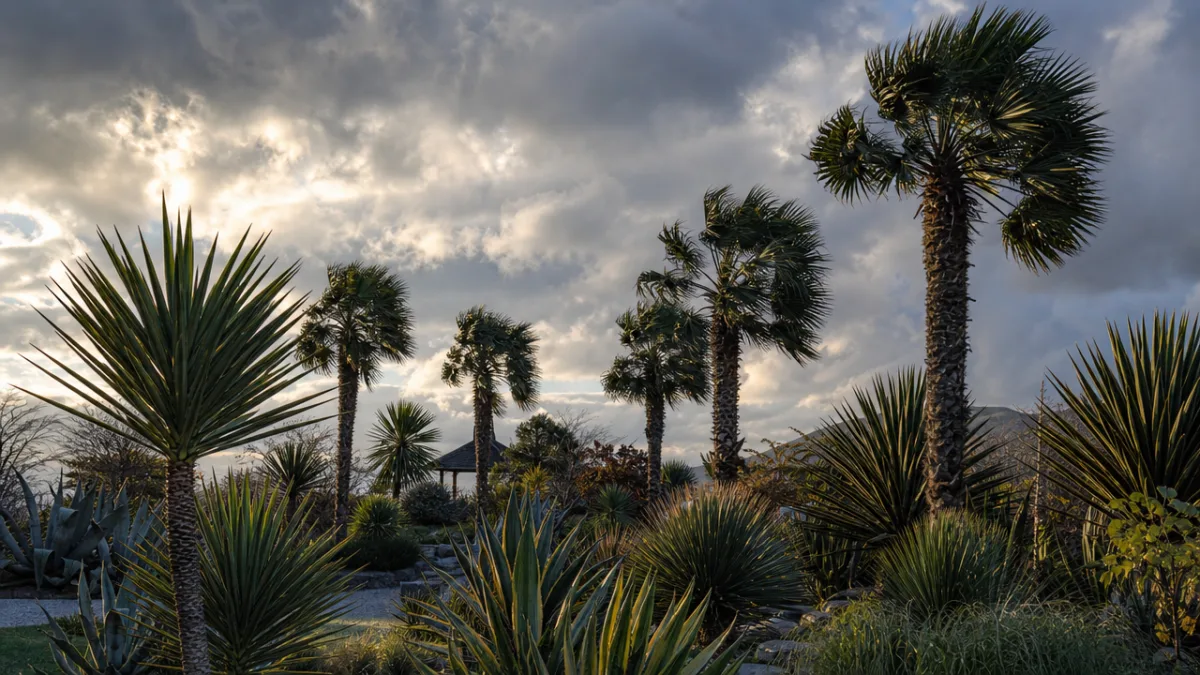
No element says “tropical garden” quite like a palm tree, and fortunately several palm species are remarkably cold tolerant. The Windmill Palm, known botanically as Trachycarpus fortunei, is perhaps the most widely grown cold hardy palm in the world. Native to the mountain forests of central China, this elegant palm can survive temperatures as low as 5°F (-15°C) with minimal protection. Its shaggy brown trunk and fan-shaped fronds create an unmistakable tropical silhouette that works beautifully as a specimen plant or as part of a layered border design.
The Needle Palm, Rhapidophyllum hystrix, is frequently cited as the most cold hardy palm on the planet, capable of tolerating temperatures below 0°F in some documented cases. Native to the southeastern United States, this clustering palm grows relatively slowly and stays shorter than many other species, making it ideal for smaller garden spaces. It produces attractive, dark green fronds with distinctive stiff needles at the base of each leaf, and while it may not achieve the towering height of other palms, its proven hardiness makes it an indispensable anchor plant for cold climate tropical gardens.
Beyond true palms, several plants offer similar architectural impact. Yuccas such as Yucca rostrata and Yucca gloriosa provide striking rosettes of blue-green or green strap-like leaves that create bold focal points in the landscape. The Sago Palm, Cycas revoluta, while technically a cycad rather than a true palm, delivers incredible tropical drama and tolerates temperatures down to around 15°F with some protection. For gardeners in Zone 7 and above, the European Fan Palm, Chamaerops humilis, provides another reliable choice with its multi-trunked form and silvery-green foliage that catches the light beautifully throughout the growing season.
Bold Foliage Plants for Lush Tropical Texture
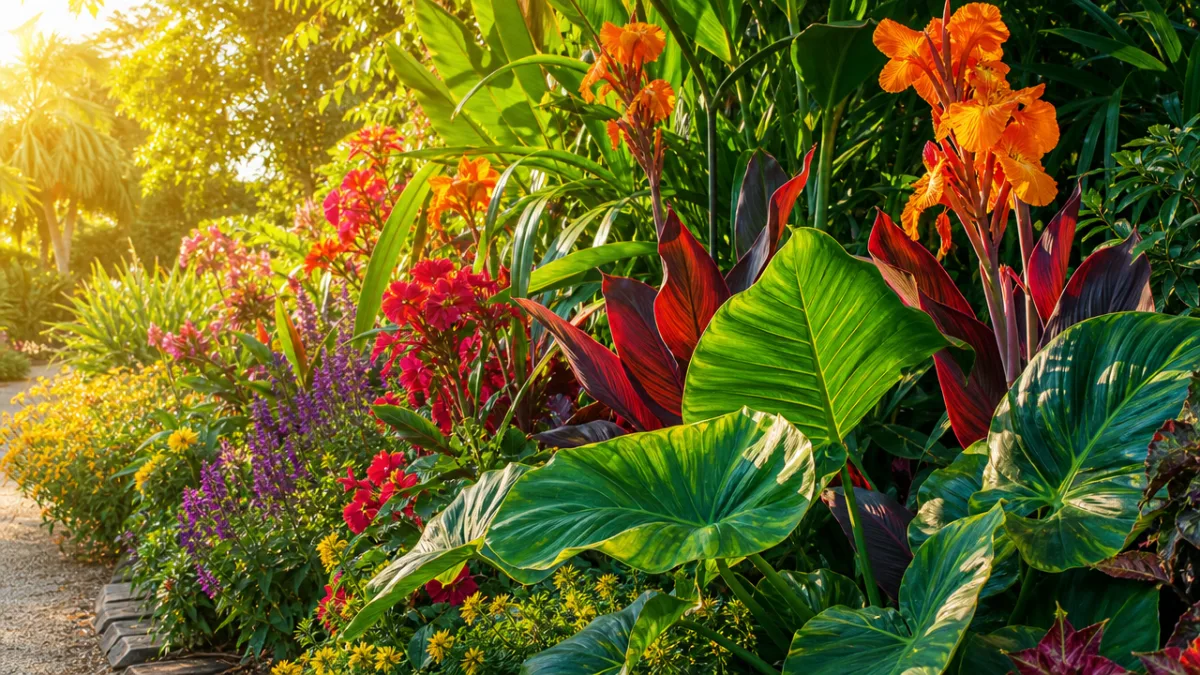
The hallmark of any convincing tropical garden is bold, oversized foliage, and several exceptionally cold hardy plants deliver exactly that effect. Cannas, for example, are borderline hardy in many cool climates and can be left in the ground year-round in Zone 7 and warmer with just a layer of heavy mulch over the rhizomes. Their enormous, paddle-shaped leaves in shades of green, bronze, burgundy, and variegated combinations create an instantly tropical mood, while their towering flower spikes in red, orange, yellow, and pink add weeks of vivid color to the summer garden.
Hardy Banana plants, particularly Musa basjoo, are among the most exciting cold climate tropical choices available to gardeners today. Musa basjoo is native to Japan and China and can survive temperatures down to approximately 0°F when the rhizomes are protected with deep mulch, even if the above-ground stems are killed by frost. In warmer zones, the trunks themselves can survive the winter, allowing plants to reach impressive heights of 12 to 15 feet within a single growing season. The enormous, gracefully arching leaves create an immediately tropical atmosphere that few other plants can match.
Gunnera manicata, sometimes called the Giant Rhubarb or Dinosaur Food Plant, produces what may be the most dramatically oversized leaves in the entire plant kingdom. Individual leaves can reach 6 to 8 feet across on robust plants, creating a prehistoric, jungle-like effect that stops visitors in their tracks. Hardy to approximately Zone 7 with appropriate mulching of the crown, Gunnera needs moisture-retentive soil and a sheltered position to perform at its best. Colocasia and Alocasia species, including the striking Colocasia gigantea and various hardy selections, provide similarly dramatic elephant-ear foliage and are proving hardier than many gardeners initially assumed, especially when planted in warm, sheltered microclimates.
Flowering Tropical Plants That Survive the Cold
One of the most rewarding aspects of cold hardy tropical gardening is discovering flowering plants that combine genuine hardiness with the kind of spectacular blooms we typically associate with warmer climates. Hardy Hibiscus, particularly the native Hibiscus moscheutos and its many cultivated hybrids, produces flowers that can reach an astounding 12 inches in diameter in shades of red, pink, white, and bicolor combinations. These plants die to the ground each winter but return reliably from their root systems even in Zone 4 or 5, emerging late in spring and rapidly growing to 4 or 5 feet before producing their dinner-plate-sized blooms through summer and into fall.
Crinum lilies are another outstanding choice for gardeners seeking tropical-looking flowers in cooler climates. Several Crinum species and hybrids show remarkable cold hardiness, tolerating temperatures into the low teens with deep mulching. Their large, strap-like leaves and clusters of fragrant, lily-like flowers in white, pink, and striped combinations create a genuinely exotic effect from midsummer through early autumn. The variety Crinum x powellii is among the most widely grown and most reliably cold hardy, performing well in sheltered positions in Zone 6 gardens when given excellent drainage and a warm, sunny exposure.
Hedychium, commonly known as Ginger Lily or Garland Lily, represents one of the most exciting frontiers in cold hardy tropical gardening. While many gingers are strictly tropical, several Hedychium species including Hedychium coccineum, Hedychium densiflorum, and the stunning Hedychium ‘Tara’ have proven hardy to Zone 7 and even into Zone 6 with protection. These plants produce tall, canna-like stems clothed in rich green foliage, topped in late summer and autumn with fragrant flower spikes in orange, red, yellow, and white. Their fragrance alone makes them worth growing, and their combination of tropical foliage and late-season bloom fills a gap that few other cold hardy plants can address.
Hardy Ferns, Grasses, and Ground Cover Plants for Layering
A truly convincing tropical garden relies not just on specimen plants but on thoughtful layering that fills every level of the planting from ground to canopy. Hardy ferns play a crucial role in this layering, providing the lush, verdant ground cover that gives tropical gardens their sense of abundance and richness. The Tasman Tree Fern, Dicksonia antarctica, is perhaps the most dramatic option for gardeners in Zone 8 and warmer, producing a classic tree fern silhouette with a fibrous trunk and arching fronds that can reach 6 feet or more in length. Even in colder zones, the crown can be protected with a stuffing of straw or fleece to help it survive hard frosts.
For gardeners in colder zones seeking reliable fern coverage, the Japanese Painted Fern, Athyrium niponicum, and the robust Ostrich Fern, Matteuccia struthiopteris, provide excellent tropical-feeling ground cover with minimal care. These deciduous ferns emerge in elegant coils each spring and build up into impressive clumps that soften the bases of larger specimen plants beautifully. Bamboo, particularly the clumping varieties of Fargesia and the running varieties of Phyllostachys when properly contained, adds an unmistakably Asian-tropical aesthetic with its tall, graceful canes and rustling foliage, with many species rated hardy to Zone 5 or even Zone 4.
Ornamental grasses also contribute significantly to the tropical garden aesthetic, with several species producing the kind of bold, dramatic impact that ties a planting together. Miscanthus sinensis cultivars such as ‘Strictus’ and ‘Zebrinus’ offer eye-catching horizontal banding on their long, arching leaves, creating a visual effect reminiscent of tropical striped foliage plants. Pennisetum macrourum and the hardy selections of Pennisetum orientale add softness and movement, while the enormous, imposing clumps of Arundo donax, the Giant Reed, create a bamboo-like backdrop of extraordinary scale that can reach 15 feet or more in a single season even in Zone 6 gardens.
Designing Your Cold Climate Tropical Garden
Creating a convincing tropical garden in a cold climate requires not just the right plant selection but also a thoughtful approach to garden design and microclimate management. The most successful cold climate tropical gardens take advantage of every available microclimate, placing tender specimens near south-facing walls that radiate stored heat overnight, in sheltered courtyards that reduce wind chill, or beneath the canopy of larger trees that provide frost protection on cold nights. Even a difference of just a few degrees in minimum temperature can mean the difference between a plant surviving the winter or requiring replacement each spring.
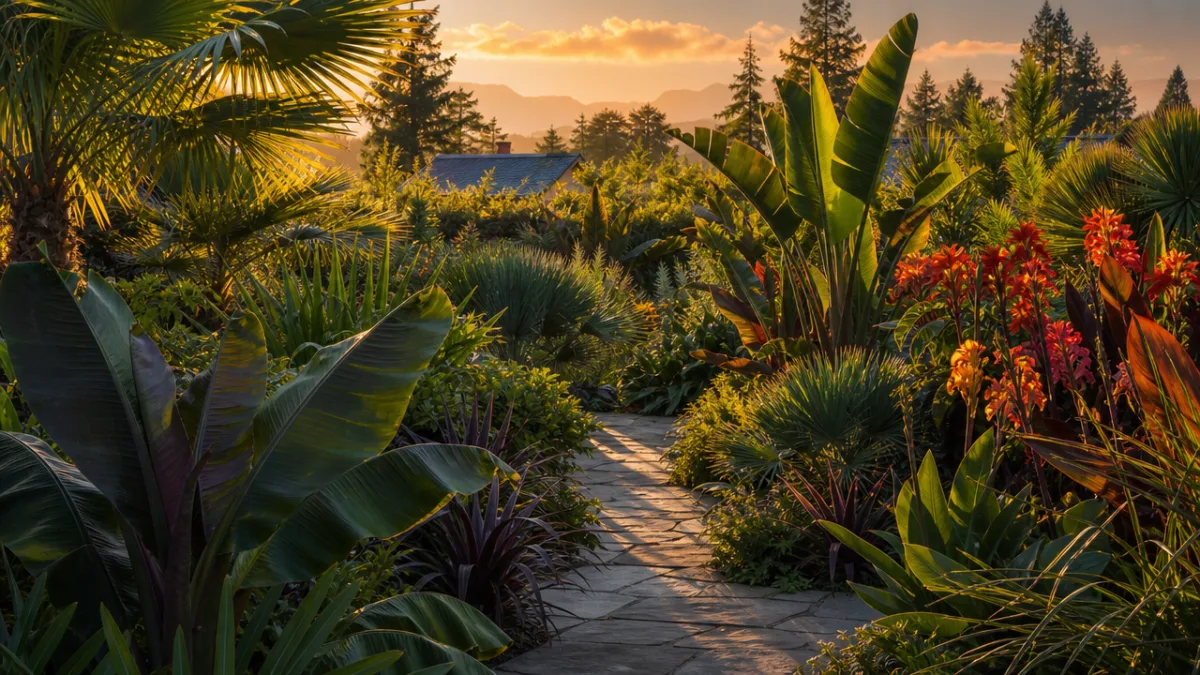
Layering is the fundamental design principle of the tropical garden, and it applies as much to cold climate interpretations as to genuine tropical plantings. Begin with your structural plants — the hardy palms, bamboos, and tree-sized specimens that will define the garden’s framework year-round or through the growing season. Around these anchor plants, build a mid-layer of bold foliage plants including cannas, bananas, and large-leaved perennials. Fill the lower levels with ferns, ground covers, and smaller-leaved plants that provide textural contrast and prevent bare soil from showing. This layered approach creates depth, richness, and the sense of abundance that characterizes genuinely tropical planting.
Soil preparation and feeding are also critically important to success with tropical-style plants in cold climates. Most of these plants are vigorous, fast-growing specimens that need rich, moisture-retentive but well-drained soil to perform at their best. Incorporating generous amounts of well-rotted compost or leaf mold before planting, and following up with regular applications of balanced fertilizer through the growing season, will make a dramatic difference to the size, health, and impact of your plants. Winter protection strategies, including deep mulching with straw, bark, or leaf litter over the crowns and root zones of borderline hardy plants, will extend your range and allow you to grow species that would otherwise be lost in your climate zone.
Finally, embrace the dynamic, evolving nature of the cold climate tropical garden. Unlike a conventional perennial border that looks essentially the same from year to year, a tropical-inspired planting is always changing — plants emerge late in spring, grow at a breathtaking pace through summer, reach their peak drama in late summer and autumn, and then die back or require cutting down as the cold arrives. This seasonal rhythm can be deeply satisfying to work with, and the anticipation of seeing your banana plants push up their first enormous leaves each May or your crinum lilies produce their first fragrant flowers in July is one of the great pleasures of this uniquely rewarding style of gardening.
Essential Tips for Overwintering Tropical Plants Successfully
The winter period is the greatest challenge facing cold climate tropical gardeners, and developing a reliable overwintering strategy is essential to maintaining a mature, impressive planting from year to year. The first and most important step is timing: applying winter protection at the right moment makes a significant difference to plant survival. Mulching should be done after the first light frosts have hardened the plants slightly but before the arrival of genuinely deep cold. Applying mulch too early can actually encourage continued soft growth that is more vulnerable to damage, while applying it too late risks losing crown tissue that was not adequately protected.
For banana plants and other species where above-ground stems need protection, several approaches are available depending on your climate and the severity of your winters. In Zone 7 and warmer, wrapping the trunk in horticultural fleece or burlap, then surrounding it with a wire cage filled with dry straw, can protect the living tissue of the pseudostem and allow the plant to resume growth much higher up the stem in spring. In Zone 6 and colder, the stems will likely be killed regardless of protection, but protecting the rhizomes with 6 to 12 inches of dry mulch will ensure vigorous regeneration the following growing season. The goal in these colder zones shifts from preserving the stems to reliably protecting the root system.
Cannas, dahlias, elephant ears, and similar tender perennials present different overwintering decisions. In Zone 7 and warmer, many of these can be left in the ground year-round with a thick mulch layer. In colder zones, the choice is between lifting the tubers or rhizomes for dry storage indoors — in a cool, frost-free location such as a garage or basement — or gambling on in-ground survival with maximum mulching. Many gardeners in Zone 6 find that cannas survive in the ground in well-drained spots with heavy mulch, while others prefer the reliability of lifting them. Experimentation and record-keeping are invaluable tools in developing a personalized overwintering strategy tailored to the specific conditions of your garden.
It is also worth considering which plants are simply treated as annuals and replaced each spring, and which are genuinely worth the effort of protecting or storing through winter. For a gardener on a limited budget, growing cannas and elephant ears from inexpensive tubers each spring and composting them in autumn may make more sense than the labor of lifting and storing. For a gardener who has spent several years growing a large, mature Musa basjoo trunk to impressive height, however, the effort of thorough winter protection is absolutely worthwhile, as it preserves years of accumulated growth. The philosophy of the cold climate tropical garden is ultimately one of joyful persistence — working with the seasons rather than against them, celebrating the drama of emergence each spring, and finding deep satisfaction in coaxing the exotic into climates where nature never quite intended it to grow.








What do you think?
It is nice to know your opinion. Leave a comment.